Cooking With Christie: Sun-dried Tomato Hummus

Inspiration: In an effort to improve my chickpea repertoire of recipes, I decided to tackle hummus! As it turns out, hummus is dead simple to make — provided you’ve got a food processor.

Looking around online, I decided to try this recipe from the ChefJar cooking blog first.

And it turned out beautifully the first time!

Though, hilariously, I didn’t know one can of chickpeas roughly equates to three cups of hummus (once you’ve put it all together), so it took us a few days to polish it all off!

Personalization for our tastebuds: The next time I make this recipe, I’m going to use 3/4 of a cup of sundried tomatoes (for a better tomatoey taste), a couple of generous pinches of Aleppo pepper flakes (for a bit of heat), and swap the garlic cloves for a half-teaspoon of garlic granules (as the cloves of garlic I used overwhelmed my mouth after a couple of bites).

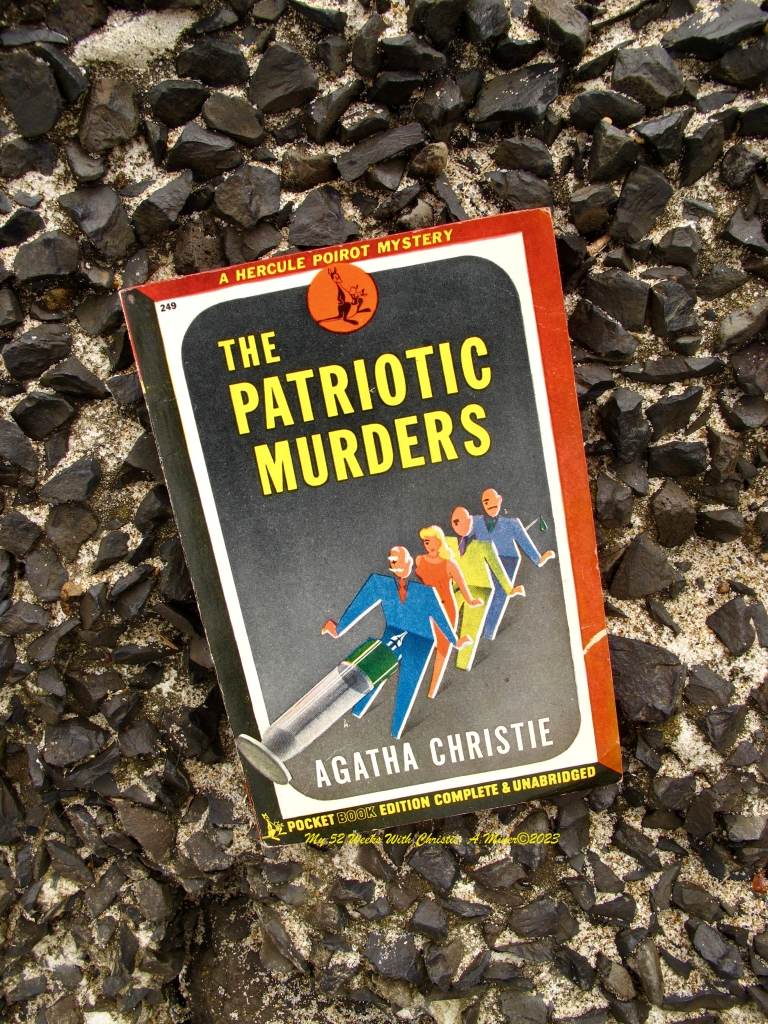
Christie: I could see Hastings or Japp eating hummus at their local pub, smeared over a bit of fried bread with a nice pint of beer!

My 52 Weeks With Christie: A.Miner©2023

Caustic Candy: How NutraSweet Got Me Into Hot Water

Back in 1984, NutraSweet introduced themselves to the world via a gumball campaign, where the company sent out a handful of spherical sweets to prove to the public it “tasted just as good as sugar”. Knowing they couldn’t send out the chewing gum and expect people to eat it — they preceded the mass mailing with an ad campaign letting everyone know what their mailers and gumballs looked like. Catching a couple of the commercials, I shrugged and returned to reading my Nancy Drews.

We never got anything that interesting in the mail.

Fast forward a few weeks to the day I opened our mailbox and spotted a familiar envelope lying inside — my heart skipped a beat. Lacking the means to buy candy on my own, as I was still in grade school at the time, I tore that envelope open in two shakes of a lamb’s tail. Popping the bright red gumball in my mouth, I began happily chewing away. Since checking the mail doesn’t generally include snacks, my mom immediately spotted my repetitive mastication when I walked back into the house and handed her the stack of correspondence. After a brief inquisition, in which my television defense was found wanting, the remaining gumballs were confiscated, and the piece I was happily snapping was consigned to the trash………….and my mom was MAD. 

Yes, capital letters are necessary.

As a kid, I thought her reaction was blown way out of proportion. The tv commercial showed the envelope, the envelope we received was a match, and the sleeve of gumballs was unopened (I did possess some common sense) — so what’s the big deal? And let me tell you, that’s the exact wrong thing to say under your breath around an already irate mom. (I swear that woman possesses the hearing of a bat.) It wasn’t until recently, when I started reading and writing about true crime, that I finally understood the root of my mom’s eruption of MAD.

In point of fact, my mom wasn’t mad — she was scared.

What sparked her poorly expressed fear? Less than two years before the artificial sweetener’s spectacular introduction to American consumers, seven people died in Chicago via cyanide polluted pain pills. The first victim in the 1982 Chicago Tylenol Murders, which remain unsolved to this day, was only a couple of years older than myself when those gumballs landed in our letterbox. My mom, an avid mystery and true-crime reader (proving I come by my reading inclinations naturally), followed the case and knew of the rash of copycat killings it inspired — hence her fright at finding me chewing gum of “uncertain” origins. (BTW — I called her up and apologized a couple weeks ago for this long ago eye rolling transgression — she laughed and accepted it.)

Now what exactly does this have to do with the price of shortbread in Scotland?

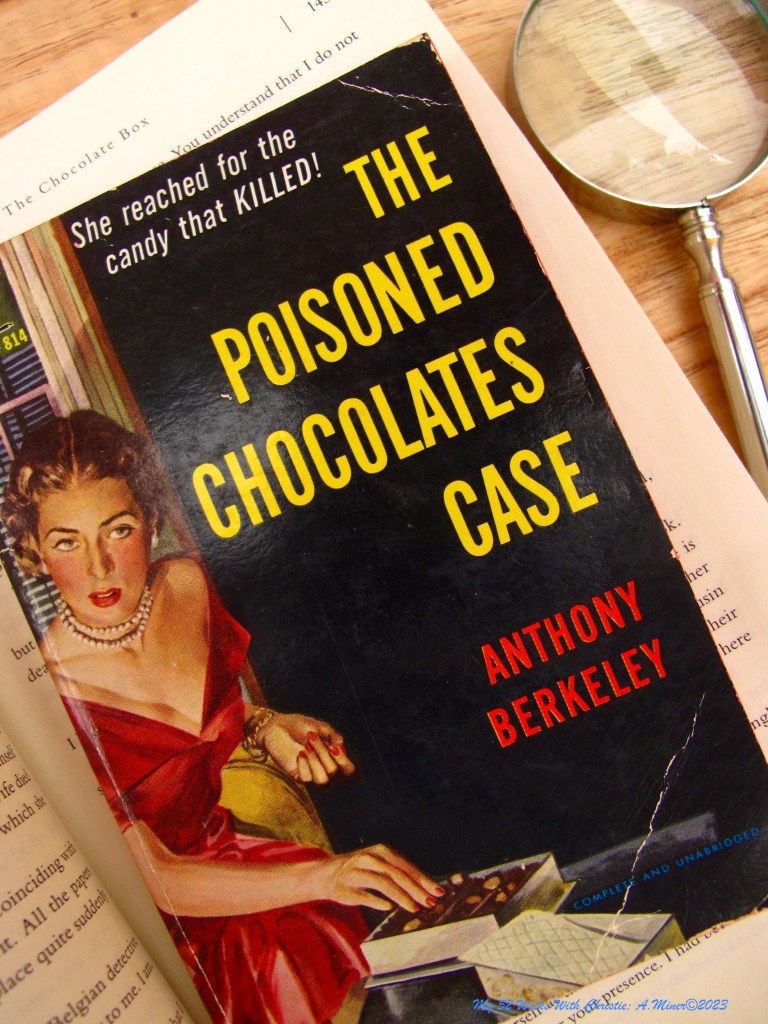
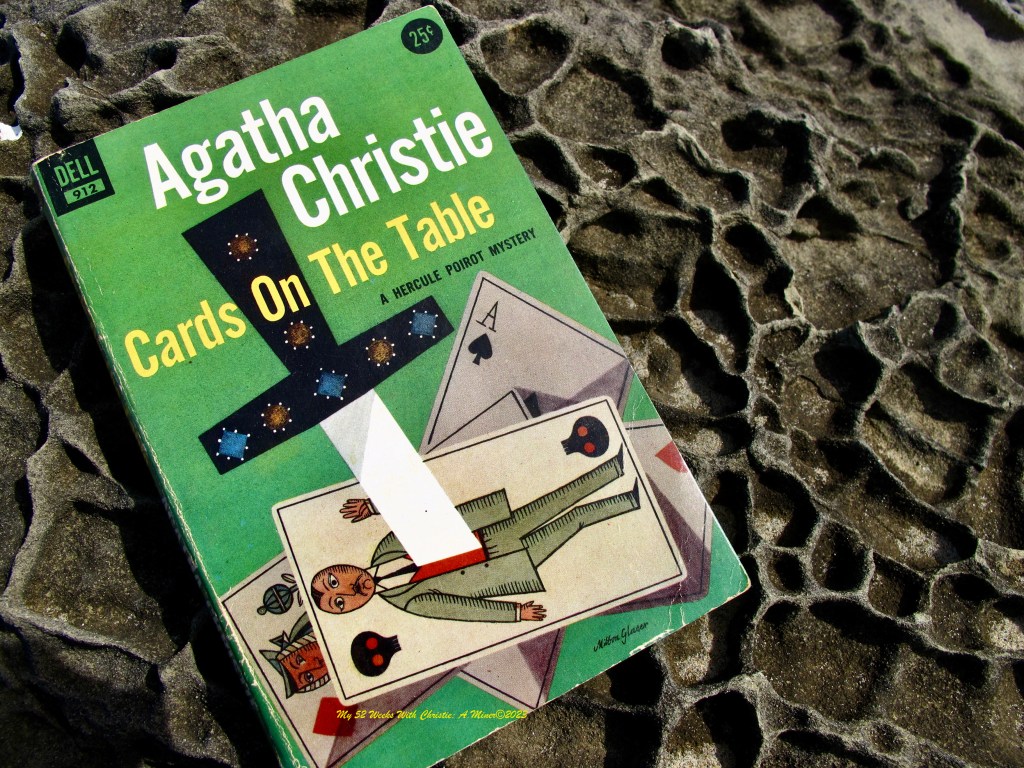
Over the past few months, I’ve unconsciously gravitated towards books that, in one way or another, feature chocolates and mail. Sometimes together, sometimes separate, these two elements kept creeping into the narrative…..A box of chocolates laced with cocaine appears in Peril At End House (1932). In the short story The Chocolate Box (1923), Poirot figures out the murder weapon was a singe trinitrine (aka nitroglycerine) stuffed chocolate. Author Anthony Berkley injected nitrobenzene into the soft centers of an entire box of chocolates, sent thru the mail to an unwitting puppet, to complete the deed in The Poisoned Chocolate Case (1929). 

Following the heels of Berkley’s aforementioned mystery, I listened to Poisoner’s Cabinet’s (a brilliant podcast) take on the case of Christiana Edmunds (year of crimes: 1870 -1871). The Chocolate Cream Killer, as Christiana was later known, laced her favorite chocolate coated confections with strychnine, then left bags of the contaminated sweets all over Brighton in the hopes someone would eat a piece of uncredited candy and sicken. Thereby convincing her crush that the candy maker was responsible for poisoning his wife and not her (it was definitely Christiana, btw). Later in her career as an adulterationist, Christiana sent anonymous boxes of sweets, chalked full of her preferred poison, to prominent citizens of the same city.

(This last feature of Christiana’s crimes, of course, brought Angele Laval and her infamous letter writing campaign to mind. Thank the gods above and below that Umberto Eco’s book, The Name of the Rose, wouldn’t be published for another sixty-three years — otherwise, it might have inspired her to post literally poisonous, poison pen letters….But I digress.)

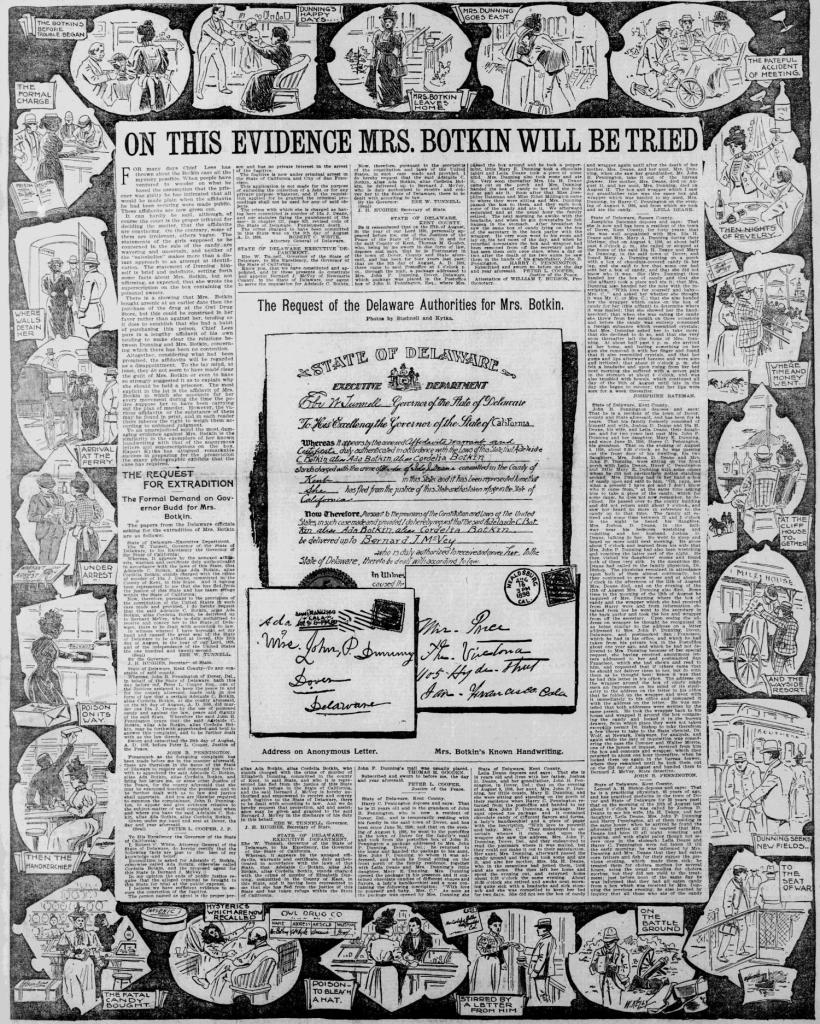
Hot on Christiana’s heels, though not actually, as there are several episodes betwixt the two explorations, I re-listened the Poisoner’s Cabinet’s alcohol tinged study of Cordelia Botkin (year of crime: 1898). Who first tried to dissuade her love rival with an anonymous note. When that foray fell flat, Cordelia sent her a box of chocolates overflowing with arsenic to permanently deal with her opponent.

Talking with my husband about these cases, I idly wondered: What on earth possessed people to eat candy they neither ordered nor expected to receive in the mail? Didn’t they see the danger? Indeed common sense and penny dreadfuls would warn people away from such behavior….That’s when I recalled the whole gumball debacle of my childhood, which made me curious. Since mysteries often reflect reality, and all the fictional crimes I listed above came well after my true-crime exemplars….How often (really) did candy get turned into a weapon before 1923?

Turns out a lot, and I will explore three true-crime cases linked by candy, poison, the postal service, and love-rivals over the next few weeks.

My 52 Weeks With Christie: A.Miner©2023

Cooking With Christie: Baked Harissa Lemon Chickpeas With Feta

Inspiration: Okay, I know this is a little odd….But I love going to new towns and checking out their grocery stores or independent grocers we happen to run across on a random Sunday drive. Not only do you learn a bit about the gastronomic tendencies of the area by what they stock, but it also allows you to discover new-to-you ingredients. On one of our recent wanders through the country, I ran across an intriguing new line of canned beans by Heyday Canning Co. 

(BTW: This is not a paid ad. I just discovered that I really loved this particular dish & product.)

In any case, I found a can of harissa & lemon chickpeas on a shelf and decided to give them a whirl — only to discover my utter lack of chickpea based recipes in my cooking repertoire. So I went to the Heyday Canning Co. website for some pointers and found this one skillet feta wonder!

I needed to make some slight alterations: Due to stupid allergies, I needed to cut out the onions and, for whatever reason, completely forgot to add the olives. To compensate for the lack of oniony goodness, I added a handful of peas (because we planted a ton of them in our garden this year and I’ve got oodles at the moment) and drop peppers. 

And let me tell you, it was great! We piled slices of sourdough bread high with the tomatoey chickpea goodness and had a great time. Even better, the leftovers made a lovely saucy pasta dish the next day for lunch!

My Helpful Hints on the Base Recipe: The canned harissa and lemon chickpeas aren’t particularly spicy, so never fear if you don’t lean that way gastronomically. Though you get a nice harissa flavor, I must admit I enjoy the burn, so I now add a couple of extra squeezes of harissa to the mix when I make it.

Unsurprisingly, a product labeled harissa and lemon chickpeas they are aggressively lemony. So in subsequent iterations of this dish, on top of remembering to add the olives, I mix a couple of squirts of ketchup (which is sweet, but not overly so) into the chickpea mixture to temper the lemon just a smidge without totally killing it. 

Christie: Honestly, I can see Colonel Race or Tommy & Tuppence loving this dish. Not only for its simplicity but because of the heat and overall amount of flavor the meal brings to the table! (Plus, in my mind, I think all three people, without any factual basis really, are adventurous eaters!)

My 52 Weeks With Christie: A.Miner©2023

Book Review: A Conundrum…

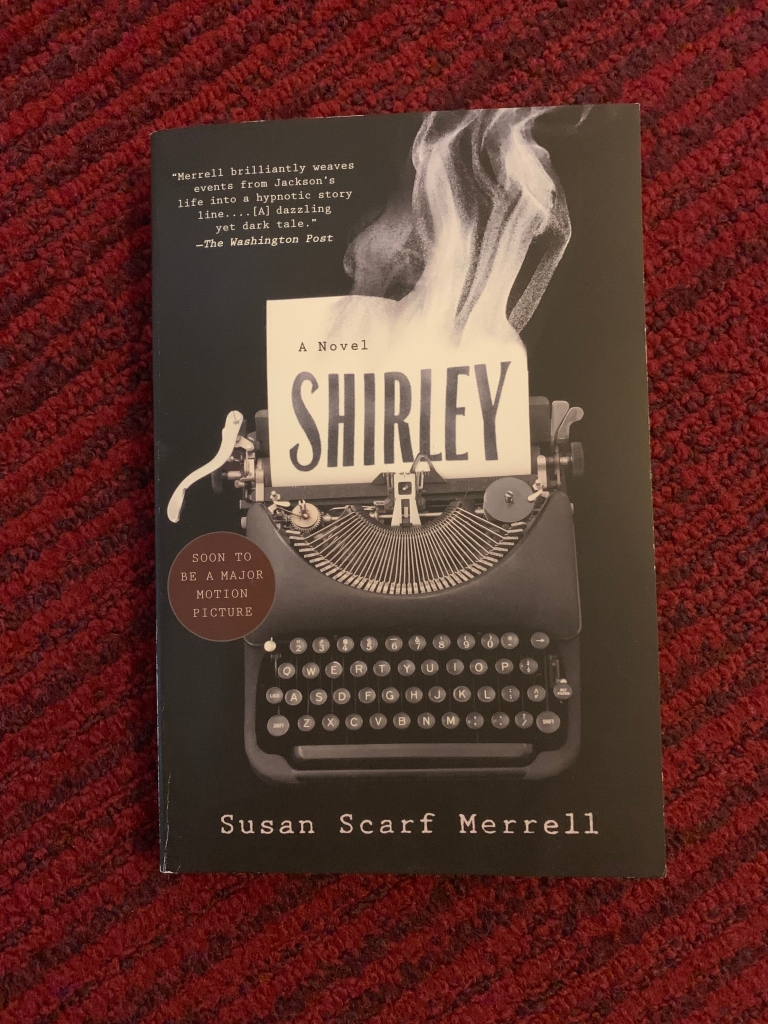
Shirley — Susan Scarf Merrell

Whilst working on my Murder By Mail series, I ran across a short story penned by Shirley Jackson called The Possibility of Evil. Which gives a fictional first-hand account of how the missives of a poison pen writer affect the community in which they live. A mere six pages, it takes no time at all to finish, and it’s one of the best short stories I’ve ever read.

That’s when I realized, despite my former coworker’s love of We Have Always Lived in the Castle, I’d never read anything by Shirley Jackson….And I fell down a literary rabbit hole trying to rectify this glaring gap in my book knowledge. During my research, in trying to figure out which anthology or anthologies to pick up, Merrell’s novel Shirley popped up. Excited by its premise, I ordered a copy of it as well. Then as one does, when gripped by a literary obsession, I eschewed my entire to-be-read-next stack in favor of my latest acquisitions. After reading a few of Jackson’s works, I switched it up and started Shirley. Whereupon I discovered myself reading a well plotted, paced, and put together book. 

The problem is, I’m not sure if I actually like it.

This realization left me in a morass of confusion, not only because I’d cracked the covers fully expecting to enjoy the read but because it took a while for me to suss out exactly why Shirley left such a sour taste in my mouth. 

Do you recall a review I wrote about Last Seen Wearing? Hillary Waugh loosely based his 1952 book on the real-life disappearance of Paula Jean Welden, a sophomore at the all female (at the time) Bennington College. Last Seen Wearing explores, through fiction, how the outcome of this still unsolved case might’ve changed had Paula’s diary been located and if North Bennington possessed a methodical police force.* 

Well, in a strange case of serendipity unknown to me prior to cracking Shirley’s cover, not only did Shirley Jackson and her husband Stanley Edgar Hyman reside in North Bennington, Vermont, when Paula Jean Welden vanished into thin air — Hyman taught English at Bennington College during the same period in which Paula attended. Giving Jackson a front-row seat to the frantic clamor of the five-hundred volunteers who turned up to search the mountain, the helicopter & airplane they employed in their search, the gaggle of reporters who descended on the town, and the strain the other students, staff, & teachers bore during this uncertain period. Unsurprisingly, Jackson drew inspiration from Paula’s case and wrote her into two stories — the 1951 novel Hangsaman and a short story called The Missing Girl.

Now, you might ask, what does a true-crime-inspired police procedural, a gothic novel, and a scathing piece of short fiction, all of which were written decades before Shirley, matter? Because of the four aforementioned works, only Waugh and Jackson chose to change Paula Jean Welden’s name in their stories.

Merrell did not.

And herein lies my problem with Shirley

When reading a fictional biopic, you expect the author to cherry-pick both the good, the bad, and the salacious from the lives of the people they are focused on. And let me tell you, Jackson and Hyman gave Merrell plenty of material to work with — a gothic/horror/mystery writer, who suffered from mental health issues (anxiety and agoraphobia), smoked like a chimney, drank, and took amphetamines & barbiturates. (Gotta love doctors — they gave her the former for weight loss, the latter to treat her anxiety, and believed they were okay to take together.) Add to that a husband who was a writer himself, had a habit of taking his students to bed, purportedly asked for an open marriage, felt frustrated by the lack of recognition for his wife’s work, yet controlled all the money she earned….As I said, there’s plenty of meat on the bone for Merrell to pick at. And it probably seemed like a stroke of luck when Merrell discovered the messy lives of this pair of literary luminaries intersected with the mysterious disappearance of a pretty blonde college sophomore.

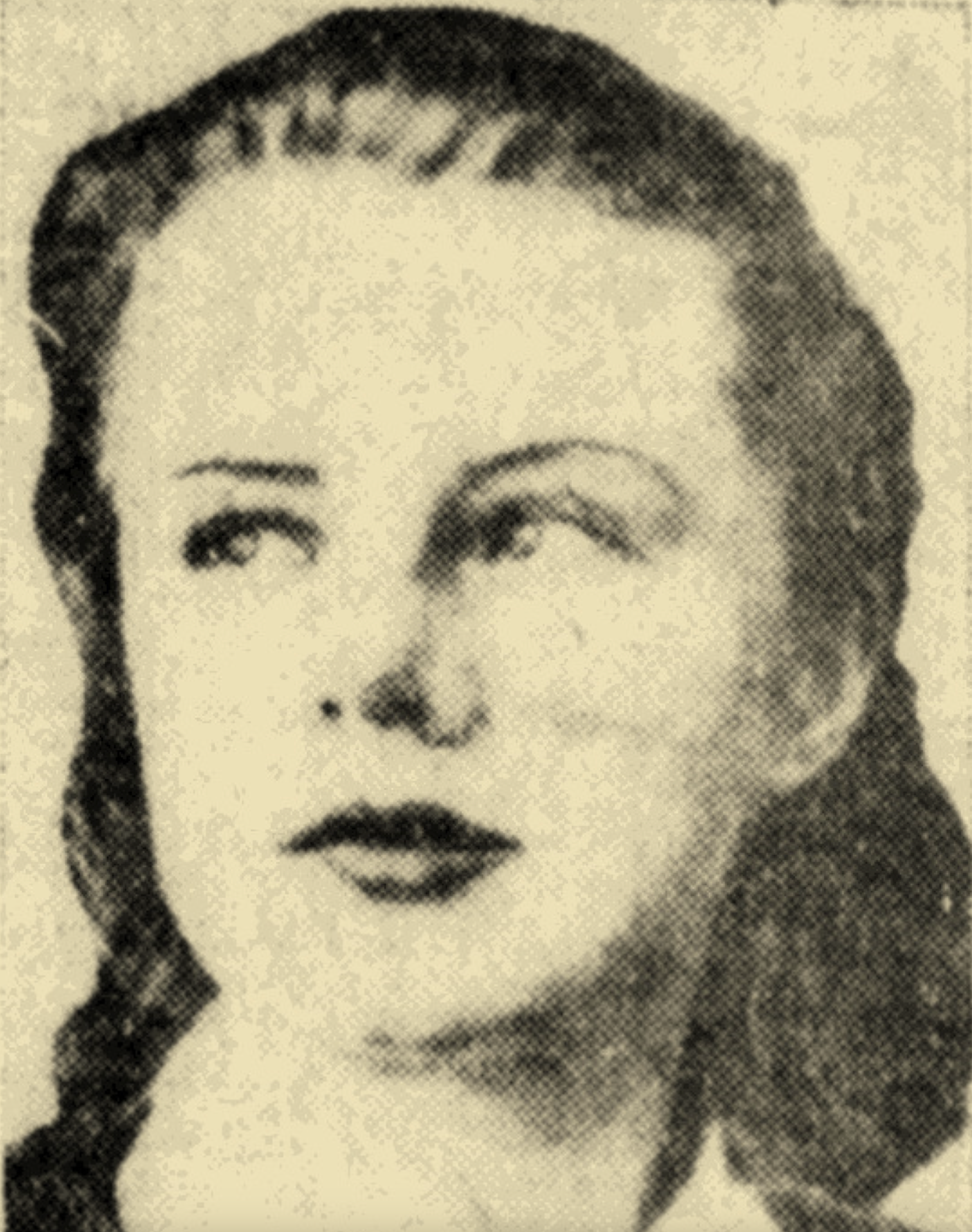
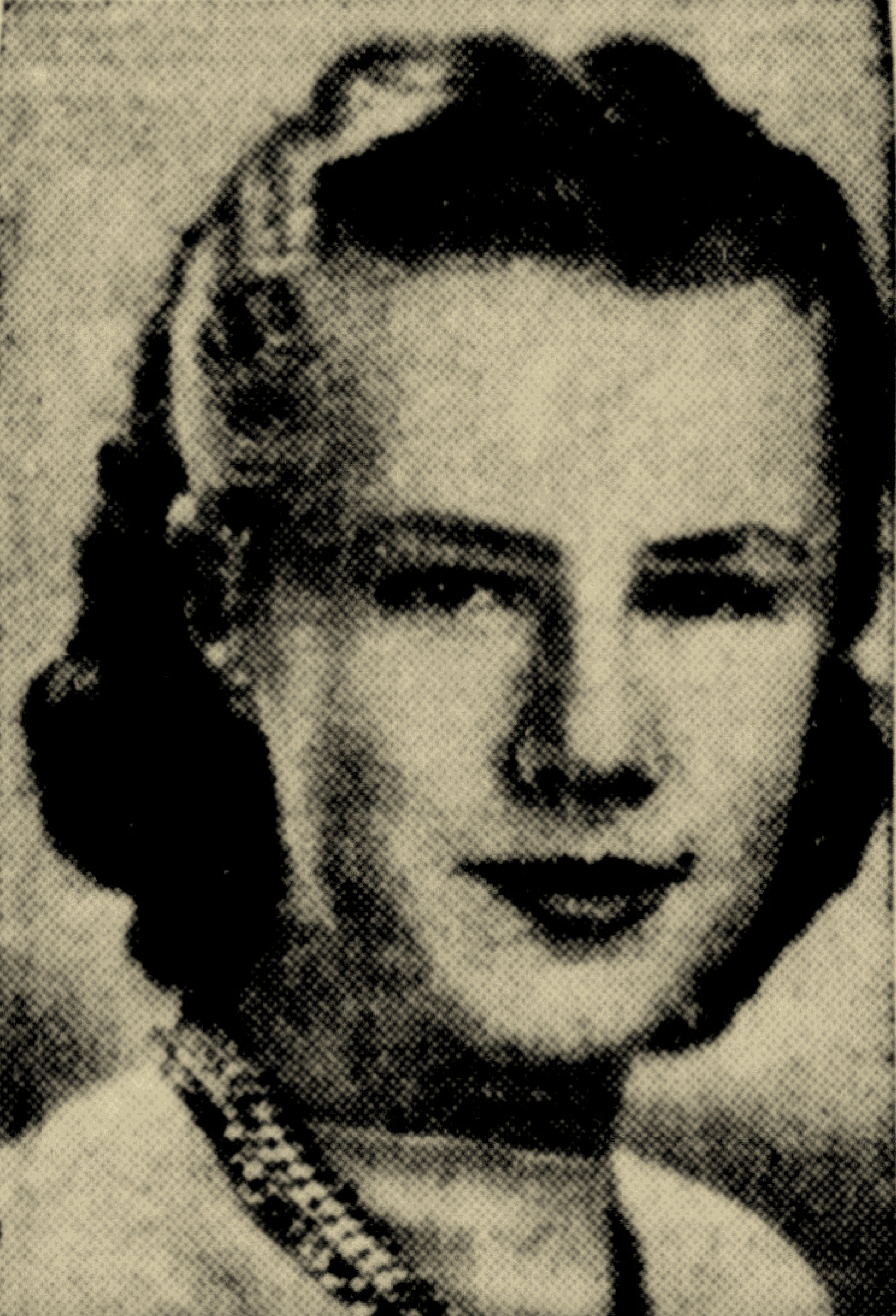
Pictures of Paula Jean Welden.

However, Shirley is not a true crime story.

An homage to Jackson & The Haunting of Hill House? Yes. A fictional story about an unhealthy relationship that inspired Hangsaman? Yup. A way of shining a light on Hyman’s professional accomplishments? Certainly. A true crime novel?

Absolutely not.

It’s a piece of fiction meant to entertain.

The second, Merrell started intimating a resolution to Paula Jean Welden’s case, which, btw begins on page two; Merrell should have changed Paula’s name. Just as Jackson herself did in Hangsaman and The Missing Girl. Especially since I don’t believe, as I haven’t found any evidence on her website or in the handful of articles about Shirley, Merrell actually considers Jackson a viable suspect in the disappearance of Paula Jean Welden. 

Albeit Merrell does mention Paula in the last paragraph of the Acknowledgments, “….I must acknowledge Shirley Jackson and Stanley Edgar Hyman. I have conflated their residential history, and restructured facts and details to serve the purpose of my story, much as Shirley did with the story of Paula Welden….” An acknowledgment that is in no way good enough for turning Paula into so much grist for the mill, a plot device, a means for our main character Rose to prove her loyalty to Merrell’s version of the late great authoress.

And this is the crux of my problem with Shirley

Would I place Shirley on my recommended shelves if the bookshop was still open? No. And this makes me angry because there are so many things to like about this book. But I cannot get over the callous indifference shown to Paula Jean Welden. A real person who, chances are, lost her life on the Long Trail back in 1946. A girl who did nothing to deserve the cheap insinuations Merrell wove into the plot of Shirley — other than being attractive, vanishing without a trace, and choosing a college that happened to employ a professor who apparently enjoyed bedding his students.

*(I’m not taking a swipe at the police here. When Paula vanished, Vermont didn’t possess a State Patrol. (Though this case, plus four other unsolved missing persons cases from what’s now dubbed The Bennington Triangle, directly led to Vermont forming one.) Thereby leaving the initial stages of the investigation to the local Sheriff — who’d lost his reelection bid less than a month before Paula vanished. And whom, according to Connecticut State police detectives who were put on the case at the request of Vermont’s Governor, didn’t keep a single written record detailing any of the efforts, leads, or witnesses interviewed before their arrival — ten days after Paula was reported missing. The pair of detectives are the ones who shined a light on the lame-duck Sheriff and his poor handling of Paula’s case.)

My 52 Weeks With Christie: A.Miner©2023

Cooking With Christie: Seaweed

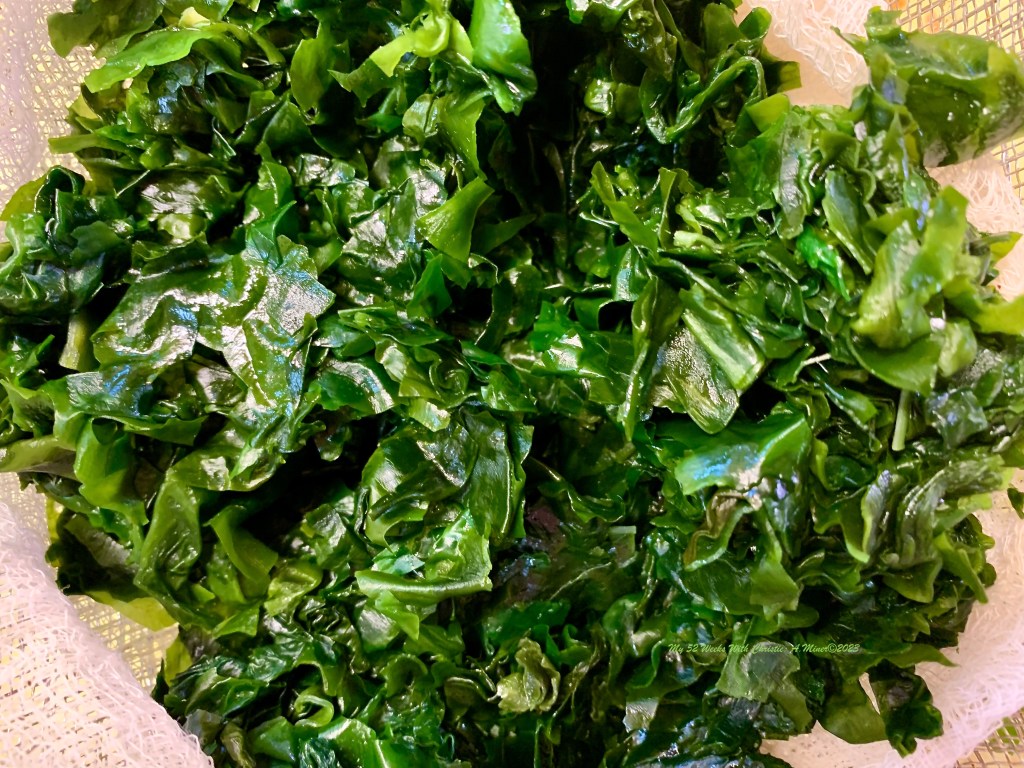
This Week’s Recipe: Wakame Seaweed Salad

Inspiration: Wakame Seaweed Salad is the second recipe Good Eats, the tv show, inspired me to make after my day of furious lemon themed bakes! Unsure of what exactly I was looking for at my local Asian grocery store, I decided to make my first purchase of dried wakame seaweed over the interwebs.

Watching the seaweed rehydrate is a fun to watch as Alton Brown said!

Here’s the thing: This recipe doesn’t contain many moving parts.

As I’d already planned on replacing the radishes the recipe requested (thanks, stupid, stupid allergies), when I realized we’d used the avocado the night before for our taco Tuesday tacos, it didn’t require much effort to pivot the side dish that much further.

Though happily, out of the eleven ingredients used, I only substituted two. So from a numbers standpoint, that’s not bad. Right?

Hopefully, Alton Brown won’t mind.

In any case, in addition to called-for carrots, I chopped up a red bell pepper and part of a zucchini….and it turned out pretty tasty. Though next time, I will reduce the amount of seaweed slightly and increase the veggies so they’re roughly equal. (I like veggies.)

Christie: Colonel Race and Mr. Harley Quin are the only eaters who are adventurous enough to try/eat a seaweed salad regularly. I think. Though if Aziraphale, from Good Omens, can enjoy sushi, Poirot might learn to like seaweed salad…..

My 52 Weeks With Christie: A.Miner©2023

Cooking With Christie: Outtake!

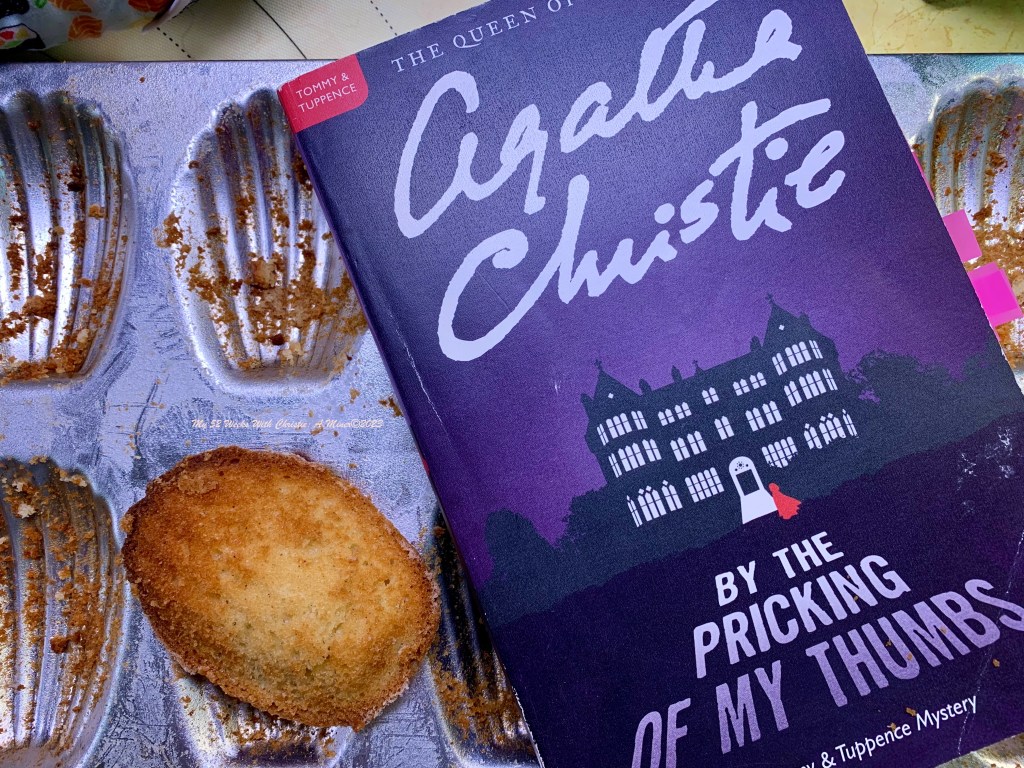
Here’s a sorta failed bake….Lavender & Honey Madeleines.

They didn’t turn out badly, but they were just meh. Somehow I managed to totally tame the lavender flavor so you could barely taste it. I should’ve just adapted my birthday cake madeleine recipe and they probably would’ve turned better…..sigh.