
(A pic of Cordelia Botkin from the San Fransisco Call.)
Last week I touched briefly on the true-crime case of Cordelia Botkin. As it happens, she’s the lynchpin in the spat of turn-of-the-century poisoned candy cases in the US, and let me tell you, her case had it all: A talented reporter who fell from grace, an adulterous affair conducted by an older woman with a younger man (which was far more whisper worthy back in 1898), a US Senator, anonymous letters, and a cross country murder plot which paired arsenic tainted chocolates with the postal system to complete the dastardly deed. (If you want a more comprehensive account of Cordelia Botkin’s misdeeds, check out episode #134 of the Poisoner’s Cabinet podcast.)
Unsurprisingly, newspapers across the country splashed Cordelia’s crimes across their pages for years — and the public lapped up every single word.
However, as we now know, this highly publicized poisoning case wasn’t exactly good news for law enforcement. Whilst Cordelia was by no means the first poisoner to mail a box of toxic sweets in the hopes of dispatching a rival, a wealthy relative, or the perpetrator of past slights — she was by far the most (in)famous. Convicted twice, first in 1898 and again in 1904 (after winning an appeal for a retrial), forces of law and order knew it was only a matter of time before copycats began creeping out of the woodwork.
They didn’t need to wait long.
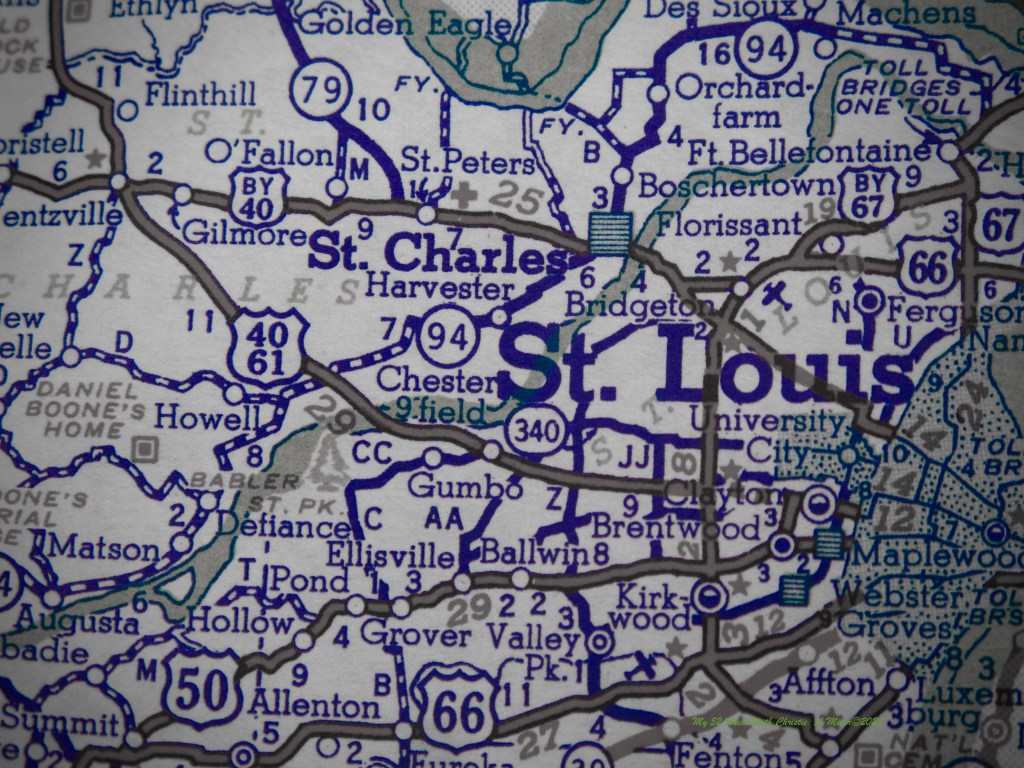
In January of 1899, mere weeks after Cordelia Botkin’s first trial concluded, Florence McVean began suffering from an acute case of nerves. The thirty-five-year-old widow of a prominent doctor, Florence, lived with her mother and younger sister at No. 4015 Cook Avenue in St. Louis, Missouri. After a couple weeks, Florence confided in her sister, Miss McGraw*, the source of her troubles: Poison Pen Letters. Being a good sister, Miss McGraw began intercepting the caustic communiques before her sister could see them, helping restore some of Francis’s peace of mind.
Fast forward a few more weeks, to around February 7, 1899 (the newspapers weren’t clear on the exact date), when an anonymous box of bonbons arrived at the house without a note and addressed to Florence.
Instantly suspicious of the unrequested sweets, Miss McGraw took both the box of chocolates and the stack of malicious missives to Police Chief Campbell and told her sister’s tale. During said recitation, she aimed authorities at one Miss Zoe Graham — to whom Miss McGraw, Florence, and their mother firmly believed was the author of all. The question was, why? Why would the twenty-two-year-old daughter of a prominent St. Louis plumbing contractor stoop to such crimes and misdemeanors? The answer, of course (sigh), was a man. Doctor Glasgow, a well-respected physician & eligible bachelor, had been calling on both Zoe and Florence.
Obviously, Zoe wanted to keep Florence from nabbing the catch of the county.
Knowing from which side his bread was buttered, Sheriff Campbell wisely chose to test the candy prior to tackling the well-to-do Graham family. Submitting the box of chocolates to the City Chemist for testing, the Sheriff quickly learned that each chocolate had been rolled in a powder containing arsenic, imbuing each piece with lethal levels of the metalloid.
Now possessing definite proof of murderous intent, Chief Campbell began looking into the finer points of Miss McGraw’s story. Which inevitably brought him to Doctor Frank A. Glasgow’s doorstep, whereupon, the distinguished young doctor informed him of a massive flaw in Miss McGraw’s theory: His interest in Florence was purely professional. He’d only looked in on Mrs. McVean to treat her for one malady or another — simple as that. Doctor Glasgow further complicated and confused proceedings by producing a sheaf of Poison Pen Letters, which he’d received over the course of a few weeks, all of which warned him to stay away from Florence — as she had “designs” on him.
Taking possession of the second set of noxious notes, determined to compare them to the first, Chief Campbell turned his eyes slowly toward his prime suspect. However, in a surprising twist of fate, the Chief didn’t need to bother pussyfooting around Zoe Graham and her parents. As both she and her mother showed up, unannounced and madder than a pair of wet hens, at the police station to see him. Evidently, Florence and her female relations had been broadcasting hither, thither, and yon to anyone and everyone (including several veiled references printed in multiple newspapers across the region) their suspicions about Zoe. The indignant Mrs. Graham wanted to press charges against Florence for dragging her innocent daughter into the whole affair and their insistence on throwing mud at Zoe’s good name. Whilst the Prosecuting Attorney refused to issue a warrant for Florence’s arrest, Miss & Mrs. Graham’s visit provided Sheriff Campbell with another critical clue — the younger woman’s alibi, which, according to his subsequent investigation and statements on the subject, was cast iron.

(Obviously, not a picture of the actual chocolates, from the limited descriptions I found — I thought they might look something like these. Thanks to Merve Aydın & Unsplash for the photo.)
This development might’ve thrown a spanner into investigation had Sheriff Campbell’s detectives not run down the source of the tainted bonbons. Enter Miss Henley of the Busy Bee Candy Store: Who could not only describe the woman who purchased the box of sweet treats, she could put a name to the face — as she’d kept the mystery woman’s calling card so the store could ship her her purchase. Though Miss Henley’s true coup de grace was her positive identification of the chocolate’s purchaser……
A one Mrs. Florence McVean!
Rolling with this unforeseen twist, Chief Campbell returned to Doctor Glasgow’s doormat and asked if he had any correspondence, notes, or even a grocery list in Florence’s hand. The only scrap the good doctor could share with authorities was an envelope Florence had addressed to him. Upon comparing the exemplar to the handwritten noxious notes, the handwriting appeared similar but wasn’t a conclusive match. Seems the letter writer had taken steps to disguise themselves. Of the countermeasures employed, all are classics: writing in all capital letters, failing to sign the missive itself, and using commonly available stationary (in this case, cheap ruled paper). Piling onto this circumstantial evidence were the postmarks stamped onto the envelopes. Apparently, every postmark indicated the letters were mailed from a postal territory only a stone’s throw away from Florence’s home.
Thoroughly convinced Florence was the architect of her own misery Sheriff Campbell immediately dropped his investigation and turned the case over to the Federal Authorities. (They didn’t say which branch, but I’m reasonably certain it was the US Postal Inspection Service.) Who, in turn, dropped the case as well due to the lack of direct evidence linking Florence to the Poison Pen Letters or the Chocolates. Sheriff Campbell also, to reassure the public there wasn’t a mad poisoner stalking the citizens of St. Louis, presented his findings to the press — who were more than willing to take the story and run.
After the story broke, Florence went into hiding for a few days, leaving her mother and sister Mary to defend her in her absence. When she returned, Florence vehemently denied the allegations against her. Contending to anyone willing to listen, she’d not set foot in downtown St. Louis, where the Busy Bee Candy Shop was located, for several months. Secondly, Florence claimed that poison pen letters continued to arrive in the mail. And why on earth would she continue to write them if authorities didn’t believe her? Miss Mary McGraw corroborated both claims….to no avail. Neither the papers, police, nor the populace of St. Louis were swallowing Florence’s defense.
Then came the night of March 14, 1899.
*(I’ve read no less than four wildly different variations of Florence’s sister’s name in the newspaper articles I referenced for these posts — I’m sticking with Miss McGraw as it was the most legible of the lot.)
My 52 Weeks With Christie: A.Miner©2023
 My 52 Weeks With Christie