
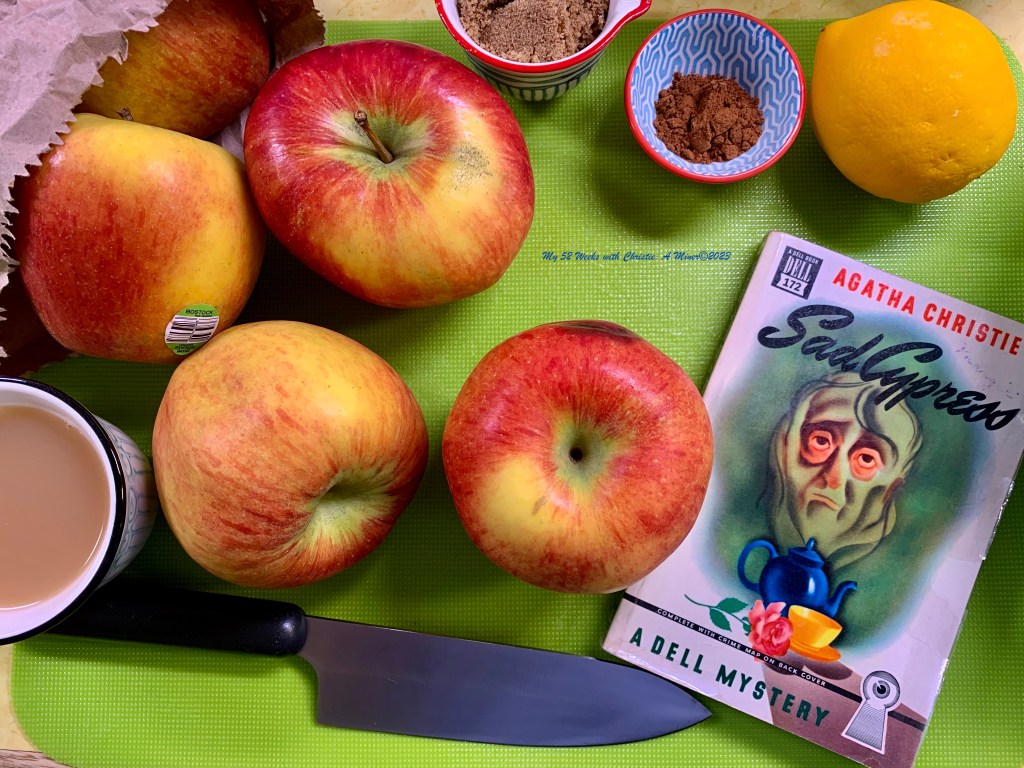
I think this was from my experiment with homemade apple sauce? Pretty sure? Found the pic in my photos and thought I’d post it!

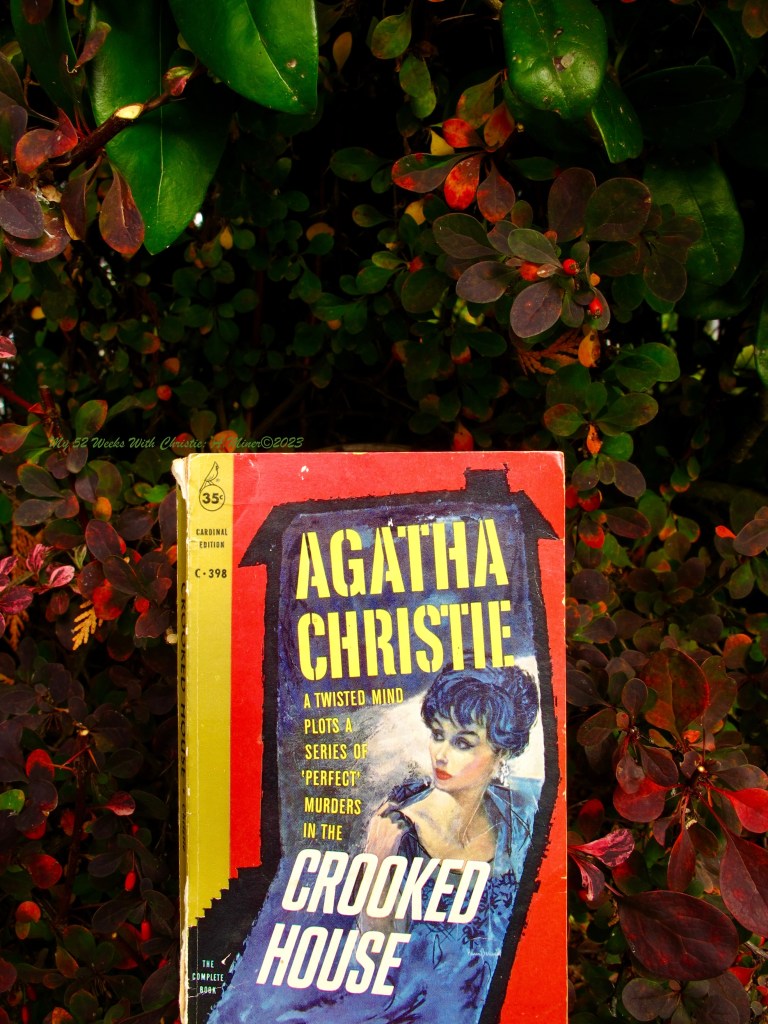
From the Office of Spoilers: If you’ve not read Crooked House by Agatha Christie, I suggest you do — then read my vintage true crime posts as one directly impacts the other. However, if you’ve no qualms with knowing the ending of a book before you begin it, read on. Either way, you’ve been warned.
Now, on with the show.
According to experts, far more learned than I, Agatha Christie’s publisher, William Collins (of Collins Crime Club fame), found the ending of Crooked House so shocking he requested Christie change it.
She declined.
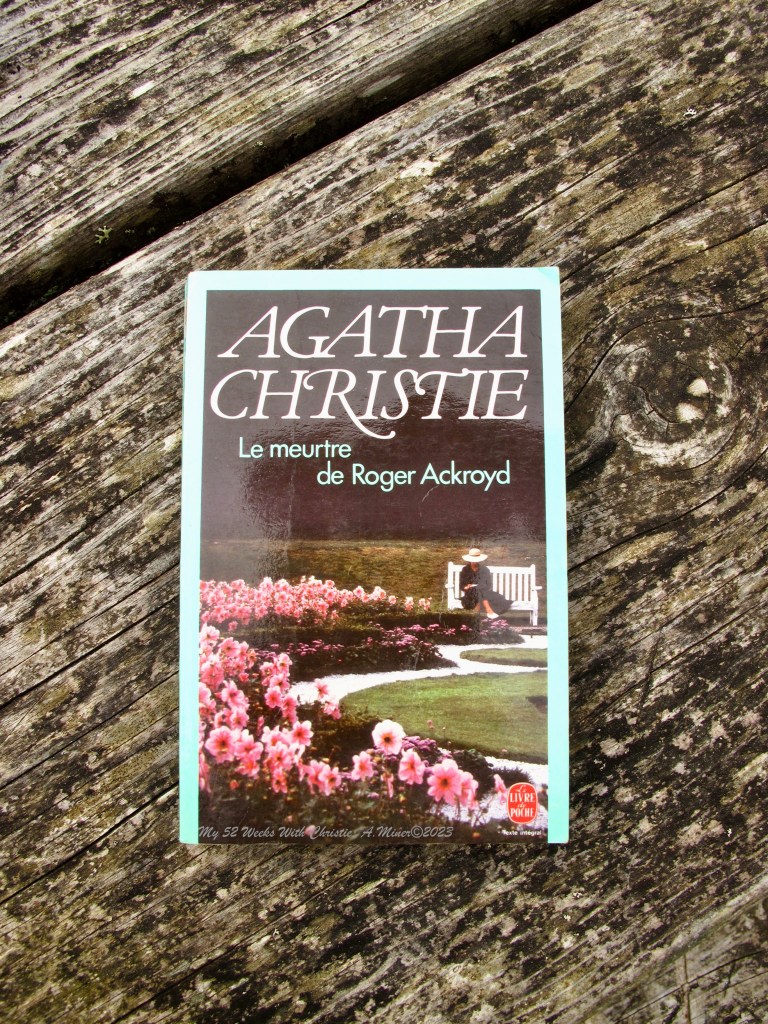
By leaving the novel untouched, Crooked House now stands as one of the best twist endings in Christie’s entire catalogue of works (second only to The Murder of Roger Ackroyd — in my humble estimation). Though, on reflection, I’m not sure exactly why the revelation of Aristide Leonides’ murderer harkens such disbelief. Within moments of meeting our malefactor, they give us their motive; Charles Hayward’s Old Man practically spells out the whys & wherefores a few pages later, and Charles himself catches sight of the penultimate clue. Yet, for the past seventy-four years, the solution continues to blindside readers. And therein lies Christie’s cunning, the ability to mark and exploit our collective blindspots….…..Because how often, really, would you look at a kid and see a poisoner?
Turns out, more often than you’d think.
Some follow the pattern set by Crooked House’s thirteen year old baddie Josephine Leonides, whose motive for murdering her grandfather was his refusal to pay for her ballet lessons. By adult eyes, Josephine’s reason seems childish, and despite her being fictional — she’s not alone in this brand of flawed rationale. In my research for this set of posts, I’ve discovered kids who’ve killed because they were rebuked too often by their mother, because their father thwarted their ambition to become a train robber, and because they wanted to see if their “chubby” playmate’s insides resembled that of pig’s (that was a singularly gruesome crime).
However, it’s the crimes of Gertrude Taylor, a case I’ll explore in more detail in this series, which reminded me forcibly of Josephine’s puerile impulse to pick up a bottle of poison. Not only did she target her nearest and dearest, but she did so so her brother wouldn’t take his upright organ with him when he moved house.
Yet other kids find themselves following (roughly) in the obsessive footsteps of the Tea Cup Poisoner.
Graham Young’s fascination with poisons not only led to an in-depth study into the subject, at the age of fourteen he started experimenting with them….on his family and friends. In some respects, Young’s diabolical deeds are unique. His ability to dazzle druggists with his knowledge to procure deadly substances like thallium, antimony, atropine, aconitine, and digitalis sets him apart from most other child poisoners.
However, the overwhelming obsession that led to Young’s abominable “experimentation” is not.
Seventy years before and across the pond, another fourteen-year-old named Ella Holdridge found herself utterly transfixed, not by poisons, but by death. Whilst her family and friends considered it an odd fixation for a young girl, no one thought much about it. Until the summer of 1892, when, due to a distinct lack of local funerals she could attend, Ella took it upon herself to supply the local churchyard with a fresh corpse….Another case I’ll cover in the next few weeks.
Above and beyond Gertrude Taylor and Ella Holdridge’s ages, alleged crimes, and underdeveloped moral muscles — one more feature unifies this pair of kid killers: A self-made man who built his empire upon the back of dead rats.
Ephraim Stockton Wells.
My 52 Weeks With Christie: A.Miner©2023

Inspiration: I love baking. I relish making things others delight in eating….But otherwise, the final result isn’t particularly important to me. It’s the making process I enjoy.
Hence, I give the majority of bakes away to others.
One of the primary recipients of my efforts is my husband’s coworkers. Normally, I bake and send whatever tickles my fancy. However, in a rare instance, they sent me a request: Could I bake something celebratory?
No problem!
After hitting my cookbook library, I found this recipe from The American Test Kitchen: Ultimate Chocolate Cupcakes with Ganache Filling. And as advertised — they are super chocolatey! They are also the most popular bake of everything I’ve sent along so far!
(Though I used their regular chocolate frosting, not the buttercream in the video, as I was running low on time the day I baked the cupcakes!)
Even better, they are actually easy to make.
Christie: If decorated with better piping or decorations, I could see Poirot indulging in one of these tiny cakes. As it is, I think Miss Marple might partake of mine at a church fete. Tommy & Tuppence would probably dig in if these were served at a school bake sale!
My 52 Weeks With Christie: A.Miner©2023

This is the magazine where I found the recipe in!


From a sheet pan supper that mostly worked…..
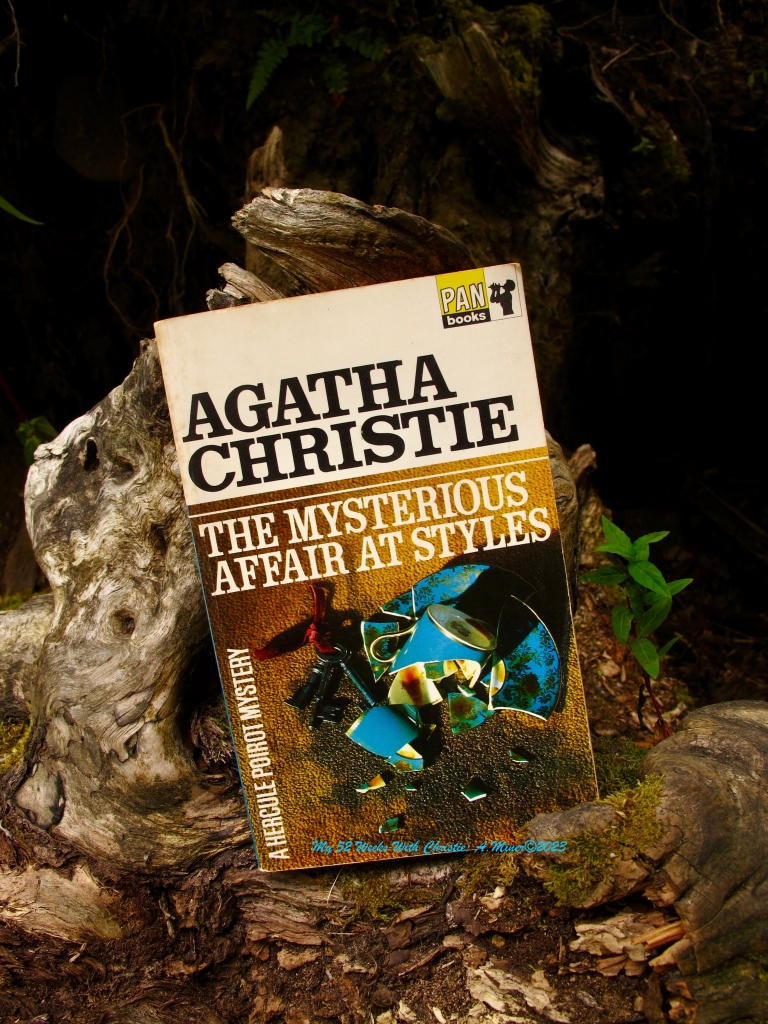
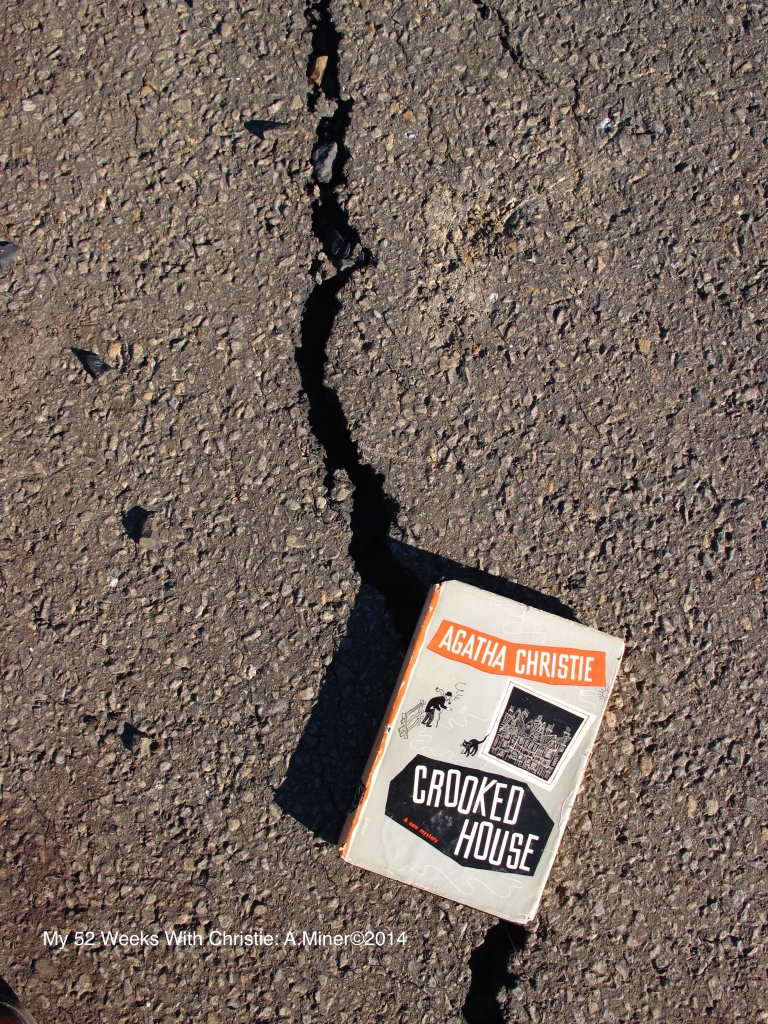
Crooked House
First Published: In Cosmopolitan (US magazine) in 1948.
I Read: Crooked House. Harper, New York, 2011.
Series: Stand Alone.
Detective: Charles Hayward
Summary: Charles and Sophia met overseas, fell in love and were separated by their duties in the War. They decided if they lived through it and still liked each other then they would get married. Two years later the War is over, both are back in England and Charles meets with Sophie to reaffirm their arrangements. While the war is finished, there is an unexpected battle on the home front — Sophia’s grandfather, patriarch of the Leonide’s family, has been murdered. The whole family is convinced his second, and much younger, wife is the culprit. However there is little evidence against her, and everyone who lives in the house had a pretty good motive for murder. And much to Charles’s consternation, Sophia refuses to marry him until the mystery is put to bed, giving him a very strong motive to see the whole business through…
Review:Much like the Murder Of Roger Ackroyd, either you know how the book ends or you do not and I cannot really review it for fear of spoiling the ending. Suffice it to say I thought this book brilliantly clever; you can tell Christie had fun while writing it. The mystery itself is a bit different, as the Rules of Fair Play, which normally Christie strictly adheres to, she took a bit of liberty with them in this mystery. You see, there are really only two clues which give a hint as to who the culprit is and even then they are a bit convoluted. The ending makes complete and utter sense when you read it, however the ability to reach the correct conclusion on your own, well, let’s just say it is a bit more difficult than usual.
One of the best characters in the book beyond the Charles Hayward and Sophia was Sofia’s great aunt Edith de Haviland. Edith was the only one in the whole of the Leonide family who figured out who committed the murder. Charles thought, “I had a suspicion that there might be more going on under the battered felt hat than I knew.” (pg. 35), and he wasn’t wrong in his assessment of Edith. Which brings us to an important point, Christie’s use of spinsters in key roles in her mysteries.
It all started when Michael Morton cut Caroline Sheppard from the stage adaptation of The Murder Of Roger Ackroyd and replaced her with a young girl (“for plot purposes” is the phrase I heard when I read this snippet of information, it has no basis in fact — just in my imagination). Caroline Sheppard was the spinster sister of Doctor Sheppard; she seemed abreast everything going on in the village without ever leaving her house. This directorial cut catalyzing Dame Christie into giving a voice to those women who never married and never had children (and were past reproductive age) — in other words the spinster.
Using notes from Caroline Sheppard and her memories of her grandmother (& her grandmother’s friends) — Christie created her second beloved sleuth, Miss Marple (btw Christie is one of the only authors to have created two equally famous sleuths). Christie was not alone in putting this group on the literary map; Miss Marple is just arguable one of the most popular. As a group I find them an interesting read, as they are allowed to do things which married or single ladies are not. And obviously with her use of Edith in Crooked House, Miss Marple is not the end of the line in Christie’s use of this type of character, I cannot wait until I meet another spinster!
Random (And Almost Relevant) Facts: During the period in which Christie was penning her mysteries, there were a plethora of spinsters populating the world. Why? World Wars One and Two had decimated the numbers of eligible males. Millions of men died at sea, in trenches and on beaches — creating a “surplus” of marriageable women back home after the wars. This allowed for the rise of respectability among this group, since mathematically speaking it was infinitely harder to “find” a husband (or for that matter remarry, since so many husbands and fiancees died as well).
And since I am on a roll….
Mother Teresa is not a spinster. While researching spinsters I found many lists which included her on them. Seriously. Greta Garbo, Coco Chanel, or Elizabeth the First all can be considered spinsters, I am not sure I would have ever used that term to their face (because I am not stupid), but the term is applicable. Mother Teresa is different, she willingly took herself out of the procreation and marriage pool when she took her vows, to become a nun. Which is different than either choosing not to or not having the opportunity to marry and/or having kids. I just needed to point this out, since I guess I had stronger feelings on the use of the word “spinster” than I thought….
Favorite Quote:
“It was rather like the exit of a bumblebee and left a noticeable silence behind it.” (pg. 55)
Interesting Note: This is one of the hardest edged solutions I have read so far in her books. When it was first published her publisher considered it so controversial they asked her to change it. Christie refused and the book is better for it (she’d been writing for thirty years at this point, so she could get away with saying no)!
Also this is one of the few Christie mysteries which has never been made into a play, movie or tv show. The BBC made it into a radio play in 2008; but so far that’s it!
Cheating: Still no cheating. I hear London and Edinburgh are lovely at Christmas time……
A.Miner©2014
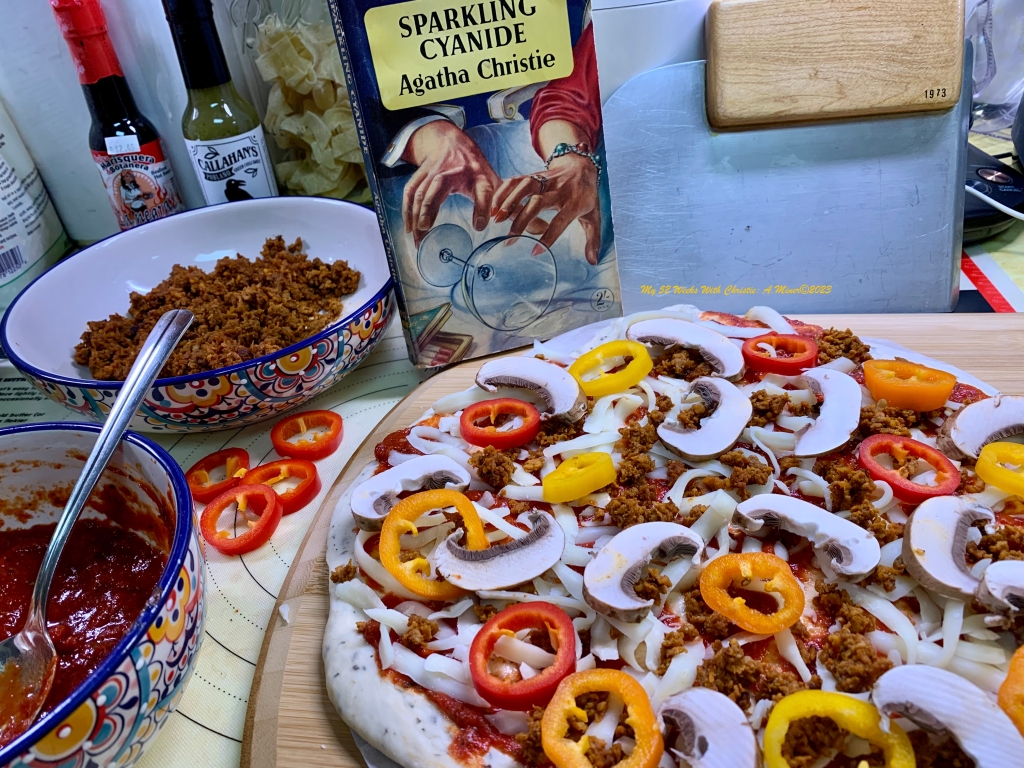
Inspiration: Recently, my favorite pizza place closed unexpectedly, leaving a wedge-shaped hole in my heart. Since it was one of the few pizzerias I could actually eat at (as it used non-enriched flour), I’ve been missing my bi-weekly pizza runs!
Deep Calming Breath
I’ve tried making pizza dough in the past, and it was…okay. Not bad, just not great either. So I decided to up my pizza game and bought the following book.

King Arthur’s Baking School has all kinds of basic recipes for simple and complicated bakes, accompanied by helpful hints, tricks, and advice.
So, I tried the book’s pizza dough recipe….with a few tweaks. To add some extra flavor, I mixed in dried basil, majorum, and parsley. I also swapped half the all-purpose flour with bread flour to give the dough a bit more chew.
And it turned out beautifully!
Then I discovered the pizza sauce I thought was in the cupboard magically disappeared. (I swear it sprouted legs and wandered off.) Undaunted, I winged it. Using regular spaghetti sauce fortified with tomato paste (to thicken it and make it taste more tomatoey), I added extra herbs, a dash of sugar, and a healthy amount of gochugaru pepper flakes.
Helpful Hint: Make a sauce like this the day before. It will taste oodles better the next day as all the flavors have time to marry together.
Spreading my improvised sauce, I loaded the pizza with veggies and vegan chorizo and baked it….It turned out great! With more practice, it might even become excellent!

Doesn’t it look pretty!
Christie: Honestly? I’m not sure I can see any of Christie’s detectives making this…Save Superintendant Battle who I think would like feeding his family something that requires time to make and a bit of improvisation.
 My 52 Weeks With Christie
You must be logged in to post a comment.