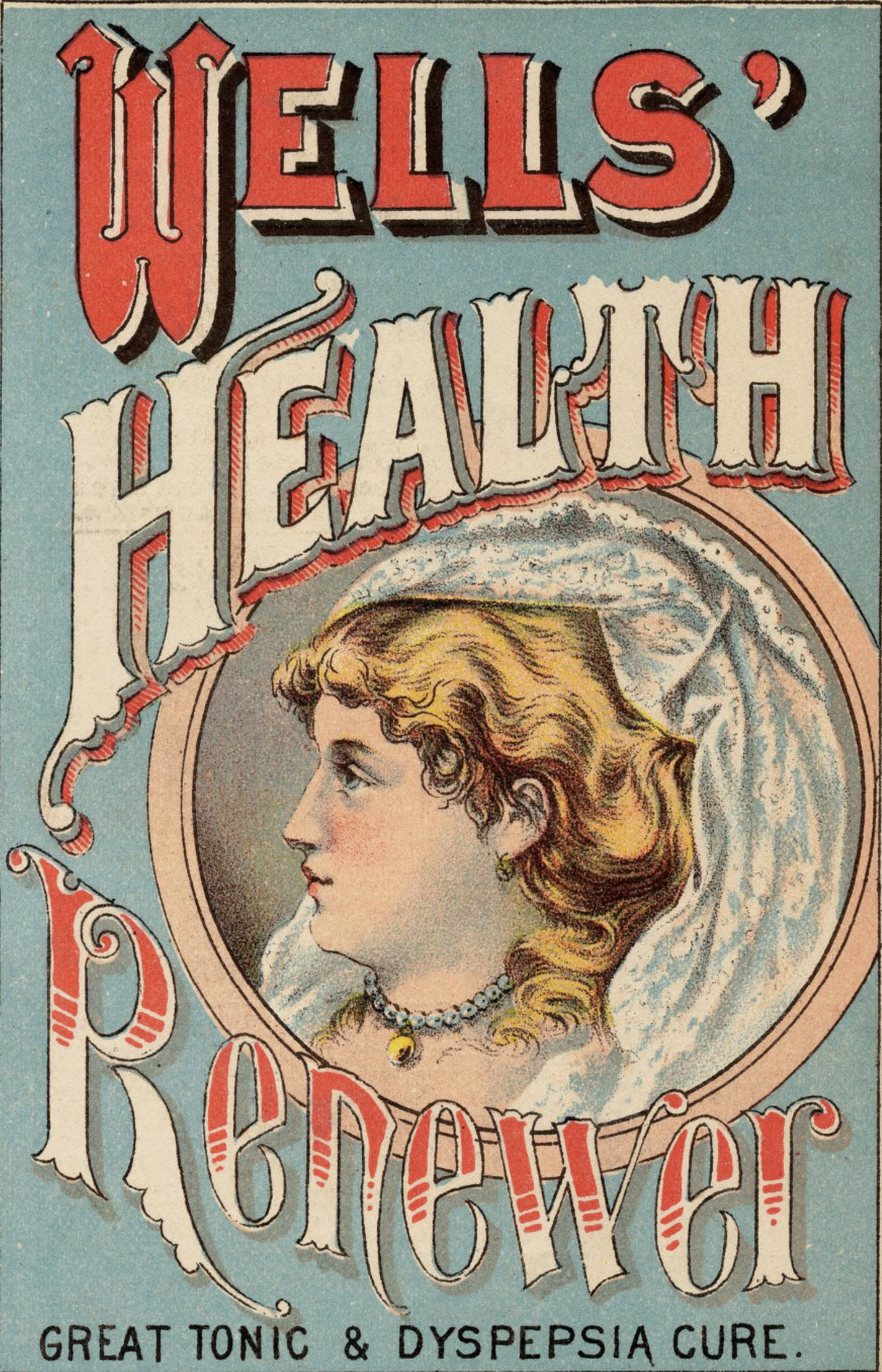
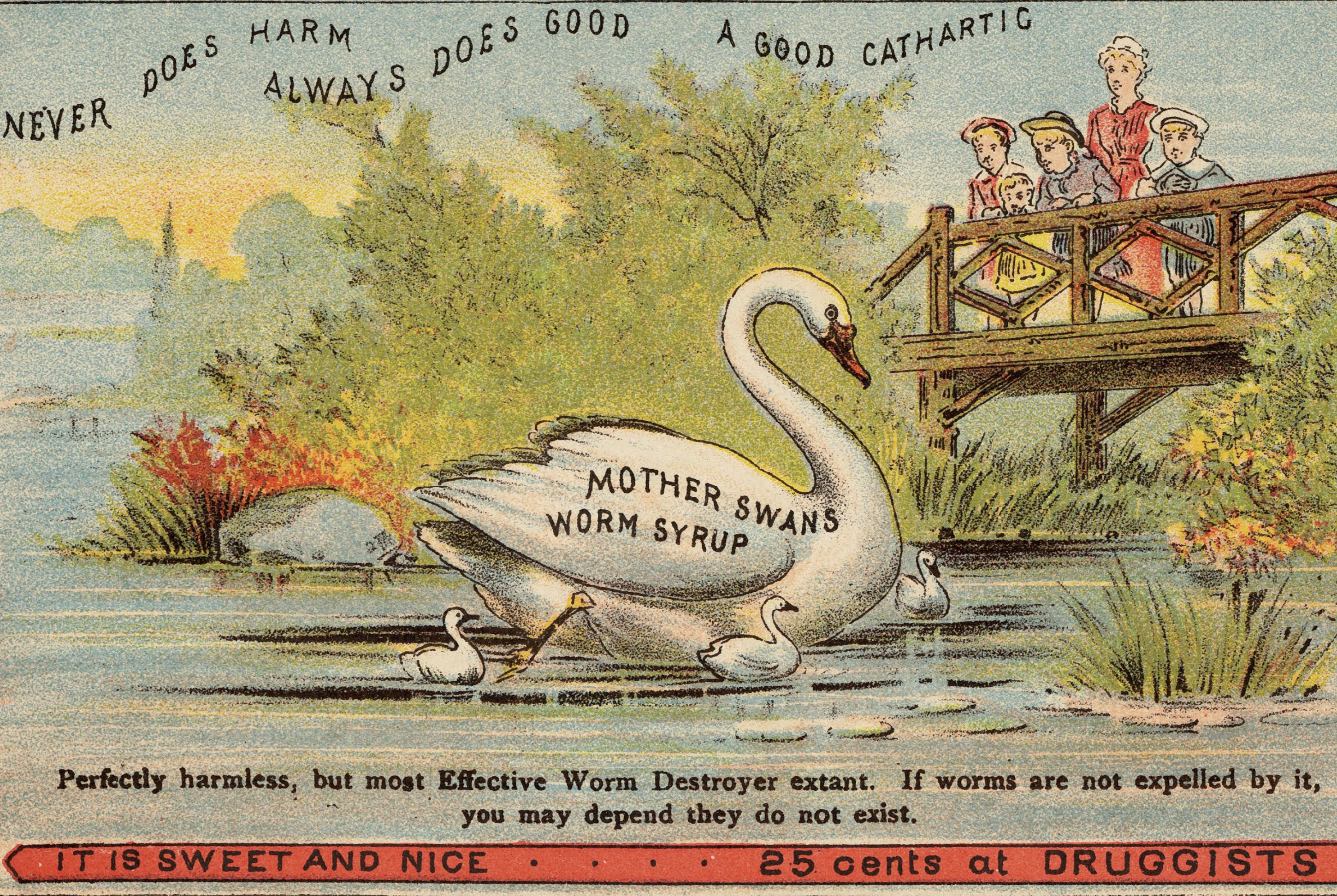
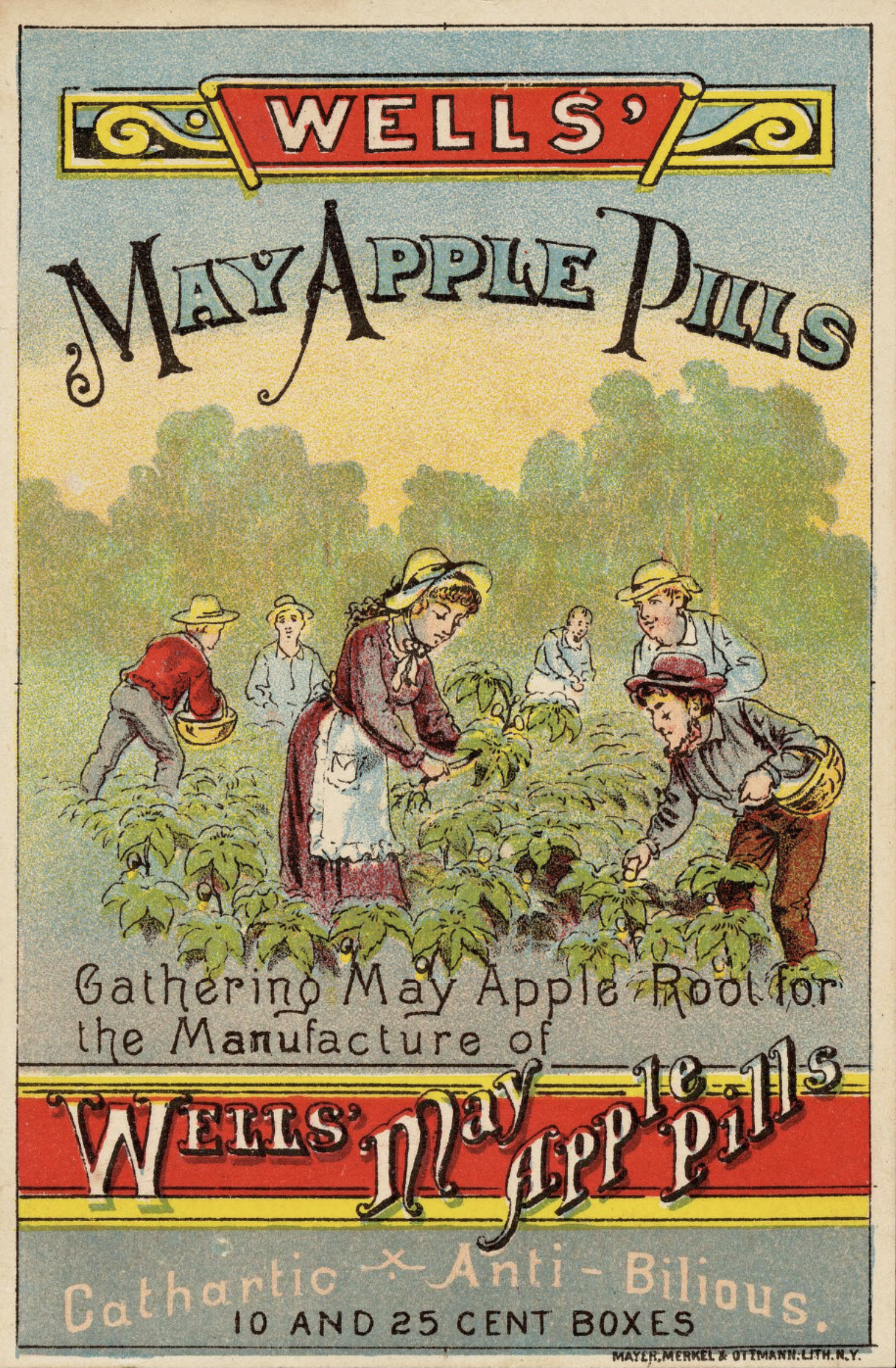


Since using dangerous and/or addictive compounds in patent “medicines” was common and we know Ephraim had large quantities of arsenic on his hands, I wonder how many of his other products contained traces of this dangerous element. A number of the claims made in the ads for Wells’ beauty aids and “medicines” sound remarkably similar to the effects (the crazy people during the Victorian era) achieved by applying arsenic to their skin or by eating small quantities.
Though I’ve no clue if Ephraim Wells added arsenic to any of his pills, tonics, or syrups — I do know what he put in Wells’ Hair Basalm for Gray Hair:
“…a perfumed mixture of sulphur with aqueous solution of lead acetate and glycerol…”
In 1912, the US government via the 1906 Pure Foods and Medicines Act caught up with Ephraim’s claims that his basalm was “harmless and not a dye.” The chemists not only proved the basalm contained dye but also consisted of lead. A heavy metal that was finally proven highly toxic in the mid-1800s. Making me wonder how many women suffered lead poisoning from the habitual use of Wells’ basalm.
In any case, Ephraim plead non-vult or no-contest to the charge. Though, unlike the majority of his contemporaries tried for similar offenses, the court didn’t levy a fine against Ephraim.
Probably, and this is speculation on my part, because he was pretty sick at that point in time.

My 52 Weeks With Christie: A.Miner©2023
 My 52 Weeks With Christie