
A pic of my cranberry sauce components!


Roughly forty years after the publication of Moby Dick and seventy years before Graham Young’s initial poisoning spree — a fourteen-year-old girl named Ella Holdridge lived with her family and three siblings in the small town of Tonawanda in Erie County, New York. Unlike Captain Ahab, who was obsessed with a great white whale or Graham Young, who’s idée fixe was poisons — Ella was spellbound by death.
Whenever she discovered someone in the community passed away — Ella would (according to her stepmother) literally jump for joy, clap her hands, and exclaim, “He’s Dead! He’s Dead!” Her excitement not only stemmed from the death itself but from the knowledge there would be a funeral, a wake, and a fresh grave in her near future. Because, irregardless if she was invited or not, if Ella could attend — she would turn up….Shouldering her way to the front of the queue at the viewing, then to the grave’s edge to witness the coffin being lowered into the earth.


(Some illustrations of Jack the Ripper from UK papers.)
It’s unclear from where Ella’s fascination with death and funerals sprung. Perhaps Ella dimly recalled watching her mother slowly succumb to TB, the inevitable funeral, and the wake that followed. Though as Ella was only 2 or 3 years old at the time, those memories would be murky — but still echoing somewhere within her mind. Or maybe her interest was sparked by newspaper reports of Jack the Ripper’s bloody exploits in Whitechapel — the serial killer’s frenzied attacks roughly spanned the years between Ella’s ninth and thirteenth birthdays. It’s also possible Ella was just naturally inclined towards the macabre. Irregardless of whatever sparked Ella’s interest in death and all its trappings — she was hooked.
Unfortunately, in the summer of 1892, a drought occurred in the local cemeteries — i.e., a distinct lack of funerals.
Okay, so here’s the thing: During my research, I found a number of GLARING inconsistencies in the news reports pertaining to this case. So, I fact-checked this case as well as I could after 130 years….Which led to a vexing urge to box the ears of the original reporters….

(From a 1866 Map of Tonawanda Village)
Unlike some of the articles I’ve read from around this time, none of the newspapers (I found) list Ella’s address. However, the Buffalo Weekly Express does mention Ella’s neighborhood. Using a helpful map ap, I discovered three cemeteries lie less than a mile from the cross-streets mentioned: Tonawanda City Cemetery, Saint Francis Cemetery, and Salem Church Cemetery. All of whom were in operation at this time and aligned with Ella’s stepmother’s intelligence.

(The Three Cemeteries Ella would visit from a 1915 map of the town of Tonawanda)
Next, I found between the three aforementioned cemeteries, there were only 14 burials between January – April, 0 in May and 2 in June. Assuming Ella could only attend a fraction of these 16 funerals — due to things like school, family commitments, and whether or not the deceased family actually held a service. I imagine Ella was desperate to satiate her obsession by the time July of 1892 rolled around.
Which might help to explain what happened next.
Unlike Graham Young, whose idée fixe I sincerely doubt would allow him to stoop to using a poison as inelegant as Rough on Rats (unless he’d no other options, in other words, during his incarcerations) it suited Ella Holdridge’s purposes just fine.
On July 7, 1892 — while playing with two-year-old Leona Stermer, Ella gave her a glass of adulterated water. Within hours, Leona was writhing in pain and violently ill. Leona’s parents called in Dr. Harris, who thought she’d contracted cholera morbus (what we now call gastroenteritis) and treated her thusly. Sadly he was unsuccessful as Leona died two days later. (And yes her name is Leona Stermer — not Louisa Sterner, Zoena Stuermer, or Lena as reported in various newspapers. It took some serious crosschecking, but I finally pinned down Leona’s correct name.)
Unbeknownst to the Stermers and Dr. Harris — whilst Leona lay dying, Ella would regularly sidled up and surreptitiously watched the goings on inside the house. After gauging the distress she’d witnessed, Ella would dash back home and say things to her stepmother like: “I guess she’d almost dead now!” (Interestingly enough, this behavior lines up with Graham Young’s during his second poisoning spree. Apparently, he would repeatedly call the hospitals, where his colleagues lay dying of the poison he administered to them, to “check” on them. Presumably so he could update his scientific journals with the most accurate information he could obtain.)
Needless to say, when Leona Stermer was buried on July 11, 1892 — Ella was front and center during the planning, preparation, and execution of Leona’s funeral rites….And no one, not even Ella’s parent’s, suspected anything was amiss with the toddler’s death.
Yet.
My 52 Weeks With Christie: A.Miner©2023

Inspiration: A few weeks back, I wrote about a recipe from the Pioneer Woman called the Veggie Tot Pie. It was so popular in this house I quickly ran out of tater tots to top the dish with….then came the unexpected gift of some stew meat….and I decided to use the Veggie Tot Pie as my inspiration and started throwing things into a pot.
Not only does the variation now contain beef, I also added more spices, veggies, lentils, and barley to the party!
And it turned out great! Especially when eaten with a piece of buttered bread.

From the Office of Full Discloser: I was impatient to get the dish done & dusted and didn’t want to wait eight hours for the crockpot to work its magic. Hence why, I first soaked the stew meat in a baking soda solution for 15 minutes, rinsed the beef off, and then simmered the treated meat in a can of Campbell’s Beef Consomme (diluted with a half-can of water) and fresh squeezed lemon juice for about 45 minutes.
If you want even quicker results, sub the stew meat for your favorite meat alternative! Which takes the cook/prep time to about an hour and a half from start to finish. (Most of which is just simmering/stirring time as the lentils and barley need the time to soften up.) However, you’ll need to taste test the final results to ensure the dish contains enough salt, as (thanks to the consomme & broth) I didn’t need to add any extra salt to the original iteration.
Christie: I can easily see Tuppence whipping up a stew along these lines, as the stew’s chiefly created from pantry and fridge staples!


Captain Ahab & The Whale — a bleak tale about a great man who gradually immolating every part of himself on a pyre of obsession until all that remains is ash and a single all-consuming desire for revenge. Beyond laying bare a treacherous side of the human psyche, Melville’s masterpiece, Moby Dick, shows us how a person caught in the grips of a powerful obsession can justify nearly anything — including the sacrifice of a ship and its entire crew (save Ishmael). While I realize scouring the high seas for a giant white leg-eating sperm whale doesn’t occupy most people’s minds the way it did Ahab’s — it’s still a compelling tale…..and a cautionary one as well.
Especially when it concerns children.
Hyperfocusing on things like space, dinosaurs, books, animals, or other similar subjects is a well-known phenomenon. This intense interest in a single subject gives natural parameters for their exploration of the world while allowing their curiosity to flourish. This zeroed-in interest often dilutes or fades when they hit school — as they’re exposed to all sorts of new ideas, people, and tedium.
However, sometimes, just sometimes, a kid’s fascination takes a darker turn and doesn’t dissipate like so much smoke in the wind.
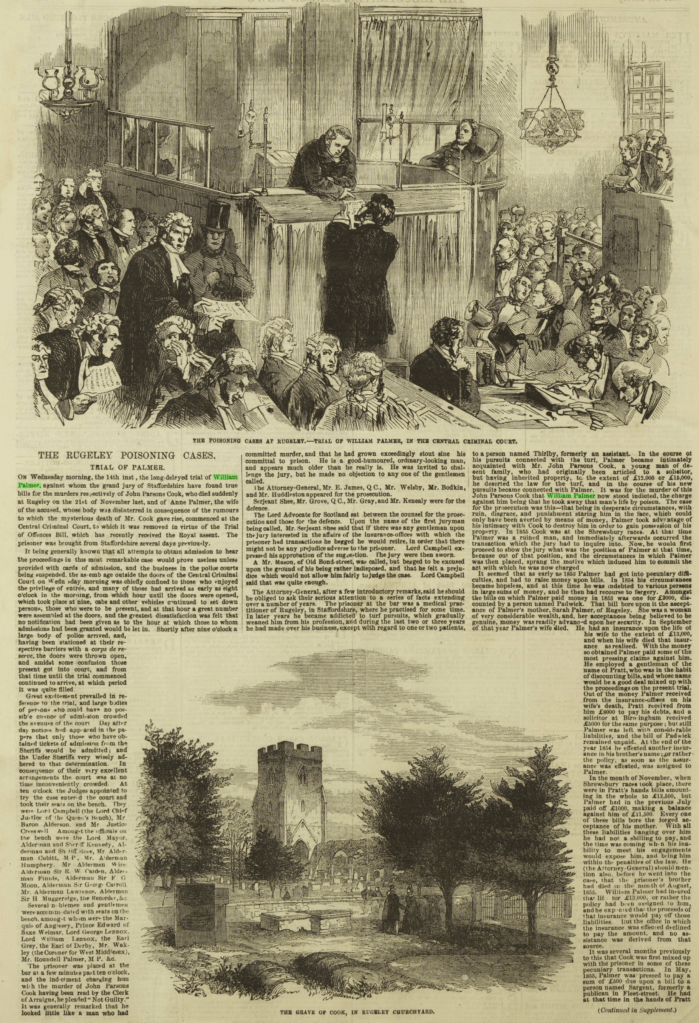
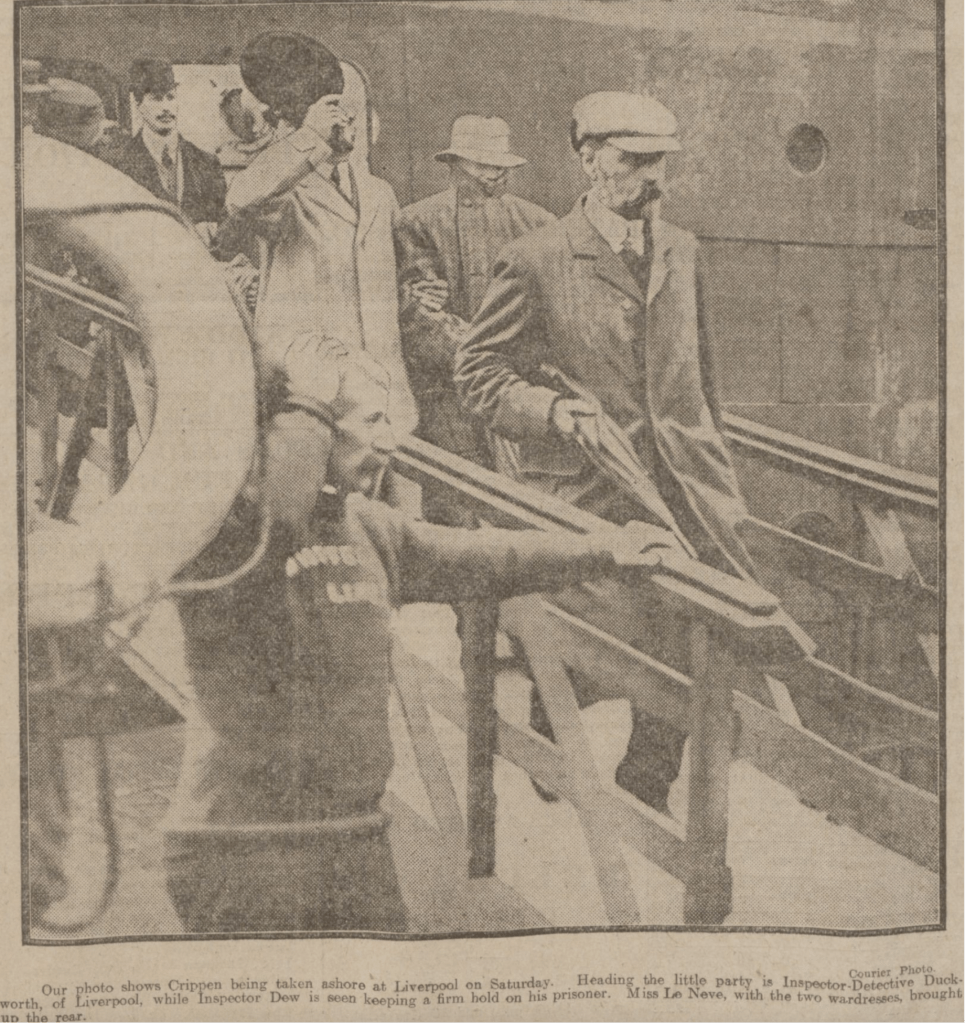
(The pics of the trial of William Palmer and the arrest of Dr. Crippen.)
Couple this all-consuming passion with immature moral muscles — you occasionally find yourself facing a kid like Graham Young. Who started wending his way down the pathway of obsession at an early age. It started with reading true crime (no biggie). Then, he became a fanboy of either Dr. Crippen or William Palmer and their poisons. (I’ve read accounts identifying one or the other as Young’s role model. Whichever way it went — labeling either as your idol isn’t exactly great.) Not to mention his enthusiasm for black magic and the Nazis.
Then Young found his calling.
At the age of twelve, Young entered secondary-school and started taking chemistry — which dovetailed nicely with his fascination with toxic metalloids, plants, and elements. At first, he satiated his idée fixe by studying books on advanced toxicology. Then, at the age of thirteen, armed with an extensive knowledge of both subjects — Young hoodwinked a local chemist into selling him antimony, digitalis, arsenic, and thallium.
Whereupon Young moved on to the practical application of poisons.
At first, Young experimented on a fellow student, but when the boy’s parents pulled him from school, Young moved on….And began conducting his research on his relations. Amongst other appalling familial poisoning episodes: Young sent his sister, Winifred, to the hospital by lacing her tea with belladonna. Next, Young committed what he thought of as a perfect murder by slowly killing his stepmother with thallium. (While Young confessed to Molly Young’s murder nine years later, this claim has never been verified — mainly because, at Young’s suggestion, her remains were cremated.) At Molly’s wake, Young tipped antimony into a jar of mustard pickles, sickening another relative. Finally, Young turned his full attention onto his father, whom he nearly sent to an early grave via antimony poisoning less than a month after murdering his stepmother.
However, Young’s preoccupation with poisons was not unknown.
Aware of the trouble befalling his family and others around him, Young’s science teacher searched his school desk and found several vials of poison and notebooks detailing things like dosages and symptoms. Taking his suspicions to the school’s headmaster, the two devised a trap: They arranged an interview between a careers counselor, who was actually a trained psychiatrist, and Young. During their discourse, the professional headshrinker managed to get Young to reveal his comprehensive and sweeping knowledge of his favorite subjects — poisons and toxicology. Weighing his troubling conversation against the spat of the “illnesses” plaguing those within Young’s sphere — the mental health professional took his misgivings to the authorities……Who saw fit to arrest Young on May 23, 1964, at which point they found his store of thallium and antimony.
In short order, Graham confessed, pleaded guilty, and became one of the youngest inmates in Broadmoor’s history at the age of fourteen. (For Those of You Who Don’t Know: Broadmoor’s the oldest high-security psychiatric hospital in England and second only in fame/infamy to Bethlem Royal Hospital, aka Bedlam.)

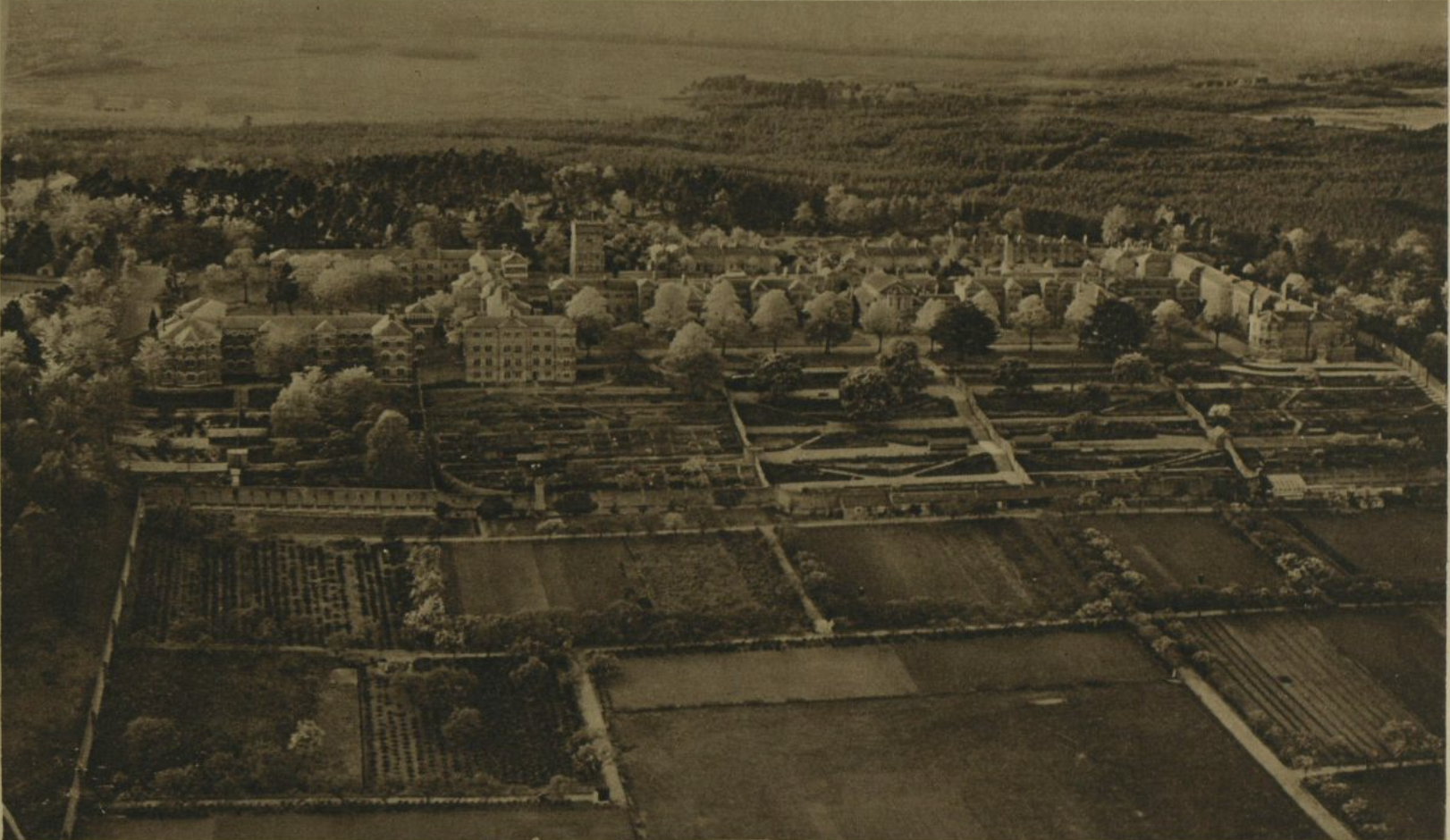
Pictures of Broadmoor the first is from 1867 and the second from 1952.
This change of address barely slowed Young down.
Soon after Young arrived at Broadmoor, another patient died after ingesting cyanide, a nurse discovered his coffee laced with toilet cleaner, and a caustic cleaning powder somehow found its way into a communal tea urn. Whilst an obvious suspect, Young was not brought up on charges in any of these incidences — as it’s unclear if he actually committed them. Young only ceased his claims of poisoning people during his incarceration after figuring out that if he feigned being cured of his fascination, he could win his freedom — which he did in 1971 at the age of (around) 24.
Unable or unwilling to eschew his love of bottles bearing a skull and crossbones, it didn’t take long for Young to return to his old ways.
Mere months after his release, Young once again secured an array of toxics — which he didn’t hesitate to dispense. By misrepresenting himself to a prospective employer, Young obtained a job where no one knew of his past offenses, which allowed him to poison with impunity. Before the shadows of suspicion thickened around him, Young administered thallium or antimony to his coworkers en masse via his tea trolly duties, targeting five individuals specifically and killing two others.

Earning him the moniker: The Tea Cup Poisoner — a nickname Young apparently loathed.
Thankfully, by the summer of 1972, Young was back behind bars — where he’d stay until his death in 1990 at the age of 42. (This is a vastly simplified history of Young’s life and crimes. For a more thorough account of his diabolical deeds, listen to episode #6 of The Poisoner’s Cabinet.)
Whilst the lion’s share of youthful passions don’t end up creating a poisoner, Graham Young demonstrates how many steps beyond the pale an idée fixe can take a kid. But here’s the horrible thing: whilst Young is one of the most infamous killer kids — he’s not the only one who’s journeyed down this treacherous path and left a body count in their wake…..
My 52 Weeks With Christie: A.Miner©2023
 My 52 Weeks With Christie
You must be logged in to post a comment.