Crime & Christie: Louisa’s Ever Dwindling No. of Relations

Despite science finally running arsenic to ground, the cultural memory of the “good old days” when arsenic was fondly known as ‘inheritance powder’ (as it helped part inconveniently living relatives from their fortunes/properties/titles in an expeditious fashion) remained. Egging on those tempted to employ arsenic for their nefarious deeds was the fact that it was available practically everywhere. Above and beyond being able to purchase the uncut stuff from druggists — products like fly paper, rat poison, and Scheele’s & Paris green pigments needed little to no refinement in order to kill. 

Speaking of druggists, at some point between 1889 and 1906, whilst living in Milwaukee, Louisa worked at Herman L. Emerich’s drugstore located at 1603 3rd Street. According to her fellow clerks, Louisa showed a marked thirst for knowledge about all the lethal substances stocked on the store’s shelves. On top of her unofficial education, Louisa’s position also granted her access to said substances. This could’ve allowed her to obtain any number of them without worrying about someone tracing, say, a purchase of pure arsenic or its slightly adulterated cousins, back to her. 

On the topic of employment, above and beyond the insurance payments Louisa collected and her new husband’s wages, by the time 1907/1908 rolled around, Louisa was earning an undisclosed amount of coin via her purported skills as a “spiritualist, medium, and seeress”. Amongst her unknown number of clients was a woman named Mrs. Eugenie Clavett. 

How Louisa entered Eugenie’s orbit or how long she performed for her is unknown. What we do know, thanks to her sister Mrs. Mary C. Nelson, was Eugenie was either already sick or became sick shortly after meeting Louisa. An illness Louisa exacerbated, Mary firmly believed, by coaxing Eugenie into rebuffing the prescription provided by her doctor in favor of one or more nostrums concocted by Louisa herself — only a few days before her death.

From the Office of Fairness: Eugenie’s case only came to light after Louisa was caught. When more often than not, people try to assign every death occurring around a poisoner to said poisoner. Nevertheless, there are four reasons why Mrs. Nelson’s accusation rings true in my mind. 

First, this was not the first time Louisa switched out a doctor’s prescribed medicine for a homemade “remedy”. According to later testimony, young Frieda and Alma both told Milwaukeean neighbors how their mother exchanged the doctor’s prescription for a concoction of her own design during their father’s final illness. 

Second, Louisa accurately “predicted” the day of Eugenie’s expiration — just as she had with Julius, John, and Frieda.

Moreover, right after Eugenie’s passing, Louisa started pressuring her teenage daughter, Mabel, to move from her Auntie Mary’s abode and in with herself. The fact young Mabel inherited $7,000 upon her mother’s death undoubtedly spurred on Louisa’s increasingly pushy demands to relocate. (Happily, the teen declined and lived.) 

Lastly, Eugenie’s probable murder coincides with a lull in familial deaths. 

Deaths that resumed on August 3, 1910. When William Lindloff, Louisa’s second husband, died in Chicago’s Denton Hospital from a brain aneurysm. Oddly enough, after being admitted to the hospital, Louisa barred Dr. Augustus S. Warner, who’d been treating William for a rapidly worsening heart ailment up until this point, from her husband’s bedside. A decision that may or may not have been due to him asking some uncomfortable questions about an inexplicable rash that started spreading all over William’s face and body just before his untimely demise. (Which is one of the symptoms of arsenic poisoning.)

It will amaze absolutely no one that Louisa promptly collected $600 from a mutual aid fund provided by William’s employer, McCormick Harvester Company, and a $1,000 life insurance policy underwritten by the Modern Woodmen of America.

Now, with six possible murders at her door, five of which netted her approximately $7,950, you’d think Louisa would quit while she was ahead. However, money ran like so much dry sand through her fingers, and by 1911, Louisa was again in desperate need of cash. Whereupon her gaze turned to her second eldest daughter, Alma.
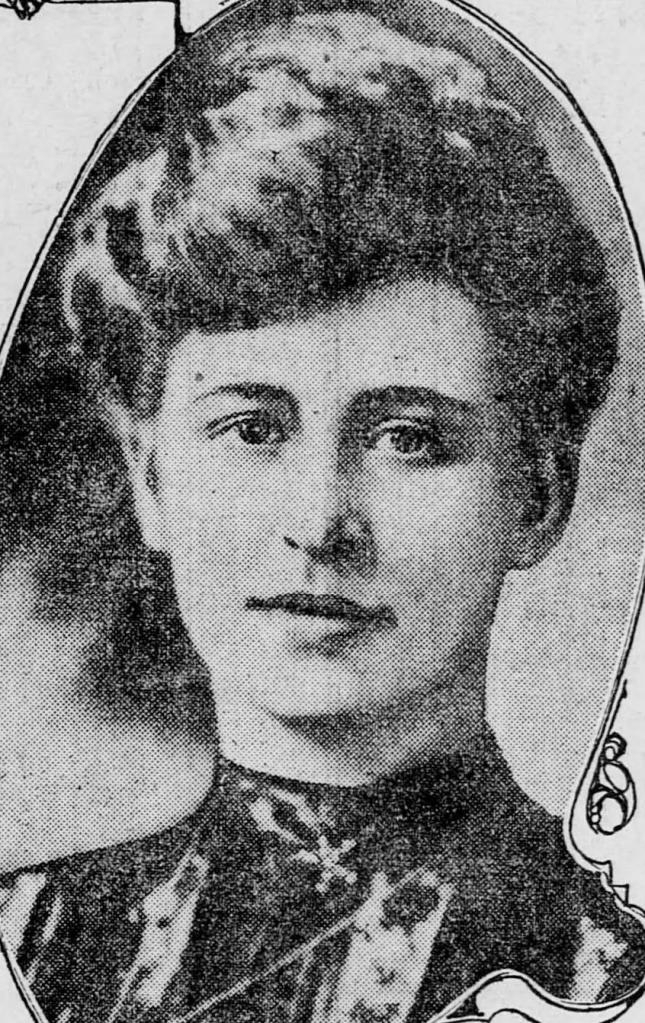
Whether it was sheer laziness, cockiness over hoodwinking people on six separate occasions, or at Alma’s insistence — Louisa made the mistake of employing the services of Dr. Warner a second time. Diagnosing Alma’s symptoms, which included tiredness and lack of appetite, as stemming from a weak heart, Dr. Warner treated her for eight months. According to Alma’s suitor, Stewart Hall, Alma’s health took a turn for the worse: “On the night of July 29, 1911, when I called to take Alma to a theater she was feeling ill. She told me that she became ill immediately after eating a supper that her mother had prepared.” 

Six days after ingesting said meal, Alma was dead. 

According to Louisa, her daughter fell ill after overheating while dancing, which Dr. Warner thought enlarged the nineteen-year-old’s heart and, in turn, led to Alma’s death on August 4, 1911. Designating natural causes as cause of death, Alma’s death certificate was duly signed, and Louisa collected her daughter’s $1,300 insurance policy.

Leaving Louisa’s son, fifteen-year-old Arthur, as her only immediate family member above ground.

Cooking With Christie: Sweet with Heat

This Week’s Recipe: Cucumber Kimchi

In an effort to expand my food knowledge, with encouragement from a friend, and with an overabundance of cucumbers harvested from my husband’s garden, I decided to try making some cucumber kimchi using this recipe.

Turns out I’m a fan.

Spicy, funky, sweet, and crunchy, this is a perfect side for a hot summer’s day!

Agatha Christie: I can see Tuppence making this dish and bringing it to a social function where people eventually try it and like it!

Crime & Christie: Arsenic the Element That Brings Everyone Together

Now, you’d think arsenic poisoning wouldn’t really square with Chicago’s Murderess Acquittal Formula. Not only because the administration of poison is (predominantly) a covert and (on the whole) premeditated act but on account of the sheer absurdity of translating the foundation of this Formula from “they both reached for the gun” — to — “they both reached for the box of Rough on Rats.” 

And yet, a handful of women still turned to this ancient element. 

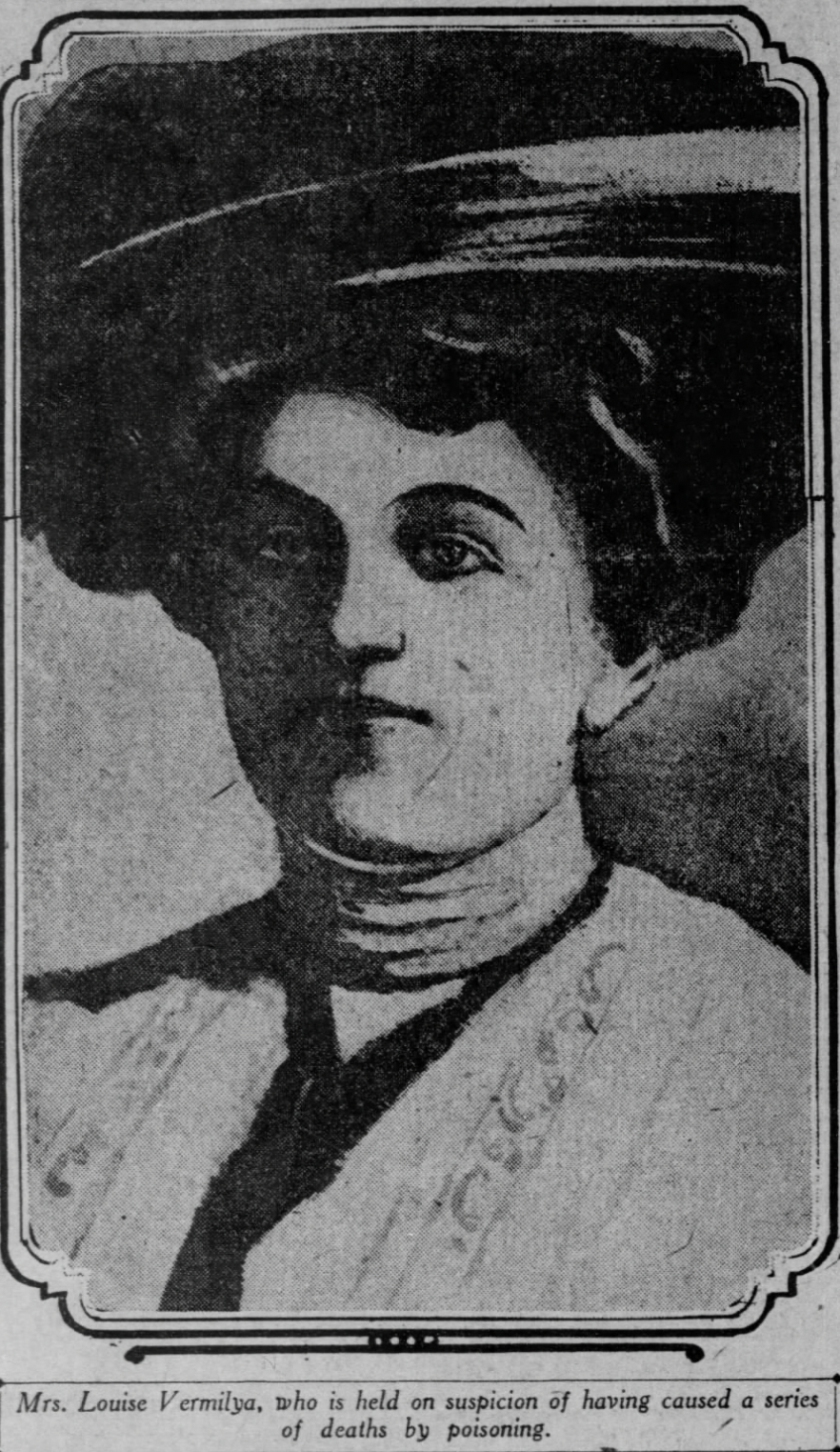
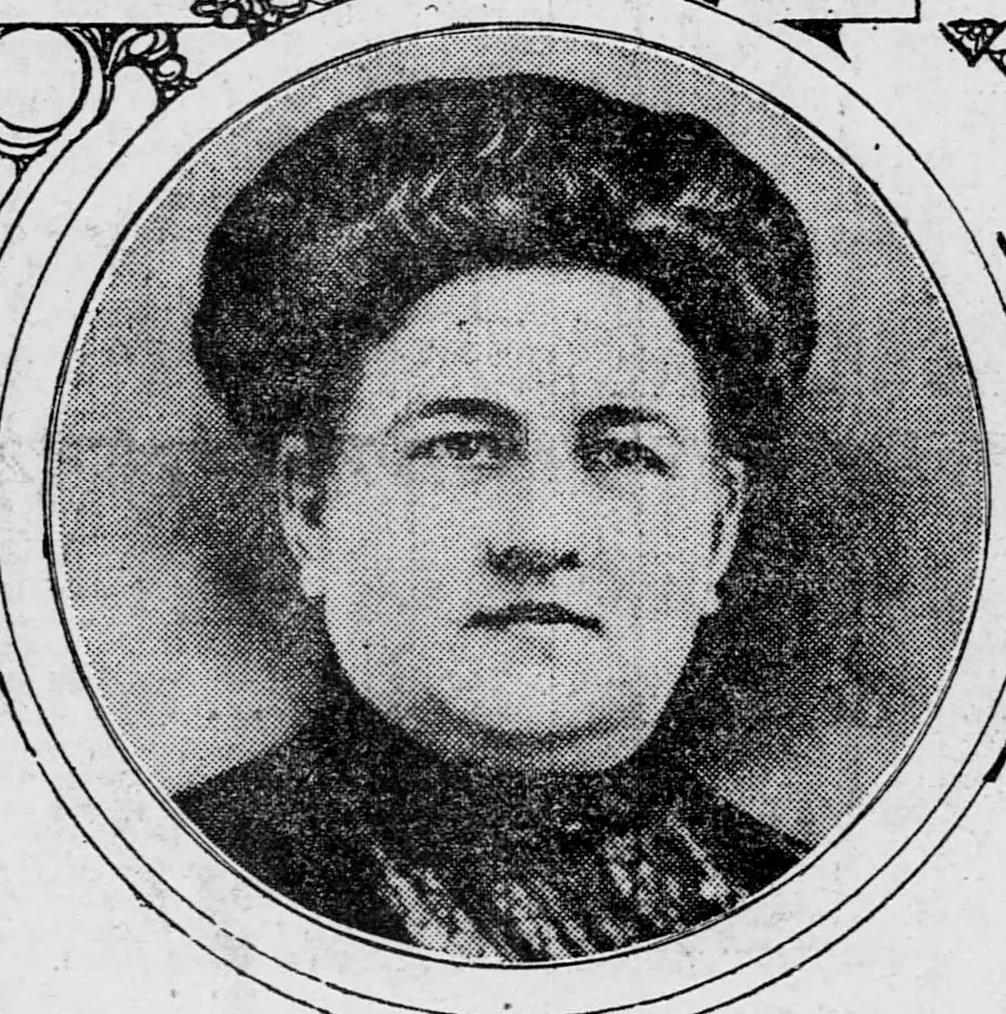
The most notorious of the lot, who spent their fair share of time in Cook County’s Murderess Row, were the serial poisoners Tillie Klimek and Louise Vermilya. However, there is a third, lesser-known member of these ‘Sisters in Bane’ — Louise Lindloff. Who’s life and crimes and subsequent trial had it all — spiritualists, allegations of witness tampering, startling admissions, and a literal crystal ball. So, of course, that’s whose misdeeds we will explore next!

Now that we’ve mastered that portion of the name game let’s examine Louisa Lindloff’s life and multifarious crimes.

Originally, Louisa was born Louise Darkone in Colmar, Germany, on February 4, 1871. Seventeen years later, in March 1888, Louisa married Julius Graunke, who was about two years her senior. Approximately two years later, in April 1890, Louisa and Julius welcomed their first child, a girl they named Frieda, into the world. 

Following this joyous event, sometime between 1889 and 1891, Julius crossed the Atlantic Ocean, settled in Milwaukee (Wisconsin), and found work as a driver for the Fitzner & Thompson Commission House before sending for his wife and baby daughter. In short order, the couple expanded their family with a second daughter, Alma, born on December 18, 1891. Finally, Julius and Louisa completed their familial unit with son Arthur Alfred Otto, born on May 19, 1897.

Sadly, misfortune in the form of an undefined, debilitating illness struck Julius around late April or early May of 1905. During his three-month downward spiral, a neighbor, Mrs. Martha Greiner, heard Julius complain: “Louisa, there was something in my last medicine.” Louisa also confided in Martha: “Julius will only live a few days and when he is dead I’ll get $2,600. I’m going to open a saloon and buy a horse and buggy and have a good time.” This prediction came about, just as Louisa foretold, on August 12, 1905. 

The death certificate put the cause of death down as sunstroke, and Louisa promptly collected on Julius’s hefty insurance policy. 

Surprisingly, Louisa’s prophecy and tawdry comments failed to ring the necessary number of alarm bells within Martha to prompt a visit to the authorities, especially when combined with the sudden death of the Graunke family dog and the baffling death of a flock of chickens on an adjoining property around this period.

Perhaps Martha didn’t want to believe someone she knew was a killer? (Which, in fairness, would slow me down as well. Despite this blog and the sheer quantity of mysteries I’ve read.) Or, more likely, Martha bought (to some degree) into Louisa’s claim of being blessed with second sight since the age of eight. Which would “explain” how she was granted the foreknowledge of the date of her husband’s death. Either way, Martha and the other neighbors remained silent about what they’d seen and heard in the Graunke household.

Even when the thirty-four-year-old mother of three followed up on her promise of ‘having a good time’ and started kicking up her heels with her boarder Charles Lipchow. Who’d not only lived with the Graunke’s for a period before Julius’s death but whose recently deceased mother (or Auntie, I’ve read conflicting newspaper reports) bequeathed him a legacy somewhere between $5,000 and $15,000 (again, there are conflicting amounts). Who, in turn, lavished the bulk of his inheritance upon Louisa. 

But, alas, all good things must come to an end. 

On August 17, 1906, nearly a year to the day after Julius passed away, Louisa lost her good time Charlie. However, in a stroke of good fortune, before his death, Charles assigned Louisa as the beneficiary of his $550 life insurance policy provided by a cigar maker’s union (of which $116 went towards his funeral in Lincoln Memorial Cemetery). 

Whereupon Louisa assuaged her grief by becoming a bride (again) and married William Lindloff on November 7, 1906.

From the Office of Full Disclosure: It’s unclear, exactly when Louisa and her kids moved to 2044 Ogden Avenue in Chicago, Illinois. One account places the move just after Julius’s death in 1905. This would make sense if Louisa was trying to avoid the side-eye and whispers of her neighbors. And Charles’s hefty inheritance would’ve made the move from Milwaukee to Chicago, with three kids in tow, a great deal easier. What muddles the timing of Louisa’s out-of-state move is that Charles died in Wisconsin, not Chicago. So either Louisa moved after Charles’s death, Charles returned to Milwaukee with a belly full of poison and succumbed there or she poisoned him on a return visit?

Compounding my confusion is the fact that Louisa’s second husband worked for the McCormick Harvester Company, which was founded and operated out of Chicago. However, in 1902, McCormick merged with several similar manufacturers to form the International Harvester Company, which operated out of both Illinois and Wisconsin (amongst other states). So did the two meet, court, and marry in Milwaukee, Chicago, or some combination thereof? I’ve not found a copy of their marriage certificate, so I’m unsure.

Then there’s William’s brother, John Otto Lindloff, who resided with the newlyweds. One report I read stated that John Otto’s new sister-in-law absolutely detested the sight of him. Not only because he was courting her eldest daughter Frieda, but on account of the fact he became suspicious of Louisa after drinks and food she’d prepared made him ill immediately afterward. Then, on October 12, 1907, at the age of 24, John Otto died after suffering, for a short period, from dizziness, vomiting, stomach cramps, and other violent symptoms. According to his death certificate he died of apoplexy in Milwaukee, where he was subsequently buried. 

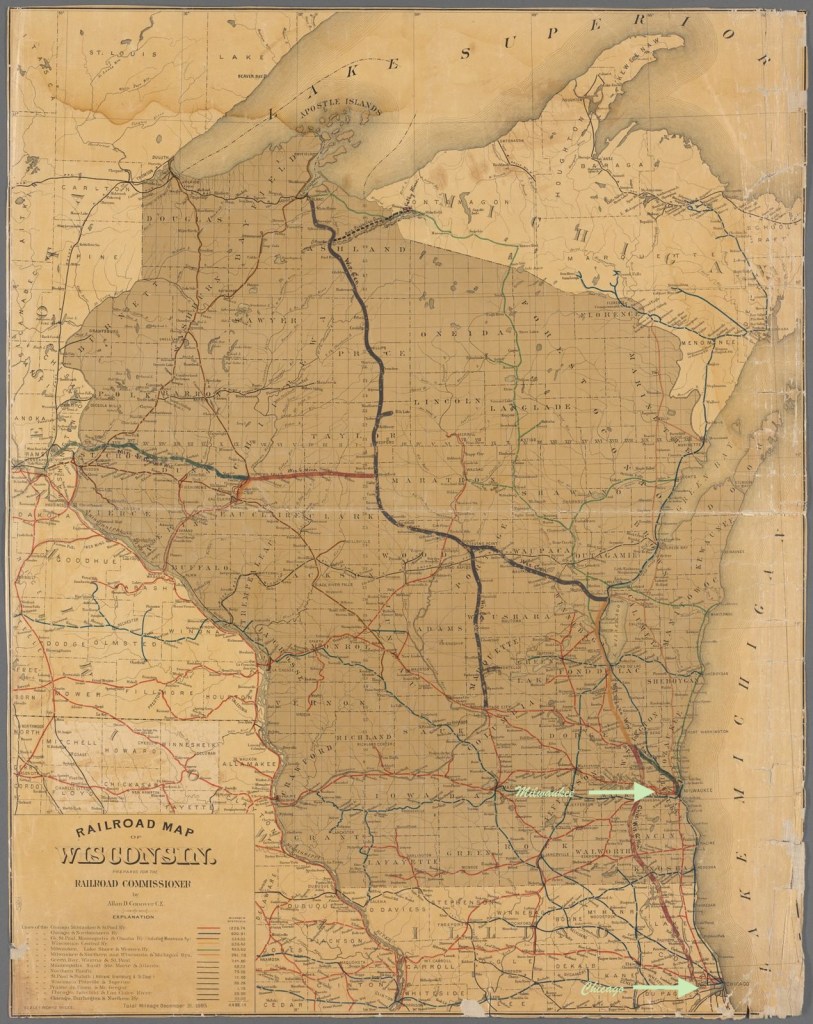
Hence why, I lean towards Louisa still living in Milwaukee, at least until 1907. It’s far simpler to slip a little something into someone’s food if you live in the same city, street, and home than Louisa traveling the hundred or so miles up the coast of Lake Michigan from Chicago to Milwaukee in order to perform the deadly deed. 

That being said, the distance would provide Louisa with a nice buffer after collecting John Otto’s $2,000 life insurance policy.

In any case, what I do know for certain is that Louisa, William, and the kids were in Chicago by June 11, 1908. As that’s the day Louisa’s eldest daughter, Frieda, unexpectedly passed away at the age of eighteen from typhoid fever and was later laid to rest in Oak Ridge (aka Glen Oak) Cemetery in Cook County, Illinois. It will surprise no one that the young laundress named her mother as the sole beneficiary of a Prudential life insurance policy in the amount of $1,350 before her death.

The reason why I find these timeline and geography questions so frustratingly fascinating is that I’ve no clue if Louisa possessed enough cunning to purposely tango to and fro over state lines in order to obscure her string of murders and subsequent insurance fraud or if it was just coincidence. Nor is it clear if Louisa used nicknames and shiny new surname to further distance herself from her earlier crimes. Either way, by happenstance or design, it worked. Despite four deaths in four years, all of which benefitted Louisa financially, no one questioned her run of bad luck.

Yet.

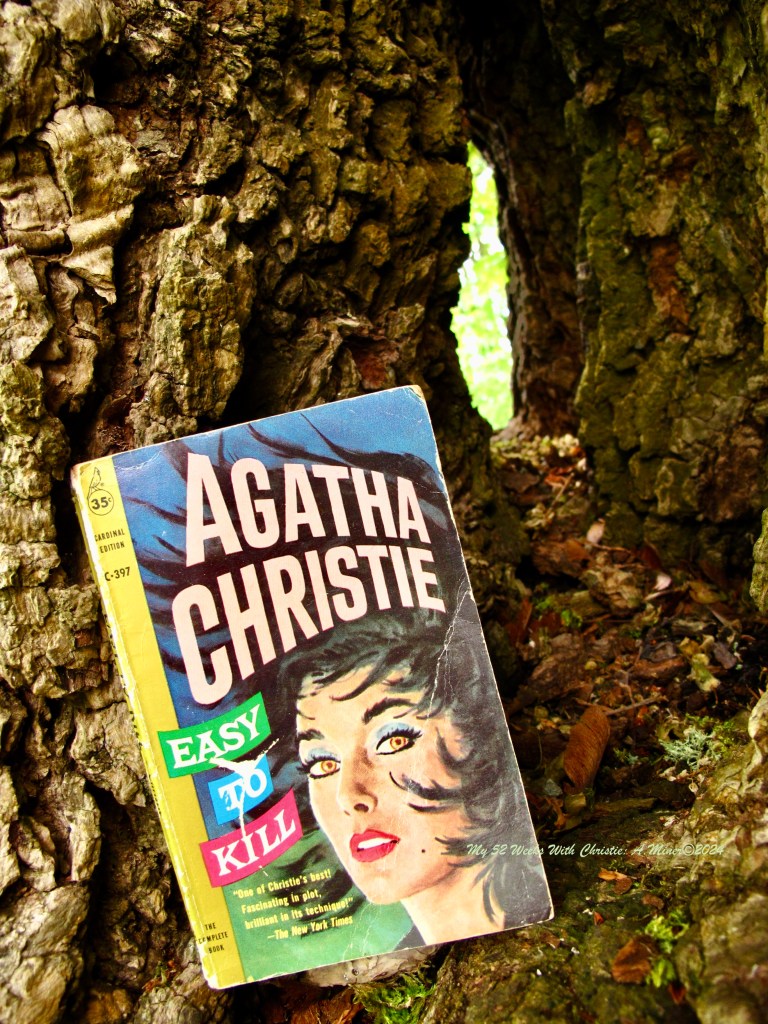
My 52 Weeks of Christie: A.Miner©2024

Cooking With Christie: Something Savory

This Week’s Recipe: Slow-Cooker Spinach Artichoke Dip

When I invited some friends over for a board game night, I needed to make sure I had plenty of food on hand—enter this slow-cooker artichoke dip recipe, which, if I’m honest, I only used as a guide.

Instead of adding frozen spinach, I used fresh spinach which I blitz down to the size of glitter (or just a hair bigger — I hate stringing spinach). Next, I used frozen artichoke hearts I thawed in the microwave and used the food processor to quickly chop them into smaller chunks (though nowhere near as small as the spinach). And by swapping these two ingredients, I didn’t need to worry about excess water or oil in the finished dip.

Next, I used twice as much mozzarella and parm (because I like cheese). Then, I diced up some celery, fresh parsley, and doubled the amount of black pepper to help build flavor because I can’t have garlic or onion. I also used a teaspoon and a half of gochugaru rather than regular red pepper flakes, as I like their flavor better. I also cut the amount of salt (because I used extra cheese) to 1/4 tsp and used celery salt rather than table — again, to add some flavor.

Our guests polished it off in less than 45 minutes.

Agatha Christie: Honestly, I can’t see any of Christie’s detectives embracing a crockpot — except perhaps Inspector Japp, who might use one to cook up a stew while he’s on shift investigating a murder.

Crime & Christie: Seven Degrees of Separation

Fun Fact: Did you know Agatha Christie used arsenic as a murder weapon, misled investigators with, or referenced the chemical element in nearly 25% of her mysteries? True story! However, ages before Agatha Christie earned the moniker ‘Queen of Poisons’ for her application of arsenic (and other equally baneful substances) within her books, people the world over were already well aquatinted with the element.

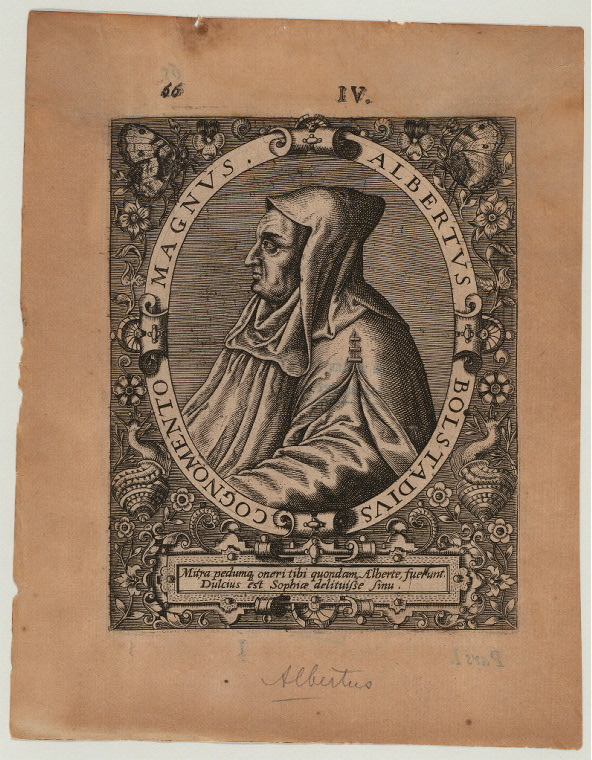
Although the discovery of this dangerous substance is generally ascribed to the Patron Saint of Natural Sciences, Philosophers, Medical Technicians, and Scientists — Saint Albertus Magnus, awareness of arsenic’s deleterious effects reaches back further still to the Ancient Greek physician Hippocrates (b.460 B.C. – d.370 B.C.), who described the symptoms of arsenic poisoning he’d observed in some miners who’d dug into a mineral vein laced with the heavy metal. 

Yet, even before the Father of Medicine noted the abdominal problems suffered by those miners, anecdotal evidence of chronic arsenic poisoning can be found in stories dating back to the Bronze Age — specifically, those tales containing the ‘lame blacksmith’ trope. 

It seems above and beyond the standard risks of molten metal, fire, and the perils of a mis-swung hammer — metalworkers faced an invisible hazard. When smelting copper ore (many varieties of which naturally contain some arsenic) or creating bronze by combining copper with arsenic (rather than or in addition to tin), a poisonous fume formed in the forge as the arsenic vaporized. Because arsenic is odorless, tasteless, and sufficiently soluble in hot liquids if mixed well enough (though this last quality probably didn’t come into play in this particular situation) — these metalsmiths had no idea they were habitually inhaling arsenic-polluted air….Until they started experiencing weakness and/or numbing in their legs and feet, difficulty breathing, and headaches — amongst other symptoms (before other diseases like cancer set in).

Thanks to the thousands of years between then and now, it’s unclear (or at least I’ve not found) when and who connected arsenic to the maladies commonly suffered by blacksmiths. Moreover, due to the ease in which both princes and paupers alike could obtain said element — the name of the first bright bulb who decided to rid themselves of an unwanted spouse/lover/relative/friend/enemy by mixing arsenic into their mulled wine or sprinkling it over their dinner plate has been lost to time. 

That being said, we do know by the time Pedanius Dioscorides, the ‘Father of Pharmacognosy’ (or the study of medicinal drugs obtained from plants, animals, fungi, and other natural sources), published the fifth and final volume in his De Materia Medica around 70 A.D. — he described arsenic as a poison. 

Knowledge Dioscorides could’ve obtained through first-hand experience as a physician in Roman Emperor Nero’s court. 

It seems a few months after Nero was crowned in 55 A.D., the newly minted emperor used arsenic (or ordered someone else) to poison his thirteen-year-old stepbrother Tiberius Claudius Caesar Britannicus. As the biological son of the former Emperor Claudius and one-time heir apparent, Tiberius seriously threatened Nero’s own claim — hence, he had to go. (There is some debate whether arsenic or belladonna was used to do the deed. I lean towards arsenic, only because belladonna isn’t always fatal, and I don’t see Nero taking a chance that Tiberius might escape the assassination attempt.)

After Nero’s act of fratricide, arsenic’s reign as the King of Poisons remained unchallenged until 1775. When Swedish chemist Carl Wilhelm Scheele (of Scheele’s Green fame) devised a methodology to reveal arsenic’s presence in a person’s remains, although the corpse needed to be stuffed full of arsenic to produce a positive result, Scheele’s initial strides at bringing arsenic and its adherents to heel were significant. 

Piling onto Scheele’s foray into toxicology was Johann Metzger. Who, in 1787, worked out a way to test if arsenic was present in a solution — but only if it hadn’t been consumed (picture the remnants of a half-finished bottle of pop, cup of coffee, or broth). Nineteen years later, Valentin Ross (or Rose; I’ve seen his name both ways) took Metzger’s technique one step further. In 1806, while pursuing a poisoner, Rose (or Ross) developed a way to process human organs (in this case, a stomach) that allowed Metzger’s test to be successfully run.

Next came the work of Mathieu Joseph Bonaventure Orfila, otherwise known as the ‘Father of Toxicology’. Amongst other advances in the field, Orfila refined Rose’s (or Ross’s) process, helping improve its accuracy. He also proved that after ingestion, arsenic gets distributed throughout the body. Orfila also aided in disseminating the work of Dr. Klanck, who, through extensive experimentation, determined the effect arsenic had on putrefaction and proved arsenic could be found in the remains of those long buried. 

The cumulation of these various discoveries came in 1836 when a British chemist, James Marsh, became so vexed at the acquittal of a poisoner that he devised a more sensitive, reliable, and accurate arsenic test — which remained in use (with refinements) until the 1970s.

Unsurprisingly, with the gold standard in arsenic detection being developed, the abuse of arsenic was curbed — but not curtailed. And within this liminal space, Chicago’s Cell Block Tango, Agatha Christie, and Cook County’s very real Murderess Row intersect.

Cooking With Christie: A Classic

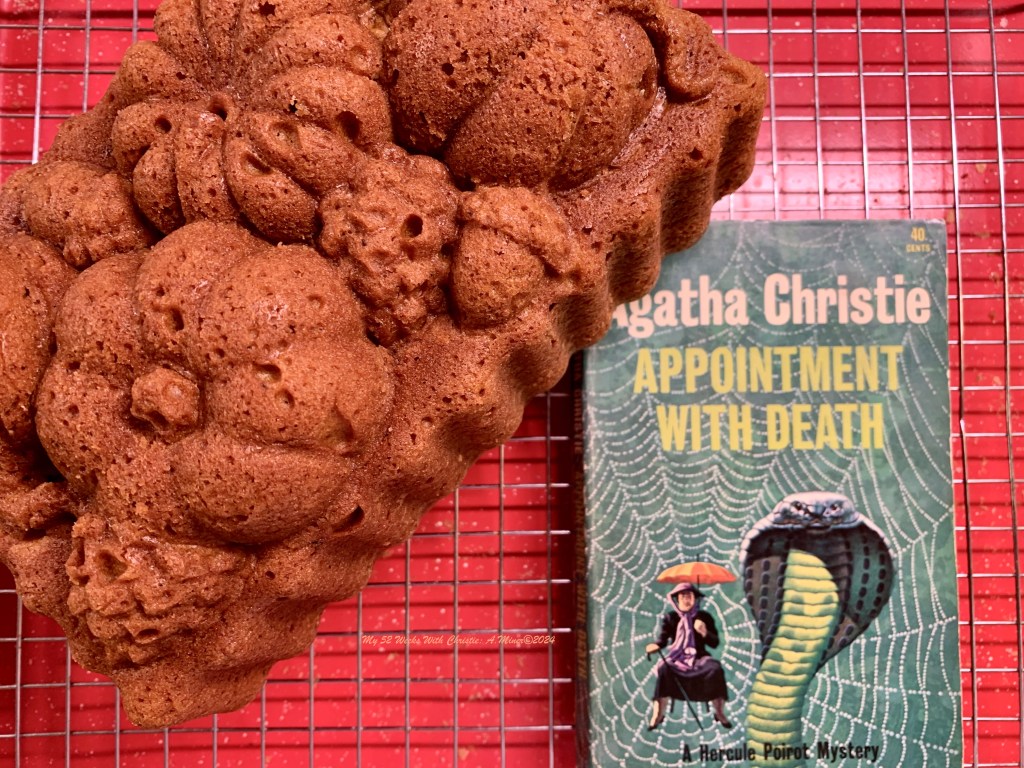
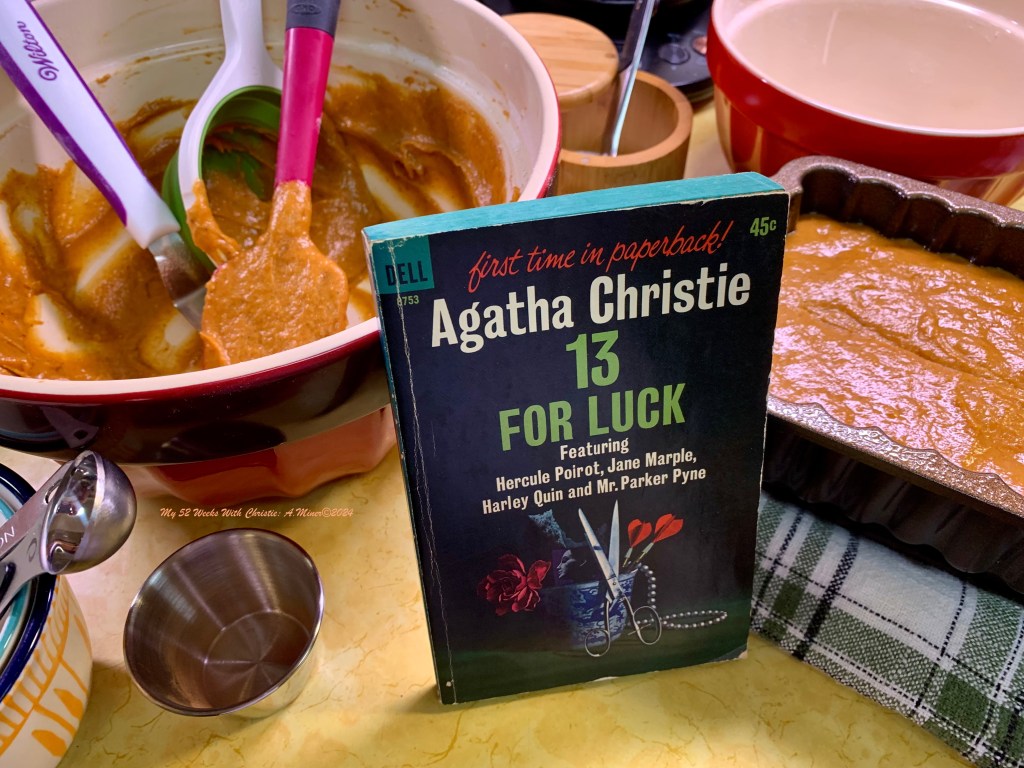
This Week’s Recipe: Spiced Pumpkin Bread

In an effort to improve my quick bread repertoire, I decided to make this recipe after running across it in a magazine. Now, unlike the magazine, I used a fancy loaf tin, not only because it was fall themed but because it was the only one I owned that was close to the size specified in the instructions.

And it turned out tasty! (Which I’m sure was the aim of the test kitchen, magazine, and its editors.)

Agatha Christie: I could see Poirot nibbling on a pie with a coffee at a client’s home whilst Captain Hastings chowed down next to him.