Book Review: Cursed Cocktails

Cursed Cocktails — S.L. Rowland

Welcome to the enchanting world of Tales of Aedrea, where small-scale stories, low-stakes adventure, and cozy fantasy come to life within an epic, high-fantasy realm.” 

This single-sentence description of this series is what originally captured my interest. Well, that and the fact that this book revolves around cocktails, a city’s first real cocktail bar, and magic. As my reviews in recent years have established, I’m a sucker for food-based fantasies.

Fantasy books.

Books.

‘Pulling at my collar uncomfortably like an old actor in a B&W movie.’

In any case….Cursed Cocktails is the first in a series of books all set in the same realm of Aedrea. Each book follows a different set of characters, though an old favorite occasionally makes a quick cameo—for flavor.

But I’m getting ahead of myself.

In Cursed Cocktails, we meet Rhoren, aka Bloodbane, an umbral elf and powerful blood mage. Who, after thirty years of defending the North from behemoths and the like, has finally reached retirement. Seeking a place to rest his aching bones, as blood magic takes a massive toll on its user, Rhoren travels south to the balmy shores of Eastborne. Where he seeks and finds the next chapter of his life…Although Rhoren’s past isn’t as far removed from his present as he initially thought.

I really, really enjoyed this read. (In point of fact, I’ve reread it several times since first cracking the spine.)

Rowland describes this series as cozy fantasy, and it is. Unlike Game of ThronesCursed Cocktails does not contain far-reaching political machinations that frequently end in an assassination, rape, or torture. However, that does not mean Cursed Cocktails lacks action, mystery, or interest. It just means that you can immerse yourself in the book’s 275 pages without worrying about encountering the aforementioned possibly panic-inducing themes and forget for a few moments that the cat knocked over the Christmas tree again, the pile of ugly holiday sweaters that need a wash, or the fact that your yule log looks more like a rotten stick than a delectable cake.

Akin to many of the culinary- and/or mixology-based books I’ve reviewed, Cursed Cocktails seamlessly weaves the cocktail theme into the narrative. That being said, there’s one element I cannot decide whether adds to or detracts from the story — the cocktail recipes themselves. 

Rather than fitting them in at the end of the book, as books of this ilk are wont to do, Rowland places them smack dab in the story. Because of the history of these recipes, which I don’t want to spoil your enjoyment of discovering, it makes complete sense why Rowland did what they did. And while they didn’t toss me out of the narrative, I’m not sure everyone is as keen on reading recipes as I am. 

So, my advice? Just skim past and continue reading if they’re not your cup of tea because Cursed Cocktails is such a fun read! So don’t miss out!

My 52 Weeks With Christie: A.Miner©2025

Mystery Review: One Pro, One Amateur, & One Critique

Liza Tully — The World’s Greatest Detective And Her Just Okay Assistant

Admittedly, this mystery and I made it to the register mainly because the title elicited a laugh. Undoubtedly, just as the author, agent, and publisher planned. Happily, the title wasn’t the only clever thing about this book.

The World’s Greatest Detective And Her Just Okay Assistant is not only a solid mystery, but it also shows the growing pains between a seasoned detective and a shiny new assistant. Bringing to mind how Watson struggled with Sherlock’s tactics, before he started understanding the method behind the madness.

Which brings me to my only real criticism of the book.

Somewhere along the way, someone decided to boil this dynamic of an amateur, mystery-book-loving, eager assistant and a seasoned, exacting, famed detective down to a prosaic Gen Z vs. Boomer dynamic. Luckily, this trope only really reared its head once. In a clunky encounter, our two ladies, Olivia Blunt and Aubrey Merritt, actually discuss this generational friction over lunch. Though this episode only lasts a couple of pages and Tully lands the dismount pretty well whilst making some good points — the discordant note did forcibly eject me from the narrative.

But don’t let this bit of criticism hold you back from reading The World’s Greatest Detective And Her Just Okay Assistant.

Watching Olivia cope with Merritt’s demands, leap to conclusions, and stumble over clues is a lot of fun! Making it plain to see that devouring mysteries, thrillers, and true crime books doesn’t necessarily prepare their readers for a real-life investigation, and I cannot underscore enough the hilarity that this chasm creates.

Even better? Tully gives her audience a couple of breadcrumbs to spark curiosity about who exactly is Merritt’s housekeeper and who is sending the detective romantic notes. Plus, the chaos that will undoubtedly ensue in the run-up to Olivia’s wedding.

I would recommend The World’s Greatest Detective And Her Just Okay Assistant to anyone looking to get in on the ground floor (I’m hoping) of a new mystery series that will only get better with time.

My 52 Weeks With Christie: A.Miner©2025

Cooking With Christie: A Lukewarm Cookbook Review

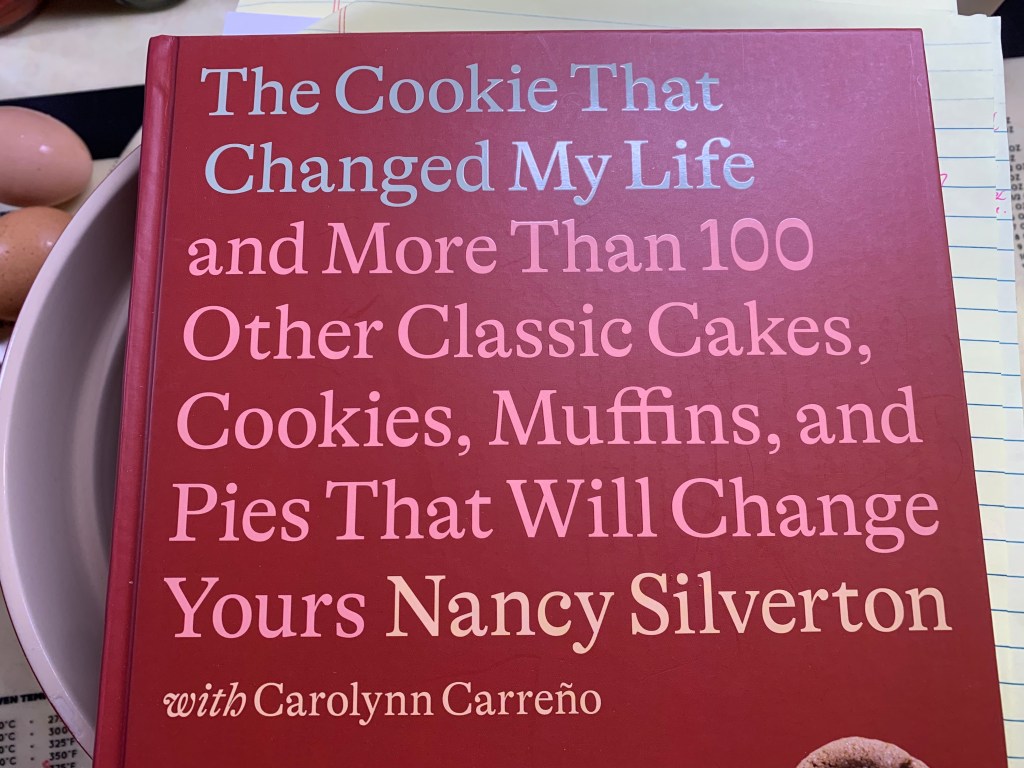
Inspiration: Endeavoring to step outside of the usual flavors of my cookies, I started scouring my cookbooks. Happily, I landed on this promising recipe, Toasted Sesame Slice-and-Bake Butter Cookies from Nancy Silverton’s book, The Cookie That Changed My Life and More Than 100 Other Classic Cakes, Cookies, Muffins, and Pies That Will Change Yours

Whilst I’m no stranger to slice-and-bake cookies, as I love recipes that require mixing on one day and baking the next, Nancy Silverton and Carolynn Carreno’s recipe threw me for a loop.

Cookbook Review: When I first perused The Cookie That Changed My Life… in my local indie bookshop, I initially glommed onto the recipe for Iced Animal Crackers. Not only do they require sprinkles, but these cookies also allow me to practice cookie-cutter dough — a style of cookie I’ve struggled to reliably produce without my grandmother’s guidance. (My unsupervised efforts always seem to spread, looking more akin to balloon animals than said four-legged friend I was aiming to create.)

What I didn’t realize, until after I got home and delved deeper into the pages, is that I’ve a preference on cookbook layouts. And, you’ve guessed it, The Cookie That Changed My Life… doesn’t follow it. 

Rather than breaking down the recipes into easily checked-off and manageable steps, which in my experience helps ensure you don’t miss adding or manipulating an ingredient, The Cookie That Changed My Life… does not. The recipes are broken down only by the broadest of strokes, leaving bakers with anywhere from 2 to 5 inches of text to parse for several steps in each recipe. Making the somewhat complicated recipes even more challenging/intimidating to reproduce. 

Unless you’re a baker who’s apparently willing to sit down, break down, and rewrite every single recipe before stepping into the kitchen.

What I do appreciate about the book is the clear ingredient list, which gives the weight of most ingredients. (A feature which should not be underestimated.)

If you enjoy pretty cookbooks then, The Cookie That Changed My Life… is for you. The layout and its uniformity, plus the intermittent pictures, create an attractive book. And if you enjoy reading cookbooks like they were works of fiction, then The Cookie That Changed My Life… is one for you. If you don’t tend to lose your place in large blocks of text in the midst of measuring, mixing, and manipulating ingredients, again I would recommend this book. 

However, if you value a practical approach to recipe writing, this book will drive you nuts. As either the editors, writers, or publisher valued style over accessibility.

That being said, the unique flavors, interesting techniques, and variety of recipes do partially make up for this (in my estimation) aforementioned flaw, and I would recommend The Cookie That Changed My Life…

With reservations.

P.S.: This cookbook is not for someone who’s new to baking as some of the processes required to successfully produce the bakes are highly technical and/or unusual.

The Bake: Familiar with the taste buds of my audience, i.e., my husband’s coworkers, I must admit to altering the Toasted Sesame Slice-and-Bake Butter Cookies slightly by adding the zest of one orange and one teaspoon of ground ginger to complement the warm nutty flavor of the toasted sesame. (It also kept the cookie from becoming one note.)

And they went down a treat!

Agatha Christie’s Canon of Characters: This is one of the few bakes I’ve produced that (I think) Hercule Poirot would enjoy. The flavor is subtle, warm, and elegant without being overly sweet. Moreover, the sesame flavor generally pairs well with espresso. Providing Poirot with something to nibble on whilst sipping a bean-based beverage and using his little grey cells.

Mystery Review: The Enchanted Greenhouse

Sarah Beth Durst — The Enchanted Greenhouse

Hope is a four-letter word. 

Found at the bottom of Pandora’s box, it gives a reason not to give up, to persevere, to keep going — even in the face of insurmountable odds. Orpheus defeated Lucifer with hope in their duel (in season one of Sandman). Yet, hope can be just as cruel as its fellow curses that it existed amongst in that (in)famous box, especially when a desperate plea for help goes unanswered.

In this case, the plea comes from the lone gardener on the island of Bedle who tends to the extensive and extraordinary greenhouses on Bedle.

And they are dying.

One by one, the magic that’s meant to keep these rooms of exotic plants, pedestrian vegetables, and magical herbage thriving is now failing, turning, and destroying what it once kept safe. Compounding the problem, the mage who created the magical menagerie of chlorophyll based life forms died, and, even worse, with revolution in the capital city, no one seems interested in saving this breathtaking creation.

Well, almost no one.

Enter the wooden statue that once graced the North Reading Room of the Great Library of Alysium. Once, a cautionary tale told to new librarians who might find themselves tempted to dabble in magics forbidden to all save a select few. 

Now, she’s Bedle’s singular hope of survival.

The follow-up book to The Spellshop did not disappoint. Not only do you learn more about Caz’s (the sentient spider plant and main character in The Spellshop) history, but you also get a much better sense of why the revolutionaries defenestrated the Emperor of the Crescent Island Empire. 

Moreover, the snow-capped trees, wondrous rooms of impossible plants, and a cozy cottage filled with the aromas of freshly baked bread, cake, and quiche make this a genuinely snug as a bug in a rug, fantasy book. However, lurking within the warm heart is mystery, corruption, and cruelty that needs weeding out lest they destroy the aforementioned coziness. And it’s this tension betwixt these two polar opposites which Sarah Beth Durst deftly weaves together to create The Enchanted Greenhouse.

Admittedly, when I originally read The Enchanted Greenhouse, I judged The Spellshop the better of the two books. 

However, on subsequent readings (yes, plural), I think this initial opinion arose due to the anxiety and internal conflict felt by one of the main characters over doing what’s right, despite their very real fears. As this conflict hits close to home, as my brain’s a real jerk sometimes, I think this is what spawned my original opinion. One that I’ve since revised, obviously, viewing both books as equally fantastic reads!

Though you don’t have to read The Spellshop prior to picking up The Enchanted Greenhouse, I suggest you do. Not only will you get the absolute most out of both books, you’ll have a few hours, days, or weeks (depending on how fast you read) of happiness, joy, magic, jam, and bread.

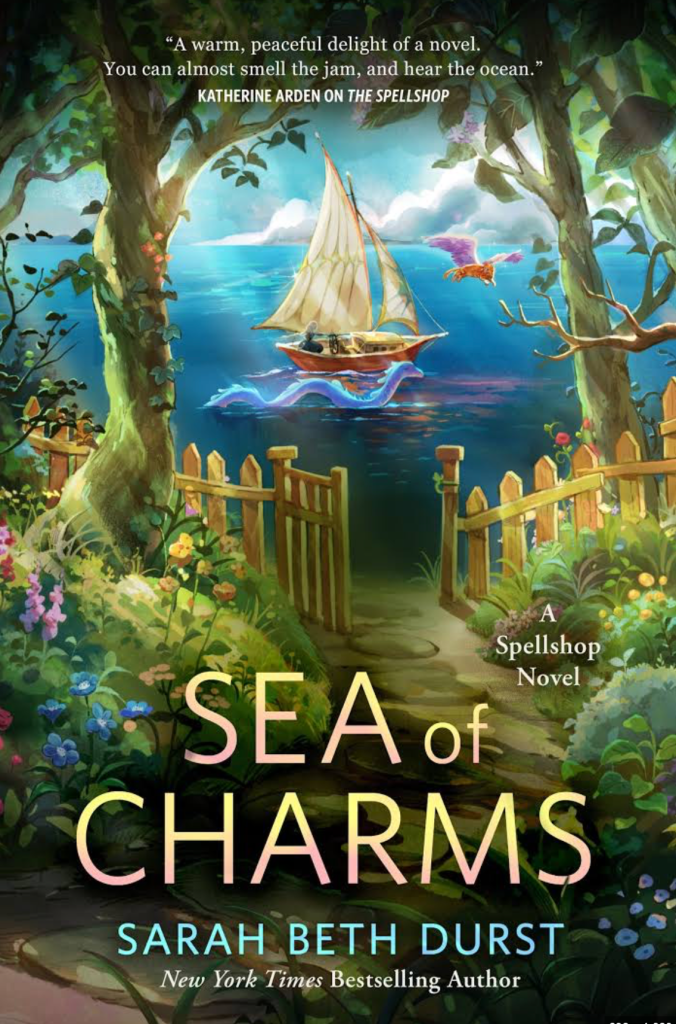
P.S.: I’m absolutely beside myself as Sarah Beth Durst wrote a third book in this series of loosely connected tales! Sea of Charms is coming out in July 2026, and I cannot wait!

Mystery Review: The News From Fair Verona….

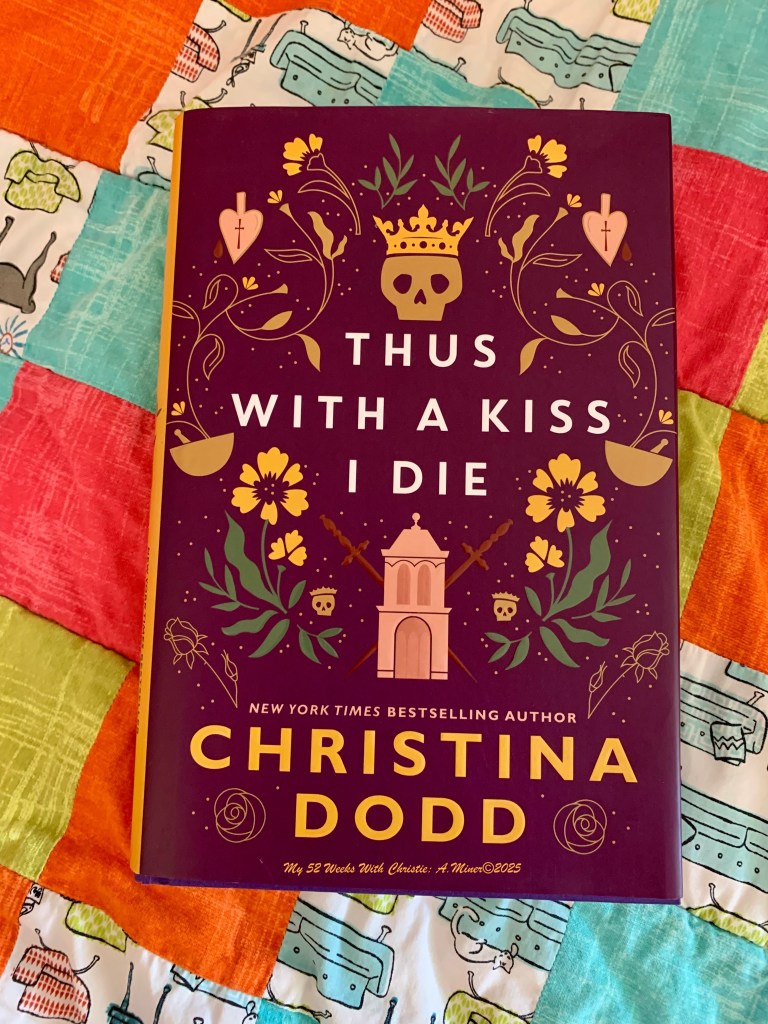
Thus With A Kiss I Die — Christiena Dodd

Akin to many high school students, I read Shakespeare’s Romeo & Juliet in English class during my sophomore year. During that month-long unit, in which we learned a bit of history, language, and the biography of The Bard himself, I did not find my love of Shakespearean plays. The protracted timeline of reading four acts stuffed with 25,993 words, plus the inevitable essay test at the end, completely drained the joy of reading the text away. 

Now, I understand the pressure our teacher was under, walking the tightrope between managing her classroom, the curriculum, and parents looking for any reason to censor/ban the play. In fairness, I have read Romeo & Juliet multiple times since high school. However, it’s been a minute since I delved into Shakespeare’s iambic pentameter, and I’d forgotten just how violent The Bard’s world could be — but fortunately, Christina Dodd didn’t. 

Within Thus With A Kiss I Die, we find our fair Rosaline faced with several mysteries, emergencies, and potential tragedies within Verona. Not the least of which: Who assassinated the last Prince of Verona? If, and it’s a big if, Rosaline is going to wed the current Prince (the son of said murdered man), this question needs to be laid to rest. Otherwise, how will she ever sleep safe and sound within the palace? 

Especially since the former Prince and potential father-in-law is now haunting her.

Thus With A Kiss I Diethe second installment featuring the daughter of Romeo & Juliet, is a tad darker than the first in series. However, as it pays homage to Hamlet, I’d expect nothing less. Never fear, Dodd does a masterful job of balancing these potentially tragic themes with wit and more than a bit of bawdy humor. 

Thus With A Kiss I Die is a superb follow-up to A Daughter of Fair Verona — which you should read before starting the second installment. Happily, Dodd doesn’t spoil the first book by giving away the murderer’s identity in the second (a pet peeve of mine). However, there are several ongoing storylines that might leave you a bit adrift if you’re not already acquainted with them. Plus, A Daughter of Verona is such an excellent read, I doubt you’ll feel vexed by needing to read the first book first.

BTW: You don’t need to know much more than the broadest of strokes of Romeo & Juliet to enjoy these books. So don’t let the literary influence deter you from reading these two books!

Mystery Review: A new twist on Romeo & Juliet

A Daughter of Fair Verona — Christina Dodd

If Seattle Mystery Bookshop were still breathing, I’d have at least five copies of this book on my recommendation shelf! No, probably ten. Seriously, it’s been a long while since I’ve giggled/snorted/chortled out loud this much whilst reading a mystery. Christina Dodd does an excellent job of blending Shakespeare’s characters, language, the values of the day, moods, and manners with today’s sensibilities. Yet the dark undercurrents lurking beneath the laughs (one would expect nothing less of a book based on the Bard’s body of work), keep A Daughter of Fair Verona from becoming a parody of Shakespeare’s original work.

But I’m getting ahead of myself. 

A Daughter of Fair Verona is about Rosaline, the eldest daughter of Romeo & Juliet. Yes, that Romeo and Juliet. Turns out, the aim of a dagger held by a thirteen-year-old girl isn’t quite as true as one would suppose. As for the bottle of poison? Romeo fell victim to biology — as it isn’t uncommon for those who ingest a large quantity of a toxic substance to vomit it right back up again. In this case, this biological safeguard allowed Romeo to survive and live happily ever after with his Juliet.

Fast forward nineteen years.

Rosaline, the eldest daughter of the ever growing Montague family, has every intention of remaining a spinster. After nearly two decades of witnessing Romeo and Juliet’s passion (apparently, their drama did not taper off as they got older), Rosaline wants nothing to do with marriage, passion, and romance — despite her parents’ efforts to match her with a mate.

Attempts which Rosaline repeatedly manages to sidestep rather neatly. 

Unfortunately, neither paternal unit has given up on settling Rosaline into her “happily ever after”. And, for the fourth time, they announce they’ve found their eldest daughter a husband. Who, unfortunately, turns up with a knife in his chest during his and Rosaline’s engagement ball….And the murderer is just getting started.

I cannot impress upon y’all how much fun this book is! Seriously, Dodd captures both the darkness and light of Shakespeare’s work. Even better? There are no asides explaining the cultural/societal norms of Shakespearean literature, nor are there history lessons or footnotes that explain politics. Dodd keeps the narrative focused on Rosaline and the mystery, allowing the plot to unfold at full tilt from the front to back cover. 

If my shelf were still around, I would grab a copy of A Daughter of Fair Verona and press it into your hands, telling you, “trust me, you’re going to have fun.”

Book Review: One of the Best Books I’ve Read this Year

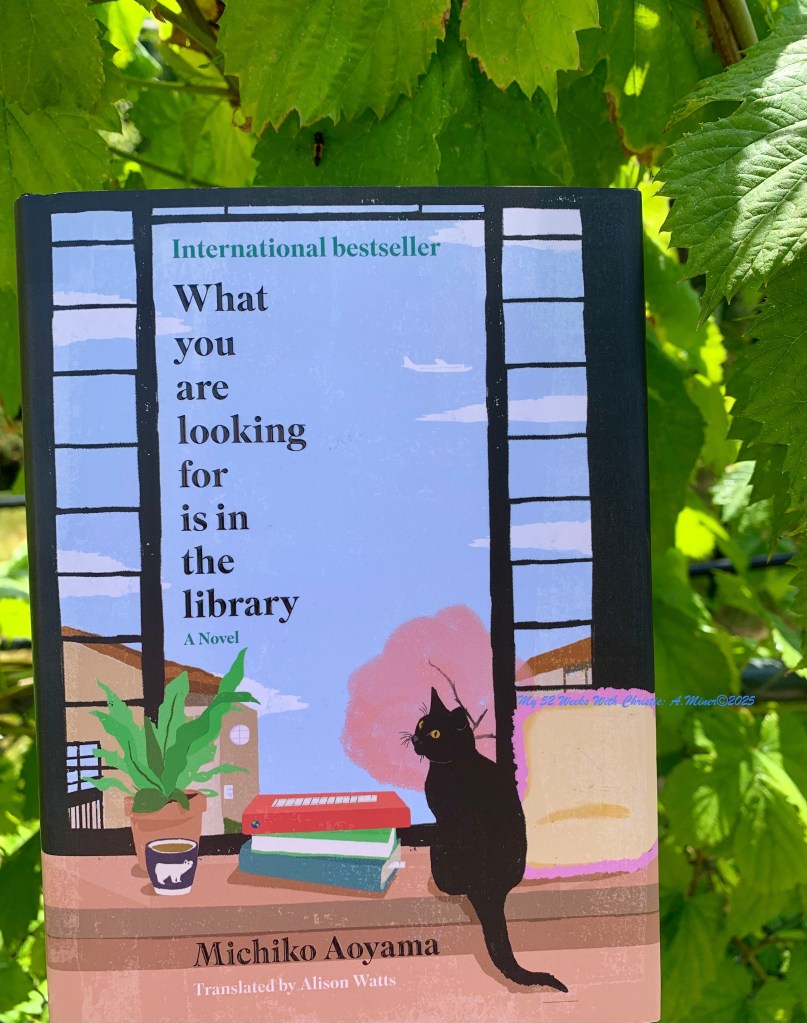
What you are looking for is in the Library — Michiko Aoyama

Translated by: Alison Watts

Last Christmas, my husband gave me a copy of The Kamogawa Food Detectives (by Hisashi Kashiwai), a Japanese cozy mystery series to which I’m now thoroughly addicted. 

Fast forward a six months.

Whilst perusing my way through the stacks of a bookshop, an idle query crossed my mind — ‘I wondered if Kashiwai’s American publisher had released the third installment yet?’ Wandering over to the fiction section (where many mysteries reside to fool genre snobs into thinking they aren’t reading/loving a mystery), I discovered that, alas, I need to wait a few more months.

Sigh.

Turning away from the shelf in question, I spied a stack of The Kamogawa Food Detectives distinctive dust jackets on a nearby table. Curious if the display contained a theme, hoping against hope, a bookseller grouped together similar titles I hurried over. 

Huzzah! 

Amongst the piles of translated tomes I discovered What You Are Looking For is in the Library by Michiko Aoyama. I love reading books about books and essays on food just as much as I love reading mysteries. So, after practically throwing my money at the cashier in my eagerness, I rushed home and dove straight into its pages….

Librarians, much like booksellers, help unite people with books. And, every now and then, they recommend the perfect title at the exact time their patron needs it most. 

It’s a kind of magic.

Most people don’t realize this skill can’t be taught; it’s acquired over time through practice, observation, and, most importantly, listening. Sayuri Komachi, “Tokyo’s most enigmatic librarian.”, owns this skill in spades and uses it to help those living in the ward where her Library resides.

I devoured this book in a day. 

Then I read it again.

And again.

Slower.

Reading how Sayuri releases each patron with a book recommendation that possesses the possibility of nudging them into shifting their perspective is fantastic. Equally fantastic, is the fact we are allowed to watch five of these masterful moments unfold in What You Are Looking For is in the LibraryEach one demonstrating the power and importance of libraries, librarians, and physical books all in one fell swoop. (Or, at least, that’s my interpretation.)

Moreover, the interconnectedness of the people, places, and things made What You Are Looking For is in the Library a joy to readEach library patron makes cameos in subsequent chapters, thus showing the subtle passage of time, whilst also allowing us (the reader) to see if these new perspectives stick or if the library patron slipped back into old habits. 

Whilst I savored every chapter (eventually), my favorite is — Masao, 65, retired. Within these handful of pages, Aoyama transforms Sayuri Komachi from a mountaintop mystic into a human being. And, unlike the great and terrible Oz’s reveal, this peek behind the curtain in no way disappoints. 

I would recommend this book to anyone. Especially those feeling a tad frustrated or lost in their own lives. Or if you need to witness kindness in action. Or someone who enjoys reading about books or felting. Yes, the craft plays a significant role in the stories.

(Ignore the cat on the cover. It does not play a role. In case you’re worried.)

My 52 Weeks With Christie: A.Miner©2025
Book Review: Not a Mystery – But well worth your time!

The Book of Difficult Fruit: Arguments for the Tart, Tender, and Unruly (with Recipes) by Kate Lebo

Unsurprisingly, as a kid, I got sick – a lot. The ailment of choice? Bronchitis or, as I called it, ‘The Arc-Arcs’. Since the uncontrollable coughing fits, which routinely left my lungs feeling raw, reminded me of the barking calls of seals. This illness ruined many a Halloween, Christmas, and the seven hours of respite my daily attendance of elementary school afforded my mom.

Although I cannot recall which of the world’s pinnipeds owns the dubious distinction of inspiring this phlegm based nickname, I suspect it’s more exotic than Phoca vitulina — also known as the common harbor seal. Mainly because I can’t recall spotting one of these bespeckled mammals swimming in the sea or lounging on a rock in the Puget Sound as a kid.

Please don’t get the wrong idea; my family and I spent tons of time on various beaches along the coast. However, like many families, we had our own traditions. Meaning: Whenever we visited Birch Bay, Deceptions Pass, Ocean Shores, and other sandy shores, we didn’t go for mindful beach strolls. 

We hunted for agates. 

An activity mom said wasn’t a competition, but it totally was and left little time for gazing past the waves stretching towards my toes.    

So, in all probability, my nickname for bronchitis came by way of a fever dream. Inspired by either an episode of Mutual of Omaha’s Wild Kingdom or a bit during a Looney Tunes cartoon I listened to whilst curled up on the living room couch, hovering in the liminal space between wakefulness and sleep. 

Although I cannot recall the origin story of ‘The Arc-Arcs,’ its cure remains indelibly stamped in my memory. 

Stored on the top shelf of my folks’ old mustard yellow refrigerator, as instructed by the label neatly affixed to the tall brown plastic bottle, the antibiotic necessary to cure what ailed me came in the form of a thick pink liquid optimistically described as cherry-flavored. 

And it tasted about as close to real cherries — as you are on the family tree to that third cousin twice removed on your father’s side that always shows up to family reunions smelling like blue cheese that’s sat out on the kitchen counter for three days in August. You might share the same surname, hair color, and distant relative, but that’s about it.

Despite the fact it’s been a solid thirty-five years since I’ve needed to choke down that medicine every four hours until the bottle was empty, the memory of this mixture has rendered cherry fillings, liqueurs, jams, spreads, ice creams, trifles, and smoothies pretty much inedible. The only cherries I’ve managed to eat over the past few years come from a neighborhood tree that I’ve picked myself (with permission, of course).

It’s these oddly interconnected memories that make Cherries a difficult fruit for me.

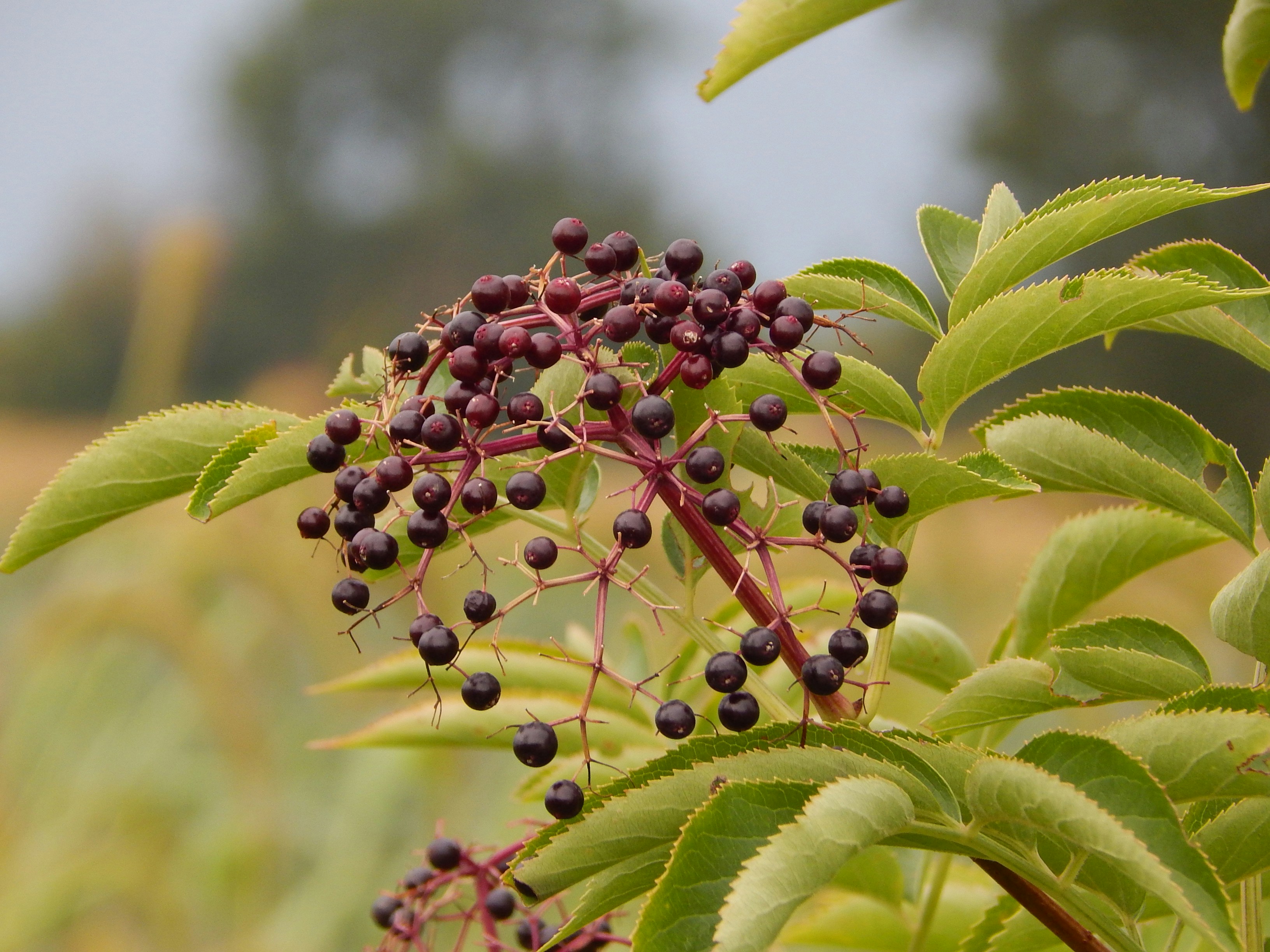
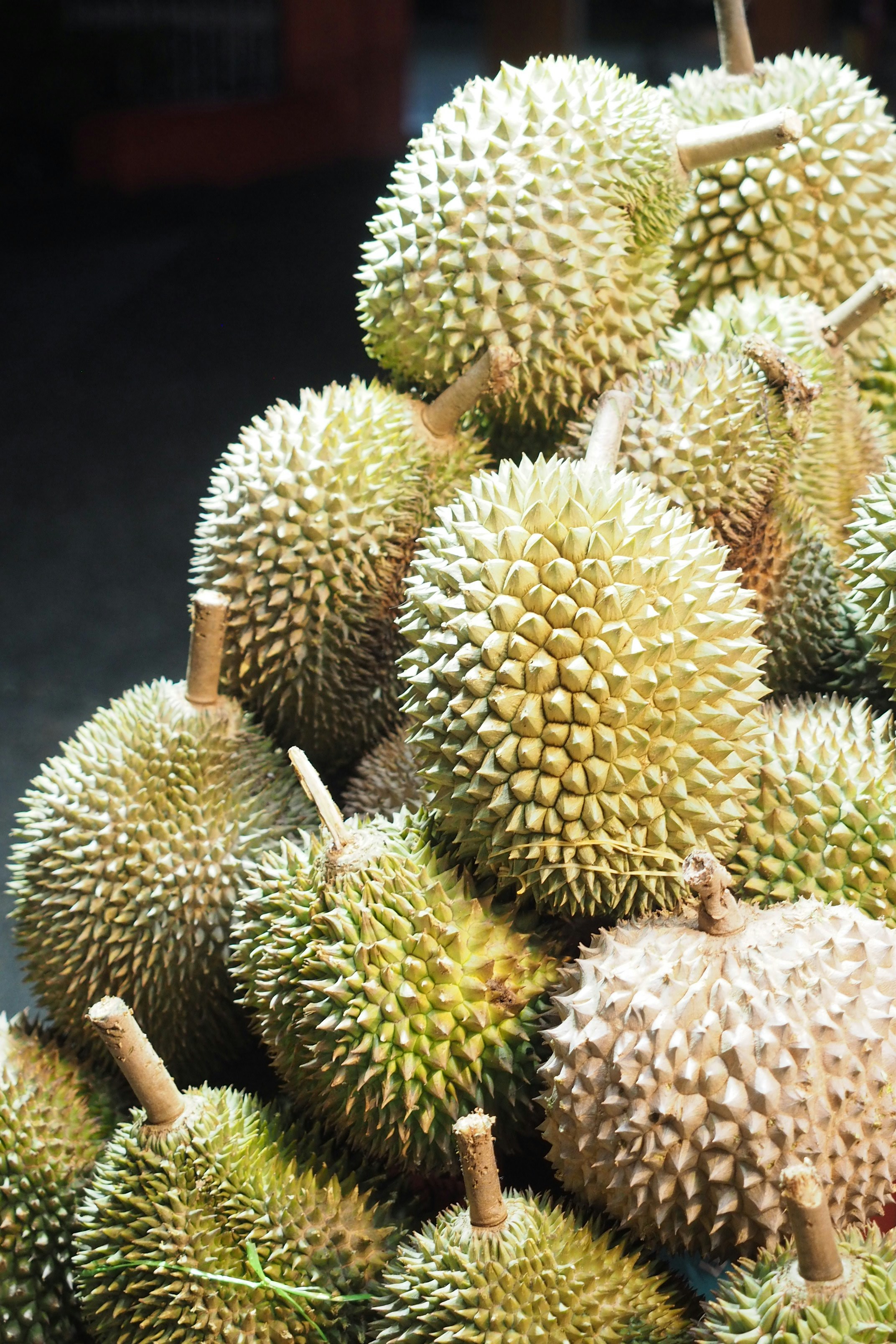
In The Book of Difficult Fruit, Kate Lebo layers her perspective, history, knowledge, and experience to build insightful essays on what makes her alphabetical list of 26 fruits difficult for her and/or the world at large. (Witten in, obviously, far more eloquent prose than my own.) At the end of each chapter, Lebo includes two recipes that serve as a safety net if you’ve always wondered what to do with aronia, elderberry, faceclock, or durian. 

You can’t have a book on difficult fruit without durian.

Mind you, The Book of Difficult Fruit isn’t always a light read. From discussing why she walked out on someone she shared her life with for several years to trying to figure out the reason her grandparents disowned her two aunts — there are some heavy memories associated with these fruits. But through practiced skill, Lebo manages to make these heavy memories accessible by showing you the weight she carries without making it yours.

Admittedly, The Book of Difficult Fruit isn’t a mystery. However, Lebo did solve the conundrum as to why almond extract never set off my nut allergy the way the raw fruit can (generally because almonds are often processed near peanuts). She also discussed the cyanide found in bitter almonds, the dangers of eating rhubarb leaves, the complicated history of gin, and the destructive power of wheat amongst other fascinating topics.

Honestly, I cannot say enough nice things about this book. I would’ve gobbled it down whole if I had not traveled to Colorado for a few days and then misplaced it for a week upon returning home. I would highly recommend these essays revolving around fruit and life to anyone who enjoys reading books about food sprinkled with interesting facts or catching a glimpse of how someone else dealt with life’s difficulties. 

Review: Jigsaw Puzzles

Recently, I caught a cold, and in my phlegmy state, reading became nearly impossible. As my brain couldn’t process the written words through the sea of cough, medicine said germies required me to take in order to breathe.

However…..I could work on jigsaw puzzles.

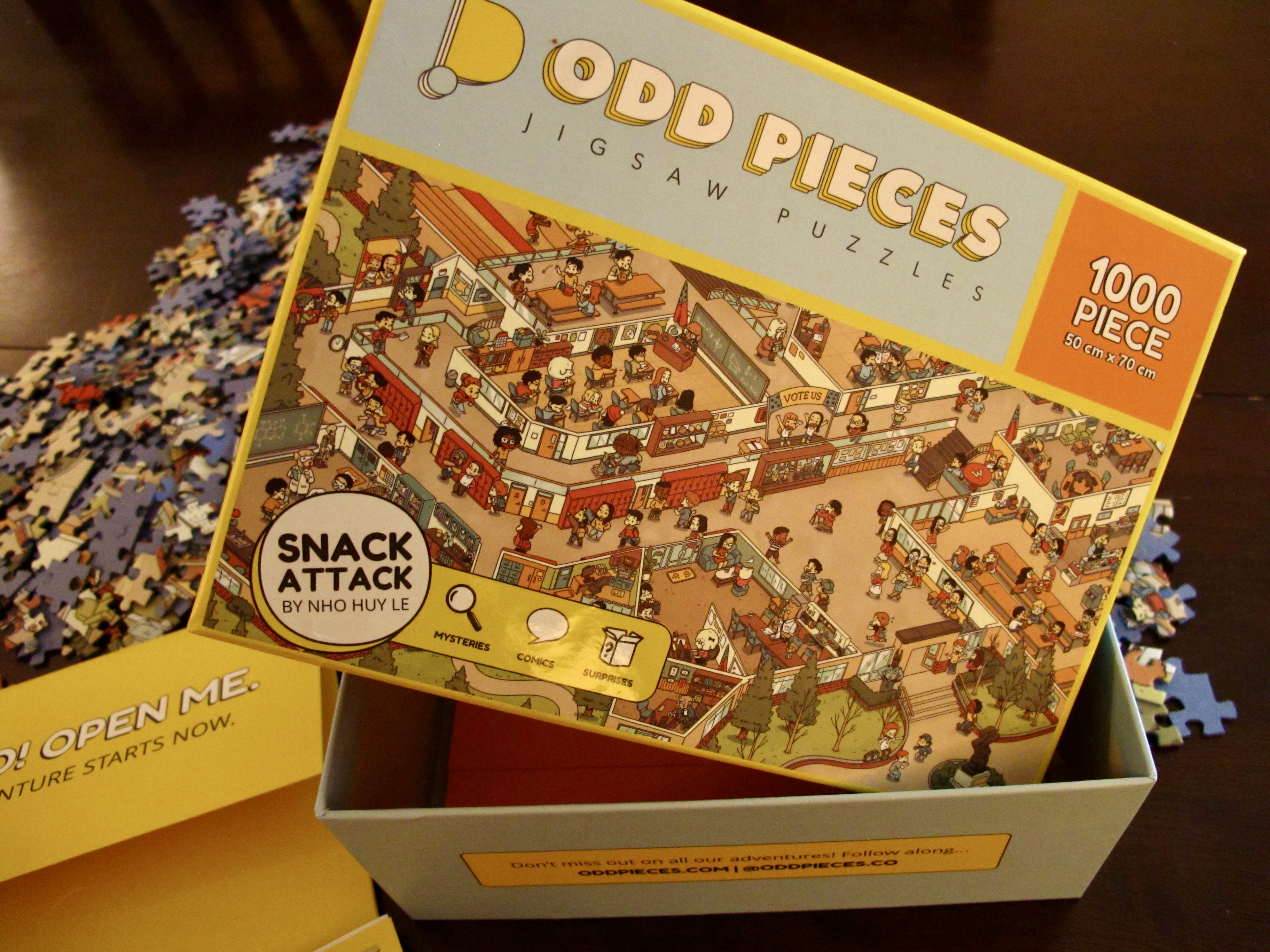
More specifically, mystery puzzles by ODD PIECES. These mystery puzzles are a bit different from those those I’ve assembled in the past. Unlike some mystery jigsaws, the makers give you a picture to work from. However, the picture on the box is the fraternal twin of the image pasted on the puzzle pieces.

Why?

Well, each ODD PIECES’ puzzle contains several mini mysteries that work together to alter the original art on the box. Thus, it gives the player a general sense of the geography, color scheme, and characters while increasing the overall challenge rating of the puzzle itself.

And let me tell you, I thoroughly enjoyed assembling all three puzzles my husband and I purchased! They are difficult enough to be challenging but not so hard you want to toss in the towel a quarter of the way through. Plus, it’s hugely satisfying to snap the pieces together after figuring out how a portion of the image was changed.

I would recommend these puzzles to anyone needing something to do on a lazy Sunday morning!

BTW: All the puzzles are 1,000 pieces and fit easily onto a dinner table (ours is smallish, and it still worked). Each box contains a small surprise and two envelopes.

The first includes a checklist that hints at the mysteries needing solving within the puzzle (hinting at some of the changes) and two additional larger pics found on the front of the box. So, if you’re working in tandem with someone else, you’re not arm wrestling over the box every time you need to view the reference picture.

The second envelope contains the final version of the puzzle and a comic that identifies the mysteries and their outcomes.

PS: These are not murder mystery puzzles. They remind me vaguely of an Aunt Dimity novel. I.e., you need to work out the source of the mayhem at the heart of the mystery.

My 52 Weeks With Christie: A.Miner©2025

What does a mystery, board game, & fabric have in common?

Annelise Ryan — Death in the Dark Woods

Whilst standing in one of my favorite indie bookshops, A Good BookDeath in the Dark Woods‘s cover ping my radar, thanks to the similarities its art shares with Agatha Christie’s book covers. Picking up the tome, I was intrigued by a mystery about a “monster hunter” that had nothing to do with Van Helsing, Dracula, or Frankenstein. Unsurprisingly, to anyone who knows me, I purchased it, as well as a stack of other books.

Upon cracking the cover of Death in the Dark Woods, I discovered myself becoming fast friends with the main character, Morgan Carter. Morgan not only owns a store I really, really wish I could visit, but her approach to cryptid investigation is one I can thoroughly get behind. Morgan explores each possible cryptid sighting with the mentality of plausible existability. Meaning she believes there’s a chance that a cryptid could exist but needs solid scientific evidence she can see, touch, and test before definitively adding said creature to science’s hierarchy of kingdom, phylum, class, order, genus, and species. 

And it’s this kernel of skepticism keeping Death in the Dark Woods from becoming a caricature. Morgan is willing to believe in Bigfoot’s existence, but that’s not the space from where she starts. 

In this installment of Annelise Ryan’s Monster Hunter Mystery series, Morgan’s asked to look into two brutal and bloody murders in Wisconsin’s backcountry. A Warden for the Department of Natural Resources named Charlie believes both deaths are the work of Bigfoot, despite the local sheriff attributing the attacks to bears. Morgan, unable to resist the lure of a cryptid based murder mystery, agrees to aid in an investigation whilst keeping both eyes open.

Okay, so here’s the thing…Originally, I was going to write that I found the ending, whilst satisfying, a bit slow due to the minor info dump in the summing up of the case by Morgan and her cohort of friends who helped close the case.

However, I now realize this opinion needs revising. 

You see, growing up in the Evergreen State, I was practically spoon-fed legends of Bigfoot as a child. Between stories told beneath the stars around a roaring campfire by my elders and older Girl Scouts trying to creep us out, shows like Ripley’s Believe It or Not! (the version hosted by Jack Palance), and the fun our family had watching Harry and the Hendersons; I’ve always known the broad strokes about Sasquatches and figured everyone did as well. 

(Yeah, yeah, assuming something makes an ass out of u and me.)

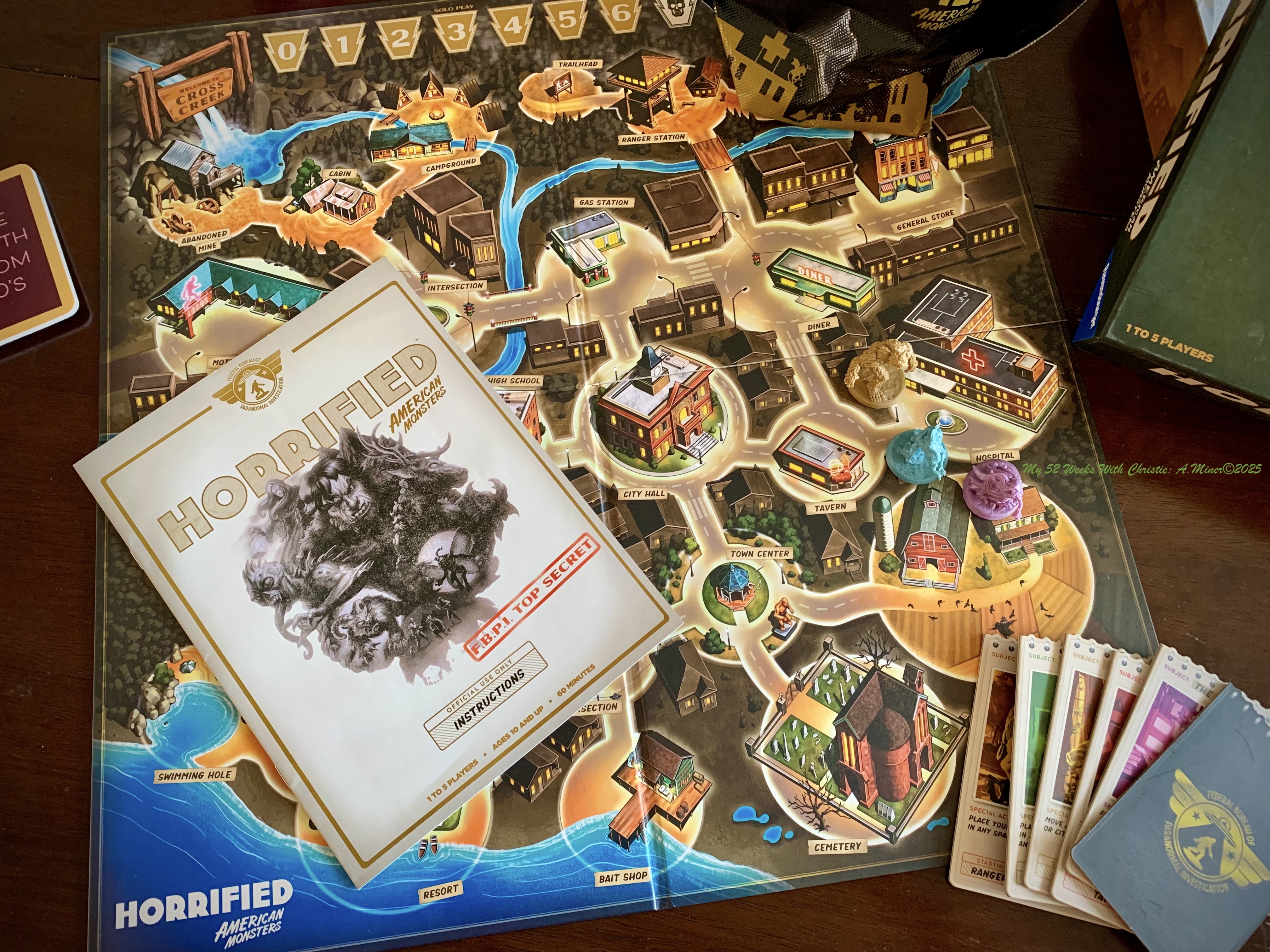
Then, during a recent game night, my husband & I, and some friends, cracked open a board game called Horrified: American Monsters.

Horrified: American Monsters pits a group of players against a Chupacabra, Banshee of the Badlands, Bigfoot, Mothman, Ozark Howler, Jersey Devil, or some combination thereof of these legendary beings.

And let me tell you, it is extremely fun to play. 

One of my favorite things about this board game is that it’s cooperative; everyone works together to save the townsfolk and each other to stop the selection of cryptids from winning. (Though there are still ways of teeing off your fellow players if that’s a dynamic your game group enjoys.)  

The game’s creators bill Horrified: American Monster as a game that takes about an hour to play for 1 -5 players. It took us about an hour and a half per game, mainly due to the debates over the best strategy to employ when attempting to thwart the cryptids on the board. (Alcohol may or may not played a contributing factor in the extra time as well….)

In any case, upon opening the rules book, Horrified: American Monster seems complicated. However, once you start playing, the rules are really easy to pick up. I highly recommend this board game to anyone looking for a quick, fun game to play either on your own or with friends!

Interestingly, above and beyond the laughs supplied by Horrified: American Monster, the games also forced me to reevaluate my initial assessment of the end of Death in the Darkwoods. Because while I’d a passing familiarity with Bigfoot, the Chupacabra, and Mothman (though, for some reason, I thought it was a comic book character), the Banshee of the Badlands, Ozark Howler, or the Jersey Devil were a complete unknown to me. Which I’m sure will lead one or two people to say something like: “How could you not know about them? They’re so famous!” 

Hence, my change in position on the ending of Death in the Dark Woods. I would no longer categorize it as a tad slow but informative and interesting.

The only real flaw in the mystery I found pesky was Annelise Ryan’s continual and overt foreshadowing — not only within the case at hand but probable future plots. Admittedly, this is a minor gripe in a solidly constructed story, but this plot device repeatedly popped me out of the narrative I enjoyed reading.

All that being said, I would still recommend Death in the Dark Woods to anyone looking for a different and intriguing take on a murder mystery. Moreover, you can read these books out of order, as Ryan didn’t spoil the ending of her first book in the second installment. (Ask me how I know.) And I’m definitely going back and reading A Death in Door County, the first in series, and then the latest installment, Beast of the North Woods

And believe it or not the fabric (the background of the very first picture in this post), the book, and game were all bought months apart! BTW I found the cryptid fabric at Gee-Gees Quilting.

Video Game Review: Ghosts, Mysteries, and Coming Soon

Once upon a time, ten-ish years ago, I ran across the game Haunt The House: Terror Town…and fell in love with it. Zooming around as a ghost, I explored the old mansion, scared people, unlocked new rooms, and solved puzzles against a brightly colored backdrop whilst listening to a fantastic score. I will unashamedly admit I played the game for hours. 

But, as new games started stacking in my queue, I set the Haunt The House aside.

Then I discovered the developer wrote another game, Detective Grimoire: Secret of the Swamp. It’s a detective game where you play Private Detective Grimoire, who’s hired to solve a murder and inadvertently meet his future side-kick. And I must say it was a whole lot of fun. The puzzles were challenging enough to feel satisfying when solved but not so hard you’re going to pull your hair out. The art was lovely, and the music was excellent, all of which helped immerse you in the game.

Then life interrupted my video game playing, for nearly a decade.

The upside of this nearly decade-long hiatus was, upon opening STEAM once again, I discovered the developer had published a new Detective Grimoire mystery called Tangled Tower. Again, the art and music are excellent, and the mystery engaging. Though there are numerous cut scenes, when interviewing various suspects/witnesses, which lengthens the gameplay significantly, they aren’t tedious. Moreover, the puzzles are engrossing, and the game mechanics make it fun to play (and aren’t buggy, which is even better). 

If you enjoy playing puzzle-based video games, I highly recommend all the titles above. The two Detective Grimoire mysteries are written as a tongue-in-cheek homage to the hardboiled Philip Marlowe private detective-type character, though Grimoire’s way more bumbling (in an endearing way) than his foundation. 

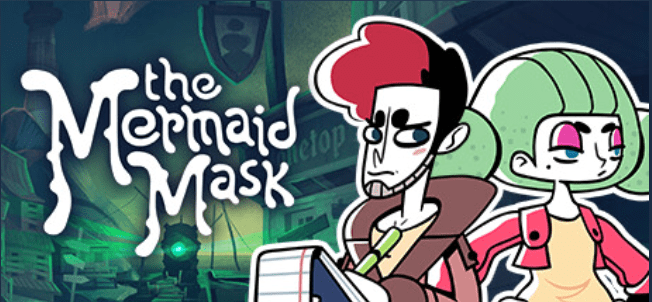
And I cannot wait until they publish the new installment, The Mermaid Mask comes out…Hopefully this year? There’s no date yet, but I look forward to playing it when it’s released!

Book Review: Tea Leaves, Quests & New Friends

The Teller of Small Fortunes — Julie Leong

Tao is the teller of small fortunes and, more importantly, the teller of true fortunes. A talent which, on the face of it, you’d think would make Tao popular. Unfortunately, after a day or two the novelty of having your fortune come to pass wears off, and Tao’s customers start wondering about what else the seer sees…Forcing Tao to move on, yet again.

Alone.

Until a tree, a stray fortune, and a quest create a troop of unlikely adventurers, changing the path of Tao’s life and theirs.

Okay, Here’s the Thing: I give The Teller of Small Fortunes 4.5 out of 5 stars. Leong’s story is bright, engaging, enjoyable, and a well-paced read. Moreover, I would recommend The Teller of Small Fortunes to anyone wanting something nice to read on a snowy winter’s night, snuggled beneath a cozy patchwork quilt with a mug of cocoa (perhaps laced with their favorite liqueur) at their elbow.

It’s a good story.

It’s just not a unique one — AND — that’s okay.

Perhaps it’s the number of D&D campaigns I’ve been watching on YouTube as of late or the fact that I’ve been reading fantasy novels of one variety or another since I was ten years old. Either way, the elements within The Teller of Small Fortunes‘s story fall squarely into the realm of things I’ve seen in other stories. Not once, not twice, but many times, and there’s a reason why — because they work: a main quest, a couple of side quests, the grind of keeping body & soul together, and a sacrifice to see things through — are all integral pieces of this style of fantasy novel.

What makes these standard components shine is Leong’s writing.

Warm and rich, her characters are multi-faceted and interesting, and I became invested in them and their futures as I read. Even better, the book has a satisfying ending (which cannot always be said). And if Leong writes another adventure for this band of adventurers, you can bet your bottom dollar I’m going to stand in line on release day and snap the second book in the series up. 

(Please let there be a second book?! )

(*Gazing beseechingly up at the publishing/book deities and muses of inspiration.*)