Mystery Review: Murder is a Collector’s Item

For the last few months, I’ve been in a reading drought. 

Nothing I’ve picked up since Tress Of The Emerald Sea really hit home in the same way as Tress, her quest, and her collection of teacups. This immediate attention grab, for which Brandon Sanderson is adept at creating, rendered other books pale and uninteresting by comparison…or I’m tired of having to wear reading glasses every time I pick up a book these days.

It could be two things, I suppose.

In any case, when writing about a Golden Age Gals, I always secure at least one book by said author in order to form my own opinion on their writing. 

And let me tell you, this book — finally — burst my funk!

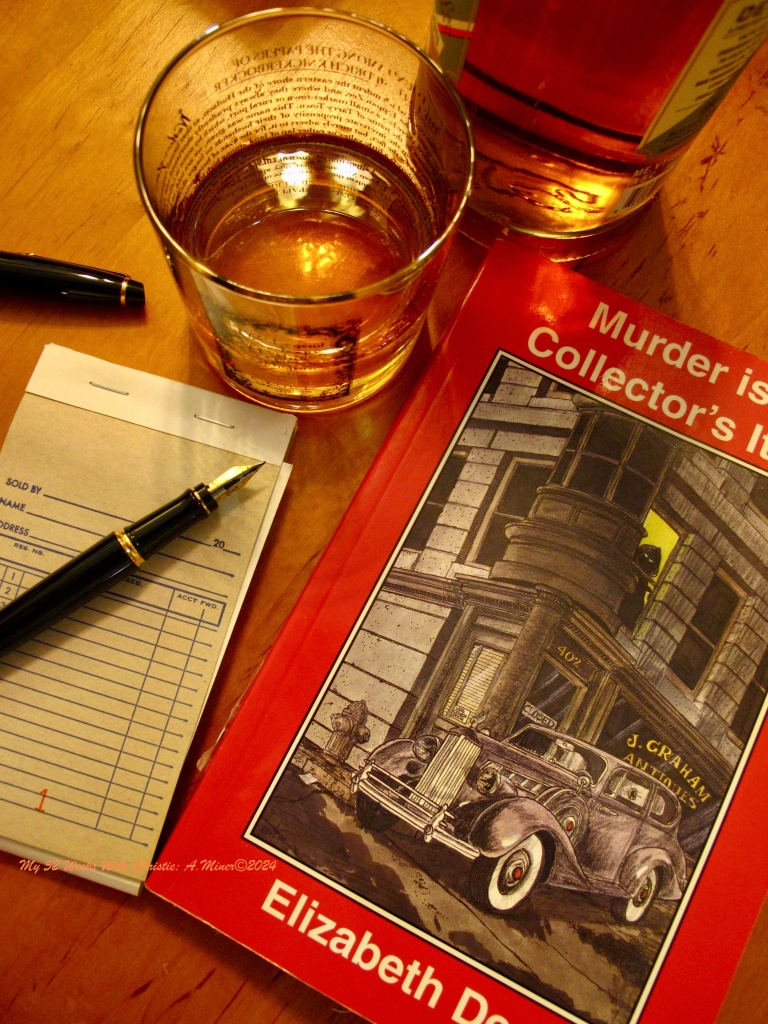
Murder is a Collector’s Item is an outstanding read! Not only does it hold up well against today’s eye, the humorous (though not screwball) mystery is engaging and believable.

What I appreciate, above and beyond the well-placed zingers, dry humor, and a mystery that Plays Fair, is Elizabeth Dean’s conscious effort to put Emma Marsh front and center. The majority of the mystery is told from Emma’s perspective. Even better, Dean doesn’t gloss over the foibles of a twenty-something female living on her own. The science experiments growing in the back of the icebox, clothes strewn across the bedroom floor, a habitually unmade bed, and dusty dishes sitting in a cupboard — are all things I understand. (And grown out of. Mostly. Though, that fridge science is a tough one to beat.) However, with my twenty-sixth birthday well and truly in the review mirror, this glimpse back into the past made me laugh.

I delighted in watching three separate investigation threads, whose ultimate goals varied slightly from one another, all propelled the mystery forward. Emma’s pure logic and luck (both bad and good) balanced well against her boyfriend’s application of the psychology angle, which was tempered by the Boston cop’s practical and pragmatic approach to the crimes. 

Moreover, I enjoyed watching Emma balance the stresses of her job. The battle of wits when trying to pitch the possible perfect (for them) item to a dithering customer, dealing with the foibles of a temperamental boss who you love (platonically) to bits but occasionally want to strangle with your bare hands, and the competative thrill of unearthing a gem from a rubbish heap you can sell for an order of magnitude more than what you paid for it. These are just some of the things I miss about my time at the book and record shops I once worked in. Plus, it’s fun to imagine how I’d balance my job duties against trying to suss out a murderer — something I never found myself needing to do.

I would happily recommend reading Murder is a Collector’s Item to anyone looking for a mystery on the lighter side. It’s not a cozy, but the murder(s) do take place off-stage, and the dry wit is precisely measured, so it only adds to the story without distracting. 

Seriously, it is worth the few extra clicks to find a used copy hanging out in the corners of the interwebs — I don’t think you’ll be sorry!

My 52 Weeks With Christie: A.Miner©2024

Book Review: Adieu to Chicagoland

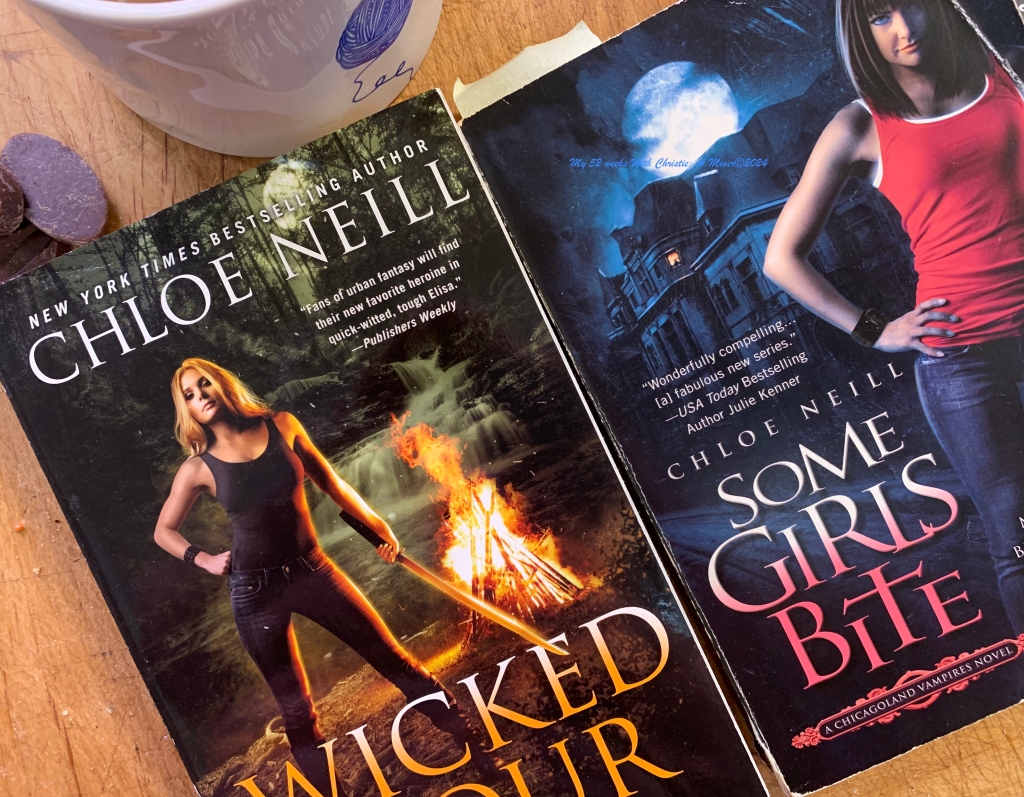
Chloe Neill — Cold Curses

Endings are not necessarily a bad thing. Bibliographies, especially lengthy ones, allow bummed-out readers to take solace in the knowledge they can revisit their favorite characters anytime they wish. However, what can leave a sour taste in a reader’s brain is when the final book in the series fails to land the ending either by indulging in maudlin sentimentality, nonsensically cramming every crowd favorite character into the narrative, or just failing to wrap up the story arcs in a satisfying way.

Happily, Cold Curses, the last of the Heirs of Chicagoland series, doesn’t succumb to any of these pitfalls. Chloe Neill does a fantastic job of wrapping up all the stray storylines in a way that feels natural and, most importantly, makes sense

Even better? The book is a fun read! Full of mystery, ass-kicking, and clever traps, Cold Curses doesn’t let the reader down. Perhaps the epilogue could’ve been longer. However, this is a very minor gripe that really stems from not wanting to say goodbye to everyone you’ve grown to love and all the mouth-watering food Elisa, Lulu, Alexei, Conner, and everyone else eats in both the Chicagoland and Heirs series.

Seriously, I would recommend either series to anyone who enjoys reading urban fantasy, about vampires, and enjoys Chicago as a book setting. You won’t be disappointed.

My 52 Weeks With Christie: A.Miner©2024

Mystery Review: Murder and Mamon

Mia P. Manansala – Murder and Mamon

“Everybody likes a bit of gossip to some point, as long as it’s gossip with some point to it….” This quote by Gore Vidal suits Lilia Macapagal’s godmothers (The Calander Crew, aka April, Mae & June) to a ‘T’. They gather scandals, scuttlebutt, and stories from around the community — then distribute what they learn to the appropriate parties.

However, unlike Oscar Wilde, who penned — “There is only one thing in the world worse than being talked about, and that is not being talked about.” Not everyone within Shady Palms appreciates being the butt of a whisper campaign, nor The Calander Crew’s brand of honesty.

So when someone starts spray painting “Mind Your Business” all over April, Mae & June’s new storefront (a laundromat) and sending them anonymous letters to the same effect…Well, some people within their sphere of influence relish the trio’s comeuppance. What’s worse, when April’s niece is found murdered in their laundromat not long after the vandalism begins, sympathy sadly runs short…Unless you’re part of Tita Rosie’s Kitchen crew! Despite her family and boyfriend’s requests to sit this mystery out, Lila sets out to find justice for her godmother’s niece.

What I enjoy about Tita Rosie’s Kitchen Mysteries is the portrayal of family and with family comes food (especially when said family owns a diner, coffee shop, brewery, and winery between them). In this series, the food is woven flawlessly into the narrative, so it adds to rather than detracts from the mystery at hand . And the mysteries Lila inevitably finds herself investigating make sense, as do her investigation methods. So I am never thrown from the narrative by what I read on the page.

There’s a reason why Mia P. Manasala won an Agatha Award!

Murder and Mamon is a great book I enjoyed reading from beginning to end. Whilst at the cozy end of the mystery spectrum, I would recommend this book to anyone looking for a light, warm, funny, and engaging mystery to combat the stress of upcoming holiday events and/or the loss of sunlight during autumn days!

BTW: This is not the first book in the series. However, if you know this going in, starting with this book isn’t a problem, as Manasala doesn’t ruin the endings of her other books in this one!

Vintage My 52 Weeks With Christie: Spinsters

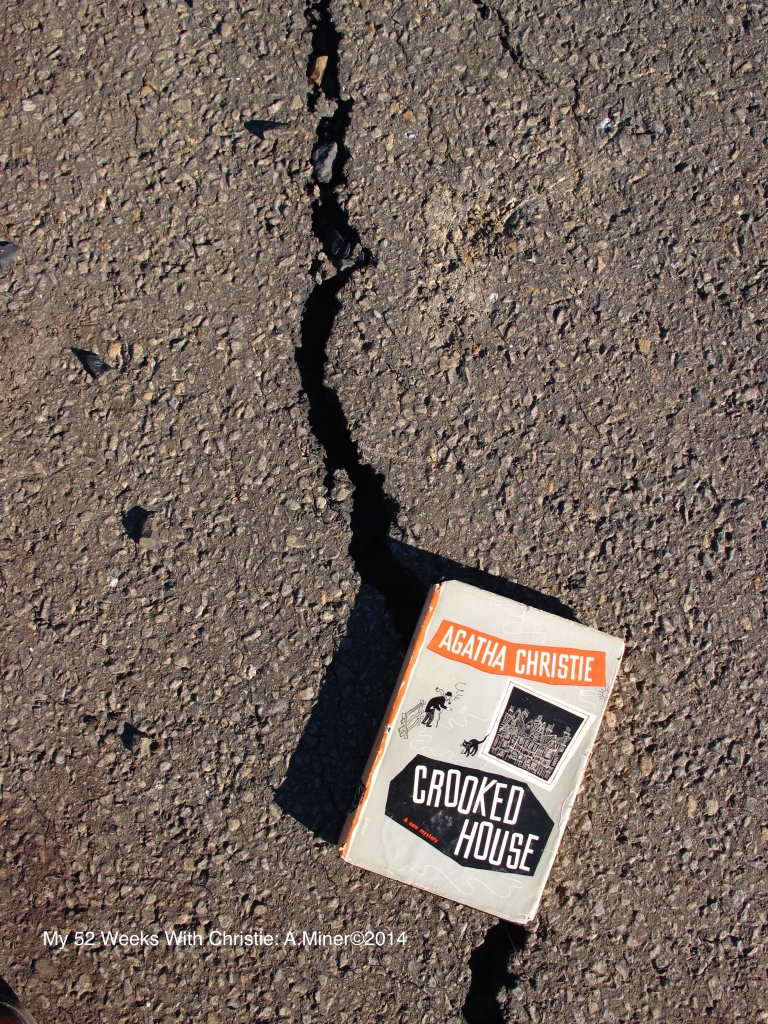
Crooked House 

First Published: In Cosmopolitan (US magazine) in 1948. 

I Read: Crooked House. Harper, New York, 2011. 

Series: Stand Alone. 

Detective: Charles Hayward 

Summary: Charles and Sophia met overseas, fell in love and were separated by their duties in the War. They decided if they lived through it and still liked each other then they would get married. Two years later the War is over, both are back in England and Charles meets with Sophie to reaffirm their arrangements. While the war is finished, there is an unexpected battle on the home front — Sophia’s grandfather, patriarch of the Leonide’s family, has been murdered. The whole family is convinced his second, and much younger, wife is the culprit. However there is little evidence against her, and everyone who lives in the house had a pretty good motive for murder. And much to Charles’s consternation, Sophia refuses to marry him until the mystery is put to bed, giving him a very strong motive to see the whole business through…  

Review:Much like the Murder Of Roger Ackroyd, either you know how the book ends or you do not and I cannot really review it for fear of spoiling the ending. Suffice it to say I thought this book brilliantly clever; you can tell Christie had fun while writing it. The mystery itself is a bit different, as the Rules of Fair Play, which normally Christie strictly adheres to, she took a bit of liberty with them in this mystery. You see, there are really only two clues which give a hint as to who the culprit is and even then they are a bit convoluted. The ending makes complete and utter sense when you read it, however the ability to reach the correct conclusion on your own, well, let’s just say it is a bit more difficult than usual.

One of the best characters in the book beyond the Charles Hayward and Sophia was Sofia’s great aunt Edith de Haviland. Edith was the only one in the whole of the Leonide family who figured out who committed the murder. Charles thought, “I had a suspicion that there might be more going on under the battered felt hat than I knew.” (pg. 35), and he wasn’t wrong in his assessment of Edith. Which brings us to an important point, Christie’s use of spinsters in key roles in her mysteries. 

It all started when Michael Morton cut Caroline Sheppard from the stage adaptation of The Murder Of Roger Ackroyd and replaced her with a young girl (“for plot purposes” is the phrase I heard when I read this snippet of information, it has no basis in fact — just in my imagination). Caroline Sheppard was the spinster sister of Doctor Sheppard; she seemed abreast everything going on in the village without ever leaving her house. This directorial cut catalyzing Dame Christie into giving a voice to those women who never married and never had children (and were past reproductive age) — in other words the spinster. 

Using notes from Caroline Sheppard and her memories of her grandmother (& her grandmother’s friends) — Christie created her second beloved sleuth, Miss Marple (btw Christie is one of the only authors to have created two equally famous sleuths). Christie was not alone in putting this group on the literary map; Miss Marple is just arguable one of the most popular. As a group I find them an interesting read, as they are allowed to do things which married or single ladies are not. And obviously with her use of Edith in Crooked House, Miss Marple is not the end of the line in Christie’s use of this type of character, I cannot wait until I meet another spinster! 

Random (And Almost Relevant) Facts: During the period in which Christie was penning her mysteries, there were a plethora of spinsters populating the world. Why? World Wars One and Two had decimated the numbers of eligible males. Millions of men died at sea, in trenches and on beaches — creating a “surplus” of marriageable women back home after the wars. This allowed for the rise of respectability among this group, since mathematically speaking it was infinitely harder to “find” a husband (or for that matter remarry, since so many husbands and fiancees died as well).

And since I am on a roll….

Mother Teresa is not a spinster. While researching spinsters I found many lists which included her on them. Seriously. Greta Garbo, Coco Chanel, or Elizabeth the First all can be considered spinsters, I am not sure I would have ever used that term to their face (because I am not stupid), but the term is applicable. Mother Teresa is different, she willingly took herself out of the procreation and marriage pool when she took her vows, to become a nun. Which is different than either choosing not to or not having the opportunity to marry and/or having kids. I just needed to point this out, since I guess I had stronger feelings on the use of the word “spinster” than I thought….

Favorite Quote:  

“It was rather like the exit of a bumblebee and left a noticeable silence behind it.” (pg. 55) 

Interesting Note: This is one of the hardest edged solutions I have read so far in her books. When it was first published her publisher considered it so controversial they asked her to change it. Christie refused and the book is better for it (she’d been writing for thirty years at this point, so she could get away with saying no)!

Also this is one of the few Christie mysteries which has never been made into a play, movie or tv show. The BBC made it into a radio play in 2008; but so far that’s it!

Cheating: Still no cheating. I hear London and Edinburgh are lovely at Christmas time…… 

A.Miner©2014

Mystery Review: Misfortune Cookie

Lana Lee, our part-time amateur detective and full-time restaurant manager, leaves snowy Ohio behind for sunny California and a restaurant convention…Only to find herself thrust into the middle of a murder mystery when Aunt Grace’s friend gets pushed off a roof. With the promise to stay away from danger, murder, and sleuthing still fresh in her mind. Lana finds herself unable to tell her Aunt Grace ‘no’ when she asks for Lana’s investigative skills.

A fish out of water without her beloved notebook, Kikomon (her pug), and supportive best friend — Lana must rely on her reluctant sister, Anna May, for help. Which goes as smoothly as you’d guess when said older sister does not condone her little sister’s penchant for snooping.

Misfortune Cookie is a change-up for the Noodle Shop Mystery series — as the majority of the main characters we’ve come to love only make cameos. However, we get to know Anna May and Aunt Grace much better, which is excellent! On top of which, Lana makes some critical decisions about her life as a sleuth — owning her need to find answers. 

Which I’m interested in seeing what happens when she returns home.

As I write this review, I just realized Misfortune Cookie is a transitional book — a cleverly written, immensely entertaining, and engaging transition story that will push Lana and the rest of her crew into new and (hopefully) exciting ways in future installments. Which makes me admire this book even more because it doesn’t feel like an evolution in Lana’s world — that’s how deftly Chien penned her mystery. 

What is even better, if you’ve not read anything in this series before (and are intimated by the back catalog), this is the perfect book to pick up! And if you’re not sure about the whole culinary themed mystery — again, this is the ideal book to start with as you’ll see that whilst food is present, it in no way detracts or distracts from the story at hand!

Seriously, pick up a copy of this mystery. 

You won’t be sorry.

My 52 Weeks With Christie: A.Miner©2023

Book Review: Tress of the Emerald Sea

During the last couple of years, when the bookshop was open, many of you who visited Fran and me on Fridays know I brought baked goods for you all to try. Whereupon I learn simultaneously that: A) I love baking. B) The practice gave me the confidence to try new and unfamiliar recipes. C) I am actually pretty decent at it. Due to this love, which finds me handing off treats to the neighbors and my husband’s coworkers regularly, I also enjoy watching baking shows.

Unsurprisingly, The Great British Bake Off is one of my faves.

Not only can you pick up pointers from the bakers themselves, but if you pay attention, you are exposed to all kinds of savory & sweet treats you (or, in this case, I) have never seen. Fans of the show know Prue Leith, one of the competition’s judges, has a compliment she whips out every now and again — “This (insert pastry name here) is worth the calories.” 

Or, inversely, “It wasn’t worth the calories.”

Considering the number of pastries, pies, breads, ice cream, and baked bits of goodness she and Paul Hollywood enjoy on the show — this is serious kudos or criticism indeed. 

Now, what does this have to do with the price of shortbread in Scotland? 

Since SMB closed its doors, gradually over the years, I’ve needed reading glasses more and more often. In point of fact, unless the writing on my phone is the size of a chipmunk’s footprint, I can’t read it. This makes reading the fine print on food labels, forms, and footnotes all but impossible…Unless I’m standing four feet away, which presents a whole new set of challenges. 

As I can no longer read books without my readers, eye strain has become a very irritating part of my life. Often keeping me from enjoying books as much as I used to. (Yeah, yeah, I’ll get to the optometrist soon. However, that’s not the point right now.) 

So when I tell you a book is totally worth the eye strain — you best believe I’m telling the truth. 

And Tress of the Emerald Sea is one of these books.

In the postscript of Tress of the Emerald Sea, Sanderson likens his story to a modern fairytale meant for grownups. However, a more apt one comes a few paragraphs later when he talks about watching The Princess Bride during lockdown with his family. When his wife wondered: “What would that story have been like if Buttercup had gone searching for Westley, instead of immediately giving him up for dead?”

This question planted the idea of Tress of the Emerald Sea in Sanderson’s brain and is a rather apt description that, whilst giving one an idea of what Tress of the Emerald Sea is about, doesn’t spoil the pleasure of found within the pages.

Of course, Tress of the Emerald Sea is far more complex and compelling than its origin question. (We’d expect nothing less.) It’s witty, laugh-out-loud funny, full of edge-of-your-seat suspense, with thought-provoking throwaway lines and a mystery concealed at its heart. 

Unlike my lovely husband, I’ve not devoured everything Sanderson’s written. Sure, I’ve read the Reckoners series (Steelheart, Firefight & Calamity) and Legion: The Many Lives of Stephen Leeds. And while Tress and the Emerald Sea is unlike any of the above books, it is set within the same multiverse. Meaning you meet one or three characters who obviously have a far deeper backstory. But so long as you know this before the first page, you’re fine. (Plus, Sanderson does a great job of weaving in enough information that someone picking up this book cold won’t get lost.)

*Squinting my eyes in the direction of New Mexico, where Fran is, at present, residing.*

Seriously, if you need something to lose yourself in, if only for a little while, Tress of the Emerald Sea is the book you’ve been looking for.

Book Review: A Conundrum…

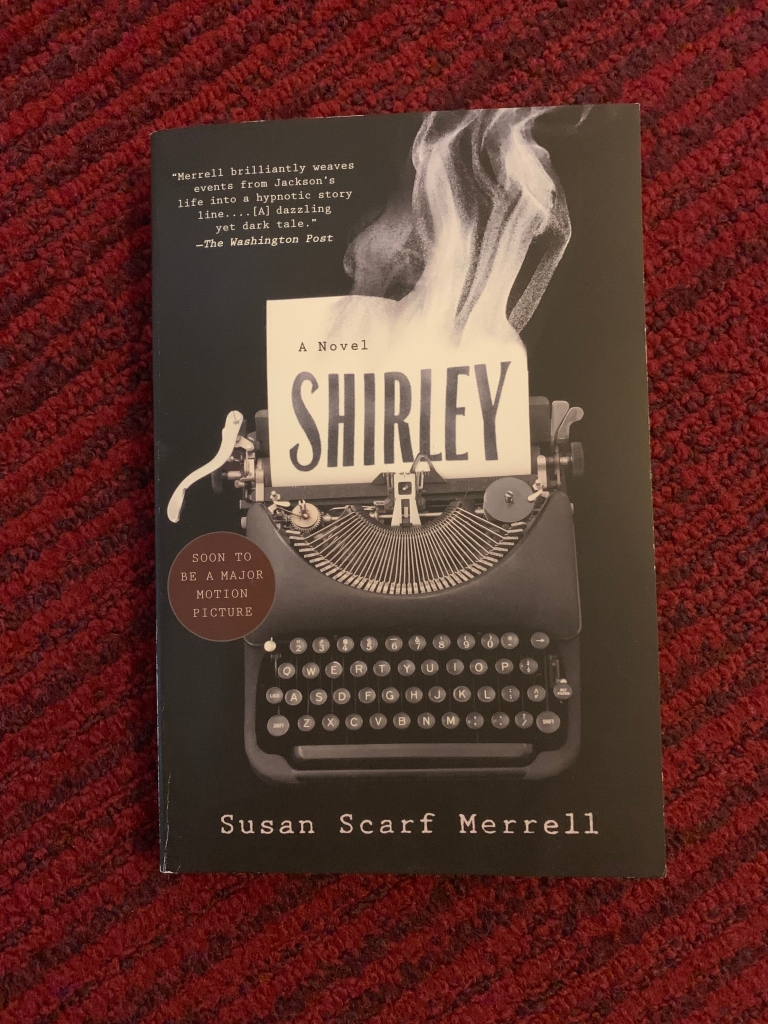
Shirley — Susan Scarf Merrell

Whilst working on my Murder By Mail series, I ran across a short story penned by Shirley Jackson called The Possibility of Evil. Which gives a fictional first-hand account of how the missives of a poison pen writer affect the community in which they live. A mere six pages, it takes no time at all to finish, and it’s one of the best short stories I’ve ever read.

That’s when I realized, despite my former coworker’s love of We Have Always Lived in the Castle, I’d never read anything by Shirley Jackson….And I fell down a literary rabbit hole trying to rectify this glaring gap in my book knowledge. During my research, in trying to figure out which anthology or anthologies to pick up, Merrell’s novel Shirley popped up. Excited by its premise, I ordered a copy of it as well. Then as one does, when gripped by a literary obsession, I eschewed my entire to-be-read-next stack in favor of my latest acquisitions. After reading a few of Jackson’s works, I switched it up and started Shirley. Whereupon I discovered myself reading a well plotted, paced, and put together book. 

The problem is, I’m not sure if I actually like it.

This realization left me in a morass of confusion, not only because I’d cracked the covers fully expecting to enjoy the read but because it took a while for me to suss out exactly why Shirley left such a sour taste in my mouth. 

Do you recall a review I wrote about Last Seen Wearing? Hillary Waugh loosely based his 1952 book on the real-life disappearance of Paula Jean Welden, a sophomore at the all female (at the time) Bennington College. Last Seen Wearing explores, through fiction, how the outcome of this still unsolved case might’ve changed had Paula’s diary been located and if North Bennington possessed a methodical police force.* 

Well, in a strange case of serendipity unknown to me prior to cracking Shirley’s cover, not only did Shirley Jackson and her husband Stanley Edgar Hyman reside in North Bennington, Vermont, when Paula Jean Welden vanished into thin air — Hyman taught English at Bennington College during the same period in which Paula attended. Giving Jackson a front-row seat to the frantic clamor of the five-hundred volunteers who turned up to search the mountain, the helicopter & airplane they employed in their search, the gaggle of reporters who descended on the town, and the strain the other students, staff, & teachers bore during this uncertain period. Unsurprisingly, Jackson drew inspiration from Paula’s case and wrote her into two stories — the 1951 novel Hangsaman and a short story called The Missing Girl.

Now, you might ask, what does a true-crime-inspired police procedural, a gothic novel, and a scathing piece of short fiction, all of which were written decades before Shirley, matter? Because of the four aforementioned works, only Waugh and Jackson chose to change Paula Jean Welden’s name in their stories.

Merrell did not.

And herein lies my problem with Shirley

When reading a fictional biopic, you expect the author to cherry-pick both the good, the bad, and the salacious from the lives of the people they are focused on. And let me tell you, Jackson and Hyman gave Merrell plenty of material to work with — a gothic/horror/mystery writer, who suffered from mental health issues (anxiety and agoraphobia), smoked like a chimney, drank, and took amphetamines & barbiturates. (Gotta love doctors — they gave her the former for weight loss, the latter to treat her anxiety, and believed they were okay to take together.) Add to that a husband who was a writer himself, had a habit of taking his students to bed, purportedly asked for an open marriage, felt frustrated by the lack of recognition for his wife’s work, yet controlled all the money she earned….As I said, there’s plenty of meat on the bone for Merrell to pick at. And it probably seemed like a stroke of luck when Merrell discovered the messy lives of this pair of literary luminaries intersected with the mysterious disappearance of a pretty blonde college sophomore.

Pictures of Paula Jean Welden.

However, Shirley is not a true crime story.

An homage to Jackson & The Haunting of Hill House? Yes. A fictional story about an unhealthy relationship that inspired Hangsaman? Yup. A way of shining a light on Hyman’s professional accomplishments? Certainly. A true crime novel?

Absolutely not.

It’s a piece of fiction meant to entertain.

The second, Merrell started intimating a resolution to Paula Jean Welden’s case, which, btw begins on page two; Merrell should have changed Paula’s name. Just as Jackson herself did in Hangsaman and The Missing Girl. Especially since I don’t believe, as I haven’t found any evidence on her website or in the handful of articles about Shirley, Merrell actually considers Jackson a viable suspect in the disappearance of Paula Jean Welden. 

Albeit Merrell does mention Paula in the last paragraph of the Acknowledgments, “….I must acknowledge Shirley Jackson and Stanley Edgar Hyman. I have conflated their residential history, and restructured facts and details to serve the purpose of my story, much as Shirley did with the story of Paula Welden….” An acknowledgment that is in no way good enough for turning Paula into so much grist for the mill, a plot device, a means for our main character Rose to prove her loyalty to Merrell’s version of the late great authoress.

And this is the crux of my problem with Shirley

Would I place Shirley on my recommended shelves if the bookshop was still open? No. And this makes me angry because there are so many things to like about this book. But I cannot get over the callous indifference shown to Paula Jean Welden. A real person who, chances are, lost her life on the Long Trail back in 1946. A girl who did nothing to deserve the cheap insinuations Merrell wove into the plot of Shirley — other than being attractive, vanishing without a trace, and choosing a college that happened to employ a professor who apparently enjoyed bedding his students.

*(I’m not taking a swipe at the police here. When Paula vanished, Vermont didn’t possess a State Patrol. (Though this case, plus four other unsolved missing persons cases from what’s now dubbed The Bennington Triangle, directly led to Vermont forming one.) Thereby leaving the initial stages of the investigation to the local Sheriff — who’d lost his reelection bid less than a month before Paula vanished. And whom, according to Connecticut State police detectives who were put on the case at the request of Vermont’s Governor, didn’t keep a single written record detailing any of the efforts, leads, or witnesses interviewed before their arrival — ten days after Paula was reported missing. The pair of detectives are the ones who shined a light on the lame-duck Sheriff and his poor handling of Paula’s case.)

My 52 Weeks With Christie: A.Miner©2023
My 52 Weeks With Christie: Vintage Post: Inflationary Language & Ancient Greece

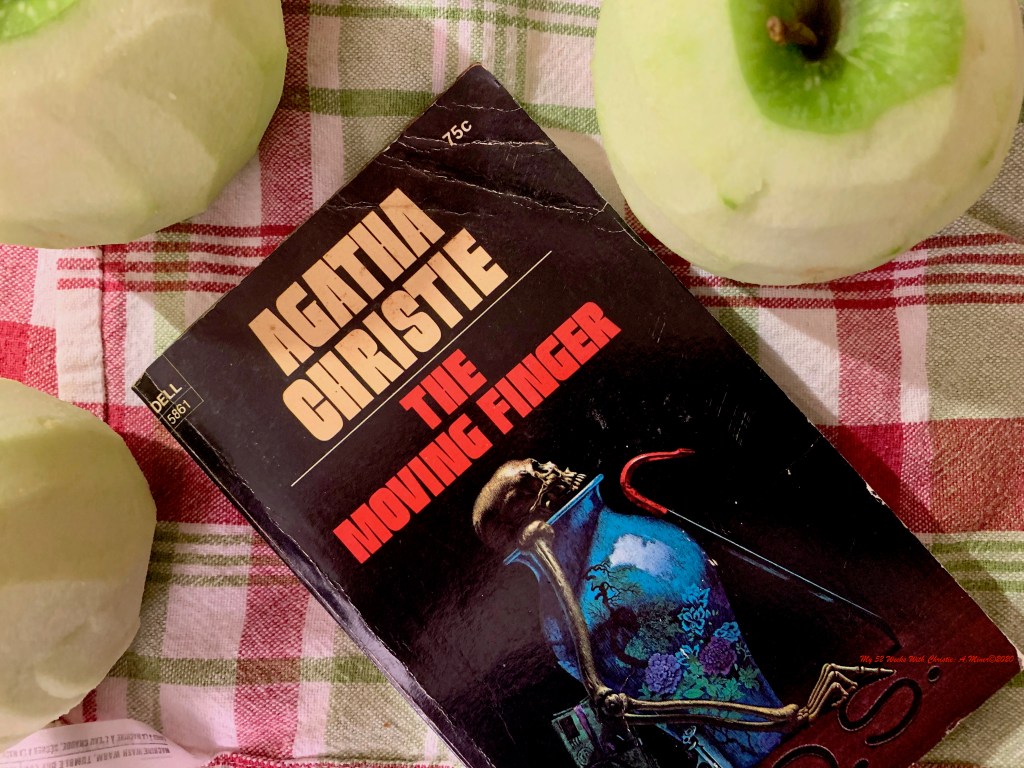
The Moving Finger

First Published: Serialized in the US in Colliers Magazine 1942. New York, Dodd Mead, 1942. London, William Collins, 1943.

I Read: The Moving Finger (New York, Harper, 2011)

Series: Miss Marple

Summary: On the advice of his doctor, Jerry Burton and his sister Joanna decide to take a country home for several months, in order to help facilitate Jerry’s healing after his plane crash, “…go down to the country, take a house, get interested in local politics, in local scandal, in village gossip. Take an inquisitive and violent interest in your neighbors…” (chapt. 1, pg. 2). The local scandal comes to Jerry and Joanna, when they receive an anonymous poison pen letter accusing the siblings of a much less proper relationship. Laughing it off, they don’t think much of it, until they discover a number of their neighbors have received similar letters, accusing them of all sorts of preposterous activities. It’s not until a suicide and then a murder rocks the village of Lymstock, that Miss Marple arrives and works with Jerry to solve this mystery.

Review: I really liked this book, Jerry, who narrates the entire book, I found to be a very likable character who developed into a stronger and more confident character the more embroiled in the village’s mystery/gossip/scandal he became. The mystery itself is very clever, and Christie had me looking in the completely wrong direction for the entire book as I thought the completely wrong family member was responsible for the murder! I found, surprisingly enough, that I enjoyed being fooled for the better part of the novel. This is one which I plan on reading again, when I find a copy of the UK edition!

The Moving Finger I feel is a curious book. The main protagonist, the one which the series is named for, Miss Marple, does not appear in the story until chapter 10. The sticky wicket here is, there are only 15 chapters in the whole book and she doesn‘t appear in the 15th chapter. While I read the book, the more I started to wondered when she was going to appear and do her magic. I know this is blasphemous, but I am not sure how critical she was to the story, as Jerry was doing a good job of working towards the solution on his own. Miss Marple was almost more of a writing device – a deus ex machina (an ancient Greek term meaning, the only solution to the problems on stage, is to have the gods descend and provide the needed solution and explanation). While not a god, Miss Marple’s intervention is used by Christie as an efficient way to wrap the tangled set of problems; clarifying Jerry’s thoughts & deductions, then devising a clever plan to apprehend the real culprit. Which I maintain Jerry and the police would have been able to do on their own, given a few more pages. So while this book is included in the Marple series, in my heart of hearts, I think of it more as a stand-alone, with a cameo by a famous sleuth.

One entertaining thought which kept flitting through my head as I read The Moving Finger was Victor Borge’s comedy sketch about Inflationary Language. Inflationary Language, if you haven’t heard of it before, (if you have, you can skip to the next paragraph) is a bit inspired by a bout of inflation experienced by the Danish economy; all numbers go up, “Prices – anything to do with money goes up, except the language. See we have hidden numbers in the language…all these numbers can be inflated and meet the economy by rising to the occasion. I suggest we add one to each number…” (a passage I have done my best to write down from a youtube video). Then much hilarity ensues as he reads a passage from a book, seriously it is very funny. I have included the video below.

(This video also has his phonetic punctuation as well – which while not relevant here is hilarious!)

Several times in The Moving Finger, the phrase, “You’re a woman in a thousand.” (Chapt. 11, pg. 181) is uttered by a character. This, it seems to me, to be a precursor to the phase we now use: You’re one in a million! Same sentiment, different number, an inflated number…. Thus, making me chuckle each and every time I read the older phrase. Remembering how I giggled, in my grandparent’s basement one summer‘s day, to my grandfather’s record of Victor Borge and the Inflationary Language track (btw if you haven‘t heard his thoughts on Phonetic Punctuation, you really must!).

Favorite Quote:

“The human mind prefers to be spoon-fed with the thoughts of others, but deprived of such nourishment it will, reluctantly, begin to think for itself – and such thinking, remember, is original thinking and may have valuable results.” (Chapt. 6, pg. 78)

Interesting Notes: When Christie was writing Miss Marple’s The Moving Finger, she was also writing N Or M?, featuring Tuppence and Tommy Beresford. She alternated between the two manuscripts, she believed it kept her writing fresh and interesting. Christie also listed The Moving Finger as one of her all time favorites!

Another interesting fact: the US and UK versions of this book are evidently very different from each other. The reason behind this, it is widely theorized, is The Moving Finger was published serialized form in Colliers Magazine in the US almost a year before the book was released in the UK. It is thought that Penguin Books published the magazine edited version rather than the original manuscript which Christie wrote. What I find even more incredible is the fact this mistake on the publisher’s part to this day hasn’t been corrected, meaning the US audience is reading, from what I understand, a much different version than the one which Christie originally penned.

Cheating: No I did not cheat, I found it wasn’t as difficult as it has been with other books (perhaps because I read the bulk of the book while sitting next to my eagle-eyed husband). I did have a vague but controllable itch to know if I had guessed correctly who the culprit was!

Mystery Review: A Sinister Revenge

Deanna Raybourn — A Sinister Revenge

One of the things I love about the Veronica Speedwell Mysteries is how Raybourn seamlessly weaves natural history into her mysteries! In fact, as in A Sinister Revenge, they become critical to the plot! Imparting just enough info, should you like, you can find out more about whatever she’s spliced into the story. 

In A Sinister Revenge, we find ourselves exposed to fossils, or more specifically, one giant fossil. Said fossil is at the heart of this murder in retrospect, where the remaining members of a group of friends come back together to discover who amongst them is a murderer….whilst Veronica and Stoker are on the outs, and Tiberius tries his hand at playing peacemaker.

Honestly, this series is so much fun.

I cannot recommend these books enough. You don’t HAVE to read the first in series to read this one….so long as you recognize several books precede it. However, if you do not, you will miss much of the nuance betwixt the main characters — Veronica, Stoker, Tiberius, and Merryweather. Plus, the books are such a lark; why would you not want to start with the first? 

Mystery Review: Another Great Classic!

Last Seen Wearing — Hillary Waugh

Originally published in 1952, Last Seen Wearing is one of the first police procedurals that gave readers a realistic portrayal of both the police people and the methods they employ to clear cases. Which, in this instance, is the disappearance of college freshman Lowell Mitchell. 

Waugh, a pioneer of the police procedural subgenera, follows the case from start to finish — showing there are no shortcuts when solving a case. Unlike Holmes’s specialized knowledge or the leaps Poirot’s little grey cells make — Police Chief Frank Ford relies on his thirty-three years of experience as a cop and the leg work of his men to run down every lead, blind alley, and dead-end so they leave no stone unturned in their search for Lowell Mitchell, a girl who doesn’t seem to have an enemy in the world. 

Unique at the time, Waugh shows all the ephemeral leads Ford’s men run to ground, the tedious leg work done to verify every piece of information, and the politics that inevitably creep into the case thanks to the pressure exerted by the press, family, and district attorney who’ve all got a stake in getting the crime solved…by yesterday preferably.

All these small and large details helped create a slow burning plot, which turns into a raging inferno by the time you reach the last page. Seriously, I couldn’t put it down as Chief Frank Ford, right-hand man Burt Cameron, and his officers closed in on their suspect.

Another interesting tidbit about this particular mystery is that it’s loosely based on the actual real-life disappearance of Paula Jean Welden. Who, on December 1, 1946, decided to hike the Long Trail (as it’s called) a few miles away from her college in Vermont. Unable to persuade anyone to go with her, she set out alone. Several people met her on and during her journey, however, none saw her leaving. When she didn’t turn up by the next morning, as her roommate thought she was studying elsewhere on campus that night, the search was on. 

Paula, or more gruesomely her body, was never found.

In an odd twist of events, Paula wasn’t the first to go missing in this area. One year earlier, Middie Rivers, a local man familiar with the area and an experienced outdoorsman, disappeared without a trace whilst hunting with four other people. Exactly three years later, on December 1, 1949, a military veteran went missing whilst traveling by bus through the area. Ten months later, an eight-year-old boy Paul Jepson, vanished into thin air while waiting for his mother to finish feeding some pigs. It’s rumored that bloodhounds tracked him to nearly the exact spot where Paula Welden was last seen four years earlier. Sixteen days after Paul went missing, Frieda Langer disappeared while hiking with friends. Of the five people who vanished from the area over five years, Frieda’s body was the only one ever found.

And not one of the quintet of mysteries was ever solved. 

This string of people going missing from the same general location earned the area the moniker — The Bennington Triangle. 

To be clear, Last Seen Wearing only details Paula’s missing person case. Using elements of the search for her and her family life in the book, the conclusion (obviously) is Waugh’s alone. Nevertheless, it’s a mystery I’d highly recommend to anyone looking for a police procedural, which is a classic and surprisingly bloodless!

Mystery Review: It’s a Classic for a Reason

Once upon a time, when I worked as a bookseller, the founder of our shop wrote a list of the five best mysteries (in his estimation) of all time. Rex Stout’s Fer de Lance, of course, topped the list. (Bill was a huge Nero & Archie fan — as those of you who knew him well remember.) However, at that point, I hadn’t started My 52 weeks With Christie blog nor begun reading my way through the classics section. So, on an academic level, I found Bill’s list interesting but not one I felt compelled to read my way through.

Fast forward one decade.

Whilst perusing the shelves of my local bookstore, I chance upon a copy of The Poison Chocolates Case, and it sparked a memory. I don’t recall its exact position on it, but for whatever reason (probably the word chocolates), I recollected its inclusion in Bill’s esteemed list. 

So I picked it up.

And my oh my, do I agree with our late great founder of SMB.

Based loosely on the Detection Club, which Anthony Berkeley helped found, the story’s Crime Circle gets together regularly to discuss all things, “….connected with murder, poisons and sudden death.” (pg. 11). (Similar to the Real Murders Club from Charlaine Harris’s Aurora Teagarden mysteries and the Hallmark Movies.) In any case, believing a group of amateur sleuths/criminologists unequal to the task of finding a solution to a rapidly cooling case, which stumped Scotland Yard’s best, Chief Inspector Moresby presents the evidence and theories to the Club’s six members. 

These six members have one week to form and prove their theories before presenting them to the group — and no solution is off limits.

Berkeley does a masterful job of presenting the same case seven times, with seven VERY different solutions — each ratcheting up the tension just a little further until landing on an ending that somehow I didn’t see coming!

Another aspect of this book I enjoyed is the fact the members of the Crime Circle draw parallels with real true crime cases and their own theories. Their commentary on said cases is fascinating and contains enough detail, you can research them on your own. 

Should you be so inclined.

Now, I’ve read variations on this style of mystery before — Cards on the Table by Agatha Christie, written seven-ish years after The Poisoned Chocolates Case, pits four detectives against four murderers in order to solve a single crime. Asimov’s Black Widowers short stories (based on Asimov’s own experience with the Trap Door Spiders — an arguing/dinner society of noted sci-fi figures) reminds me of Berkeley’s Crime Circle as well. Unfortunately, while reminiscent of Berkeley’s work and brilliant in their own right, neither Christie nor Asimov captures the same slow burn or surprise Berkeley manages to cram into this masterpiece.

Seriously, if you’re looking for an outstanding mystery, I highly suggest, just as Bill did before me, you pick yourself a copy of The Poisoned Chocolates Case — you won’t be sorry.

Round-Up Mystery Reviews

Things I’ve loved watching/reading recently but are so popular they practically sell themselves!

First Up: The Glass Onion

The second installment in the Knives Out universe is absolutely awesome. Though I must admit, I was worried when I first started watching it. Very, very worried. All the cameos of well-known actors felt a bit gratuitous…but I’d looked forward to the movie for months — so I stuck with it, and boy, was my patients rewarded. The cameos enhance the feel of the billionaire jet set cast of suspects we are watching and make complete sense by the end of the movie. An end that I gotta say is one of the very best I’ve seen in a whodunnit….since the original Knives Out movie.

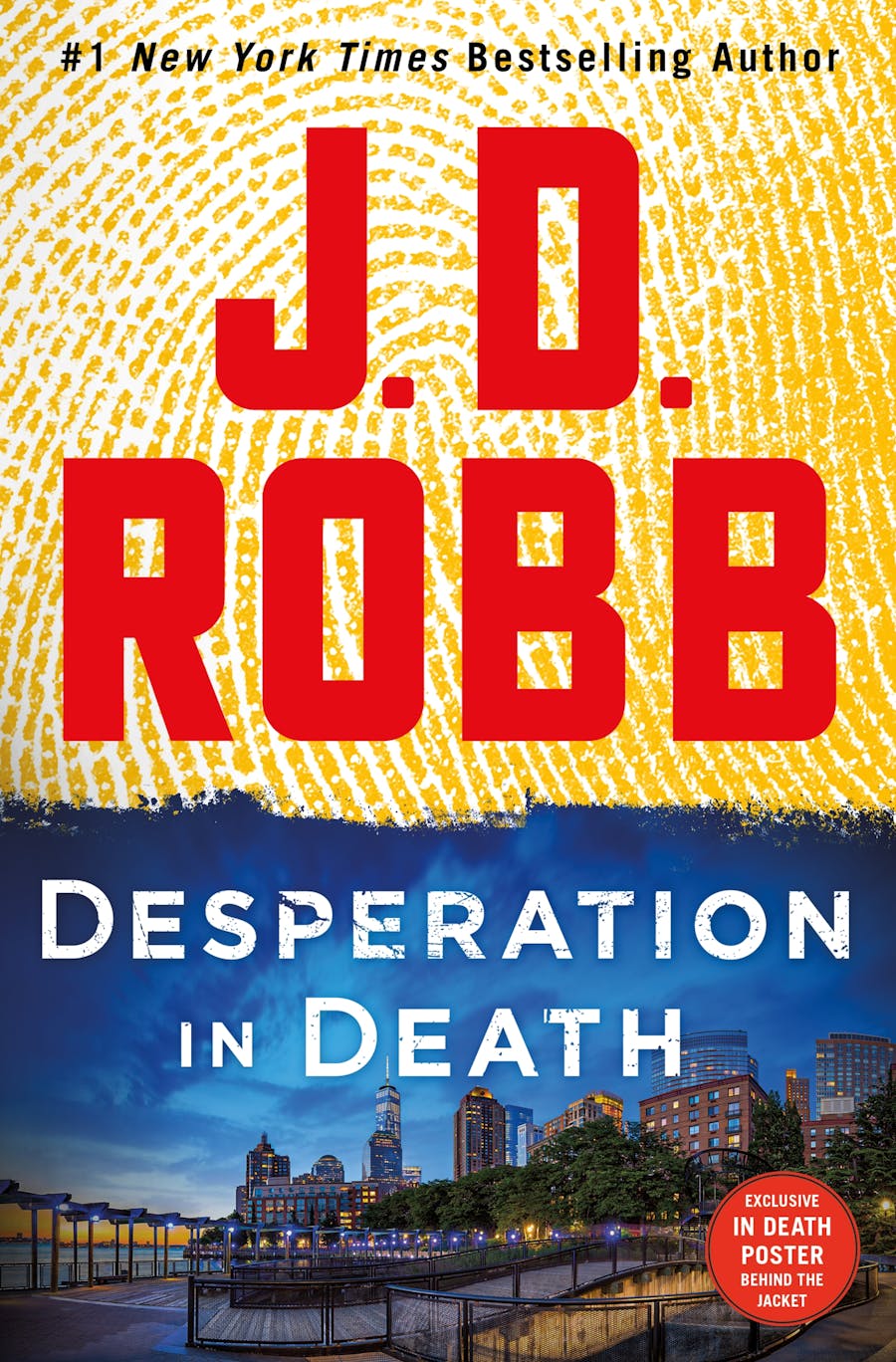
Second: Desperation In Death by J.D. Robb

A page-turning, ripped-from-the-headlines thriller didn’t disappoint. Action packed from the first page to the last, if you’re looking for a good vacation read, you won’t go wrong with this installment. Though there is a trigger warning I must warn other readers about — the plot revolves around human trafficking and the sexual exploitation of women and young girls. While Robb does a good job of balancing the horror of the subject matter with the mystery (without getting overly graphic), if this is something that you struggle with, I’d skip this installment and wait for Encore In Death which is due out on February 7, 2023.

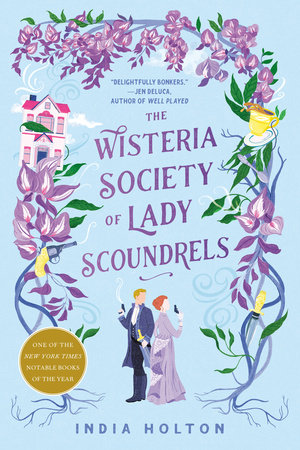
Third: The Wisteria Society of Lady Scoundrels by India Holton

Jane Austen meets pirates meets magical flying houses — this is the best summary I can give. An amusing read full of action, swashbuckling, betrayal, and books, The Wisteria Society was a fun read. Though, if you’re well versed in steam-punk and fantasy, it’s not quite the groundbreaking book the New York Times made it out to be.

Lastly: Wednesday

A Netflix original that expands the Addams Family universe — is an exceptional show. Of course, all the traditional elements of an Addams Family story are present. Still, the writers have done a singular job of sprinkling them through the series and keeping them fresh (rather than simply regurgitating them in a cringe worthy fashion). Full of secrets, multiple mysteries, and interesting characters, this show is well worth your viewing time. And I am so very excited that Netflix renewed Wednesday for a second season!