Mystery Review!

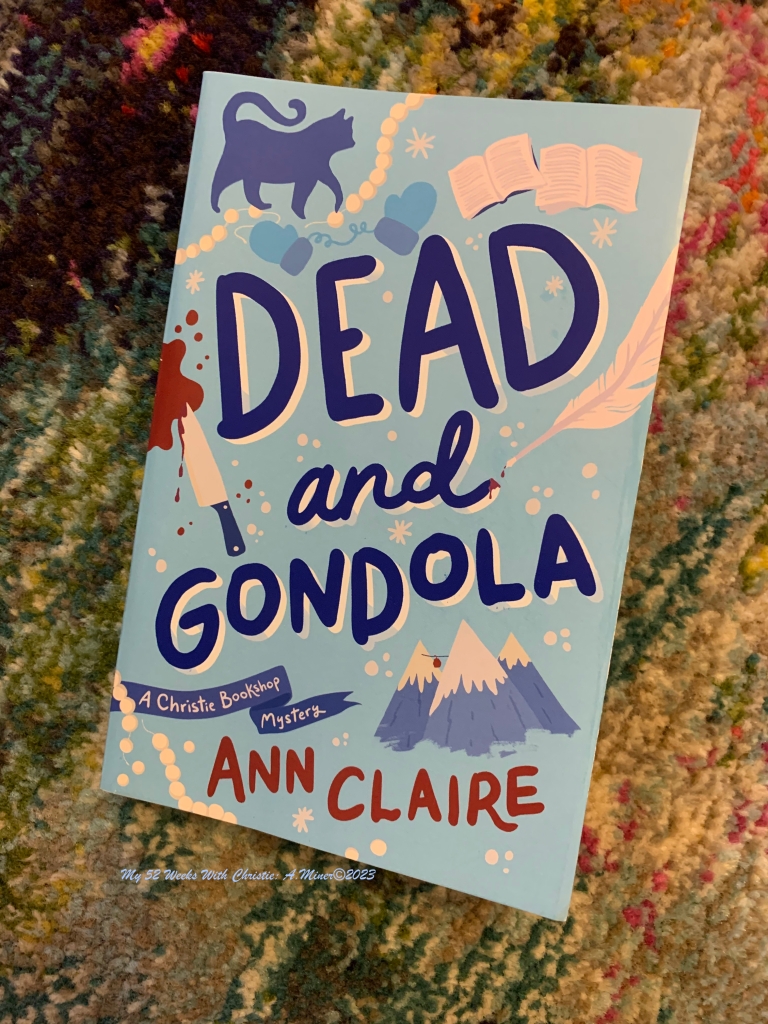
A Christie Bookshop Mystery: Dead and Gondola — Ann Claire

Okay, so the pull of this mystery title is obvious. Whilst not about Dame Agatha directly, the tangential tie intrigued me, so I settled down for a read….and found myself enjoying the book rather a lot.

Ann Claire, our author, does a great job of keeping the mystery focused on the mystery. Knitting tidbits about the famous authoress in seamlessly and as needed — by using a Mary Westmacott book as a critical clue, naming the bookshop cat Agatha, and occasionally invoking our sleuth’s inner Miss Marple to help push the story forward.

The characters are well-rounded and interesting, as is the town of Last Word itself. The mystery, a variant of a Patricia Moyes plot I once read, works well.

I’d recommend this book to anyone who enjoys mysteries set in a bookshop, around a ski town, or with a strong family vibe. Seriously, I cannot wait until the next book in the series, Last Word To The Wise, comes out in October!

Brazil, Chernobyl, & An Answer

My 52 Weeks With Christie: A 2022 Revisit to The Pale Horse Part 3

On September 13, 1987 a security guard failed to show up for his shift at an abandoned medical clinic in Goiania, Brazil. This seemingly unremarkable event set into motion events that would eventually cumulate into a mass cesium-137 radiation event — second only in size and severity to Chernobyl.

On that fateful day, taking advantage of the guards absence, a pair of men absconded with the deserted clinic’s tele-therapy device. Not knowing what they’d stolen, the two begun disassembling the steel and lead liners in hopes they’d fetch a good price from the salvage yards. Unsurprisingly, they both rapidly begun exhibiting signs of radiation sickness and burns. Which prompted one of the men to visit a doctor — who put his symptoms down as food poisoning. Whilst he was told to go home and rest, his friend continued to break up the device. Eventually, he managed to puncture the housing’s heart with a screwdriver…and discovered a deep blue glowing substance residing inside.

Getting sicker by the minute the thieves sold the perforated device to a salvage yard.

That night the new owner, spying a beautiful blue glow emanating from his backyard, decided to bring the device inside his house. Using a screw driver he widened the hole slightly, and found a glittering blue gem inside. Scraping the ‘gem’ he managed to dislodge and extract several pieces of the cesium-137. He then gave away the twinkling pieces, about the size of a grain of rice, to his favorite family members and neighbors for good luck.

However, after his wife grew sick, the same day he’d begun fiddling around with and gifting people with the twinkling blue dust, he sold it to another scrapyard….spreading sickness, along with radioactive dust, even further afield.

Finally, the now ailing wife of the first salvage yard owner noticed how everyone who’d come into contact with the device or it’s pretty innards grew gravely ill — she retrieved the device from the other salvage broker and took it to a hospital. Where a doctor figured out they weren’t suffering from food poisoning or a cold but from radiation sickness. 

The doctor then persuaded the Brazilian government to intervene.

In the end, well over 100,000 people were tested for exposure to cesium-137, 249 were found to have been exposed and amongst the 249 — there were 44 serious cases which cumulated in 4 – 7 deaths (my source materials are conflicted on this number), including the wife who’d initially alerted authorities. 

(A photo taken in 2020 by Gustavo Leighton of an area in Goiania — though not of the cesium-137 contaminated area. I just though people might like to see how beautiful the area is!)

Again, how does this 1987 tragedy influence my Pale Horse research? Turns out, this was the first large scale, systematic test of the efficacy of Prussian Blue treatment in humans. 

Now in possession of another firm date, which I must admit was far more recent than I’d ever dreamt when I begun my informal inquiry, I started scouring the Library’s database for more modern research papers. 

And struck gold. (Whilst the plumbers realized several fixtures in the house hadn’t been properly installed….)

In Mexico from 1978 – 1986, where thallium based rat poisons hadn’t been banned, 50 cases of exposure due to an accident, attempted suicide, or murder were recorded. Of the 50 — 26 were treated with Prussian Blue and as expected those patients recovered significantly faster. (The other 24 were treated with the standard non-Prussian Blue medicines.) 

Another study, held from 1990 – 1995, administered Prussian Blue to cattle in areas of the Ukraine, Belarus, and Russia hardest hit by the 1986 Chernobyl disaster. Scientists hoped to reduce the lingering cesium-137 from the food chain (i.e. milk and meat) by treating the cows with Prussian Blue. Which it did. (It also proved to be cost effect way of doing so.)

How? 

Turns out Prussian Blue clears up a case of mistaken identity. 

When cesium-137, radioactive thallium, or regular thallium enters your body — their ions fool your body, for a hot second, into thinking they’re potassium ions. Since we need potassium for all kinds of important functions, our body’s are keen on absorbing it — which is how the poisons get a foot hold in your system. Now the body isn’t bamboozled for very long, and when it figures out the toxic ions aren’t actually potassium, they get unceremoniously dumped into the intestines….Unfortunately, a large number of the deadly ions fool the body once again and get reabsorbed. 

The binary cycle — which ends with either recovery (if the dose was small enough) or death (more often than not) — played out over and over again. Until a scientist came up with a theory, exposed some rats to cesium-137, and then treated some with pharmaceutical grade Prussian Blue in 1963.

The crystalline structure of the insoluble version of Prussian Blue trapped the cesium-137 by exchanging its own potassium ions for the poisonous ones. Because of Prussian Blue’s strong affinity for cesium-137 the pigment held firmly onto to the poisonous ion — even through the intestine. So the treated rats end up whizzing and pooping out the toxin much faster than their traditionally treated and non-treated counterparts.

Armed with even more info I turned, once again, to the library database….and found, in a single line of a chemistry textbook, a name. (And the plumbers informed me the five feet of cast iron sewer line, which didn’t get a new liner, was the source of our continuing back-up problems — needed replacing. Cue more apocalyptic sounds echoing up from the underside of our house.)

Nigrovic.

Dr. Vladimir Nigrovic.

Who got the Prussian Blue ball rolling in 1965 when he published a paper, Retention of Radiocaesium By The Rat As Influenced By Prussian Blue And Other Compounds, informing the world of his findings. (Born in Yugoslavia in 1934, Dr. Nigrovic emigrated to the U.S. and went on (after his Prussian Blue find) to have an impressive career in medicine, academia, and as a teacher. He sadly passed away in 2008.) Four years later, in 1969, a German pharmacologist named Horst Heydlauf of Karlsruhe suggested Prussian Blue as an antidote for thallium poisoning.

And there it was, the answer I sought — the names of the two scientists who figured out a pigment could help those poisoned by cesium-137 and thallium. 

You’d think their names would be easier to suss out! 

Now, I didn’t discover how they came up with their theories, if they were indeed inspired by The Entombment of Christ by Pieter van Der Werff (the first known painting to have Prussian Blue in its creation) or by an offhand comment from a colleague but either way, their find has saved live all over the world.

And, having finally answered my own question, my search was over.

And so too was the trial and tribulations of our house’s plumbing problems (knock on wood). It only took three weeks, the rapid depletion of our savings, and several holes in our garden before we could do some nerve wracking loads of laundry and dishes….On the upside I now fully appreciate the luxury of running water, a fully functioning sewer line, and plumbers! 

(Whom I fervently hope I don’t need to hire again anytime in the near future!)

A.Miner©2022
Thallium, Rat Poison, & Poisoning

My 52 Weeks With Christie: A 2022 Revisit to The Pale Horse Part 2

In fairness to all the scientists studying Prussian Blue, uncovering its curative properties couldn’t really come about until someone discovered Thallium. A feat which finally happened….157 years after Prussian Blue’s in a moment of scientific synchronicity. 

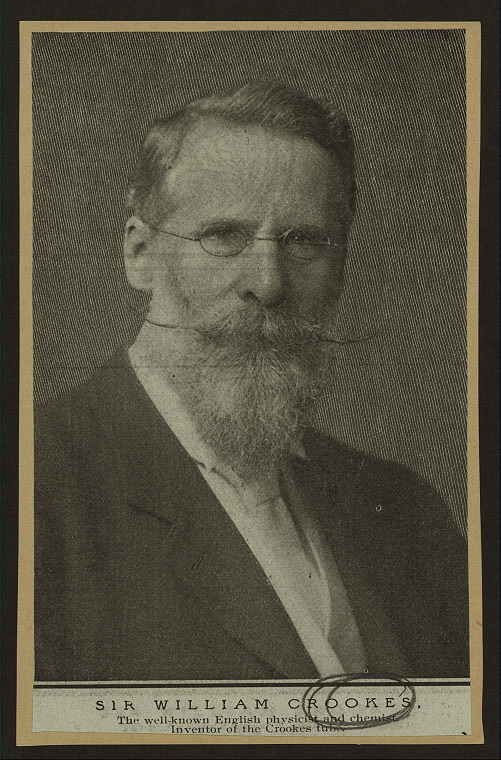
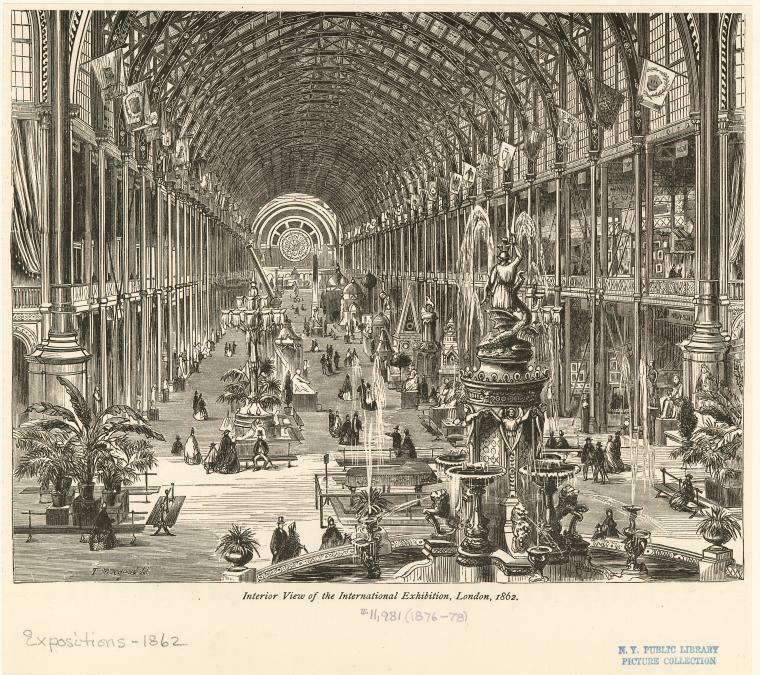
As it turned out both Sir William Cooks and Claude-Auguste Lamy independently observed, tested, and published papers about a new element in 1861. (They also presented their find, in separate demonstrations, at the Great London Expo in 1862.  Which led to a massive brouhaha as Lamy was awarded a medal for the discovery and Crooks was not.) In any case, whilst Cooks got to name the new silvery-white metal (after the Greek word thallos — in honor of the bright green flame it produced when burned), Lamy holds the dubious distinction of being the first confirmed case of thallium poisoning.

(Sir William Crookes on the left — The Interior of The Great London Expo in the center — Claude Auguste Lamy on the right)

Apparently, during Lamy’s pursuit and study of the newest heavy metal on the periodic table, he began suffering lower limb pain and weakness. Theorizing thallium as the source of his health problems, Lamy set about testing his notion. 

(***Trigger Warning*** I’ve no clue what Lamy had against puppies.) 

Dissolving 5 grammes of thallium sulphate in milk, Lamy offered the polluted mixture to two two-month-old puppies. Who, after taking an initial drink, refused to swallow another ounce of Lamy’s lethal potion. Leaving the remainder in the yard overnight, probably hoping the puppies would lap up more poison (the jerk), Lamy went outside the following morning and discovered the dish empty.

Taking a good look around his yard, Lamy quickly determined that an adult dog, two hens, and six ducks had unexpectedly finished off the puppy’s foul brew. Over the next several hours, all the unfortunate animals, puppies included, began exhibiting signs of depression, fatigue, paralysis of lower limbs, convulsions, pain, and eventually death. When Lamy performed a necropsy on the corpses, none of the animal’s organs showed any significant signs of poison. However, when Lamy subjected the animal’s organ tissue to spectral analysis, the tell-tale vibrant green flame gave thallium’s presence away. 

Wanting to make sure of his findings, Lamy gave another luckless two-month-old puppy a grain and a half of thallium sulfate. When the poor thing died forty hours later, Lamy finally felt confident enough to infer that thallium sulfate was a potent poison. 

When Lamy published his findings in 1863, he made sure to tack on a warning to anyone thinking of using this easily dissolvable and nearly tasteless toxin for nefarious purposes, “…there is not a poison that can be traced with more certainty…than this.” (Cork Examiner Sept. 8, 1863; issue 4333.)

Super, so I now knew when and how people figured out you shouldn’t lick a lump of thallium. However, I still hadn’t found a link to Prussian Blue. (And BTW – The fact Lamy knew thallium sulfate is nearly tasteless makes me wonder if he didn’t do a taste test and inadvertently poison himself.) 

Stymied, I decided to reread The Pale Horse. (Plus, as we didn’t have any running water or plumbers in the house for a few days, and I needed something to do.) Whereupon, thanks to my early research, another detail stuck in my craw. 

Assuming Christie set The Pale Horse in and around 1961 (the book’s publication year) and Lamy had already established thallium’s lethalness back in 1863. Then why was Rhoda Despard (Mark Easterbrook’s cousin) using a thallium cream to remove a patch of hair on her dog in order to cure their case of ringworm? Especially since, over the intervening ninety-eight years, newspapers had provided ample proof that people shouldn’t have access to thallium. 

Don’t believe me? 

Well, amongst other infamous stories reported in the papers betwixt 1863 and 1961 there were the accidental deaths of three little boys in 1929 at St. John’s Hospital (Leicester Square) from a miscalculated dose of thallium meant to cure their case of ringworm. A few years later, in 1935, a New York father of five named Fredrick Gross was accused (and ultimately found not guilty) of murdering his wife and four of his five children with thallium-laced hot chocolate. Three years later, in 1938, Austria executed Martha Marek by guillotine for murdering her husband, daughter, aunt, and two boarders with thallium-based rat poison. Finally, there’s Australia’s infamous ‘Thallium Craze’ — which all started thanks to an infestation of rats and mice around the country (but mainly in Sydney) in the 1950s. Since no one is keen on sharing their abode with rodents, retailers stocked large quantities of thallium-based rat poison on their shelves. The easy access and perfect purchasing camouflage coupled with high profile poisoning trials of Yvonne Fletcher, Caroline Grills, Veronica Monty, and Beryl Hague — led to at least one hundred people finding themselves at the wrong end of a thallium-laced cups of tea, cakes, and cocktails.

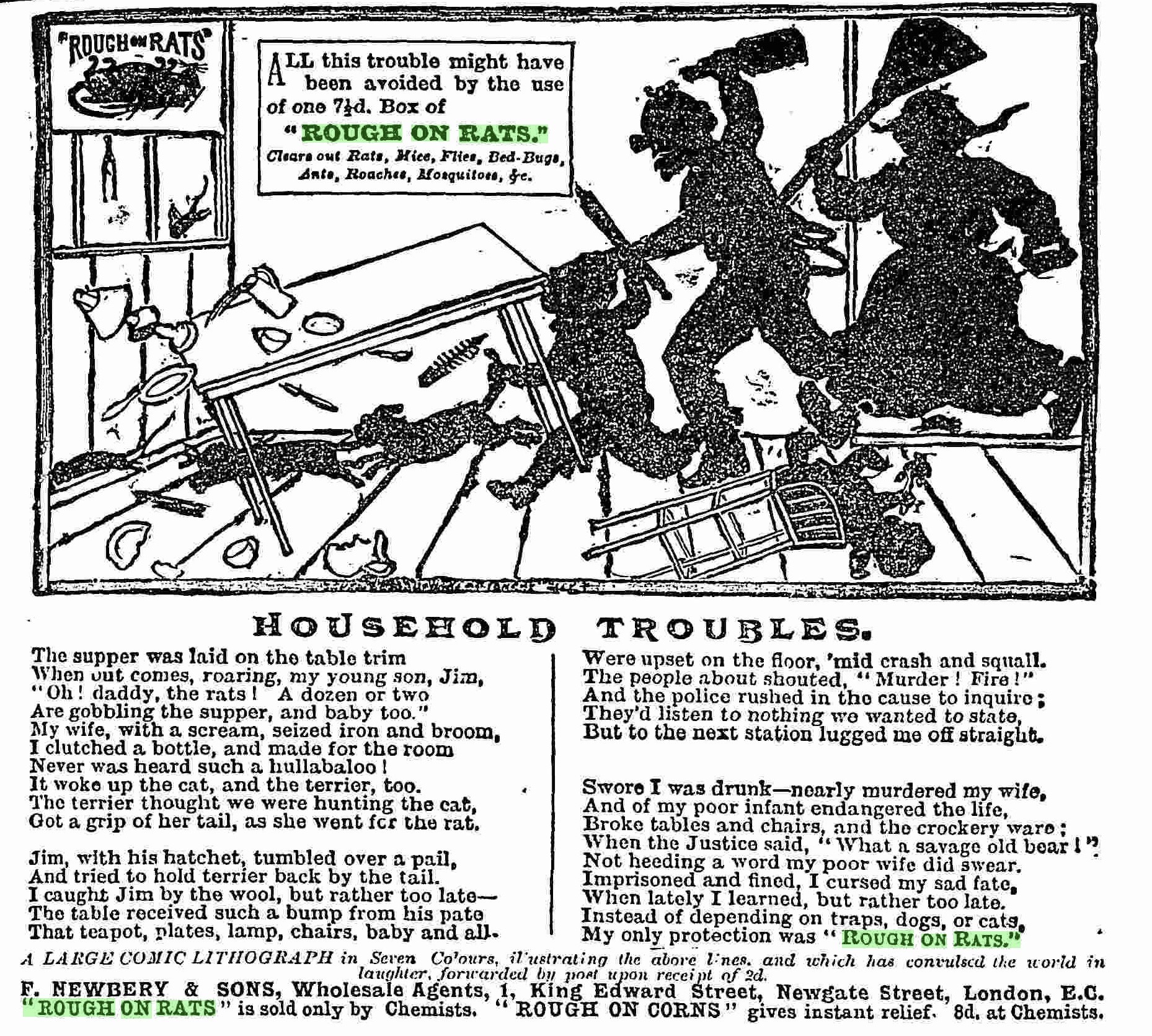
(In fairness to Rough On Rats, it doesn’t actually contained thallium — it was an arsenic based rat poison. Which isn’t any less lethal. But I wanted to show how prevalent this style of pest control substance was back in the 1880’s with this newspaper advertisement. Plus, Rough On Rats was cited in the poisoning cases of Ceely Rose and Ada Applegate — to name just a couple of cases.)

However, none of the articles I found ever mentioned the survivors, and there were a few, being treated with Prussian Blue. Nor did Christie write about The Pale Horse’s heroine, Ginger, being treated with the stuff during her hospital stay either. And since our authoress wrote about the poison in such detail it saved a number of lives over the years — I can’t imagine she would’ve omitted its antidote. 

So I did what I should’ve done in the first place, after smacking myself in the head and saying ‘Doh!’ — I googled ‘Prussian Blue AND antidote’ — whereupon I made a startling discovery.

(Now, I probably should’ve started my search with Wikipedia. However, armed with a newly minted library e-card, I was fully committed to the newspaper/scientific paper/government org rabbit hole in which I’d already leapt and didn’t think of it….Plus, my hyper-focus search allowed me to block out the apocalyptic sounds emanating from under the house.)

The FDA didn’t approve Prussian Blue as a treatment for thallium poisoning until 2008, and the World Health Organization only added it to its Essential Medicines list in 1999.  Switching back to the Library’s digital database, I found a number of helpful research papers corroborating and elaborating upon the aforementioned info. 

I also learned Prussian Blue is an antidote for Cesium-137 poisoning as well…and this little tidbit cracked the informational floodgates wide open. (Thankfully, my kitchen floor remained dry….which is more than can be said about the bathroom’s.)

A.Miner©2022

A Lingering Question, Plumbing Problems, & Prussian Blue

My 52 Weeks With Christie: A 2022 Revisit to The Pale Horse Part 1

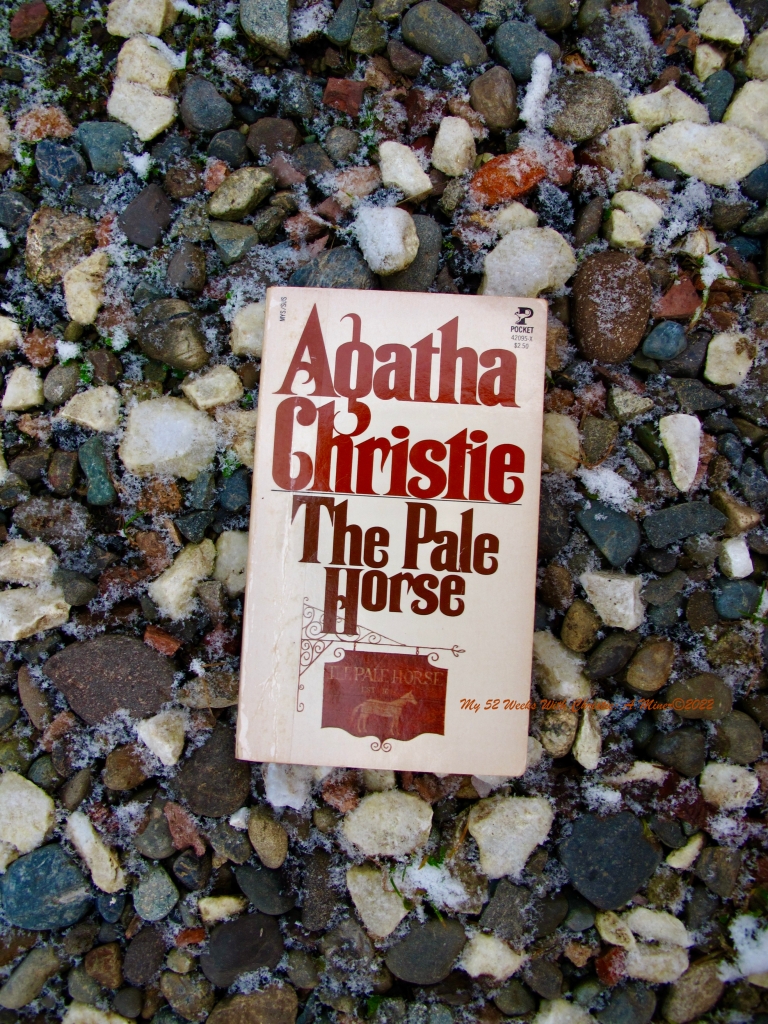
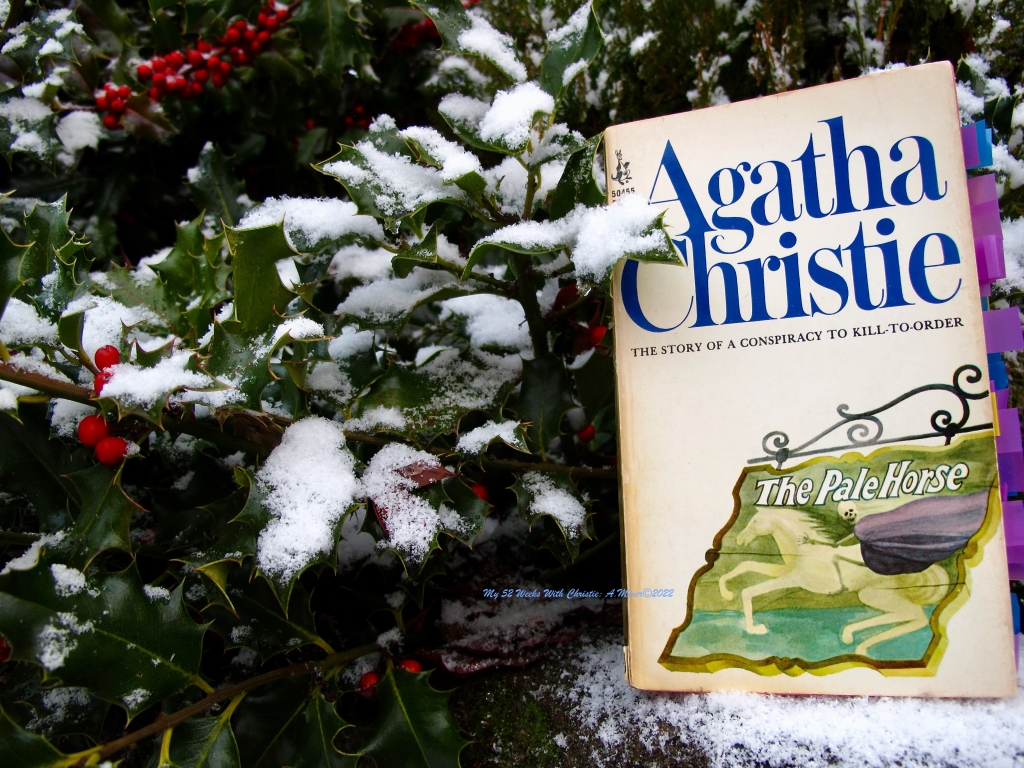
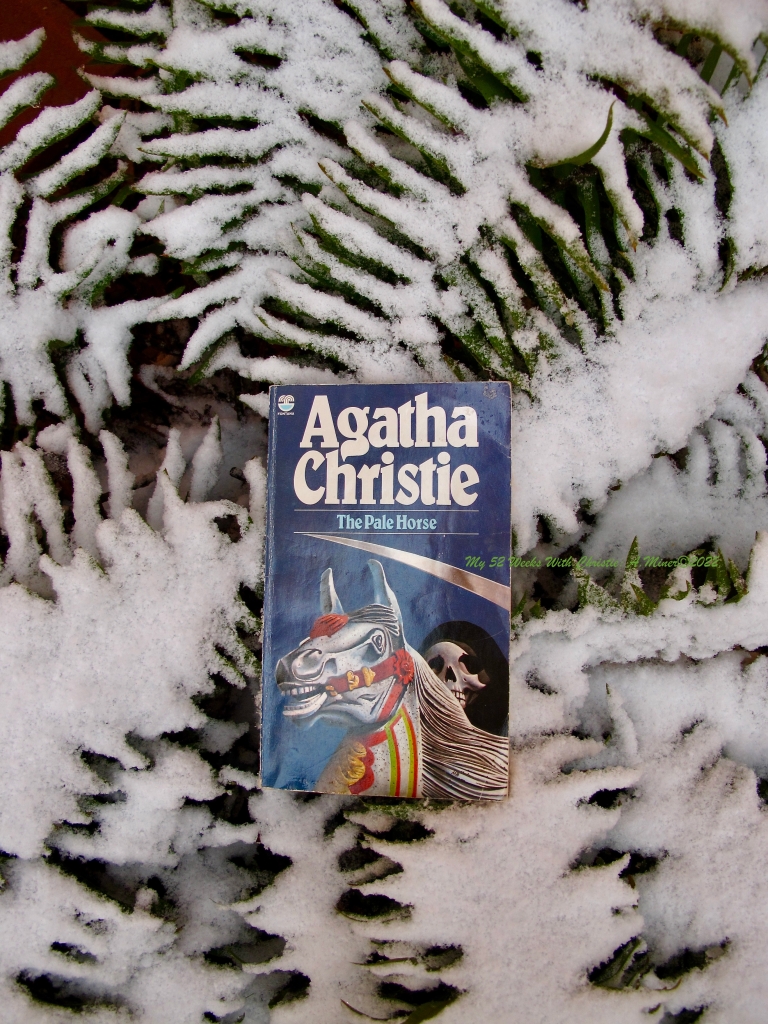
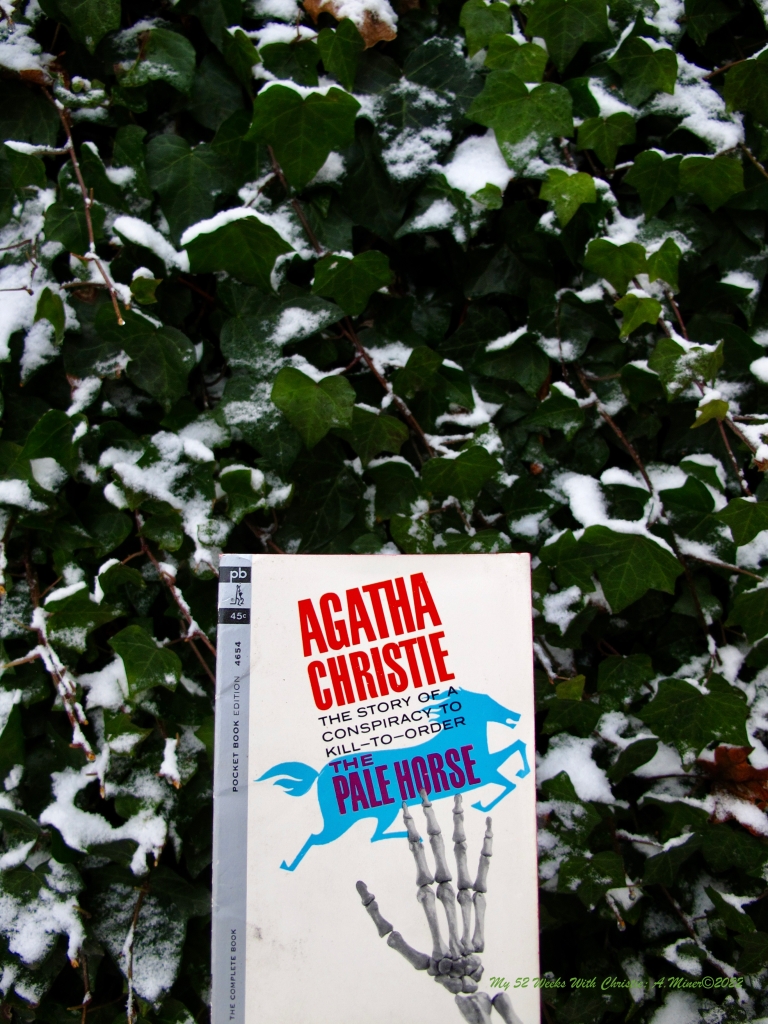
The Pale Horse by Agatha Christie

Word of Warning: If you haven’t read Christie’s The Pale Horse, proceed at your own risk, as this write-up contains spoilers. I’ll try and mitigate them if I can….but in covering what I want to cover in this piece, there isn’t a good way of avoiding plot points. So if you’ve already cracked this book’s cover or don’t mind having critical elements of the mystery revealed before you pick up the story — read on!

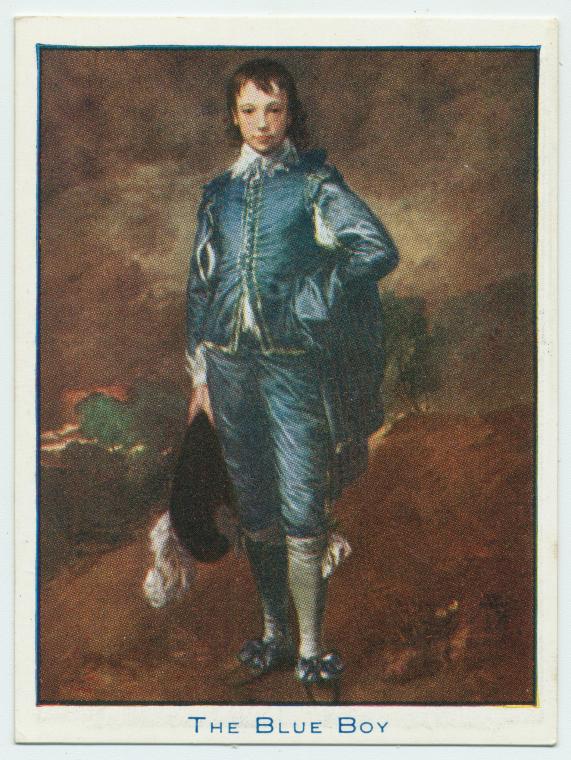
The 2022 Follow-Up: Ever since I first read The Pale Horse, all the way back in 2014, I’ve wondered how on earth someone came up with the idea of administering Prussian Blue to people suffering from Thallium poisoning. It seems improbable that a scientist would stare at Gainsborough’s The Blue Boy and think — ‘Hey! I bet that deep blue pigment would make a great antidote for heavy metal poisoning.’ However, other than the occasional idle thought, I never did much of anything to answer my own question.

(BTW — This photo of a photo does not do the painting justice.)

Until our house insisted we needed to replace all its pipes, water heater, and sewer line.

Turns out writing fiction, for me, doesn’t work so well when you’ve got a pair of plumbers wandering all over and under your house banging, clanging, and sawing holes in your walls.

Who knew?

And, for whatever reason, this long-neglected Prussian Blue colored question popped into my head again — and needing a distraction from the crew digging up my flower beds (for the second time in as many weeks), I began my search in earnest.

In fairness, I didn’t actually nail down how scientists landed on Prussian Blue as an antidote. So it’s possible that the inspiration stick struck them whilst watching the blue ink flow from their fountain pens. (Assuming they owned such writing implements, favored blue ink above black, purple, or green, and knew Prussian Blue is a component of the ink’s recipe.) However, it’s not probable.

And yet….

The very first bucket of Prussian Blue was an accidental creation. Thallium was discovered by two scientists, independently of one another, at nearly the same time. So there is precedent for unlikely coincidences occurring.

Unfortunately, the same serendipity did not strike when I Googled ‘Who discovered Prussian Blue was an antidote for Thallium poisoning’. (That would’ve been entirely too easy.) 

So down the rabbit hole I leapt, looking for answers — beginning my quest with Prussian Blue.

As told by Georg Ernst Stahl, Prussian Blue’s origin story places the pigment’s synthesis at the door of color maker Johann Jacob Diesbach. Working in a shared Berlin lab in 1704, Diesbach initially set out to create a red hue. The only problem was he’d run out of a key ingredient, potash. Borrowing some of his lab-mate, Johann Konrad Dippel, Diesbach continued mixing the formula — unaware that Dippel’s potash was contaminated with animal material. When Diesbach finished his mixture, rather than creating the anticipated red, he’d accidentally concocted Prussian Blue for the first time.

Here’s where things get a bit murky. 

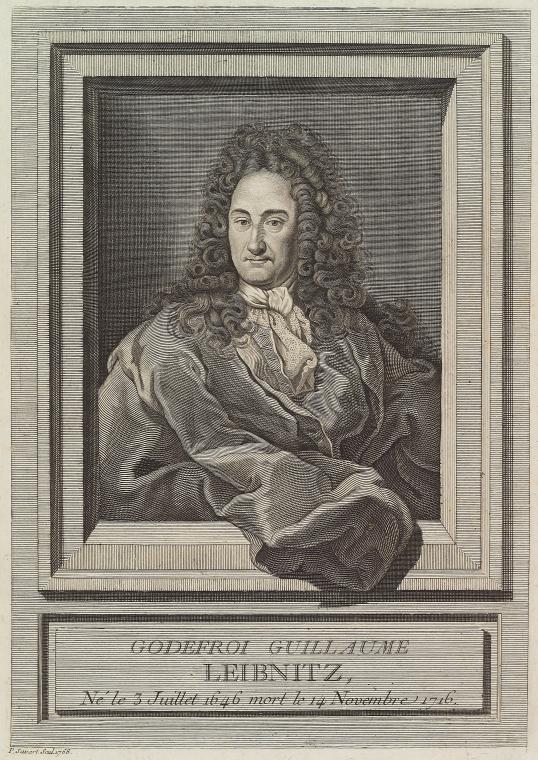
Apparently, Stahl wrote his account twenty-five years after Diesbach’s discovery. Since then, a series of letters from Johann Leonhard Frisch and Gottfried Wilhelm Leibniz have come to light (two eminent scientists of the day). Whilst these primary source materials seem to confirm Diesbach as Prussian Blue’s inventor — Frisch later declares Prussian Blue as his own invention. An assertion undoubtedly rooted in Frisch’s claims to have improved upon the original color and lowered its manufacturing costs. There’s also a good chance Frisch was trying to save face with this boast — as Diesbach’s father-in-law informed Leibniz of Prussian Blue’s actual creator.

(Fun Fact: Even back in the day Leibniz was a BFD. Amongst his other achievements: he’s considered one of the most important people in the history of both math and philosophy — and — whilst overseeing a German library created a method for cataloging books that influenced other libraries all over Europe. Hence why someone might tell a lie in order to impress this very impressive man.)

Either way, Diesbach and Frisch only managed to keep Prussian Blue’s formula a secret (allowing both men to cash in) until 1724, when John Woodward published a Prussian Blue how-to recipe. Thereby allowing manufacturers to flood the market with variants of this iconic color.  

Crucially to my Pale Horse inspired inquiry, Woodward’s verified formula enabled other scientists to research Prussian Blue’s chemical properties. In the hopes of nailing down its composition, stoichiometry, and structure. 

Unfortunately, this is where the trail went cold, and the plumbers discovered our sewer pipe needed lining because it was older than Methuselah. (*sigh*)

Other than uncovering Carl Wilhelm Scheele’s talent for concocting toxic substances. None of the distinguished chemists or alchemists of the eighteenth or nineteenth centuries figured out Prussian Blue’s exact structure or that it was an antidote for thallium. 

Unwilling to give up, especially since the plumbers added another week of plumbing fun to the agenda, I started tugging a different line of inquiry.

A.Miner©2022

2014 Review Part 2:The Princess Bride, Iocane Powder, & Thallium

My 52 Weeks With Christie: My 2014 The Pale Horse Review

Interesting Facts: **Spoiler Kind Of** While I reveal the murder weapon this will not give you the delivery method or the culprit!**

Hello. My name is Inigo Montoya. You have killed my father; prepare to die!””

Alas I cannot relate Christie to this quote. (I am hoping for that day.) However, The Pale Horse does contain a slightly more sinister similarity to this 1987 film classic. In The Princess Bride (I am speaking of the movie here not the book, as I have not read it yet, blasphemer I know) Vizzini (played by Wallace Shawn) claims, “What you do not smell is called iocane powder. It is odorless, tasteless, dissolves instantly into liquid and is among the more deadlier poisons known to man.” The perfect poison for a battle of wits or for the occasional mysterious murder. Happily enough this iocane powder is completely fictional, a poison like that would be disastrous if obtained by the wrong person…

While The Princess Bride relies on a fictional poison to move the story along, Christie decided to use a real one in The Pale Horse. And just like in The Princess Bride this poison is orderless, colorless, tasteless, difficult to trace, hard to diagnose and dissolves easily in liquids.

Making Thallium a perfect poison — so to speak.

Though, unlike iocane powder, you cannot build up a tolerance to thallium. Thus making it less desirable for a duel of wits, as generally it’ll kill you stone dead.

But I digress.

Thallium is a highly toxic metal and like arsenic was once used as a rat poison and some medicines (Seriously there has to be some sort of symbolism to the number of people poisoned by something meant to kill rats…) If administered in large enough doses thallium can kill with in 24 to 48 hours after it is administered. However, poisoners generally dole it out in smaller doses, invoking a whole other set of symptoms. Which in turn mimic a whole plethora of other ailments. So when death occurs it appears to be natural causes.

The one tell thallium possesses? Rapid and clumpy hair loss.

Christie’s description of said symptoms in The Pale Horse is so good, it is credited with saving a number of lives. In 1975 a woman sent a letter to Christie stating she figured out her husband was poisoning her with thallium after reading the book. Second, a hospital nurse in 1977 diagnosed a baby’s illness (due to thallium) while reading the book. Most astonishing The Pale Horse is credited with stopping a serial killer dubbed The Teacup Poisoner. Graham Fredrick Young was convicted in 1972 for murdering two of his fellow co-workers while poisoning seventy others in the factory where he worked. As the story goes, a doctor consulting for Scotland Yard correctly identified the poison being used by Young thanks to Christie’s mystery.

On a complete side note the absolutely best treatment for thallium poisoning is a pigment called Prussian Blue (taken in pill form). It is even better than activated charcoal in removing the heavy metal from the victims system – due to the complex chemical nature.

Not sure what Prussian Blue is?

It is the pigment used to make blueprints, well, blue! It is also one of the colors which makes Vincent van Gogh’s painting Starry Night so vivid. It was one of the very first synthetic pigments to be created, around 1706. (FYI — do not eat blue prints if you think someone is poisoning you. Seriously there is lab grade Prussian Blue without the other chemical associated with paper & paint!)

Christie is often called the Queen of Poisons and The Pale Horse I think is the flawless jewel set in this crown.

Cheating:01001110 01101111 00100000 01100011 01101000 01100101 01100001 01110100 01101001 01101110 01100111 00100000 01110100 01101000 01101001 01110011 00100000 01110111 01100101 01100101 01101011 00100001 00100000 01001101 01100001 01111001 01100010 01100101 00100000 01101110 01100101 01111000 01110100 00100000 01110111 01100101 01100101 01101011 00101110 00101110 00101110 00101000 01100010 01110101 01110100 00100000 01001001 00100000 01100001 01101100 01110010 01100101 01100001 01100100 01111001 00100000 01001001 00100000 01101011 01101110 01101111 01110111 00100000 01001001 00100000 01100100 01101001 01100100 01101110 00100111 01110100 00100001 00101001 

Convert Binary with http://www.ConvertBinary.com (Online Binary Translator)

AmberMiner©2014 

2014 Part One: Shakespeare, Three Witches, & Evil

My 52 Weeks With Christie: My 2014 Review of The Pale Horse

First Published: The Pale Horse. Collins Crime Club, UK, 1961.

I Read: The Pale Horse. Pocket Books, New York, 1967.

Series: Ariadne Oliver

Summary: It starts with a priest, who hears the last confession of a dying woman unlike any he’s heard before. The woman gives him a list of names of connected somehow to wickedness, before the Father can do anything about the list he is brutally murdered. The investigating officer police find said list and discovers the names on the list belong to people who have recently passed away, seemingly of natural causes.

The police surgeon is not so sure.

At the same time through a series of crazy random happenstances Mark Easterbrook becomes involved in the investigation. Discovering the deaths all seem to revolve around  something called The Pale Horse, “Revelation, Chapter Six, Verse Eight. And I looked, and behold a pale horse: and his name that sat on him was Death, and Hell followed him…” (pg. 209). Mark, not one to believe in the supernatural, decides to look for a more concrete solution to how the people on the list really died…

Review: This book, like many before it, is a fantastic read. One which contemplates the nature of evil; not in a preachy way, more Shakespearian in feel. Through this contemplation on the nature of evil Christie creates a clinging sinister atmosphere on each page of the book. Making you all most believe she will write her first supernatural solution to a mystery novel, thus breaking the Rules of Fair Play. Once again Christie does a wonderful job playing with her audience’s comfort levels and preconceived notions about things we cannot always explain satisfactorily. 

I really loved this book, again not overly surprising. However just like the Miss Marple in The Moving Finger, Ariadne Oliver plays a very small role in the narrative (however larger than Marple in Moving Finger). A deus ex machina role for Oliver which provides Mark Easterbrook with the inspiration for the solution to the mystery. Which I found slightly disappointing as this is the only independent encounter with Oliver outside of the Poirot series.  This is really such a small thing it did not perceptibly diminish my enjoyment of the read, just something to know going into the book.

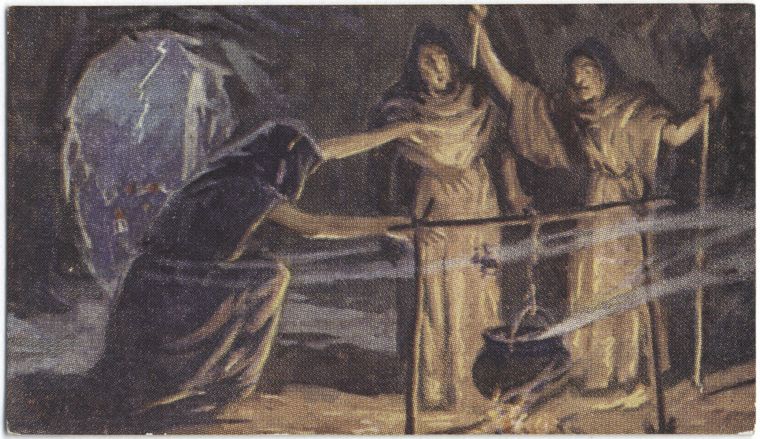
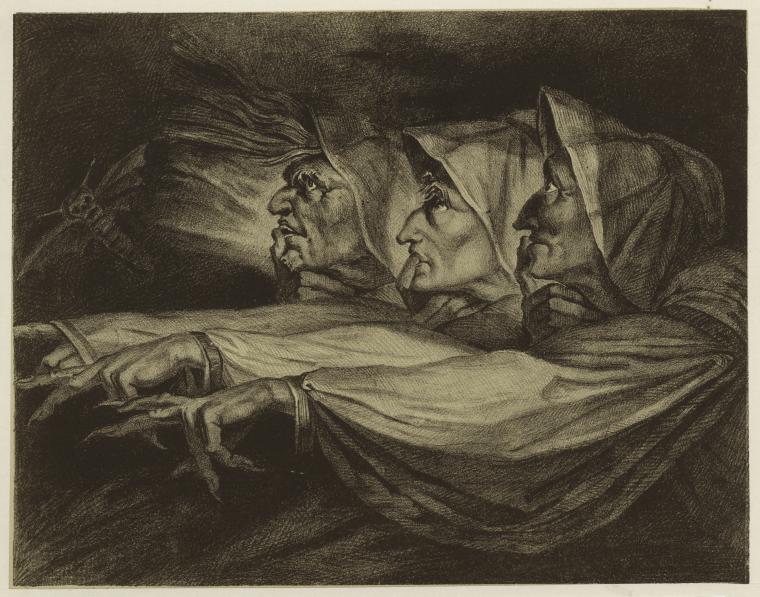
Speaking of a menacing Shakespearian feel to a novel…..How many of you out there have seen a performance of The Scottish Play? You know the one I mean, the name that thespians do their absolute level best not to say on stage (or anywhere else for that matter)…. Have you ever given any thought to how the three witches in the beginning of the play are represented? Often the actress dressed up to look like old crones with hooked warty noses, long black robes, conical hats and black cats. Seemingly almost unhinged in nature uttering their prophesies for Banquo and his fellow general, more akin to monsters than women.

Did you ever think this is a safe way of portraying evil?

David (minor character from The Pale Horse) a thespian during his college years had a different idea of how to portray the three, “I’d make them very ordinary. Just sly quiet old women. Like the witches in a country village.” (pg. 33). I say I have to agree with David on this point, and subsequently Christie since she is the one who penned the book (and Fran who also things this would be brilliant staging). Done right this could lend an extra layer of malevolence to the three witches scenes. Why? In general we want to be able to identify evil at a glance, we want the stereo typical indicators, we want to Know who to watch out for.

Portraying evil as ordinary means it can creep or seduce its way into out lives without our noticing, making it difficult to ward ourselves against. 

This is one reason serial killers or rapists haunt our imagination, since more often than not they look ordinary. Sometimes they are even charismatic or charming in their way. The ones who have been caught and shown on the news don’t seem to have any one trait to identify them as serial killers. No twitch, sign or limp identifies them to the police and the public as a dangerous individual. Profilers, psychologists and police officers who have extensive training can — through psychology and experience not a birthmark. This is one underlying reason why they seem to be so difficult to catch. But I digress.

This idea of ordinary evil is what makes The Pale Horse such a singular sinister book!

(BTW — if you want to see a really great version of The Scottish Play, click here. Patrick Stuart plays the lead and the three witches are seriously eerie/creepy!)

AmberMiner©2014 

True Crime Book Review!

Quackery: A Brief History Of The Worst Ways To Cure Everything

by Lydia Kang, M.D. & Nate Pedersen

Ever wondered where the saying ‘blowing smoke up your a**’ came from? Or the origins of the insulting nickname ‘Snake Oil Salesman’? Or perhaps you wondered about the healing properties of melted human fat, ground-up mummies, and moss cultivated on human skulls. If you did, I’ve found the book for you!

Macabre without being gross. Irreverent without being disrespectful. Filled with all kinds of cures, one ardently wishes the medical community never thought to prescribe to anyone ever. Quackery is a riveting read.

Even better, the book is sensibly and well-organized. So if you ever want to find a brief and horrifying history of lobotomies or the terrible fate of Rosemary Kennedy — you can do so in seconds.

Admittedly, Quackery only gives brief accounts of the world’s worst cures. However, the authors do an excellent job filling each section with rich detail and salient facts. So should you ever want to learn more about, say, the Bureau of Cosmotherapy, you possess more than enough information to do so.’

Quackery also exponentially increases empathy for those who got sick in centuries past and those with epilepsy. (The “cures” for this neurological disorder were particularly dodgy. And that’s saying something.)

Overall, I thoroughly enjoyed reading this book. Fascinating, funny, without ever inducing a squeamish flip-flop of my stomach — I would recommend this book to anyone who loves listening to podcasts like The Poisoner’s Cabinet or Sidedoor by the Smithsonian. (And if you haven’t checked these two podcasts out, you should — they are excellent!)

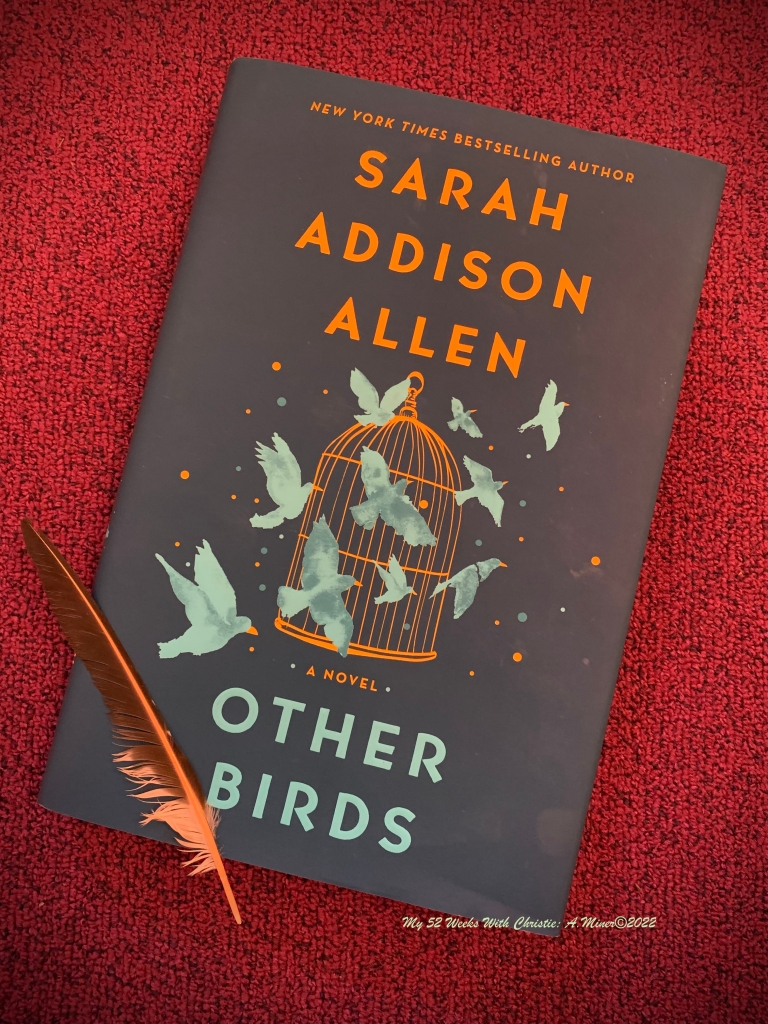
Book Review! Other Birds

Sarah Addison Allen – Other Birds

I read Sarah Addison Allen’s Other Birds back in September, and I’ve struggled to figure out how to review it ever since then. Not because it’s terrible — but because I enjoyed it so very much. And the fact that Sarah Addison Allen’s style, magical realism, is done with such a deft hand, I don’t want to ruin the book for you! 

What can I tell you? 

Well, there’s a peculiar death, a series of strange occurrences unrelated to the four ghosts who also call Dellawisp home, and a cantankerous flock of birds flitting about the property. Add in the living human happenings in the small block of apartments, and you’ve got a riveting read! 

Seriously, Sarah Addison Allen is one of my all-time favorite writers. Who, in fact, penned my all-time favorite novel, The Sugar Queen. In Other Birds, as with Allen’s other novels, she brushes up against several writing styles, like mystery and urban fantasy — which creates a story that’s more than a sum of its parts. (Or literary techniques in this case.)

Sitting here writing this review, I realized all the nice things I wish to say about this book boil down to this: I enjoyed every page of Other Birds. And I cannot wait to revisit the Dellawisp apartments and its inhabitants again and again. 

Seriously, if you’re looking for a mysterious and lovely read this festive season, you cannot go wrong with Other Birds.

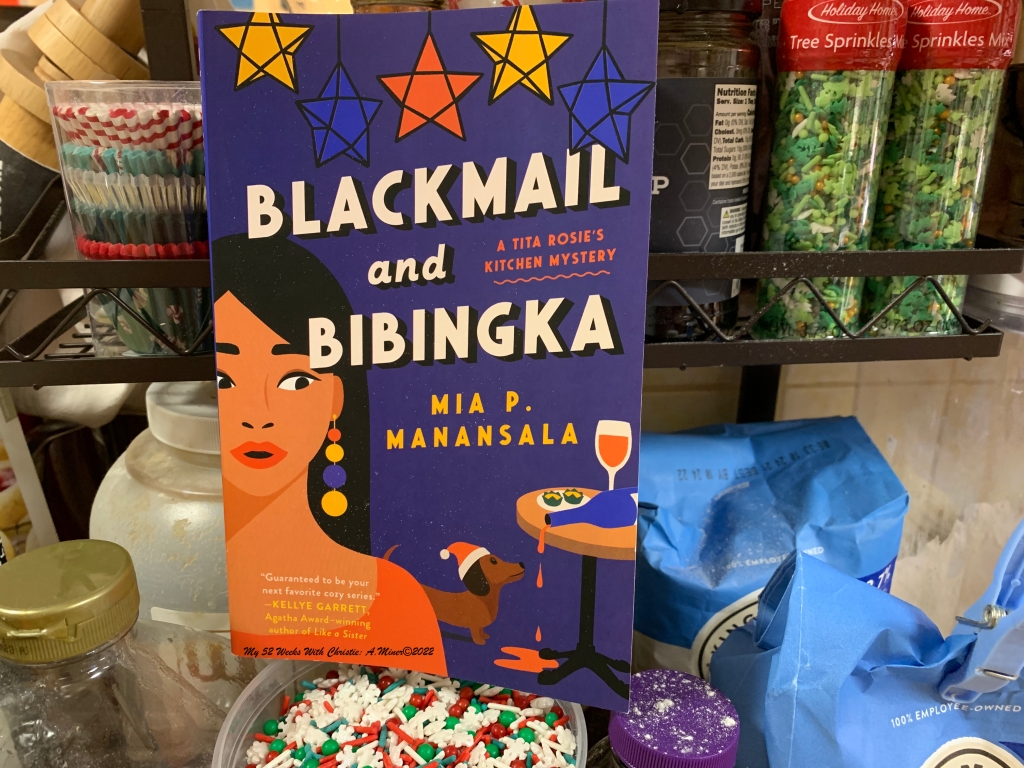
Culinary Mystery Review!

Mia P. Manansala – Blackmail and Bibingka

The third installment in the Tita Rosie’s Kitchen Mystery series finds Lila in a much better head space. Both the Brew-Ha Cafe and her personal life are starting to take off in extremely happy directions. (If you hear nerve-jangling music at the end of the sentence, there’s a reason.) On the other hand, her family life has hit a rather large speed bump — in the form of her cousin, Tita Rosie’s son, Ronnie. The teenage ne’er-do-well has returned home, still carrying all the emotional baggage he left with, to start a new business with some college chums. This powder keg of past resentment blows when Ronnie’s primary investor is poisoned, and he becomes a suspect in her murder….and Lila feels duty-bound to snoop despite Ronnie’s insistence she stays out of his affairs.

Blackmail and Bibingka is an excellent read! With just a fringe of the winter holiday season on display and a well fused food motif, neither theme ever threatens to overwhelm the book’s main plot. Blackmail and Bibingka is a thoroughly engaging mystery I enjoyed reading, as it’s been quite a while since I’ve seen poison other than arsenic, cyanide, or thallium used as a murder weapon.

A Note From The Office of Fair Warning: Our author also deftly fuses genuine family tensions and resentments in ways that push the plot forward rather than stopping it cold, which isn’t an easy feat. But they could prove a tad uncomfortable for readers who’ve dealt with similar situations.

That said, I really can’t say enough nice things about this book. Technically speaking, you don’t need to read the first two books in order to understand what’s going on in Blackmail and Bibingka — but you should just because they are both awesome reads!

Cozy Mystery Review!

Jenn McKinlay — The Plot And The Pendulum

Spooky Season is upon Briar Creek. Arriving along with the crisp air, autumn leaves, and giant pumpkins is a giant donation to the Briar Creek Library. The gift of such rare and valuable books is not something Lindsey, Briar Creek’s Library Director, is willing to turn down…even if they’re ensconced in a crumbling mansion. The donation turns decidedly spooky Lindsey and her volunteers discover a hidden room containing a skeleton and the complete works of Edgar Allen Poe inside!

The Plot And The Pendulum is a first-rate murder in retrospect. McKinlay does a first-class job of taking this well-established murder mystery trope and freshening it up without breaking Lindsey’s amateur sleuth status or straining credulity. Thereby creating a book that’s a joy to spend a few hours with.

Obviously, I would recommend this book to anyone who’s missing Halloween or is trying to forget the stress of the impending Thanksgiving holiday. You don’t need to start at square one in this series, as our author doesn’t spoil the plots of past books in subsequent installments, but I think you’ll want to work your way backward after reading The Plot And The Pendulum!

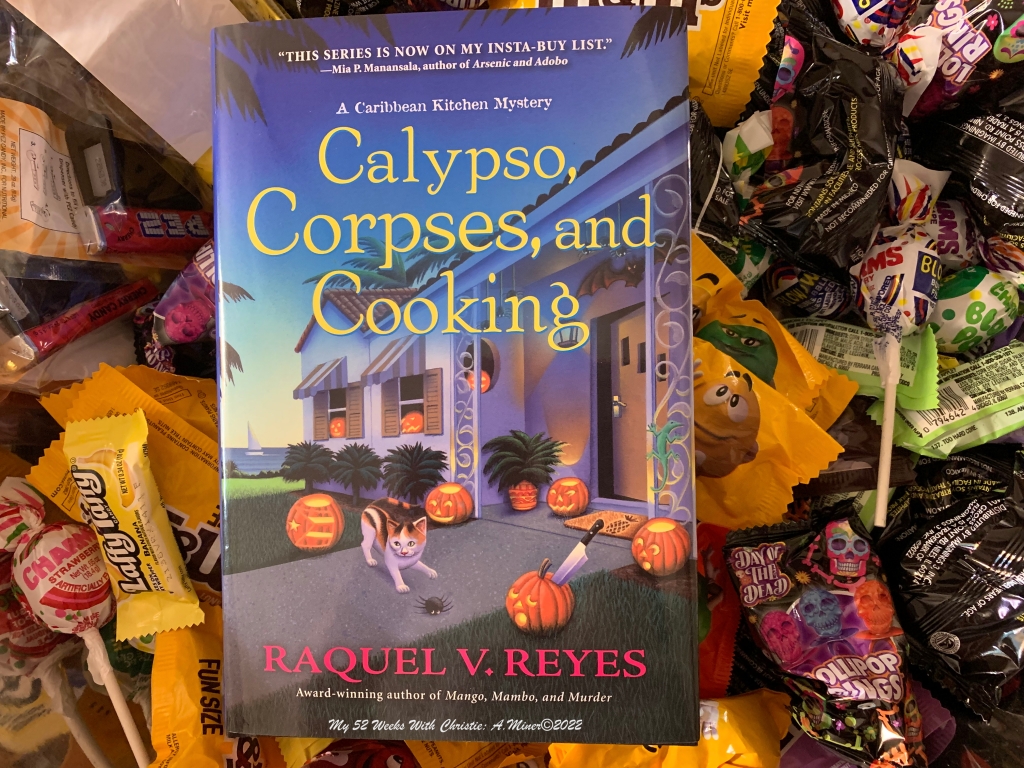
Halloween Mystery Review!

Raquel V. Reyes – Calypso, Corpses, and Cooking

The second installment of the Caribbean Kitchen Mystery series is fantastic! Set during Halloween and the trials and tribulations that plague a household with a five-year-old during said month of the perpetual sugar rush, Miriam finds herself juggling her on-air cooking show career with her mother-in-law’s demands upon her time. So when a body magically appears on her front lawn, amongst the fake plastic tombstones, our intrepid sleuth decides to sit this mystery out. Until…You’ll need to read the book to find out what happens next!

I enjoyed reading Calypso, Corpses, and Cooking very much. The food, the hook of this cozy, is written seamlessly into the story — adding to the narrative without detracting, distracting, or diverting one from the actual focus of the story — murder. (And if you enjoy this particular subgenre of mysteries, you understand how difficult this feat can be to achieve.) Above and beyond, watching Miriam making dishes I’ve not attempted before in her home kitchen (in my mind’s eye) makes them feel more accessible and far less daunting to attempt in my own kitchen.

(Don’t ask me why I find guava paste intimidating. I just do.)

Now, unlike Mangos, Mambo, and Murder, whose final pages succumbed slightly into the realm of saccharin (which one could ignore because the rest of the book was so splendid), Calypso, Corpses, and Cooking does not possess this flaw. Even featuring both Halloween and Thanksgiving between the pages, Reyes found an outstanding balance between the holidays and criminal intent.

However, because this is a review, I need to point out a minor flaw (again) in the final few pages. The penultimate summing up felt a tad muddled, in so far as untangling which crimes we could attribute to whom. Though, to be fair, I could’ve been so excited to find out whodunnit I skipped a few crucial deductions…But I don’t think so. That said, I think the slight tangling of plot threads has more to do with Reyes furthering an ongoing storyline from Mangos, Mambo, and Murder than anything else. And this minor flaw will in no way impede me from picking up this tome up for a reread in the near future or politely throwing money at my local bookseller when the next installment is published!

From the Office of Fair Warning: I do need to tell you that you do need to read Mangos, Mambo, and Murder before Calypso, Corpses, and Cooking as the latter narrative builds directly upon the bones of the former and gives away the solution to the first mystery in the second. Which, again, makes sense as background nefariousness is afoot in Calypso, Corpses, and Cooking that will hopefully burst into the foreground in Reyes’s next book!