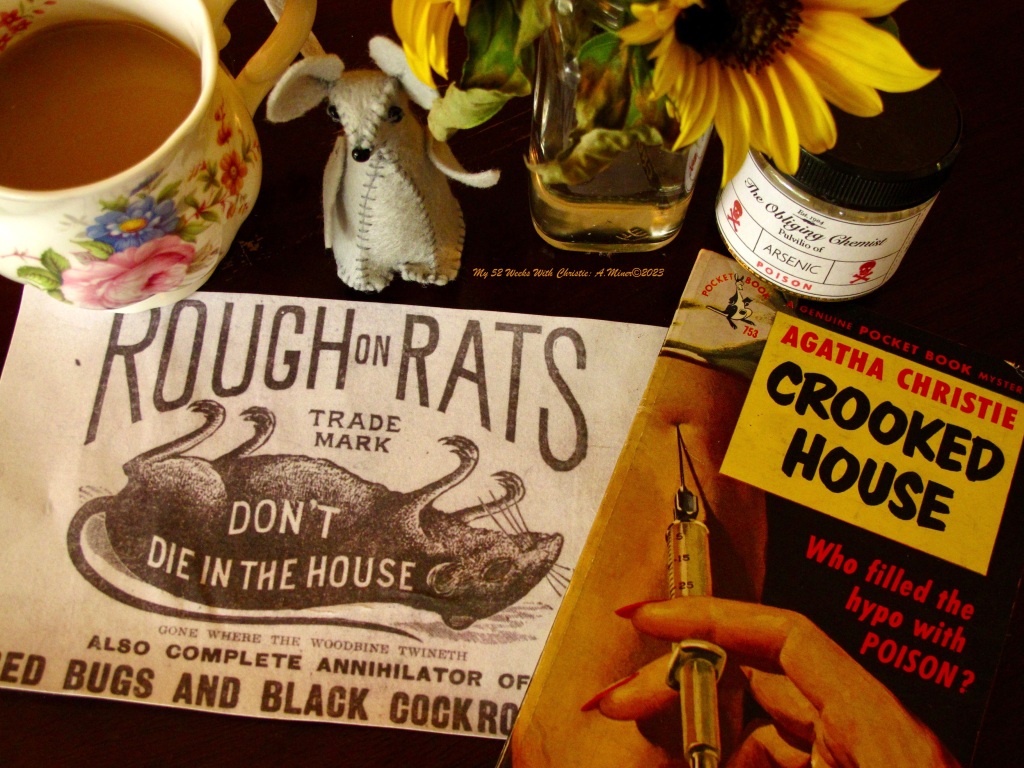
Rough on Rats: Ella’s Deadly Obssession

Roughly forty years after the publication of Moby Dick and seventy years before Graham Young’s initial poisoning spree — a fourteen-year-old girl named Ella Holdridge lived with her family and three siblings in the small town of Tonawanda in Erie County, New York. Unlike Captain Ahab, who was obsessed with a great white whale or Graham Young, who’s idée fixe was poisons — Ella was spellbound by death.

Whenever she discovered someone in the community passed away — Ella would (according to her stepmother) literally jump for joy, clap her hands, and exclaim, “He’s Dead! He’s Dead!” Her excitement not only stemmed from the death itself but from the knowledge there would be a funeral, a wake, and a fresh grave in her near future. Because, irregardless if she was invited or not, if Ella could attend — she would turn up….Shouldering her way to the front of the queue at the viewing, then to the grave’s edge to witness the coffin being lowered into the earth.

It’s unclear from where Ella’s fascination with death and funerals sprung. Perhaps Ella dimly recalled watching her mother slowly succumb to TB, the inevitable funeral, and the wake that followed. Though as Ella was only 2 or 3 years old at the time, those memories would be murky — but still echoing somewhere within her mind. Or maybe her interest was sparked by newspaper reports of Jack the Ripper’s bloody exploits in Whitechapel — the serial killer’s frenzied attacks roughly spanned the years between Ella’s ninth and thirteenth birthdays. It’s also possible Ella was just naturally inclined towards the macabre. Irregardless of whatever sparked Ella’s interest in death and all its trappings — she was hooked. 

Unfortunately, in the summer of 1892, a drought occurred in the local cemeteries — i.e., a distinct lack of funerals.

Okay, so here’s the thing: During my research, I found a number of GLARING inconsistencies in the news reports pertaining to this case. So, I fact-checked this case as well as I could after 130 years….Which led to a vexing urge to box the ears of the original reporters….

Unlike some of the articles I’ve read from around this time, none of the newspapers (I found) list Ella’s address. However, the Buffalo Weekly Express does mention Ella’s neighborhood. Using a helpful map ap, I discovered three cemeteries lie less than a mile from the cross-streets mentioned: Tonawanda City Cemetery, Saint Francis Cemetery, and Salem Church Cemetery. All of whom were in operation at this time and aligned with Ella’s stepmother’s intelligence.

Next, I found between the three aforementioned cemeteries, there were only 14 burials between January – April, 0 in May and 2 in June. Assuming Ella could only attend a fraction of these 16 funerals — due to things like school, family commitments, and whether or not the deceased family actually held a service. I imagine Ella was desperate to satiate her obsession by the time July of 1892 rolled around.

Which might help to explain what happened next. 

Unlike Graham Young, whose idée fixe I sincerely doubt would allow him to stoop to using a poison as inelegant as Rough on Rats (unless he’d no other options, in other words, during his incarcerations) it suited Ella Holdridge’s purposes just fine. 

On July 7, 1892 — while playing with two-year-old Leona Stermer, Ella gave her a glass of adulterated water. Within hours, Leona was writhing in pain and violently ill. Leona’s parents called in Dr. Harris, who thought she’d contracted cholera morbus (what we now call gastroenteritis) and treated her thusly. Sadly he was unsuccessful as Leona died two days later. (And yes her name is Leona Stermer — not Louisa Sterner, Zoena Stuermer, or Lena as reported in various newspapers. It took some serious crosschecking, but I finally pinned down Leona’s correct name.)

Unbeknownst to the Stermers and Dr. Harris — whilst Leona lay dying, Ella would regularly sidled up and surreptitiously watched the goings on inside the house. After gauging the distress she’d witnessed, Ella would dash back home and say things to her stepmother like: “I guess she’d almost dead now!” (Interestingly enough, this behavior lines up with Graham Young’s during his second poisoning spree. Apparently, he would repeatedly call the hospitals, where his colleagues lay dying of the poison he administered to them, to “check” on them. Presumably so he could update his scientific journals with the most accurate information he could obtain.)

Needless to say, when Leona Stermer was buried on July 11, 1892 — Ella was front and center during the planning, preparation, and execution of Leona’s funeral rites….And no one, not even Ella’s parent’s, suspected anything was amiss with the toddler’s death.

Yet.

My 52 Weeks With Christie: A.Miner©2023

Rough on Rats: Obsession, Melville, & the Tea Cup Poisoner

Captain Ahab & The Whale — a bleak tale about a great man who gradually immolating every part of himself on a pyre of obsession until all that remains is ash and a single all-consuming desire for revenge. Beyond laying bare a treacherous side of the human psyche, Melville’s masterpiece, Moby Dick, shows us how a person caught in the grips of a powerful obsession can justify nearly anything — including the sacrifice of a ship and its entire crew (save Ishmael). While I realize scouring the high seas for a giant white leg-eating sperm whale doesn’t occupy most people’s minds the way it did Ahab’s — it’s still a compelling tale…..and a cautionary one as well.

Especially when it concerns children. 

Hyperfocusing on things like space, dinosaurs, books, animals, or other similar subjects is a well-known phenomenon. This intense interest in a single subject gives natural parameters for their exploration of the world while allowing their curiosity to flourish. This zeroed-in interest often dilutes or fades when they hit school — as they’re exposed to all sorts of new ideas, people, and tedium. 

However, sometimes, just sometimes, a kid’s fascination takes a darker turn and doesn’t dissipate like so much smoke in the wind. 

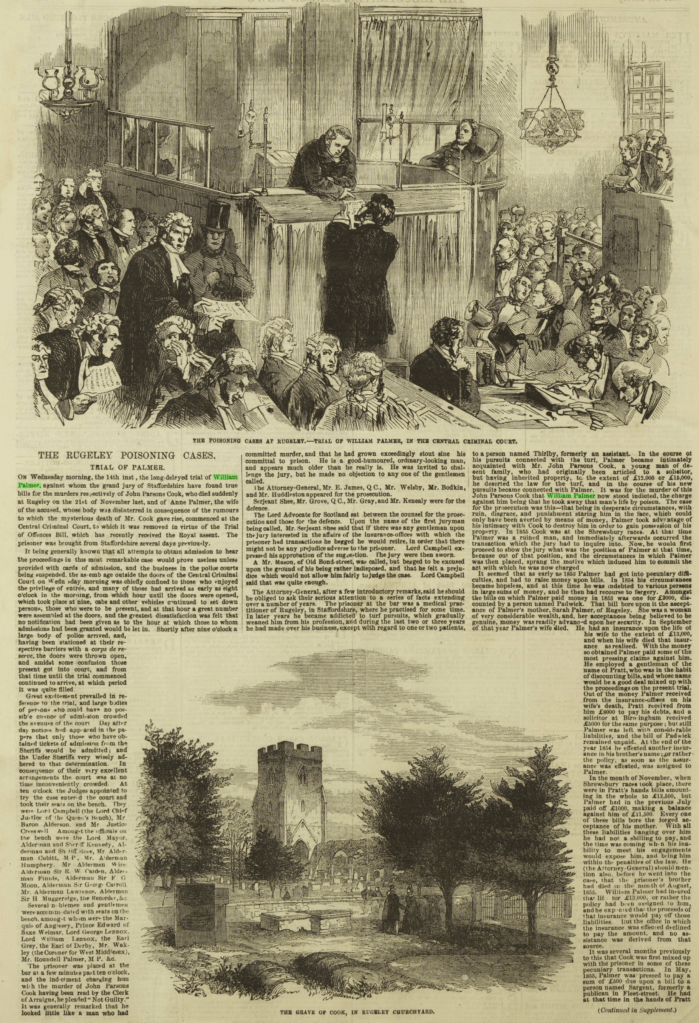
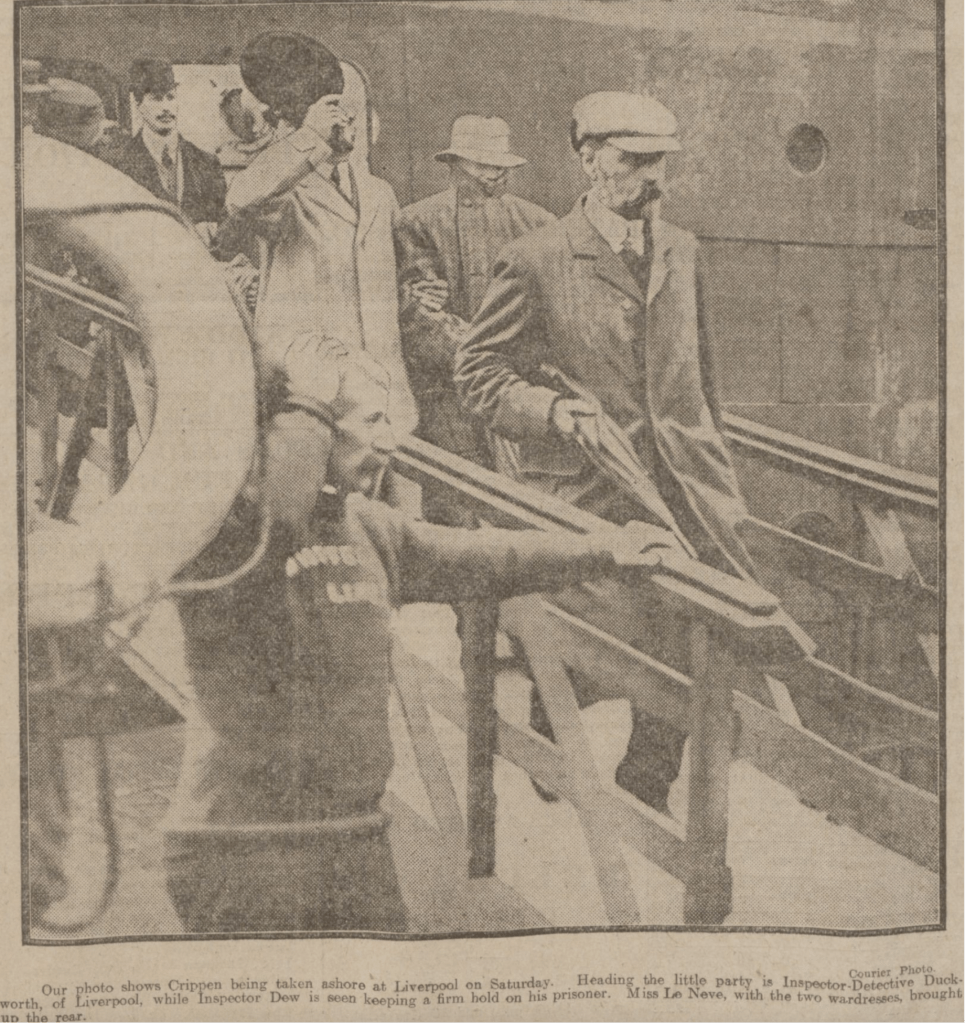
Couple this all-consuming passion with immature moral muscles — you occasionally find yourself facing a kid like Graham Young. Who started wending his way down the pathway of obsession at an early age. It started with reading true crime (no biggie). Then, he became a fanboy of either Dr. Crippen or William Palmer and their poisons. (I’ve read accounts identifying one or the other as Young’s role model. Whichever way it went — labeling either as your idol isn’t exactly great.) Not to mention his enthusiasm for black magic and the Nazis.

Then Young found his calling.

At the age of twelve, Young entered secondary-school and started taking chemistry — which dovetailed nicely with his fascination with toxic metalloids, plants, and elements. At first, he satiated his idée fixe by studying books on advanced toxicology. Then, at the age of thirteen, armed with an extensive knowledge of both subjects — Young hoodwinked a local chemist into selling him antimony, digitalis, arsenic, and thallium.

Whereupon Young moved on to the practical application of poisons. 

At first, Young experimented on a fellow student, but when the boy’s parents pulled him from school, Young moved on….And began conducting his research on his relations. Amongst other appalling familial poisoning episodes: Young sent his sister, Winifred, to the hospital by lacing her tea with belladonna. Next, Young committed what he thought of as a perfect murder by slowly killing his stepmother with thallium. (While Young confessed to Molly Young’s murder nine years later, this claim has never been verified — mainly because, at Young’s suggestion, her remains were cremated.) At Molly’s wake, Young tipped antimony into a jar of mustard pickles, sickening another relative. Finally, Young turned his full attention onto his father, whom he nearly sent to an early grave via antimony poisoning less than a month after murdering his stepmother.

However, Young’s preoccupation with poisons was not unknown.

Aware of the trouble befalling his family and others around him, Young’s science teacher searched his school desk and found several vials of poison and notebooks detailing things like dosages and symptoms. Taking his suspicions to the school’s headmaster, the two devised a trap: They arranged an interview between a careers counselor, who was actually a trained psychiatrist, and Young. During their discourse, the professional headshrinker managed to get Young to reveal his comprehensive and sweeping knowledge of his favorite subjects — poisons and toxicology. Weighing his troubling conversation against the spat of the “illnesses” plaguing those within Young’s sphere — the mental health professional took his misgivings to the authorities……Who saw fit to arrest Young on May 23, 1964, at which point they found his store of thallium and antimony.

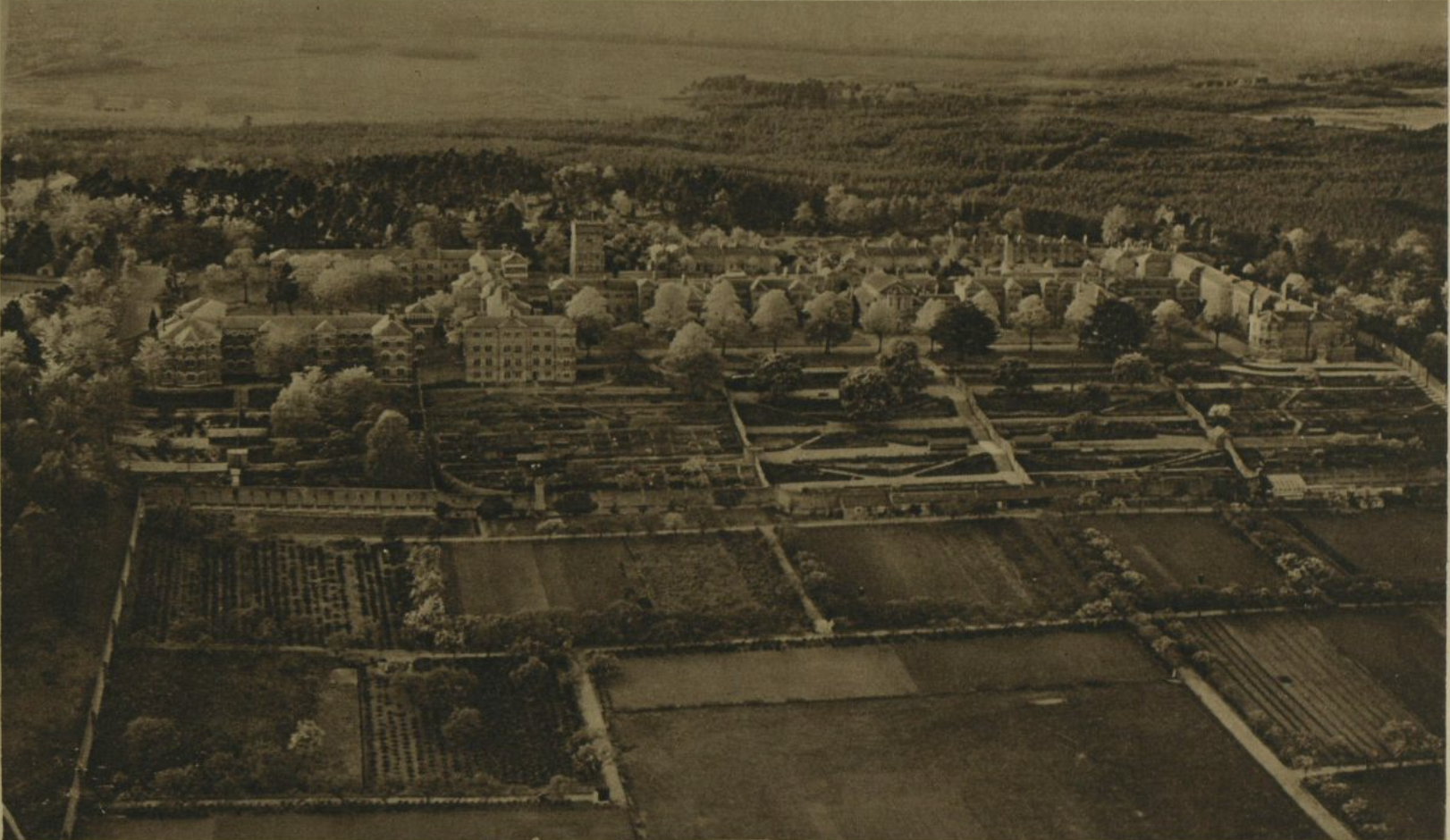
In short order, Graham confessed, pleaded guilty, and became one of the youngest inmates in Broadmoor’s history at the age of fourteen. (For Those of You Who Don’t Know: Broadmoor’s the oldest high-security psychiatric hospital in England and second only in fame/infamy to Bethlem Royal Hospital, aka Bedlam.)

This change of address barely slowed Young down. 

Soon after Young arrived at Broadmoor, another patient died after ingesting cyanide, a nurse discovered his coffee laced with toilet cleaner, and a caustic cleaning powder somehow found its way into a communal tea urn. Whilst an obvious suspect, Young was not brought up on charges in any of these incidences — as it’s unclear if he actually committed them. Young only ceased his claims of poisoning people during his incarceration after figuring out that if he feigned being cured of his fascination, he could win his freedom — which he did in 1971 at the age of (around) 24.

Unable or unwilling to eschew his love of bottles bearing a skull and crossbones, it didn’t take long for Young to return to his old ways.

Mere months after his release, Young once again secured an array of toxics — which he didn’t hesitate to dispense. By misrepresenting himself to a prospective employer, Young obtained a job where no one knew of his past offenses, which allowed him to poison with impunity. Before the shadows of suspicion thickened around him, Young administered thallium or antimony to his coworkers en masse via his tea trolly duties, targeting five individuals specifically and killing two others. 

Earning him the moniker: The Tea Cup Poisoner — a nickname Young apparently loathed.

Thankfully, by the summer of 1972, Young was back behind bars — where he’d stay until his death in 1990 at the age of 42. (This is a vastly simplified history of Young’s life and crimes. For a more thorough account of his diabolical deeds, listen to episode #6 of The Poisoner’s Cabinet.)

Whilst the lion’s share of youthful passions don’t end up creating a poisoner, Graham Young demonstrates how many steps beyond the pale an idée fixe can take a kid. But here’s the horrible thing: whilst Young is one of the most infamous killer kids — he’s not the only one who’s journeyed down this treacherous path and left a body count in their wake…..

My 52 Weeks With Christie: A.Miner©2023

Rough on Rats: Who Really Put the Arsenic in the Coffee?

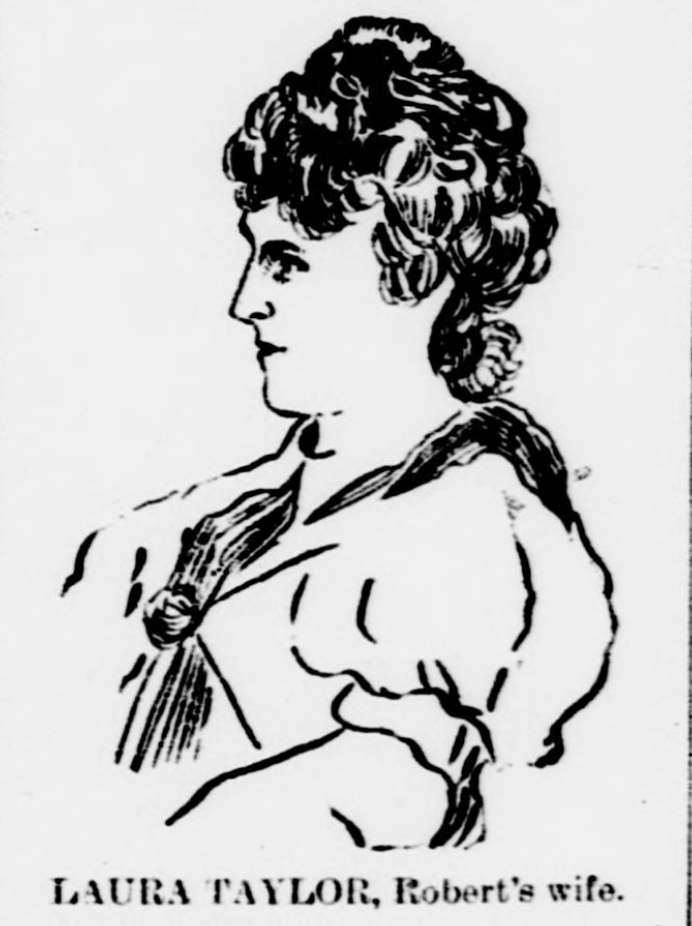
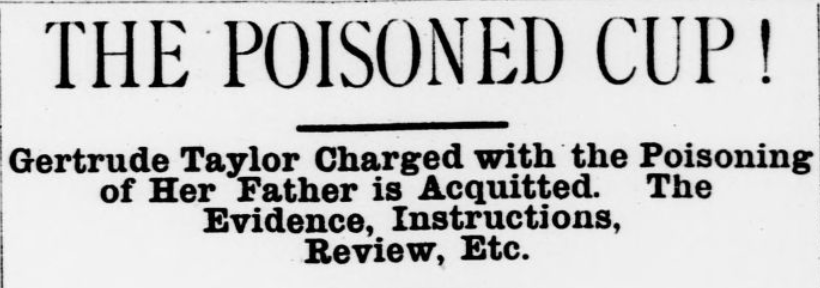
Whilst there weren’t any reports of jiggery-pokery in Gertrude’s trial, there are several odd discrepancies when you compare Gertrude’s single unguarded statement to a reporter against her, Robert, Laura, and (her mother) Sarah’s subsequent testimony.

Ignoring Gertrude’s denial of adding Rough on Rats to the coffee pot, the first disparity between this newspaper clipping and courtroom testimony comes when Gertrude explains what prompted her to buy the box of Rough on Rats. Above, she claims her father sent her to the drugstore to buy the rat poison. In the courtroom, Gertrude switched her story, stating the purchase was made because the night before the murder, her mother commented on how “rats {were} going to take the place.” A statement Sarah, her mother, corroborated under oath. 

So, which is true? 

Did her defense team decide to put forth the trial version, as it had someone who could truthfully attest to its accuracy and doesn’t wholly negate Gertrude’s initial statement to the paper? Or was a convenient circumstance, recalled later, used to mask Gertrude’s childish revenge plan? And if you owned two reasonable explanations for purchasing the poison, why keep mum during Dr. Kaltenbach and her Aunt’s initial inquisitions? Unless you hadn’t anything other than the ugly truth to tell….

However, the most telling inconsistencies betwixt Gertrude’s unscripted answers and later testimony occur over the family’s upright organ and Gertrude’s state of mind. 

1) Robert: “…no trouble existed between himself…and Gertrude or between his wife and Gertrude….we never had any trouble about the family organ, and had no intention of removing it, from the home of my parents…

—— I suppose it’s just possible that a newly married older brother could’ve been entirely oblivious to his younger sister’s upset….. 

2) Laura: “She seemed envious at times, but this lasted only a short time, and there was no positive enmity between them….Her husband had stated to her that he did not intend to take the organ with them….

—— ….Laura, however, was not oblivious to Gertrude’s jealousy, which conflicts with Robert’s rosy view of their relationship with Gertrude. I also find it difficult to believe Laura didn’t bring up Gertrude’s envy issues with her husband. Because, in theory, he’d have a better idea of how to handle a green-eyed little sister.

Moreover, I think this bit, “Her husband had stated…he did not intend to take the organ…” is a potential lie by omission as Laura’s not revealing her intentions on the organ but simply regurgitating her husband’s. Yes, I know at that point in time, a wife was expected to abide by her husband’s decisions…..But this calls to mind an axiom from My Big Fat Greek Wedding — “The man is the head {of the family}, but the woman is the neck. And she can turn the head any way she wants.” 

3) Sarah: “…Gertie always treated her father as well as any child could. There had never been any trouble between members of the family or children only what would naturally arise.”

—— A belief Sarah could’ve held right up until she poured the poison-laced coffee that night.

On the whole, the testimony of Gertrude’s kin successfully contradicted, or at least partially mitigated, Gertrude’s spontaneous answers on March 20th (above) — and weakened the motive of jealousy the prosecution was trying to establish as the basis for the murder. Though, frankly, I believe Gertrude’s off-the-cuff answers hold more honesty than those of her relations. I think her family split hairs and told what was technically true in order to keep Gertrude from the gallows. 

(And yes, I do believe the prosecution would’ve sought the death penalty against the thirteen-year-old — as five jurors were excused from service due to their “conscientious scruples” against a sentence of death. Hauntingly enough, one of the newspaper articles I found advertised that if Gertrude had been anything other than an attractive young girl, the townspeople would’ve lynched her for allegedly murdering Dillon Taylor. 

Especially since the townspeople of Craig found Gertrude’s unscripted admission of anger and hate tantamount to a confession. On top of this,  Gertrude’s utter lack of emotion and concern at being accused of patricide during her court appearances didn’t help her cause either. A situation Gertrude later remedied by breaking down and weeping whilst on the stand, in front of the all male jury, during her trial.)

In any case, mitigating Gertrude’s motive is all well and good, but her defense needed more. They needed to give the jury an alternate, credible explanation the twelve men could use to find Gertrude not guilty.

The only problem was the classic formula of offering a substitute suspect for the jury to blame wouldn’t work in this case. The only outsider to enter the Taylor home that day was Tyler Cristman, and despite choosing of milk over coffee that evening (the near identical choice Gertrude made, which landed her in the hot seat) — it doesn’t seem anyone ever considered him a suspect in Dillon’s murder. Moreover, during Sarah’s testimony, she stated no one other than Tyler entered their house that day. 

Leaving Gertrude’s attorney only the immediate family to offer up in Gertrude’s place….

Speculation on the Baseness of Human Behavior à la Miss Marple: Sex & Money: Interestingly enough, of these two archetypical motives for murder, Sarah owned half of this quintessential duo — inheriting $100,000 worth of land upon Dillon’s death. 

As for the sex? Perhaps Gertrude correctly recognized her father’s shift of affection but misidentified from whom they moved. Not realizing, in the throws of egocentric youth, Dillon hadn’t transferred his affections from her — but from his wife to his daughter-in-law? If Dillon and Laura started an affair, it would explain why he refused to relent to Gertrude’s pleas over the organ.

BTW — I’m not pulling this theory from thin air.

While both women possessed the opportunity to put the poison in the coffeepot — Gertrude passed through the kitchen when she returned home from her trip to the drugstore, and Sarah prepared supper that night, alone…It was Sarah who poured everyone’s coffee that evening. An ordinary act that could’ve allowed her to guarantee her husband received a lethal amount of arsenic whilst administering smaller doses to herself and the rest of her family. (Hence why only Dillon died. While Robert & Laura recovered a week later.)

Thanks to Asa Sharp’s testimony, we know he kept a store of arsenic on his farm and used it frequently. This could explain how Sarah got ahold of the dangerous element without linking her name to a purchase record. What’s more chilling? Thanks to the bevy of highly publicized poisoning cases, the rodenticide’s main ingredient was less than secret. So what if Sarah purposely prompted her daughter’s purchase of Rough on Rats? Banking on Gertrude’s youth & good looks, her parent’s influence, and her brothers’ money to get her daughter cleared of all charges.

Can you imagine how wild A.C. & Arthur Sharp would’ve become if Gertrude’s attorney presented Sarah as his alternative suspect? Or Robert? Who, according to his own testimony, was alone in the kitchen when Gertrude arrived home — giving him at least the opportunity to put arsenic in the coffee pot.

As it was, Gertrude’s legal team found an entirely different pretext to present to the jury. In an oddly serendipitous event, one week before Gertrude’s trial started, two farmhands found a box of Rough on Rats right around the area where Gertrude told her Aunt she’d lost it. Not only was the box appropriately weathered, having spent nearly two months exposed to the elements — it still bore the druggist’s wrappings.

This piece of evidence, combined with her family’s measured testimony, allowed the jury to reach a not-guilty verdict in less than two hours. 

Leaving Dillon Taylor’s murder, as far as I can tell, unsolved to this day. 

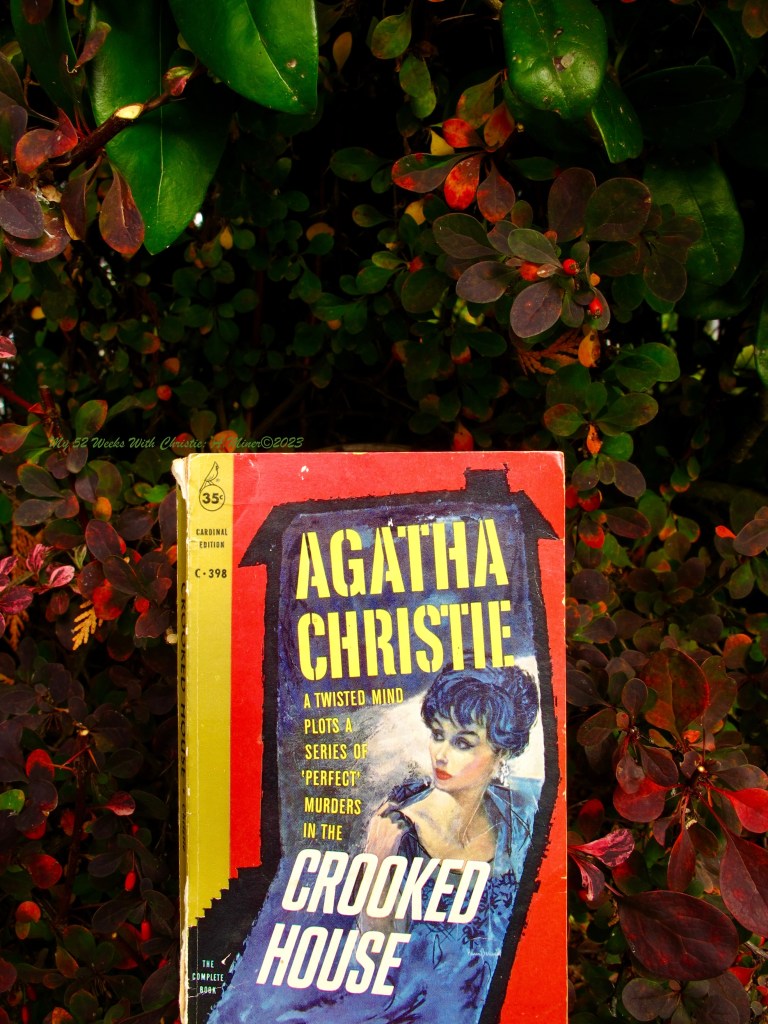
An outcome that I find just as insupportable as Sophia Leonides from Crooked House would’ve. Because how can you ever feel safe amongst your nearest and dearest again? Every sugar cookie at Christmas, each pie eaten at Thanksgiving, every piece of candy procured from a family member at Halloween holds a potentially poisonous center — and it’s not paranoia at play here — one of your next of kin proved themselves capable of committing such a dastardly deed. 

What’s to stop them from striking again?

What’s to say they won’t follow Josephine Leonides’ example and kill anyone who crosses them? Or years later, they let something slip, panic, and murder again to cover their original sin? What if one of your fam follows Edith de Haviland’s example but gets it wrong? Or someone, eaten up by uncertainty, sends both the innocent and guilty to the grave — just to stop the relentless spiral of anxiety and dread?

Whilst sitting here and writing this piece, I can better appreciate why so many of Christie’s detectives (or people close to them) need to find the culprit in manor house mysteries — which, weirdly enough, the very non-fictional murder of Dillon Taylor neatly slips into. It creates a cloud of suspicion that forever clings to those involved, like so much smoke that not even death can fully dissipate.

Don’t believe me?

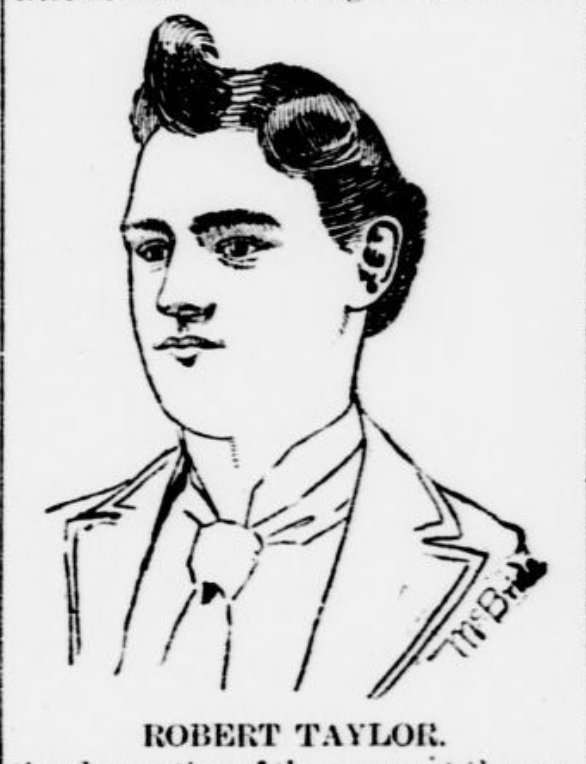
What if I were to tell you Robert Taylor committed suicide on March 30, 1930? Now, there’s a myriad of reasons why he could’ve hung himself: depression, familial estrangement (in 1889, two years after Gertrude’s trial, he sue his mother and siblings – including his 6yr. old sister Nancy, — for what I don’t know, but it doesn’t speak of happy families), or cancer diagnosis (a disease that claimed his younger brother Duke’s life nine years later). 

But doesn’t a tiny part of you wonder, after thirty-four years and twenty days, if his guilty conscience finally caught up with him?

As for Gertrude, she married sometime around 1900-1901 to a man named Marcus Spencer. They had a daughter about 1903 and another two years later. Gertrude was widowed on August 30, 1915, after her husband died of TB (a disease which, apparently, killed his two sisters and brother before him). Gertrude herself passed away on September 12, 1958, from a cerebral thrombosis at the age of 76.

And, despite all my research, I am none the wiser to who actually murder Dillon Taylor. I lean toward Gertrude, but really her original indictment is based solely on Dr. Kaltenbach’s misgivings and one imprudent interview. And, as we’ve seen in other cases, we don’t know how closely the police looked at the other people seat at the supper table on March 10, 1896….

Leaving open the possibility someone other than Gertrude assassinated Dillon Taylor.

My 52 Weeks With Christie: A.Miner©2023

Rough on Rats: One Doctor’s Suspicions

Dubious of Gertrude’s lucky escape, Dr. Kaltenbach swiftly sussed out Gertrude’s choice of water over coffee was inconsistent with her regular suppertime eating habits. With this nugget of knowledge stuck in his craw, Dr. Kaltenbach continued to care for the rest of the poison-stricken Taylor family — who now needed to contend with making funeral arrangements for their patriarch, Dillon. And whilst they and the extended family handled those details — Dr. Kaltenbach quietly started piecing together a case against Gertrude. 

Knowing he’d need more than his gut feeling and deductions to accuse any member of such an influential family, especially a thirteen-year-old girl, Dr. Kaltenbach set about confirming the coffee was indeed how the poison was administered.

Now For a Deduction On My Part: Whilst the gold standard in detecting arsenic, the Marsh Test, had been around since 1836, there’s a good chance a small-town general practitioner had never performed it. It’s also equally possible Dr. Kaltenbach simply didn’t have the time to conduct the highly sensitive test — as he’d seven or eight seriously sick people to treat whilst trying to keep a weather eye on his prime suspect and the extended family from entering the sickrooms (just in case he’d honed in on the wrong person).

Either way or both, Dr. Kaltenbach decided he only needed to prove poison was present in the coffee for the inevitable inquest into Dillon Taylor’s death, so after securing and spiriting away the leftover coffee from the pot and its dredges for later analysis. He then poured the remnants from the family’s coffee cups into the slop buckets of three hogs and fed them the adulterated mash. When the poor piggies exhibited the exact same symptoms as those experienced by the Taylor family and died — Dr. Kaltenbach knew he’d proven the first portion of his theory.

Which, of course, led to the inevitable question: Where did Gertrude get the arsenic?

Assuming he’d a quiet nose around the obvious places one would store caustic chemicals in a home, without finding any, Dr. Kaltenbach moved on to the next obvious means of acquisition — the town druggist. Turns, mere hours prior to the mass poisoning, Gertrude visited the drugstore and bought a bar of soap and a box of Rough on Rats.

With the druggist William Butts’ information in his hip pocket, Dr. Kaltenbach confronted Gertrude.

At first, Gertrude lied and flat denied possessing Rough on Rats. When Dr. Kaltenbach pressed further, telling her he knew she’d bought a box, she eventually admitted to the purchase. With that established, Dr. Kaltenbach asked where it was, and Gertrude told the doctor she’d secreted it away upstairs. Sending her to fetch it so he could (presumably) inspect how much of the rat poison remained — Gertrude left and never returned. A short time after he’d been left hanging, Dr. Kaltenbach asked Gertrude’s Aunt, Mrs. Ada Sharp, if she could get Gertrude to divulge the information. A task which Mrs. Sharp was only partially able to complete as Gertrude refused to tell her Aunt why she’d bought Rough on Rats, though she did confess to losing the box on the way home.

Armed with all this information, Dr. Kaltenbach related what he’d found out and witnessed during the Coroner’s Inquest held on March 17, 1896. This, in turn, resulted in the exhumation of Dillon Taylor, who’d been buried four days before, for a post-mortem. (During which Dillon’s stomach was removed for chemical analysis….Said testing was performed around May 5, 1896, and the chemist found not only arsenic but powdered glass in Dillon’s organ as well. When the chemist compared what he’d discovered in Dillon’s stomach to a box of Rough on Rats, purchased specifically for this test, the results aligned perfectly. As the fresh two ounce box of Ephraim Well’s rat poison contained about one ounce of powdered arsenic and the rest was powdered glass and starchy substances. The chemist went on to posit each cup of coffee contained about 20 to 24 grains of arsenic — more than enough to kill a man.)

The coroner’s jury also returned a verdict naming Gertrude as the one responsible for her father’s death.

On March 19, 1896 — Gertrude was arrested.

Thanks to a few remarks made to the press prior to the hiring of defense lawyers — we learn that Green Taylor, Dillon’s brother, “….was determined to sift the crime to the bottom and to prosecute the guilty person to the end.” To my ear this sounds a lot like a man who has a doubt or two about his niece’s innocence — but is smart enough to only allude to them when speaking with reporters. However, unlike Edith de Haviland, whose clarity of sight and strength of character allowed her to see what the rest of her family couldn’t or wouldn’t admit to themselves and then act on it, Green Taylor either ended up holding his tongue when he realized thirteen-year-old niece might hang or was persuaded into swallowing Gertrude’s story. 

Whichever way, by the time Gertrude went to trial in May of 1896, Green Taylor sat with his other brother in the court — supporting his niece.

If any influence was exerted on Green Taylor, to shift his stance at least in the public eye, was undoubtedly brought to bear by Gertrude’s other Uncles — A.C. & Arthur Sharp, Gertrude’s mother’s brothers, and most vocal supporters. Not only would they not listen to a word said against their niece, they paid the thirteen-year-old’s $1,000 bail (about $36,000 in today’s money), financed her defense, and told a reporter Gertrude “…would never be convicted if money can save her.” 

As the entire Sharp family was extremely wealthy and prominent in Missouri society — this wasn’t an idle boast. 

My 52 Weeks With Christie: A.Miner©2023

Rough on Rats: The Alleged Cimes of 13yr. old Gertrude Taylor

A jealous hate is different—that rises out of affection and frustration…..I think people more often kill those they love than those they hate. Possibly because only the people you love can really make life unendurable to you.” (Pg. 113)

This Crooked House quote references the real-life case of Constance Kent. Who, at the age of sixteen, took her nearly four-year-old half-brother Francis to the outhouse in the middle of the night and slit his throat….Not because she didn’t love him, but on account of her father — who experts suspect shifted all his affections from the children of his first marriage (Constance) to those of his second (Francis). This changeover provided ample food for the green-eyed monster within Constance to feed upon until that fateful June night when she finally lashed out in revenge. Whilst this is a vast simplification of the circumstances leading to Constance Kent’s penultimate act, it gives you an idea of the point Charles Hayward’s father was trying to make about ‘jealous hate’.

Interestingly enough, if you make a ven diagram with Constance Kent’s motives (jealous hate & revenge) in one circle and Crooked House’s black hat Josephine Leonides’ in another (the puerile rage at being denied ballet lessons) — you’d discover within the overlapping area the alleged crimes of Gertrude Taylor.

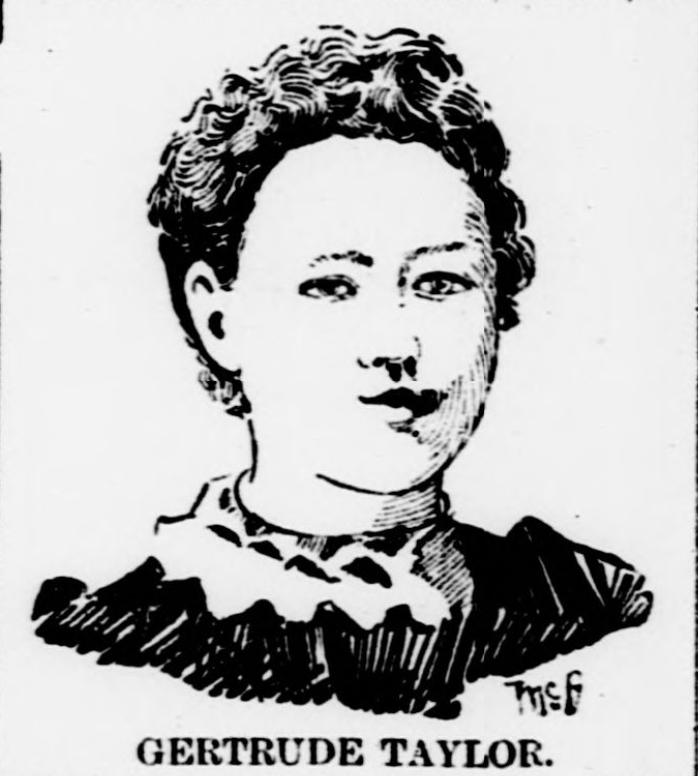
Gertrude Taylor (13 yrs) sat smack dab in the middle of Dillon Taylor and his wife Sarah’s brood with two older brothers (24 & 15), one younger brother (11), and a younger sister (4). Between her whipsmart brain, good looks, and status as the eldest daughter — Gertrude was the apple of her father’s eye.

Then came October 1895.

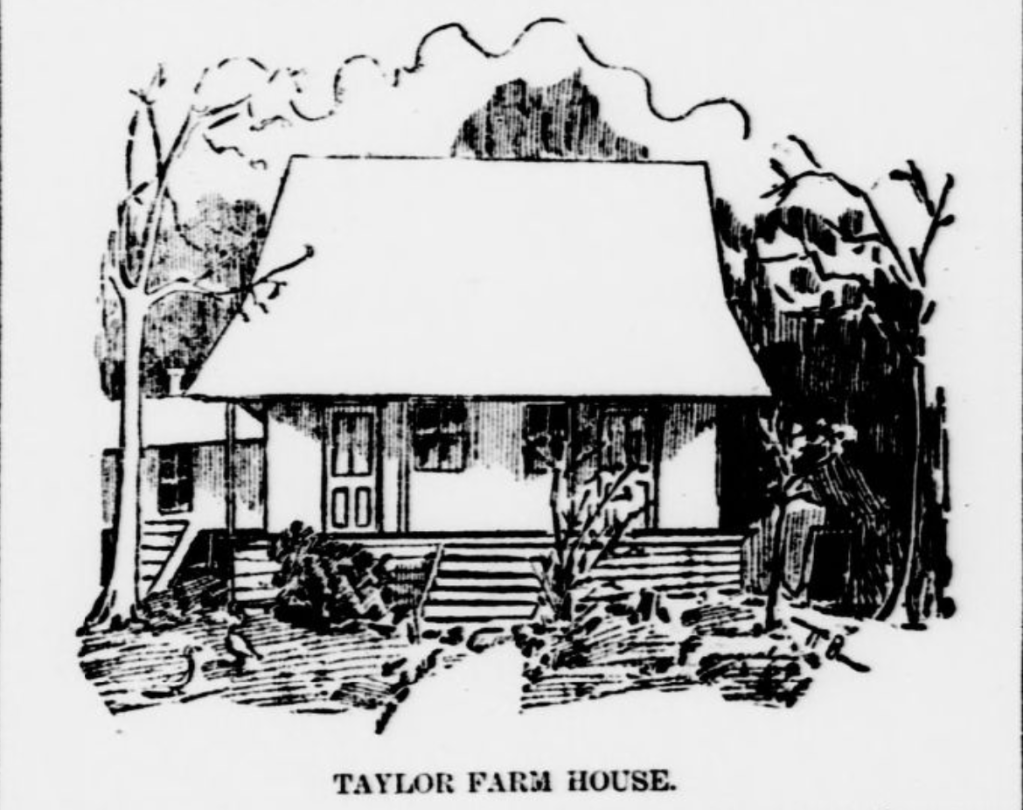
Gertrude’s eldest brother, Robert, married Laura Varnes. Following their nuptials, the newlyweds settled into Robert’s parent’s household — a circumstance everyone knew was temporary as Dillon promised to build them a house somewhere on his farm the next spring. As one of the largest landholders in Craig, Missouri, as well as one of its most prominent families, Dillon and his wife had more than enough space and money to give the couple such a generous gift. 

No big deal…Except…In Gertrude’s eyes, her status as eldest daughter eroded to a certain extent with the addition of Laura to the Taylor family tree. Reading between the lines, it appears Dillon went out of his way to ensure Laura felt welcome, probably hoping it would smooth her transition into his household and into marriage with his son. Knowing his Gertrude enjoyed receiving gifts, Dillon employed a similar tack with Laura, and one afternoon, when in town together, he purchased both her and Gertrude new capes. An occasion Dillon apparently thought nothing of, yet bred resentment in Gertrude — who did not enjoy sharing the spotlight with her new sister-in-law.

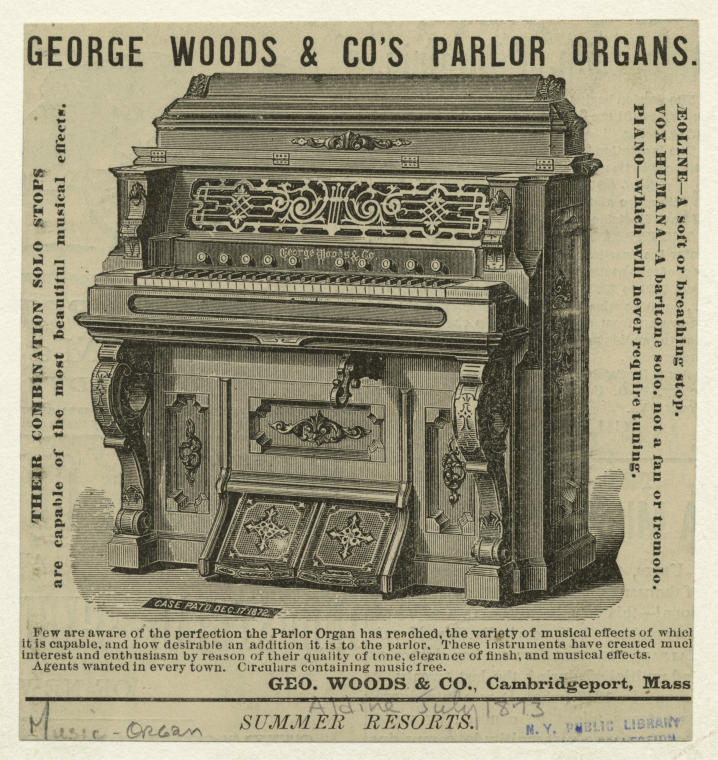
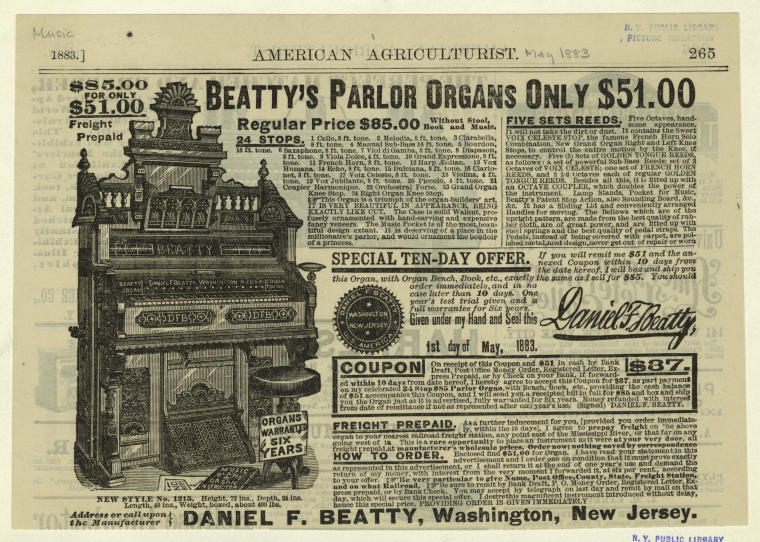
Compounding Gertrude’s rapidly souring situation, at some point between October 1895 and February 1896, Dillon gifted the family’s upright organ to Robert and Laura. Not wanting her sister-in-law to take the instrument away when she moved house, Gertrude begged her father to change his mind — she even threatened to leave home and live with her Aunt should the continue to “be mean to her”.

Yet, Dillon remained steadfast in his decision.

(It’s unclear if either Gertrude or Laura played the instrument. However, according to reports, Dillon usually gave Gertrude whatever she wanted. And his refusal to relent in this particular instance make me suspect Gertrude enjoyed noodling around on the instrument whilst her sister-in-law knew how to play it properly.)

Unsurprisingly, her father’s failure to yield solidified Gertrude’s growing belief that Dillon now favored Laura above herself. A situation that would hurt anyone, but for a thirteen-year-old — it would feel unbearably unfair.

Though the exact straw broke the proverbial camel’s back remains a mystery, we know events came to a head on March 10, 1896.

That evening at the supper table, Sarah worked her way around the two tables (one for the adults and the other for the kids — the latter of which Gertrude sat at), pouring coffee into everyone’s cup. Noting the unusual aroma wafting from the pot, Sarah commented on it, and everyone agreed with her assessment. Then, of course, the entire party took a sip and discovered the liquid tasted unusually bitter as well. Chalking up the odd taste to the grinder not being adequately cleaned after milling peppercorns — everyone continued consuming the coffee….until it began burning their throats.

Within minutes, everyone started feeling massively ill. 

Suspecting his family had been poisoned en masse, Dillon asked his dinner guest, Tyler Cristman, to fetch a doctor. (As Tyler had drank milk with dinner and only sipped the coffee when everyone started complaining about it, the gut-wrenching sickness afflicting everyone else took longer to present itself in him.) By the time he returned with Dr. Kaltenbach in tow, the entire Taylor family was crippled with stomach cramps, nausea, and vomiting. After hearing about the strange tasting coffee, Dr. Kaltenbach agreed with Dillon’s theory and deduced they were suffering from acute arsenic poisoning. 

The good doctor also noticed one member of the ill-fated dinner party who failed to show a single sign of sickness — Gertrude. Seems she’d eschewed the coffee, in favor of a glass of water on this particular evening.

This observation and explanation set wheels into motion.

Not willing to take any chances with a potential poisoner in the house, Dr. Kaltenbach not only secured the aid of a couple of other local doctors (allowing for better care whilst adding extra sets of eyes), he barred nearly everyone from visiting the afflicted (including Gertrude and the majority of the extended family). Dr. Kaltenbach even went so far as to lock the sickroom’s doors. 

Sadly, despite his best efforts, Dillon died less than twenty-four-hours later.

My 52 Weeks With Christie: A.Miner©2023

Rough on Rats: (Un)Truth In Advertising

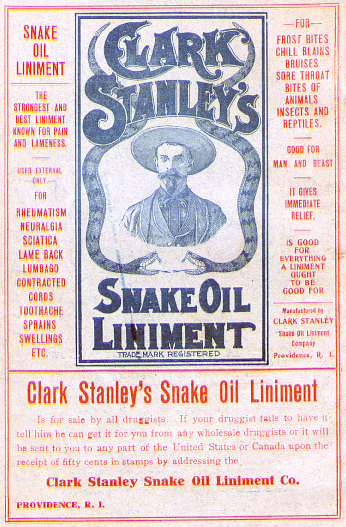
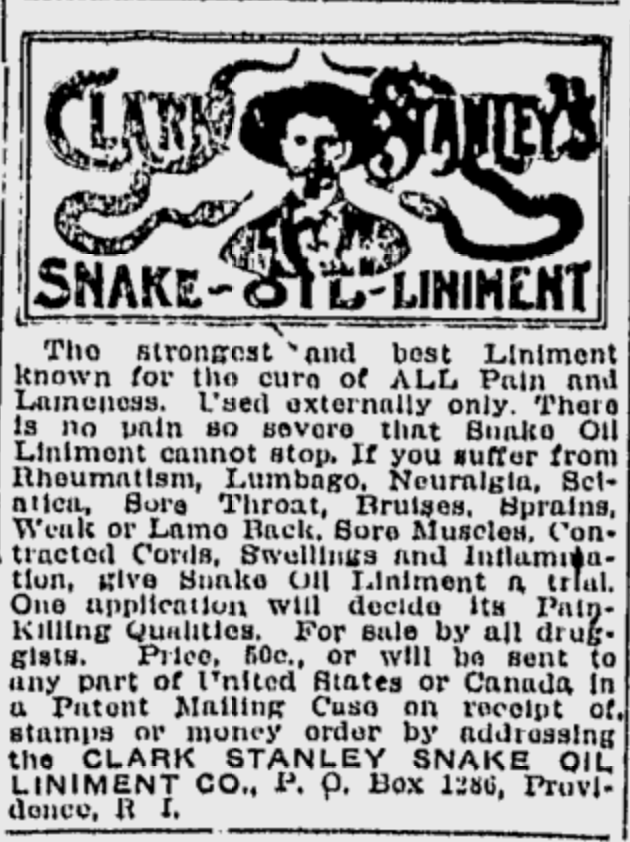
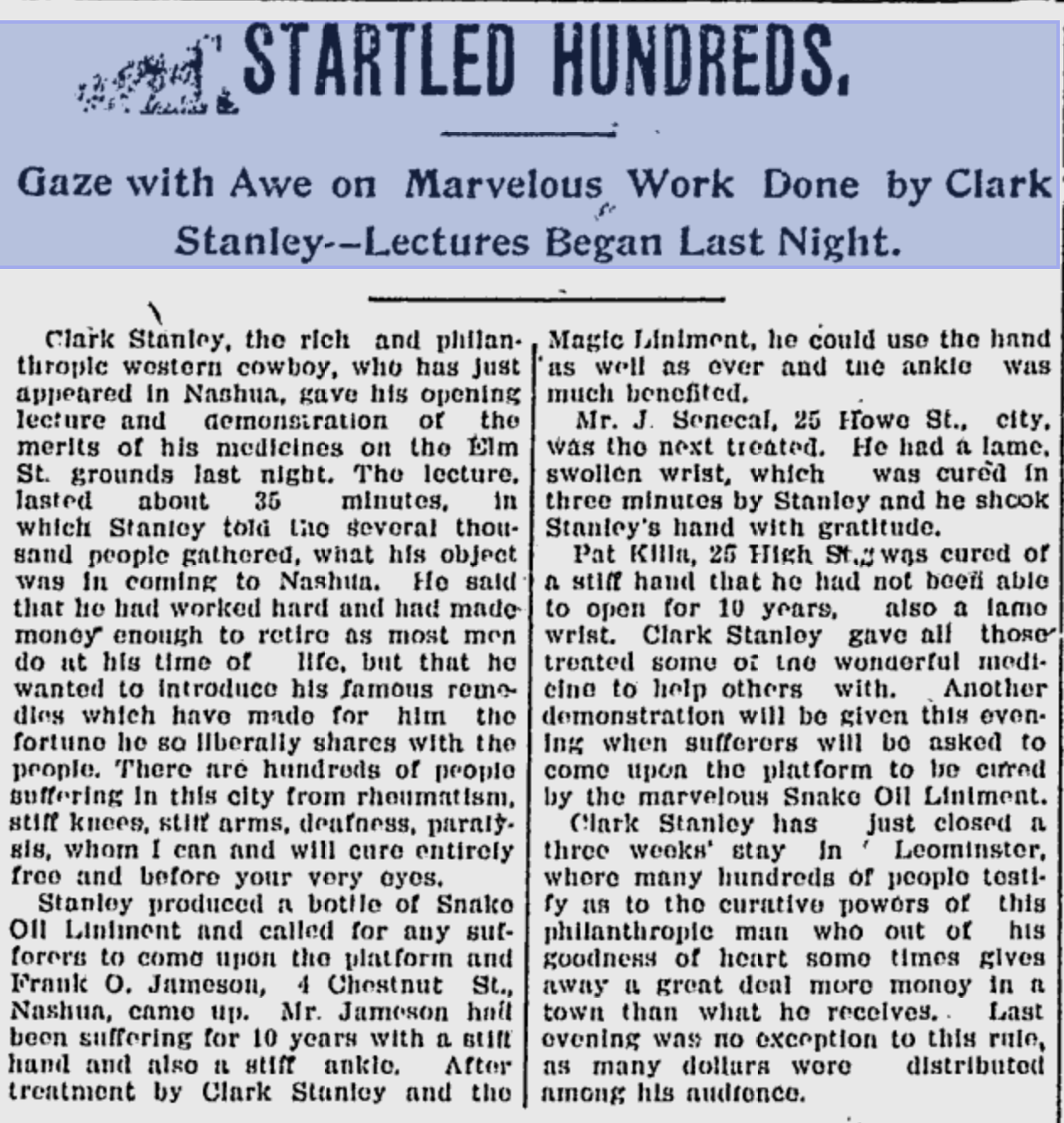
Ever wondered how ‘snake oil’ came to epitomize quack medicine? Or who the first snake oil salesman was? (Well, thanks to a great book called Quackery and some research, I can tell you.) During the 1893 World’s Fair in Chicago, a man named Clark Stanley took to one of the Fair’s many stages. Dressed in the height of frontier fashion, he produced a rattlesnake from a bag and then proceeded to slit it open in front of the crowd. Ignoring the blood and gore, Stanley plunged the snake into boiling water. Then he waited for the snake’s fat to rise to the surface, whereupon he skimmed it off, mixed it into a pre-prepared solution, stoppered the bottles, and sold it to an eager crowd under the name Clark Stanley’s Snake Oil Liniment.

Over the next twenty-three years, Stanley’s liniment would make him a fortune. Then came Upton Sinclair’s graphic and stomach-turning expose on the meat packing industry — which inspired the passage of the 1906 Pure Food and Drug Act. 

From the title of the Act, you can guess where this is going.

The Drug portion of the Act allowed federal authorities to target patent medicines. These proprietary “medicines,” also known as nostrums, salves, powders, balms, elixirs, drafts, syrups, tinctures, essences, and liniments, DID NOT patent their ingredients or formulas. Instead, they trademarked their names, labels, packaging, and/or bottle shapes. Meaning that up until the 1906 Act of Congress, the hucksters of these “medicines” didn’t (generally) need to worry about doctors, chemists, or other interested parties testing their effectiveness. Hence, manufacturers rarely placed an ingredient list on their products or, like Stanley’s Liniment, only provided one or two key (usually “exotic”) components. Whilst claiming they’d cure you of everything from the common cold, aches & pains, cancer, sexually transmitted diseases, and death — amongst other things.

Yeah……You laugh, but common sense often gets tossed out the window when desperation settles in for an extended stay.

In any case, Stanley got away with selling his Snake Oil Liniment until May 20, 1916. When crates of his Snake Oil, bound for Massachusetts, were seized by federal authorities and analyzed by the Bureau of Chemistry. In short order scientists revealed Stanley’s secret formula: “light mineral oil (petroleum product) mixed with about 1 per cent of fatty oil (probably beef fat), capsaicin, and possibly a trace of camphor and turpentine.”

Unsurprisingly, not a single microscopic mote of snake, rattle or otherwise, was found within the liniment. 

As these ingredients did not cure pain, lameness, rheumatism, sciatica, paralysis, inflammation, animal & insect bites, or reptile/insect/animal poison — as the Snake Oil literature claimed…..Led Stanley to plead nolo contendere (which means Stanley accepted the conviction as if he pleaded guilty without actually admitting he did anything wrong) and pay a twenty-dollar fine (about $576 in today’s money).

Now, by comparison to the majority of his contemporaries who used things like grain alcohol, cocaine, opium, morphine, strychnine, lead, uranium, and radium in their products — Stanley’s Snake Oil Liniment was pretty safe (if one followed the recommendation on the advert — “Used Externally Only”). The problem was anyone who picked up a newspaper back then was inundated with adverts for these dodgy cure-all concoctions — because the ad revenue they generated paid the bills. 

Enter Ephraim Stockton Wells. 

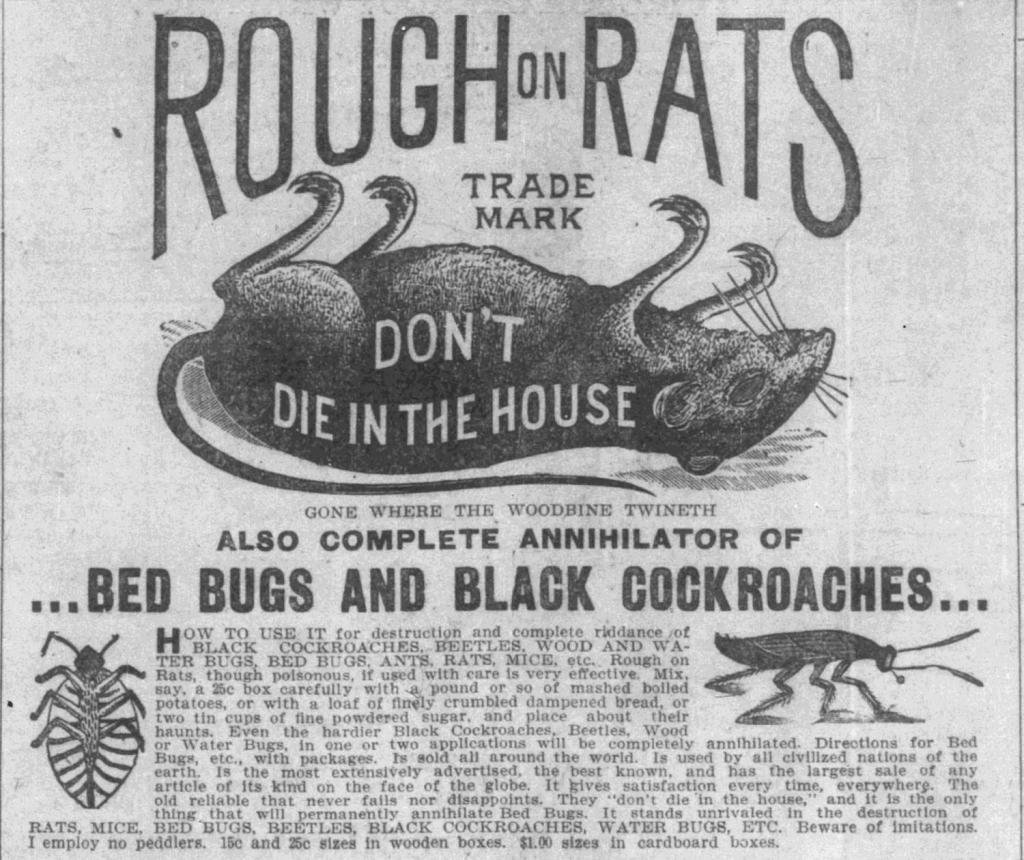
By the Spring of 1862, Ephraim owned and operated a drugstore on Monticello & Harrison Avenue in Jersey City, New Jersey. One day, whilst he was helping customers in the front of the shop — rats tucked into his lunch in the back. Upon discovering the sad remains of his midday meal, Ephraim vowed revenge on the vermin who’d left him with an empty stomach. Drawing on all his knowledge of chemistry and drugs, Ephraim concocted a deadly compound to rid the world of the rodent scourge. When he told his wife of his plan, she joked about him being rough on rats — and the name stuck. (This origin story, of which there are several variants, probably contains a small kernel of truth.)

From 1863 to 1880, Rough on Rats would be Ephraim’s side hustle.

Initially, Wells only sold the deadly rodenticide at his Jersey City drugstore. Then, perhaps, after casting an eye across the shelves of patent medicine his store stocked and his customers bought by the bag full, Ephraim recalled an episode from a few years earlier. After the NYC drugstore he worked at unexpectedly folded, Ephraim placed an advert about himself in a newspaper, and by the next week, he’d a job in Michigan. Either inspired by these real life events or simply following in his contemporaries’ footsteps — Ephraim patented the name Rough on Rats. And in a stroke of genius or foresight, Ephraim also patented similar sounding names, to thwart future competition. (Moreover, Ephraim would end up employing a veritable fleet of lawyers to defend his trademarks.) With his brand now secure Ephraim moved onto phase two, and between 1872-1880 he spent forty-thousand dollars (which is just shy of 1.2 million dollars in today’s money) advertising Rough on Rats in newspapers across the country.

This ambitious gamble nearly bankrupted him. 

However, by 1881, Ephraim’s investment paid off. Allowing him to sell his drugstore, convert another property into a manufacturing facility, and focus all his energies on growing his mail-order business. Which he did with relish. Not only did Ephraim place $140,000 worth of adverts, of his own design, in every magazine and newspaper he could think of every year for the next twelve years — he also expanded his empire into England, New Zealand, and Australia. Seeking trademark protection in each new country to once again keep “imitators” at bay. 

The only problem? Ephraim’s multi-national trademark hid a dirty little secret: Rough on Rats’ primary component was white arsenic.

Known since Cleopatra’s time, refined by the Borgias, and made cheaply available via the Industrial Revolution — by 1862, everyone from emperors to paupers knew of arsenic’s legendary lethality. (Thereby making Ephraim’s claim he “used all his knowledge of chemistry and drugs” to concoct his popular product a bit of a stretch.) And despite Rough on Rats failure to disclose its secret ingredient, it didn’t take long for the general public to work out that Rough on Rats worked just as well on humans as it did on vermin. 

This omission, when taken in conjunction with Rough on Rats adverts, poses an ethical conundrum — i.e. how much responsibility should Ephraim Stockton Wells shoulder in the hundreds, if not thousands, of non-rodent related deaths connected to Rough on Rats? 

In the majority of murders linked to the rodenticide, I’d agree Ephraim’s conscience is clear — except — in one narrow category: Where kids purchased, administered, and murdered with Rough on Rats. Whilst regulation on the sale of arsenic were inconsistent at the state level in the US — by 1872 (the start of Rough on Rats heyday) most restricted the sale of arsenic to minors. Meaning, Ephraim’s omission allowed kids to buy poison they’d otherwise be denied.

A flaw in the law which Gertrude Taylor slipped through in 1896.

My 52 weeks With Christie: A.Miner©2023

Rough on Rats: Crooked House, Kids Who Kill & Two Motives

From the Office of Spoilers: If you’ve not read Crooked House by Agatha Christie, I suggest you do — then read my vintage true crime posts as one directly impacts the other. However, if you’ve no qualms with knowing the ending of a book before you begin it, read on. Either way, you’ve been warned.

Now, on with the show.

According to experts, far more learned than I, Agatha Christie’s publisher, William Collins (of Collins Crime Club fame), found the ending of Crooked House so shocking he requested Christie change it. 

She declined.

By leaving the novel untouched, Crooked House now stands as one of the best twist endings in Christie’s entire catalogue of works (second only to The Murder of Roger Ackroyd — in my humble estimation). Though, on reflection, I’m not sure exactly why the revelation of Aristide Leonides’ murderer harkens such disbelief. Within moments of meeting our malefactor, they give us their motive; Charles Hayward’s Old Man practically spells out the whys & wherefores a few pages later, and Charles himself catches sight of the penultimate clue. Yet, for the past seventy-four years, the solution continues to blindside readers. And therein lies Christie’s cunning, the ability to mark and exploit our collective blindspots….…..Because how often, really, would you look at a kid and see a poisoner?

Turns out, more often than you’d think.

Some follow the pattern set by Crooked House’s thirteen year old baddie Josephine Leonides, whose motive for murdering her grandfather was his refusal to pay for her ballet lessons. By adult eyes, Josephine’s reason seems childish, and despite her being fictional — she’s not alone in this brand of flawed rationale. In my research for this set of posts, I’ve discovered kids who’ve killed because they were rebuked too often by their mother, because their father thwarted their ambition to become a train robber, and because they wanted to see if their “chubby” playmate’s insides resembled that of pig’s (that was a singularly gruesome crime).

However, it’s the crimes of Gertrude Taylor, a case I’ll explore in more detail in this series, which reminded me forcibly of Josephine’s puerile impulse to pick up a bottle of poison. Not only did she target her nearest and dearest, but she did so so her brother wouldn’t take his upright organ with him when he moved house. 

Yet other kids find themselves following (roughly) in the obsessive footsteps of the Tea Cup Poisoner. 

Graham Young’s fascination with poisons not only led to an in-depth study into the subject, at the age of fourteen he started experimenting with them….on his family and friends. In some respects, Young’s diabolical deeds are unique. His ability to dazzle druggists with his knowledge to procure deadly substances like thallium, antimony, atropine, aconitine, and digitalis sets him apart from most other child poisoners. 

However, the overwhelming obsession that led to Young’s abominable “experimentation” is not. 

Seventy years before and across the pond, another fourteen-year-old named Ella Holdridge found herself utterly transfixed, not by poisons, but by death. Whilst her family and friends considered it an odd fixation for a young girl, no one thought much about it. Until the summer of 1892, when, due to a distinct lack of local funerals she could attend, Ella took it upon herself to supply the local churchyard with a fresh corpse….Another case I’ll cover in the next few weeks.

Above and beyond Gertrude Taylor and Ella Holdridge’s ages, alleged crimes, and underdeveloped moral muscles — one more feature unifies this pair of kid killers: A self-made man who built his empire upon the back of dead rats. 

Ephraim Stockton Wells.

My 52 Weeks With Christie: A.Miner©2023

Caustic Candy: When a Frame Falls Apart

In an uncanny case of serendipity: While the curious citizens of Pierre, South Dakota, congregated outside the courthouse after the Coroner’s Inquest, someone linked to the investigation overheard a local confectioner remark that on Saturday, February 27, 1904, the day Rena Nelson said she received and ate a piece of poisoned candy — she’d come into his shop asking for an empty candy box. This tidbit marked the second inconsistency tallied that day. The first came during the testimony of one of the physicians, who noted That while a victim may linger in agony for upwards of fourteen days, the initial symptoms of an acute case of corrosive sublimate poisoning spring up within a few minutes or hours of ingestion. In other words, the science didn’t tally with Rena’s account of eating the tainted sweets on Saturday morning, feeling iffy on Sunday night, and then falling gravely ill on Monday morning. Compounding these two incongruities, Sheriff Laughlin admitted basing his pursuit of Belle Dye on Rena’s word — believing Rena’s sterling reputation provided the necessary veracity to establish his case.

So on March 10th (or perhaps 11th), authorities finally started corroborating the particulars of Rena’s accusation.

Pulling at the most straightforward thread first, investigators visited the shop of the confectioner whom they’d overheard earlier that day. Whereupon they learned that Rena did indeed stop by his shop looking for a candy box but left empty-handed as she said none that he stocked suited her purpose. Catching the scent, investigators visited a nearby drugstore, Dahoss & Company’s candy counter — and struck gold. Seems Rena bought a box and candy identical in every way to the ones submitted as evidence in the inquest.

Save for the white sweeties sprinkled amongst the chocolates. 

Similar in shape and size to peppermint pastilles, it turns out they were, in fact, corrosive sublimate tablets. 

With a sneaking suspicion starting to form, the lawmen returned to the beginning. Taking a closer look at the chocolate box’s wrappings, they found yet more discordant notes. While the package bore Rena’s name and address, they found it odd that someone would paste the front of an addressed envelope to the parcel rather than writing said details onto the paper wrapping itself. When the Special Agents from the Postal Service asked Pierre’s post office workers about this, they confirmed that Rena did receive a parcel on February 27th. However, they were nearly certain the box’s requisite information wasn’t listed on an envelope. When investigators rechecked the label again, using a strong magnifying glass, they detected writing beneath the pasted-down piece of paper (though they couldn’t read it). While back at square one, they also noticed a discrepancy in the cancellation marks. Seems the Boone Post Office cancels stamps using wavy lines, while this parcel’s stamps displayed a flag design. Even weirder, the box bore a January 23rd postmark. As a package doesn’t take a little shy of a month to travel the roughly four-hundred-and-seventy miles between Boone, Iowa, and Pierre, South Dakota, investigators re-interviewed Belle Dye.

Who readily admitted that she wrote Rena a letter in January.

However, when Rena did not respect Belle’s wishes to leave her and Sherman alone, so they could work things out, Belle went to the Boone Police Department. Requesting they arrest Rena, should she enter Boone’s city limits again — citing her continued interference in her & Sherman’s marriage. Though it’s unclear if they could actually do anything, Belle apparently felt confident they could, as she made arrangements with a mutual friend to notify her if Rena ever returned. Whilst also ensuring word of Belle’s plan to press charges reached Rena’s Aunt. Hence, the letter Rena received on the same day as the sweets. It warned Rena against writing to Belle again. Otherwise, things could get ‘hot’ for her.

Why would Belle resort to poison if she already had a plan in place to deal with Rena?

Finally, a report submitted by Boone police hardened the sneaking suspicion into a rock-solid certainty. No shop in Boone, Iowa, used boxes or wrappings like those on the box Rena received. Moreover, they’d run the type of bonbons Rena received to ground and revealed to their South Dakota counterparts no shop in all of Boone sold chocolates manufactured in Mankato, Minnesota.

Since, thanks to all the legal wrangling over warrants earlier, the lawmen already established Belle defiantly hadn’t left Boone for some time prior to Rena’s poisoning. And they doubted she’d any reasonable way of obtaining those specific candies, wrapping, or box. Put these facts together with the incorrect cancelation on the package itself, the odd method of address, and the exorbitant amount of time it took to supposedly arrive…Sheriff Laughlin admitted he now believed Rena Nelson had fashioned a plan to slightly poison herself and frame Belle for the deed. 

While authorities never nailed down exactly where Rena obtained the corrosive sublimate tablets, though they suspected she swiped them whilst nursing the sick around the city (as the substance was used as a disinfectant in hospitals and sickrooms), they felt confident they’d finally arrived at the correct conclusion. (This time.)

Though they were less confident of Rena’s motivation.

Did Rena think if Belle went to jail, Sherman would be able to obtain a divorce from his wife, who, up until this point, had denied him one? Only to misjudge the amount of corrosive sublimate she could safely take (which, btw, is an infinitesimally small amount), destroying not only her chances of wedding Sherman but herself as well. Or did she sacrifice herself to ensure his freedom? Amongst the many articles I read, one claimed that Rena had shown her friends a letter from Sherman in November of 1903, in which he broke things off using the old saw — ‘he’d tired of her.’ This, of course, led to the report that Rena’s letter to her Aunt, the one she penned on Sunday, February, right before she became seriously ill, was tantamount to a suicide note. 

Whilst no one but Rena knows the truth, I lean towards the former explanation. 

Mainly because Rena wrote Belle asking her to grant Sherman a divorce — after — Belle had discovered the cache of Rena’s letters and photos in the family chicken coop in December. Implying Sherman told Rena they’d been found out. Information that wouldn’t need imparting if he’d broken up with Rena in November. On top of which, Belle herself was convinced Rena would return to Boone to visit either her or Sherman or both. Hence, Belle’s complaint to the police about Rena’s conduct.

It must’ve been a bitter blow to Rena when Sherman chose to comfort his wife in jail rather than running pell-mell to her side.

A choice Sherman repeated again…..eventually. 

Seventeen months after Rena Nelson’s death, in August of 1905, Belle Dye started divorce proceedings and obtained an injunction against Sherman from seeing her or coming to their house. The reason? Apparently, Sherman continued running around Boone with other women, and when he condescended to stay home, he treated Belle with ‘extreme cruelty.’ (The papers speculating he blamed Belle for Rena’s death). However, by April 1906, Sherman had secured a good job with a railroad company in Denver. At which point, he invited Belle and his daughter Dolly (a nickname) to join him in Colorado, which they did. Whilst I’ve no clue if they were happy together, from bits and pieces I found in newspapers and census records, they did indeed stay together after their do-over out west until his death in 1951.

My 52 Weeks With Christie: A.Miner©2023

Caustic Candy: The Woebegone Case of Rena Nelson

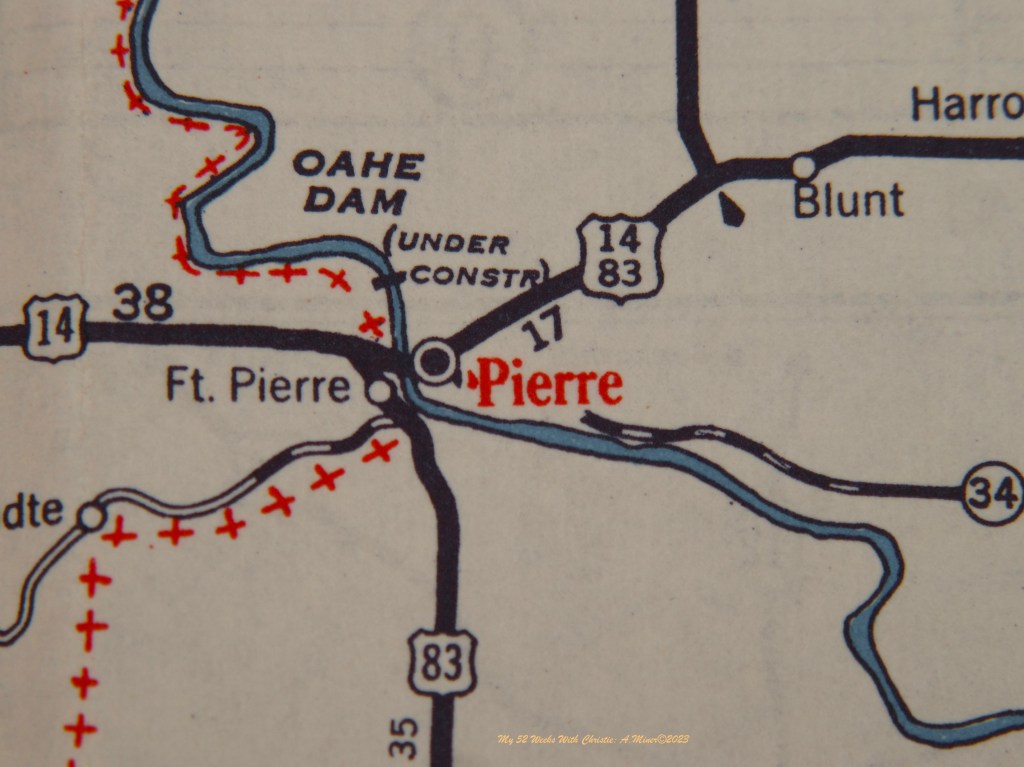
In our last case of Caustic Candy, we will travel roughly three-hundred-and-thirty-seven miles north and slightly west from Hastings, Nebraska, to Pierre, South Dakota, to meet a love-struck woman who nearly managed to send another to prison for a murder she didn’t commit.

In the years leading up to February 27, 1904 — Cordelia Botkin and her infamous cross-country murders continued to make headlines. (Due in no small part to the upcoming retrial Botkin managed to secure for herself — which would ultimately fail.) Despite the police catching and the prosecutors convicting Cordelia Botkin, her evil exploits still inspired/tempted people across the country into trying to rid themselves of an unwanted lover, rival, enemy, or annoying neighbor by sending said person a box of poisoned laced sweets through the mail.

Enter Rena Nelson.

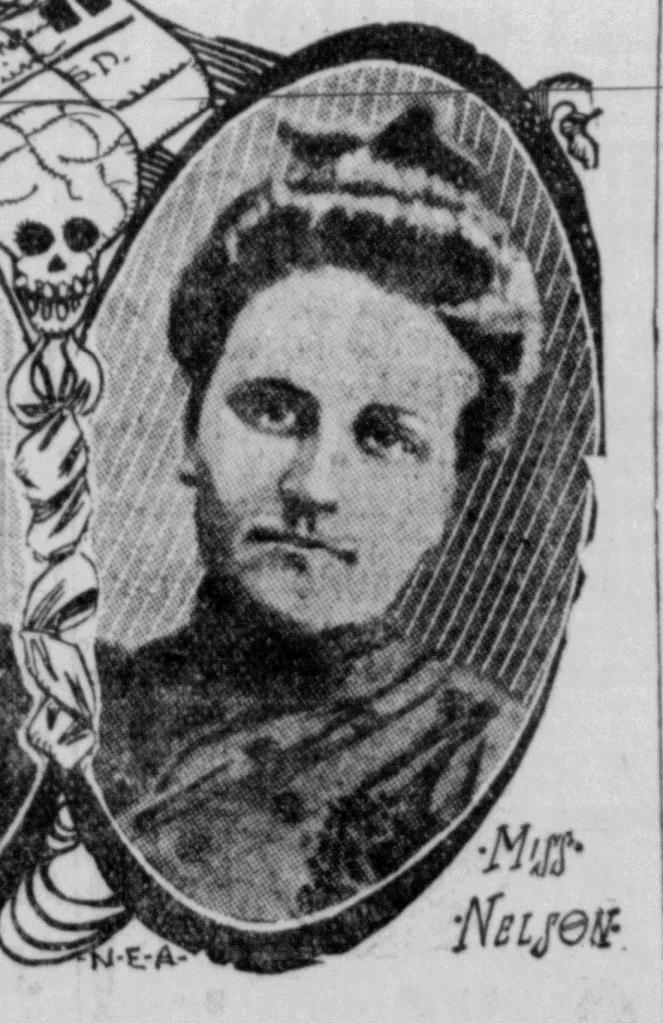
An unattached woman in her late twenties, Rena lived six miles north of Pierre, South Dakota, on a farm with her parents working as a nurse around the city. (Though, as she had no formal training, I think it’s more likely Rena acted as a nurse’s aide.) In any case, on Saturday, February 27, Rena and her father went into Pierre. One of the must-visit spots, whenever one visited town, was (of course) the post office. On this day, a parcel and a letter waited for Rena. Carefully slitting open the parcel’s wrappings, she discovered someone had sent her a box of chocolates. Popping one in her mouth, Rena stood at a counter chewing whilst reading a letter from her Aunt. By Sunday night, Rena was beginning to feel a little iffy, though still well enough to pen a return letter to her relation in Boone, Iowa. On Monday, Rena’s family sent for the doctor.

Who in turn sent for Sheriff Laughlin. 

Whilst slowly succumbing to a hitherto unknown poison her doctor suspected was delivered via bonbon, Sheriff Laughlin listened to Rena point the finger at her own murderer. Taking Rena’s hunch and the suspect box of confectionary with him, the Sheriff left the Nelson household. His first stop was the chemists, where he handed off the sweets for testing. His second was the telegraph office, where he wired his counterpart in Boone, Iowa, asking them to arrest his prime suspect.

By this point, it was Tuesday, March 1, 1904, and the local newspapers got wind of a possible Botkin copycat within their midsts. By the following day, regional papers had picked up the story, and by the next, the national press. 

On March 4, the State Chemist, Professor Whitehead, confirmed the local physician’s worst fears: Rena had ingested corrosive sublimate. Otherwise known as mercury chloride, this compound was used in developing photographs, preserving specimens collected by anthropologists & biologists, to treat syphilis, and as a disinfectant. In acute poisoning cases, like Rena’s, the chemical’s corrosive properties wreak havoc on internal organs. Causing ulcers in the mouth, throat, stomach, and intestines. Leading to a burning sensation in the mouth/throat, stomach pain, lethargy, vomiting blood, corrosive bronchitis, and kidney failure. Even today, doctors face an uphill battle in mercury chloride poisoning. Back in 1904, the only option available were iodine salts.  

Unfortunately, Rena’s organ damage proved too extensive for any hope of recovery.

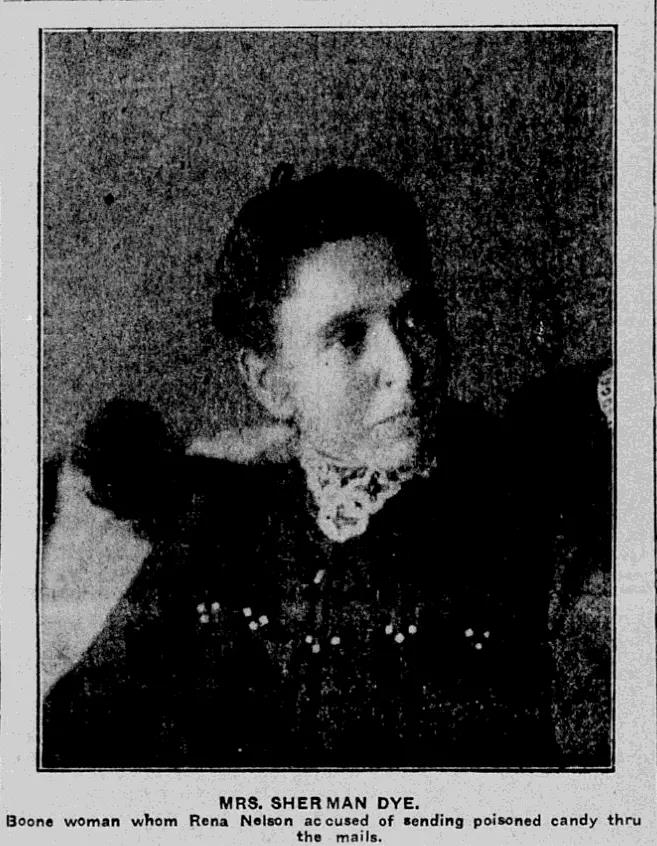
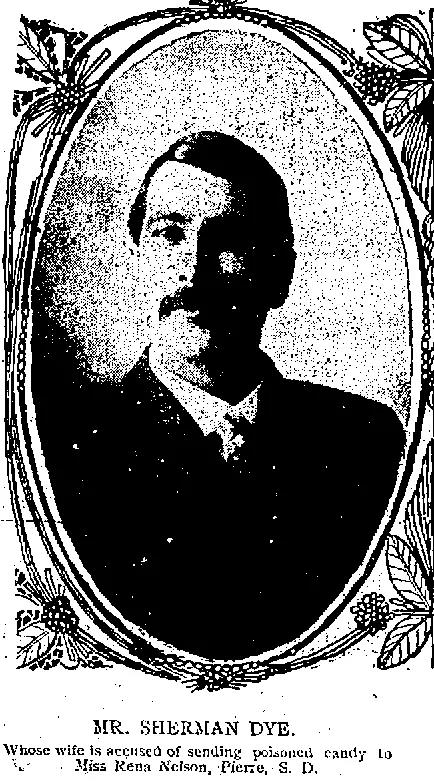
But who did Rena accuse of killing her, and why? This was the question the newspapers, public, and residents of Pierre clamored after Sheriff Laughlin to reveal. For that answer, we must travel back three years to Boone, Iowa. Where for a season, Rena worked at the Boone Telephone Exchange as an operator while living with her Aunt. During this time, Rena met Mr. Sherman Dye, who worked for the Northwestern Railroad as a clerk in one of their roundhouses. 

The two soon started dating. 

When Rena returned to Pierre, the pair continued their romance via pen & paper and carried on in this fashion for the next two-and-a-half years….Until November 1903, when Mrs. Belle Dye, Sherman’s wife and mother of his child, accidentally discovered Rena’s letters and photos stashed in the family’s chicken coop.

Mr. & Mrs. Dye separated on Christmas 1903.

Now, it’s unclear when Sherman told Rena he was married. However, thanks to the letter Rena penned to her Aunt on that Sunday when she started suffering from the effects of the corrosive sublimate, we do know that Sherman initially ‘misrepresented his marital status’. Telling Rena he’d obtained a divorce. However, when Sherman revealed he was, in fact, still married — for whatever reason — Rena chose to continue the relationship rather than giving him the old heave-ho. 

Rena even went so far as to write Belle several letters asking her to grant Sherman a divorce as he wanted to marry her. 

Finally, on January 23, 1904, Belle wrote back, asking Rena to leave them both alone — pointing out that she was ‘interfering with a husband and wife.’ And therein lies the crux of Rena’s deathbed accusation. She claimed Belle was jealous because Sherman transferred his affections from his wife onto herself. Rena also told the Sheriff she recognized the handwriting on the parcel’s wrapping as that of Mrs. Belle Dye’s — but only after ingesting the poison-laced chocolates.

On March 6, 1904, with a South Dakota issued arrest warrant in hand, Sheriff Laughlin arrested Belle Dye — in Boone, Iowa.

Unfortunately, for Sheriff Laughlin, returning to South Dakota with Belle in tow wasn’t as easy as simply catching a train. Facing the same conundrum his counterparts in California and Delaware found themselves in a few years prior with Cordelia Botkin — Sheriff Laughlin needed to navigate Iowa law, which had never faced a case where the (impending) murder took place in a separate state from where the instrument of destruction was mailed from. The first blow to the Sheriff’s extradition of Belle came when the Iowa Supreme Court quashed the North Dakota arrest warrant — which labeled Belle as a fugitive from justice. However, since Belle never entered South Dakota, it followed that she’d not fled back to Iowa afterwards. 

So, by definition of the law, Belle wasn’t a fugitive.

Not willing to let this woman get away with murder, Sheriff met with Iowa’s Governor Cummings on March 7, hoping he’d intervene. While he did, on advice from State Attorney General Mullan, Governor Cummings made a different call than his Californian counterpart. Not only did he free Belle on March 9 with a writ of habits corpus, he also let Sheriff Laughlin know that Belle could neither be extradited to South Dakota nor would she meet a murder charges in Iowa. 

Belle needed to be tried in South Dakota, where the deed took place, or not at all. 

Undoubtedly, seeing which way the wind was blowing before Governor Cumming made his announcement, Sheriff Laughlin made one last Hail Mary play to get Belle Dye back to South Dakota to face justice — he applied to the US Postal Inspection Service. As one of the only investigative federal bodies at the time (the precursor to the FBI wouldn’t be founded until four years later), the Sheriff hoped they’d charge Belle with misuse of the mail. (As sending poison thru the post was, and is still, illegal.) If the Special Agents found enough evidence to charge her, then Federal Marshals could cross state lines, arrest Belle without a warrant, and bring her back to South Dakota.

Whilst all this legal wrangling went on, Rena Nelson died on March 8, 1904. 

Noticeably absent from the side of Rena’s deathbed was Sherman Dye. Rather than comforting his dying lover, he chose to support his wife during her detention. Not only defending Belle in the press, Sherman also paid multiple visits to Belle in jail with their daughter Dolly.

On March 10, the same day Postal Service Special Agents arrived in Pierre — the Coroner’s Inquest into Rena’s death was held. The verdict from the jury was a foregone conclusion: “Miss Nelson came to her death through eating some tablets or chocolate candies contained in a box received through the United States Mail at Pierre, South Dakota and postmarked Boone, Iowa and contained corrosive sublimate in sufficient quantities to cause death.”

However, the most significant feature of the inquest, which would throw the whole case on its ear, occurred as the spectators congregated outside the courthouse discussing the case….

My 52 Weeks With Christie: A.Miner©2023

Caustic Candy: I Didn’t Do It, But If I Did It….

Until this point in Viola Horlocker’s trial, her defense team worked to establish doubt as to whether Viola actually entered the building where Anna and Charles Morey lived. Later, they’d call a witness, who’d known Viola for years, lived in the same hallway as the Morey’s, was home all day — who swore he never saw Viola on April 10, 1899. While all these details add up, Viola’s lawyers had yet to really address the heart of Viola’s insanity plea.

Until the prosecution called Charles Morey to the stand.

Faster than a fox falls on a fluffy-tailed rabbit, Viola’s defense team tipped their hand, showing the jury who they regarded as the real villain of the piece. 

Badgering and lambasting Charles at every turn, they relentlessly grilled him about the exact nature of his relationship with Viola: Charging him with ‘making love to an innocent young woman.’ Accusing him of encouraging Viola’s infatuation through the sheer volume of time spent together, confidences shared, and promises of marriage made. Blaming him for unhinging Viola’s mind — by forcing her to watch her rose-tinted dreams die when he unexpectedly severed all ties with her. Could anyone fault Viola for cracking under the pressure of watching the man she ‘loved not wisely, but too well’ carry on with his wife from afar, as if she never existed? 

(BTW: Apparently, Viola’s lawyer’s cross-examination of Charles was so merciless that when Charles left the stand, he said something very rude while passing by the defense counsel’s table. Unwilling to let the insult roll like so much water off a duck’s back, said lawyer immediately punched Charles in the nose. The next day, the bailiffs, who suspected the dust hadn’t quite settled from the previous day’s kerfuffle, kept a weather eye on the two men. The surveillance proved fortuitous as they foiled the pair of hotheads from drawing pistols and shooting one another in the middle of the courtroom.)

Viola herself took the stand sometime later in her own defense. Though, betwixt hiding her face in her hands, copious weeping, and periodic bouts of fainting, she didn’t provide much substance to aid her case….However….Considering the number of trials where the purported perpetrator put their own head in the noose by trying to defend themselves on the stand — you could call presenting a generally pathetic and remorseful figure a result.

Fortunately, her legal team had an ace up their sleeve.

Do you recall the friends who, from the very start, said Viola must’ve been out of her right mind if she tried to poison Anna Morey? Well, they’d stuck to their conviction and with her. Not only did they attend Viola’s trial en masse, much to Judge Adams’ consternation (who didn’t think it proper). At one point during the proceedings, they rained kisses all over Viola’s head to show their support. 

One of Viola’s particular friends, Miss Eva Stuart, took this show to the next level by providing information that Viola couldn’t or wouldn’t bring herself to say. 

In what the newspapers deemed a well-rehearsed testimony, Miss Eva Stuart divulged several pertinent secrets and private conversations she and Viola shared. Opening with the revelation that initially Viola hadn’t viewed Charles Morey as anything other than her boss….Until one afternoon in the office, he confided in her how sad and lonely he was and wondered if she would be his friend. 

(BTW: This was well before Anna left town for three months in the summer of 1898.)

However, Viola didn’t fall in love with Charles until the afternoon he hypnotized her headache away. While in the ‘altered’ state, Viola revealed she’d felt ‘a little door in her heart spring open and feelings she’d never felt for another friend poured out.’ Deepening their bond, Charles confided in Viola about his marital troubles whilst listening to her matriarchal woes. He came over to her house and listened to her sing. He started asking her to stay late after everyone else at work left — so he could give her a passionate kiss goodbye. Finally, while his wife was out of town, Charles invited Viola to his home. Just the two of them. Alone.

And she went.

At this point, Viola’s defense really started picking up steam. 

Her lawyers then called an array of witnesses who testified to Viola’s peculiar behavior in the months leading up to the poisoning of Anna Morey & friends. Behavior, which included: mood swings, crying jags, melancholy, depressed spirits, headaches, peculiar conduct, unhappiness, and general distress. On one occasion, Viola failed to recognize a friend whom she’d known for the better part of fifteen years. One of the Tibbets brothers testified that more often than not, after the summer of 1898, he’d find Viola on the office floor in a dead faint. 

Next, Viola’s elder sister, Luella, took the stand. First, disclosing what many already knew, that as children, they’d often witnessed the savage fights between their mother and George Horlocker. Bouts, which led to Viola’s nervous disposition as a child. However, the coup de grace of her testimony was the confession of a dark family secret: Just before Viola’s birth, their mother had tried to kill herself.

Next came the medical experts from Oak Lawn Sanatorium. Dr. Cromwell, the superintendent of said sanatorium, testified that Viola had indeed been insane on April 10th. Gradually, between August 1898 and April 1899, the irresistible impulse to poison Anna Morey seized Viola. The last straw, which snapped what little reason Viola still possessed, came that day in the dining room of the Boswick Hotel. When Charles called Anna ‘darling’ — a term of affection he’d never applied to her. 

Dr. Cromwell and his colleagues then explained that when Viola first entered the sanatorium, she’d been subject to extreme attacks of hysteria and nervousness. However, thanks to their care and treatments, Viola was well on the road to recovering her reason.

Dr. Cromwell also went on to say, I’m paraphrasing the pure hokum doctors often spouted about women during this era, that the true root of Viola’s crazy lay in her lady bits, which puberty magnified, and Charles’s wicked conduct together with his abrupt rejection exacerbated. The cumulative effect of all these factors turned Viola into a degenerate.

It took less than an hour for the jury to find Viola ‘not guilty by reason of insanity.’

The question is, was she? Was Viola really insane at the time she poisoned Anna Morey? He was her boss, and if what Viola’s friend Eva said is true, it sounds like Charles groomed her. Thereby making his sudden break-up all the more callous and cruel. And if, in the heat of the moment, she set his desk ablaze, stabbed him with a letter opener, or poisoned his favorite bottle of bourbon — I’d get it.

However, Viola waited just shy of eight months before acting, and she had that box of candied cherries and walnuts prepared before stepping into that hotel dining room on April 10, 1899. Making me wonder if coincidence or premeditation fueled Viola’s choice to dine at the same establishment on the same afternoon as Charles and Anna’s standing lunch date…..But as the papers noted from the beginning, Viola’s reputation, popularity, and well known family drama made a conviction highly unlikely — especially after her lawyers gave the jury an alternate person to blame.

In any case, after the reading of the verdict, Viola stood up, gave one long piercing shriek, and fainted. Upon being revived by her sister Luella, both women thanked the jury profusely. When the press asked Viola about her next life steps, she told them she planned to return to Oak Lawn Sanitarium for a few months before traveling to New York City to stay with Luella and her husband — for a fresh start.

And it seems she did. 

In the few lines in which her name appeared in the papers over the years after her acquittal, Viola Horlocker did indeed travel to New York. Where, for a few years at least, she performed music professionally. She married a man with the surname of Adams, moved to Tujunga, California, and was alive, if not well, as of February 16, 1939. 

My 52 Weeks With Christie: A.Miner©2023

Caustic Candy: Planting Doubt

Undoubtedly aware of the scandal Charles Morey narrowly managed to dodge the summer before, Dr. Cook didn’t need to strain any mental muscles persuading Sheriff Simmering to take a closer look at Viola Horlocker for the attempted murder of Mrs. Anna Morey and her friends. When the lawman learned Viola and her mother hightailed it out of town a few hours after Dr. Cook’s accusation? The twenty-five-year-old law clerk became suspect numero uno. Viola’s sister, who was visiting Hastings, tried to explain to the Sheriff that the hastily taken trip was due to the disquiet caused by Dr. Cook’s unanticipated accusation — not because it possessed any merit. 

The explanation failed to hold water for the Sheriff Simmering.

Knowing when and what train Viola departed on, it didn’t take the Sheriff’s men much time to locate the wayward Viola and her mother in Sheldon, Iowa. Due to Viola’s crossing of state lines and lack of an arrest warrant, the Sheriff issued a statement to the press. Warning the Horlocker family that if Viola didn’t return to Hastings, Nebraska forthwith, he’d fetch her back to town himself. 

A threat he followed through with a week later, arrest warrant in hand.

Arriving back in Hastings, Viola (apparently) created quite a spectacle when authorities tried to usher her from the train platform to a waiting cab. Sobbing, moaning, and fainting — Viola needed support to traverse the fifty or so yards to the waiting vehicle. Whilst her mother looked on, giving an unhelpful statement to the eager reporters, “Even as a child, she’s always had these funny turns.” After finally making it to the courthouse, Viola pleaded ‘not guilty’, placed under a $5,000 bond, and sent home.

While in court, her brilliant legal team, John Stevens and William R. Burton, also asked Judge Adams for a continuance to prepare Viola’s defense. 

The request was granted.

The newspapers labeled their delay a sound strategy: Noting that Viola’s previously spotless reputation of a hardworking, churchgoing, and long-suffering daughter would delay the trial until autumn 1899 and would allow time for minds & memories to mellow. 

As coverage of Viola’s case continued, it became readily apparent she and her lawyers needed all the help they could get.

A little over a week prior to Anna finding the box of arsenic tainted candy on her doorstep, Viola purchased one full ounce (or 900 grains) of the deadly metalloid. She then returned to the chemists on April 3rd & 10th for another two half-ounce packets of the poisonous powder (or 218 grains each). Viola’s reason for the purchase? Rats.

(Though, unless a massive rabble of rats decided to take up residence in the house’s walls, attic, crawl space, garden shed, root cellar, and garage  — the purchase of two full ounces doesn’t exactly align with Viola’s explanation.)

Supplementing the prosecution’s case were various eyewitnesses who placed Viola in the Boswick Hotel at the same time as the Morey’s lunch date, on the street near their apartment, in their building, and in the hallway leading to their apartment. Together with the tried and true motive, jealousy, I’m sure Hasting’s prosecutors thought Viola’s case a slam dunk.

Despite the damning evidence mounting against her, Viola’s lawyers proved more than equal to the task. 

The first order of business, they convinced Viola’s mother to commit her daughter to the Oak Lawn Sanatorium in Jacksonville, Illinois, for treatment. (From the Office of Full Disclosure: I don’t actually have documentation that her lawyers persuaded Viola to enter the sanatorium. However, this surmise feels probable with the subsequent turn of events.) Next, they asked Judge Adams for another continuance in September of 1899. Stating they needed extra time to explore their defense strategy — hypnotism. Whilst not admitting to committing the crime, her lawyers said Viola had no recollection of perpetrating the deed and claimed she was subjugated to a will stronger than her own. It was this unnamed person who instructed Viola to kill Anna Morey, and it was they who wanted her dead. Making Viola an instrument, not the guilty party.

Whilst Viola’s lawyers did not directly point the finger at Charles Morey, the newspapers did. 

Digging into this sensational claim, they (rather quickly) found the kernel of truth fueling Viola’s defense. Seems Charles did indeed hypnotize Viola at least once in an effort to help rid Viola of headaches that had plagued her on and off for years. (Even back then, hypnotism stood on very, very shaky ground. However, I don’t think Viola’s lawyers ever seriously considered using it. I believe this was another means of A) buying more time and B) casting further doubt in the minds of potential jurors.) 

At this point, the papers uncovered another curious detail. 

During the period when the prosecution needed to charge Viola with attempted murder, the victim herself lay bedbound, recovering from arsenic poisoning. Hence, the task of pressing charges fell to Charles. Only he didn’t. The County Prosecutor did. This lack of action on Charles’s part was considered highly irregular. Perhaps Charles didn’t want to leave his wife’s side or was paralyzed by the fear of losing Anna. Either way, the newspapers didn’t report this so benevolently. Especially when editors know innuendo increases circulation, so speculation ran rampant: Because if everything between Charles and Viola in the summer of 1898 was on the up and up, it follows that the investigation into and the trial of Viola Horlocker wouldn’t uncover anything untoward. So why didn’t Charles press charges? Did he have something to hide? 

There’s no smoke without fire.

Planting yet another seed of doubt in the minds of the potential jury pool.

In the spring of 1900, Viola’s lawyers asked for a third continuance. Only this time, Judge Adams denied their request. Summoning Viola home from Oak Lawn Sanatorium, where she’d spent nearly a year receiving treatment, the trial commenced on March 20, 1900 with jury selection. After two days, the lawyers finally agreed on a group of all male, well-to-do, local farmers. At which point, Judge Adams instructed the jury that the prosecution didn’t need to prove Viola was sane when she poisoned Anna Morey & friends — just that the murder attempt was made.

Unsurprisingly, Viola’s lawyers abandoned hypnotism and switched to a straight not-guilty by reason of insanity defense. 

The first five witnesses called by the prosecution established that Viola was seen at the Boswick, walking towards the Morey’s building, and outside their flat’s door. 

Until their cross-examination, whereupon: Mr. Dillon, the proprietor of the Boswick, admitted he wasn’t totally sure Viola lunched in the hotel on April 10. The second witness, a Mr. Barnes, was equally uncertain if April 10th was the exact date he’d seen Viola walking towards the Morey’s flats. The third, C. E. Cox, owned that he hadn’t actually seen Viola climb the stairs towards the Moray’s flat. He only heard a female foot tread up them. Cox’s wife testified that a veritable bevy of women ascended and descended those stairs all that day. The flat’s housekeeper, Mrs. Pottinger, testified she’d seen Viola in the Morey’s hallway, but said she’d asked after a different tenant. Viola held a similar conversation with Belle Rand a minute or two later on the Morey’s doorstep. Unfortunately for the prosecution, neither woman recalled Viola holding a fancy candy box. 

Mrs. Anna Morey took the stand, confirming her sighting and hasty retreat of Viola from the hotel’s dining room. Plus her recollection of the circumstances surrounding the receipt of the poisoned box of candy.

Finally, the prosecution summoned Charles Morey to the stand.

*Cue the fireworks.*

My 52 Weeks With Christie: A.Miner©2023

Caustic Candy: The Alleged Crimes of Viola Horlocker

Continuing on our theme of unexpected deliveries, tainted sweets, and copycats of Cordelia Botkin (who murdered two women by sending poisoned chocolates through the mail), we are going to put St. Louis (Mo.), Florence McVean, and her sister Mary McGraw in our review mirrors and travel roughly five-hundred-and-twenty-six miles northwest to Hastings, Nebraska to meet Viola Horlocker.

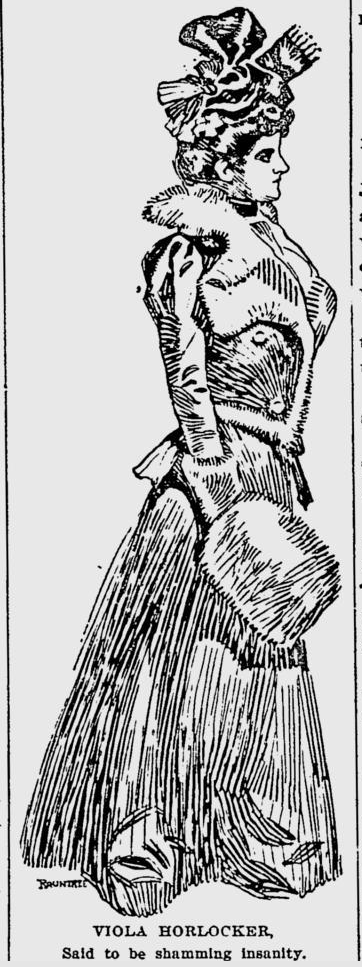
Known as Ollie, though I will continue to refer to her as Viola for constancy’s sake, she was the second oldest of four sisters. By the spring of 1898, all save Viola had left home. The oldest, Luella, became a highly regarded painter of porcelain china. Lita went on to become an accomplished artist in the field of flower painting and arranging. Whilst Zora made a name for herself as a professional singer. Like her sisters, Viola also possessed a musical streak, which she showed to full advantage by singing and arranging music for the church’s choir. Though not considered a beauty, Hasting’s society did find Viola attractive, fashionable, and “well above mediocrity in every way”. 

However, things weren’t as rosy as they appeared at first blush.

Viola’s father, George, not only made and lost a vast fortune, he also abandoned his entire family when Viola was a teenager. An event that surprised no one in the community, as next-door neighbors were often treated to the auditory splendor of knock-down-drag-out fights between the Mr. and Mrs. of the Horlocker household. (At one point, during one of these vicious rows, said neighbors felt the need to intervene. Upon locating the source of the commotion, they found Mrs. Horlocker beating George with a pot about the head and shoulders in the kitchen. Noting the number of dents in the cookware, neighbors surmised this wasn’t the first time something along these lines happened.) After her husband’s hasty exit stage left, Mrs. Horlocker turned her capricious temper, bitter disposition, and sour tongue on her daughters. Driving each and every one to seek out respectable employment in cities hundreds of miles away from their mother.

Save Viola. 

Viola stayed behind to cope with a maternal figure, who was not mellowing with age, alone. Again, this turn of events wasn’t wholly unexpected. Viola’s sense of duty to her family found her stepping up to provide for her mother and two younger sisters (as Luella was already out of the house and state by this point) after their father departed. Educating herself in the law, Viola worked as the deputy county clerk for four years until she accepted a position at Tibbets Bros. & Morey. Where her work was considered exemplary. (There is a bit of discrepancy regarding her exact role in the firm. The newspapers labeled her a stenographer. However, during the trial, the Tibbets brothers said Viola drew up flawless legal documents for them….Which sounds more involved than what a stenographer normally does? I’m not really sure. Though, it wouldn’t be the first time newspapers of this era chose a dumbed down a woman’s job title to avoid confusing their readers.)

Enter Charles F. Morey. 

Prior to joining the prestigious firm as a junior partner, he’d held the office of City Attorney for years. Now, it’s unclear if Viola and Charles knew each other before joining the same firm, but either way, they soon became acquainted — as Viola was assigned to assist him. By the time spring rolled around in 1898, the two were friendly enough that Charles introduced Viola to his wife and tried to encourage a friendship between the two women. He also invited Viola to join his cycling club….Naturally, Charles accompanied Viola home after each meeting or tour — to make sure she arrived safely. 

Fast forward a few months to the summer of 1898: Anna, Charels’s wife, left Hastings for a few months.  

Almost immediately, Charles and Viola started spending ever increasing amounts of time together. They’d go for long, winding rides in the country, where Charles confided in Viola about his work, career aims, and struggles at home. Viola, in turn, vented to Charles about her troubled home life and mercurial mother. Charles then began asking Viola to stay on after everyone else in the office left for the day, for more long talks, which more often than not spilled over into dinner at one restaurant or another. If Viola felt she couldn’t leave her mother alone on a particular evening, Charles would accompany her home, and they’d sit out on her porch for hours talking.

After three months of this constant association, the local newspaper’s gossip column weighed in on what the Hasting’s busybodies had already started whispering about: What would Anna say if she knew her husband was spending such copious amounts of time with his young female law clerk? As they say: While the cat’s away, the mice will play. Though the paper didn’t print their names, everyone in Hastings knew (or was subsequently informed of) who the couple in question was. This potentially embarrassing situation prompted one of the Tibbets brothers to pull Morey aside and advise him to cool it with Viola. 

Counsel Charles willingly complied with as his wife was due home in days.

To say Viola took Charles’s news badly would be an understatement. However, she soon learned no amount of protestation or pleading would alter Charles’s mind. He even went so far as to have Viola reassigned to one of the Tibbets, further limiting Viola’s opportunities to spend time with him. And whilst her work didn’t suffer, after Charles dropped her like a hot stone, her manner did. Over the subsequent fall and winter months, Viola’s demeanor turned increasingly irritable, nervous, and depressed….

Until everything came to a head on April 10, 1899. 

According to the newspapers, the bare bones of the “incident” went something like this: Whilst Charles occupied his days with lawyering. His wife Anna added to the household coffers by teaching art, drawing, and painting to the well-to-do women (and their daughters) of Hastings. And by all accounts, both Anna and her classes were remarkably popular. Due to the duo’s demanding professional calendars, Charles and Anna chose to consciously carve out time to spend together.

One such hewn event was a standing Monday lunch date at the Boswick Hotel.

On this particular April day, after finishing their meal and parting ways until quitting time, Anna rushed home to prepare for a class. When she arrived at their apartment’s door, Anna found a box of candy sitting on the mat. The attached card identified the gift giver as one of Anna’s good friends, Miss Kirby. Still needing to zoom, Anna Morey set the box aside and started prepping her studio for the impending art class. A short while later, with everything sorted and five out of six students on hand, Anna opened the box of homemade candy. Passing the sugared walnuts and cherries around, the group partook while they waited for the last class member.

Who, in an odd case of serendipity, just happened to be Miss Kirby.

Upon Anna’s thanks for the unexpected box of sweets, Miss Kirby denied making or sending Anna the candy. Unsurprisingly, this contradiction frightened everyone: The notorious trial of Cordelia Botkin had only wrapped up five months prior and copycat crimes, like Florence McVean’s, had proliferated on newspaper’s front pages across the country ever since.

Compounding this disquiet, everyone who’d nibbled on a piece or two or three — started feeling queasy. Uncertain whether the power of suggestion or something more diabolical was causing their gastric distress, the group of budding artists sent for a doctor….Who, after arriving, rapidly determined he’d a genuine case of poisoning on his hands. After treating/stabilizing the group of women, the doctor sent the remaining candied fruit and nuts out for testing.

The very first piece tested came back as containing four grains of arsenic. 

Now, if I understand how this largely defunct unit of measurement works (please correct me, nicely, if I’m wrong), one grain equals just a smidge under 65mg. Experts consider a lethal dose of arsenic between 100-300mg (depending on things like body mass, tolerance, and overall health). So if each piece of the tainted candy contained four grains or about 258mg of arsenic…..That sextet of women should thank the gods above and below for escaping the afternoon of April 10th with their lives. Anna Morey, in particular, should light a candle. The only reason the tainted sweets didn’t kill her outright was that she threw up a large measure of the arsenic she’d eaten. As it was, Anna was bed-bound for weeks afterward as the toxic substance worked its way out of her system — her husband continuously by her side.

News of Anna’s mysterious poisoning spread like wildfire through Hastings.

Two days after the ‘incident’ Viola, who’d continued to work diligently at the firm whilst gossiping with everyone else over nearly fatal turn of events, ran into a family friend at the drugstore. Well acquainted with the gossipworthy happenings betwixt Charles and Viola the summer before Dr. Cook voiced his growing suspicion: “Ollie, how could you do this?”* To say this brought their conversation to an abrupt end is an understatment, as Viola apparently fainted then staggered away from the good doctor as fast as humanly possible after regaining her senses….Then, later that same evening, she and her mother boarded an eastbound Burlington Train and left town.

Because running away after someone accuses you of attempted murder ALWAYS makes you appear innocent.

*(There’s a variant of this story where one of the Tibbets Brothers accuses Viola. However, the majority of the newspapers printed the Dr. Cook version.) 

My 52 Weeks With Christie: A.Miner©2023