Book Review: Can’t Spell Treason Without Tea

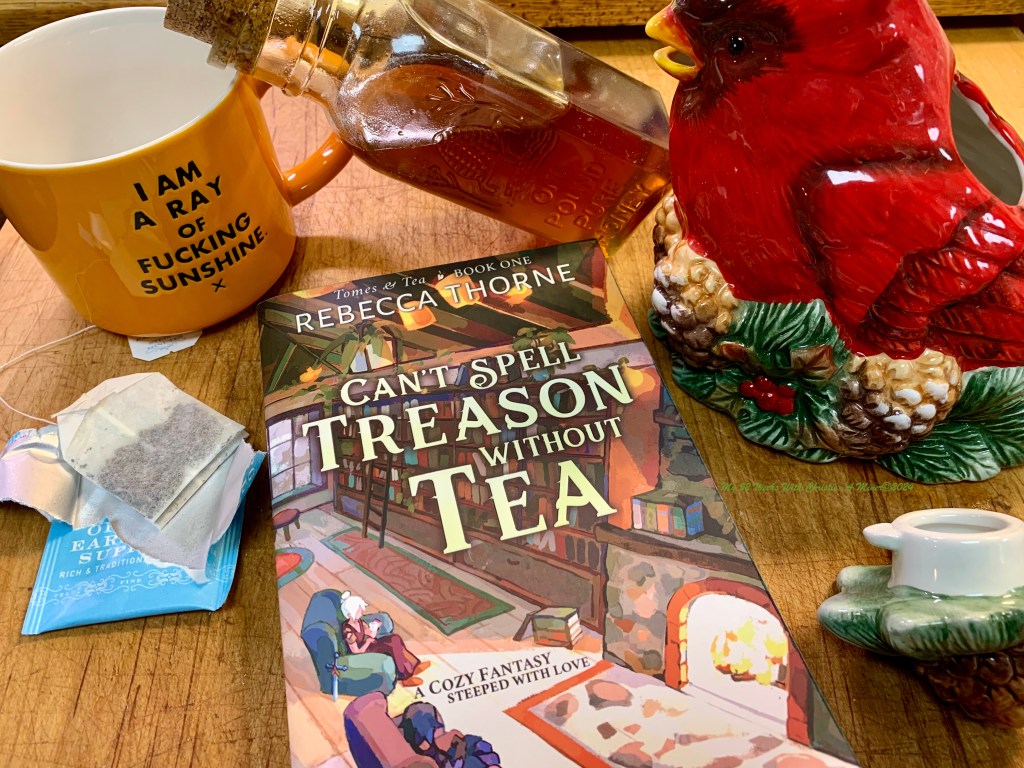
Can’t Spell Treason Without Tea — Rebecca Thorne

If one chucked a Harlequin Romance novel, a D&D campaign, tasty pastries, and gallons of tea into a cauldron — you might end up with Can’t Spell Treason Without Tea

Initially, the story is about Reyna, a private royal guard, who’s fed up with serving the world’s worst boss — aka the Queen. The problem is quitting isn’t exactly an option, as she thoroughly enjoys having her head attached to her shoulders.

But sometimes, you just can’t take it anymore. 

Running away into the mountains Renya, with all-powerful mage girlfriend Kianthe by her side (well, actually flying her griffon), the pair open a bookshop/teahouse/bakery in a small mountain hamlet on the cusp of dragon country.

And this is where the mystery starts.

For you see, the dragons are pissed. Someone stole a clutch of their eggs and they want them back….And Kianthe gets tasked/cursed/bespelled (depending on your view) to locate and return them.

I really enjoyed reading this book and cannot wait until the second book in the Tomes & Tea series arrives at my house later today! Perhaps not what people would snobbily call “high fantasy”. Can’t Spell Treason Without Tea is fun, funny, entertaining, and intriguing. Basically, everything I’m looking for in a book, especially during the cozy autumn season.

I would recommend this book to anyone looking for a light fantasy novel with snarky humor, action, magic, and dragons. 

BTW: Whilst the book has a punny title, don’t let that fool you. The Tomes & Tea are the background setting for the main plot, not the plot itself. So they never distract from what our two heroines are trying to accomplish.

My 52 Weeks With Christie: A.Miner©2024

Mystery Review: Death Comes To Marlow

Death Comes To Marlow — Robert Thorogood

Judith, Suzie, and Becks are back—only this time, they find themselves embroiled in a classic locked room mystery. Unsurprisingly, there’s plenty of suspicious behavior, motives, and suspects to go around, as the murder occurred the day before the wedding of one of Marlow’s great and good. 

I still really love this series. 

The snark, mystery, and humor work so well with the mystery. Plus, the relatableness of the Marlow Murder Club and (honorary member) Detective Tanika makes this a satisfying book to read. The fact it feels like a modern take on the classic Golden Age mystery doesn’t hurt either. 

You don’t necessarily need to read these in order, as they don’t spoil the endings of the previous books in the newer ones. However, if you enjoy watching characters evolve and grow, I recommend starting with book one — The Marlow Murder Club. But if that sort of thing doesn’t worry you, then you’ll be fine so long as you know Death Comes To Marlow isn’t the first in series.

My 52 Weeks With Christie: A.Miner©2024

Mystery Review: How To Solve Your Own Murder

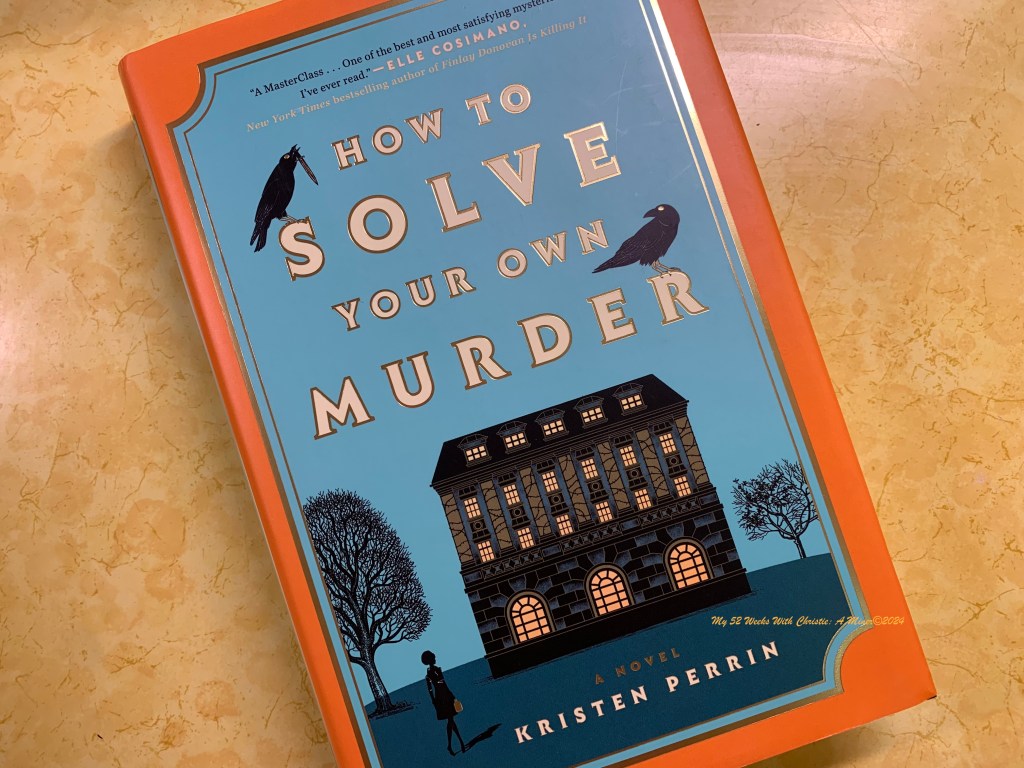
How To Solve Your Own Murder

by Kristen Perrin

….All signs point toward your murder.” 

Typically, the cryptic words from a fortuneteller at a village fete would rapidly evaporate from the mind, supplanted by the heat of the summer’s day, hanging with your best friends, and the laughter that inevitably follows such an overly dramatic reading. Yet, despite her friend’s teasing, sixteen-year-old Frances Adams can’t shake the feeling there’s something to this prophesy.

A feeling which solidifies into certainty a year later when one of her best friends goes missing. Whereupon a barb of fear plants itself in Frances’ heart. Where it remains there for nearly six decades, breeding fear, paranoia, and a plan — a plan to solve her own murder with a bit of help from her family.

A blend of Agatha Christie’s Murder In Retrospect and Dead Man’s Folly, with elements of a classic English village murder mystery — How To Solve Your Own Murder is a fantastic book. Not only because it flips seamlessly between 1965 and today but because Perrin does an excellent job of creating an atmosphere of distrust and tension amongst the characters, as well as seamlessly planting clues, red herrings, and McGuffins that, when seen in hindsight, feel obvious but seem utterly innocuous while reading. Moreover, the penultimate clue (which I can’t say because I don’t want to spoil the book for you) isn’t one I recall reading before — which is a delight for someone who devours mysteries the way I do!

Seriously, this is a great book I would happily recommend to anyone who enjoys classic-ish style mysteries. It starts off a tad slow, as there are several people to meet and places to see. But soon enough, if you’re like me, you’ll find yourself unable to put it down until the last page is devoured whole.

BTW: How To Solve Your Own Murder is not a Young Adult mystery. Just in case you are wondering.

My 52 Weeks With Christie: A.Miner©2024

Mystery Review: 2 for 1

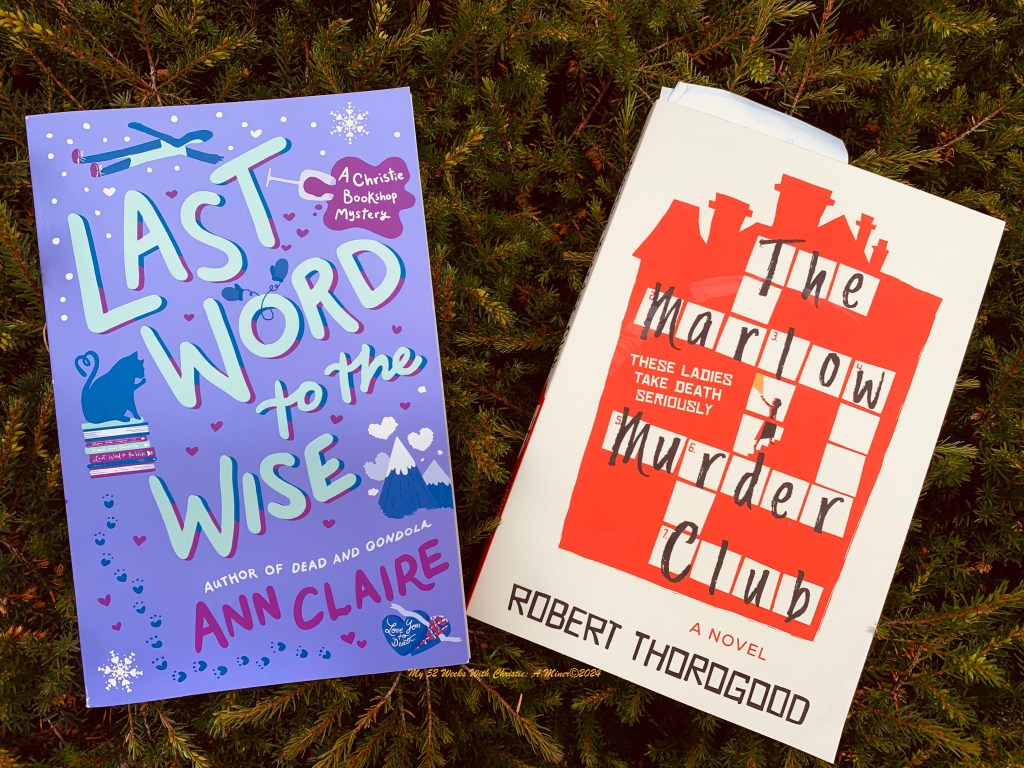
Robert Thorogood – The Marlow Murder Club

A couple of months ago, during a visit to my local bookstore, I’d (for once) remembered to bring my reading glasses with me. So, whilst waiting for my husband to finish his perusing, I idly picked up The Marlow Murder Club. Ignoring the back cover blurb, which sometimes can be misleading, I cracked the cover and read the opening paragraph….Then, the following three pages, and in short order, I was hooked on one, Mrs. Judith Potts.

Mrs. Judith Potts is a seventy-seven-year-old woman who lives alone in a large mansion on the banks of the River Thames in a town called Marlow. Happily sipping her whiskey, compiling crossword puzzles, and swimming in the Thames. It’s this last activity that sparked Judith’s newest pursuit – murder investigation, as she nearly witnessed the murder of her neighbor….An event that leads Judith into not only investigating the crime but into forming the unofficial Marlow Murder Club — with her new friends Becks, Rosie, and one frazzled investigating police officer.

And it’s not until I sit here writing this review that I’m struck by Judith’s resemblance to Ms. Marple in both age and her love for gossip and puzzles. While these similarities exist (perhaps to hook Marple lovers like me?) Judith is very much her own sleuth. One I’d recommend to anyone who’s looking for an irreverent, independent woman (of a certain age) who’s determined to solve the puzzles life places before her.

Seriously, this is a great first installment in a series and one I’d happily place on my recommendation shelves if Seattle Mystery was still going strong.

Ann Claire — Last Word To The Wise

What I enjoy about the Christie Bookshop Mysteries is that Ann Claire doesn’t try to recreate one of Agatha Christie’s famous detectives or her writing style. Instead, Claire finds inventive ways of including references to the Grand Dame herself, as well as occasionally mentioning tidbits from her books. 

Such as, in Last Word To The Wise, the college professor who, whilst on a blind date, snubs Agatha Christie to a bonafide lover of her works, Ellie Christie (no relation). 

As you can imagine, the date went downhill from there.

Claire also taps into the dream of living with a beloved cat above a bookshop in a quirky town. (The winter setting in Last Word was especially welcome; the descriptions of snow and ice on a ninety-degree day made me feel at least a tad cooler.) 

In any case, don’t be fooled by this book’s lavender cover or the tiny hearts dotting it. Last Word To The Wise is not an over-the-top, sappy, cozy, but a proper mystery. Grounded in clues with plenty of good humor, red herrings, and books, I cannot wait until the next Christie Bookshop Mystery hits the shelves so I can (metaphorically) gobble it up!

Mystery Review: Two-For-One

Deanna Raybourn — A Grave Robbery

Once upon a time, several decades ago, when I was in the Girl Scouts, we took a trip to Victoria, B.C. One of the attractions (which is sadly now closed) was Madame Tussard’s Wax Museum. At first, I found the exhibits boring, as waxworks of Queen Elizabeth, Elizabeth Taylor, Abraham Lincoln, and celebrities held zero interest to my ten(ish) year-old self.

Then, I stumbled into the Chamber of Horrors. 

Whereupon my eyes met gruesome deaths, like the pit & the pendulum, a body suspended from a giant hook, and an iron maiden (amongst others). I found the exhibits simultaneously fascinating and repelling (which prompted me, upon returning home, to hit our set of encyclopedias for answers and explanations).

Next came the fairy tale section, where the slow rise and fall of Sleeping Beauty’s chest startled and delighted in equal measure….

It’s at this point that Rayborn’s A Grave Robbery begins. 

Only it’s Lord Rosemorran’s daughter who’s fascinated with Tussard’s clockwork beauty, or, more specifically, with the notion of making a bit of pocket money by creating her own Sleeping Beauty and charging an admission fee for her friends to see it. To this end, her father found her an Anatomical Venus and asked Stoker to place a clockwork mechanism within.

The only problem? The body isn’t made of wax.

Whereupon Veronica and Stoker set about trying to identify and find justice for the poor girl lying within the glass coffin.

One part Frankenstein, one part murder mystery, with a dash of macabre — this latest installment of the Veronica Speedwell mystery didn’t disappoint! And, so long as you know this book isn’t the first installment in the series, you can read this installment first — as Raybourn doesn’t spoil the end of any of her other mysteries within A Grave Robbery.

But what’s an Anatomical Venus or Adonis, you ask?

Well….

Do you recall those plastic torsos from your high school biology classes that someone would invariably jostle into, and all their organs would fall out with a clatter onto the floor? Turns out, Anatomical Venuses and Adonises (female and male bodies, respectively) are the precursors to these embarrassment inducing plastic specimens. 

Unlike the basic high school models I used, Anatomical Venuses are highly detailed, anatomically correct, life-sized waxworks that could be “dissected” by removing layers and/or organs to show the human body’s inner workings. 

(Click Here to see one owned by The Met.)

Created by highly skilled artisans, these inanimate women were meant to bridge the divide between medical schools’ need to dissect human cadavers to learn and the belief dissection jeopardized one’s immortal soul. (Hence why, after their execution, murderers’ bodies were often sent to medical schools for dissection — thereby condemning their souls to eternal damnation.) Anatomical Venuses were also meant to instruct the general public on how the body worked at a time when it wasn’t well understood. 

While Raybourn does a great job explaining their historical significance and the flaws they present to modern eyes….I wanted to learn more! So I found:

Joanna Ebenstein’s The Anatomical Venus.

Within the pages, Ebenstein explores the history of the Anatomical Venuses and the odd, uncanny feelings these lifelike women invoke by examining their religious origins, scientific needs, and the art that these hyper-realistic works inspired. With plenty of pictures to demonstrate what she’s speaking of, this book does a great job explaining the complicated and nuanced place these ladies hold in history and their eventual fall from favor.

I would highly recommend this book to anyone who enjoys learning about an unsettling side of history. 

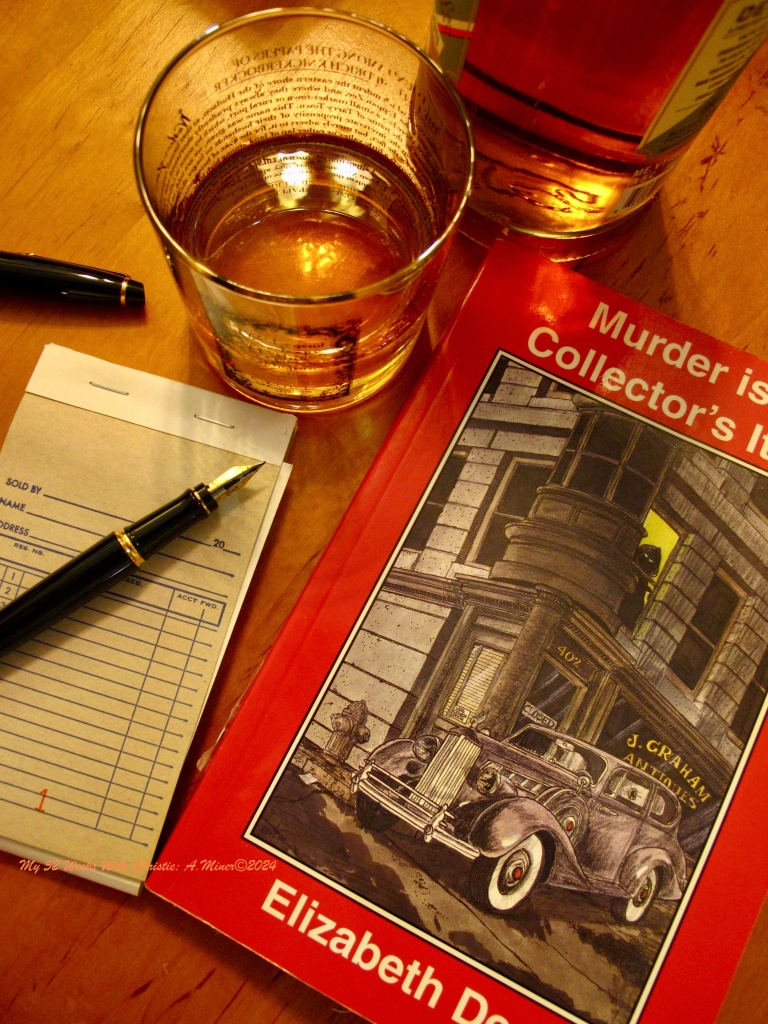
Mystery Review: Murder is a Collector’s Item

For the last few months, I’ve been in a reading drought. 

Nothing I’ve picked up since Tress Of The Emerald Sea really hit home in the same way as Tress, her quest, and her collection of teacups. This immediate attention grab, for which Brandon Sanderson is adept at creating, rendered other books pale and uninteresting by comparison…or I’m tired of having to wear reading glasses every time I pick up a book these days.

It could be two things, I suppose.

In any case, when writing about a Golden Age Gals, I always secure at least one book by said author in order to form my own opinion on their writing. 

And let me tell you, this book — finally — burst my funk!

Murder is a Collector’s Item is an outstanding read! Not only does it hold up well against today’s eye, the humorous (though not screwball) mystery is engaging and believable.

What I appreciate, above and beyond the well-placed zingers, dry humor, and a mystery that Plays Fair, is Elizabeth Dean’s conscious effort to put Emma Marsh front and center. The majority of the mystery is told from Emma’s perspective. Even better, Dean doesn’t gloss over the foibles of a twenty-something female living on her own. The science experiments growing in the back of the icebox, clothes strewn across the bedroom floor, a habitually unmade bed, and dusty dishes sitting in a cupboard — are all things I understand. (And grown out of. Mostly. Though, that fridge science is a tough one to beat.) However, with my twenty-sixth birthday well and truly in the review mirror, this glimpse back into the past made me laugh.

I delighted in watching three separate investigation threads, whose ultimate goals varied slightly from one another, all propelled the mystery forward. Emma’s pure logic and luck (both bad and good) balanced well against her boyfriend’s application of the psychology angle, which was tempered by the Boston cop’s practical and pragmatic approach to the crimes. 

Moreover, I enjoyed watching Emma balance the stresses of her job. The battle of wits when trying to pitch the possible perfect (for them) item to a dithering customer, dealing with the foibles of a temperamental boss who you love (platonically) to bits but occasionally want to strangle with your bare hands, and the competative thrill of unearthing a gem from a rubbish heap you can sell for an order of magnitude more than what you paid for it. These are just some of the things I miss about my time at the book and record shops I once worked in. Plus, it’s fun to imagine how I’d balance my job duties against trying to suss out a murderer — something I never found myself needing to do.

I would happily recommend reading Murder is a Collector’s Item to anyone looking for a mystery on the lighter side. It’s not a cozy, but the murder(s) do take place off-stage, and the dry wit is precisely measured, so it only adds to the story without distracting. 

Seriously, it is worth the few extra clicks to find a used copy hanging out in the corners of the interwebs — I don’t think you’ll be sorry!

My 52 Weeks With Christie: A.Miner©2024

Book Review: Adieu to Chicagoland

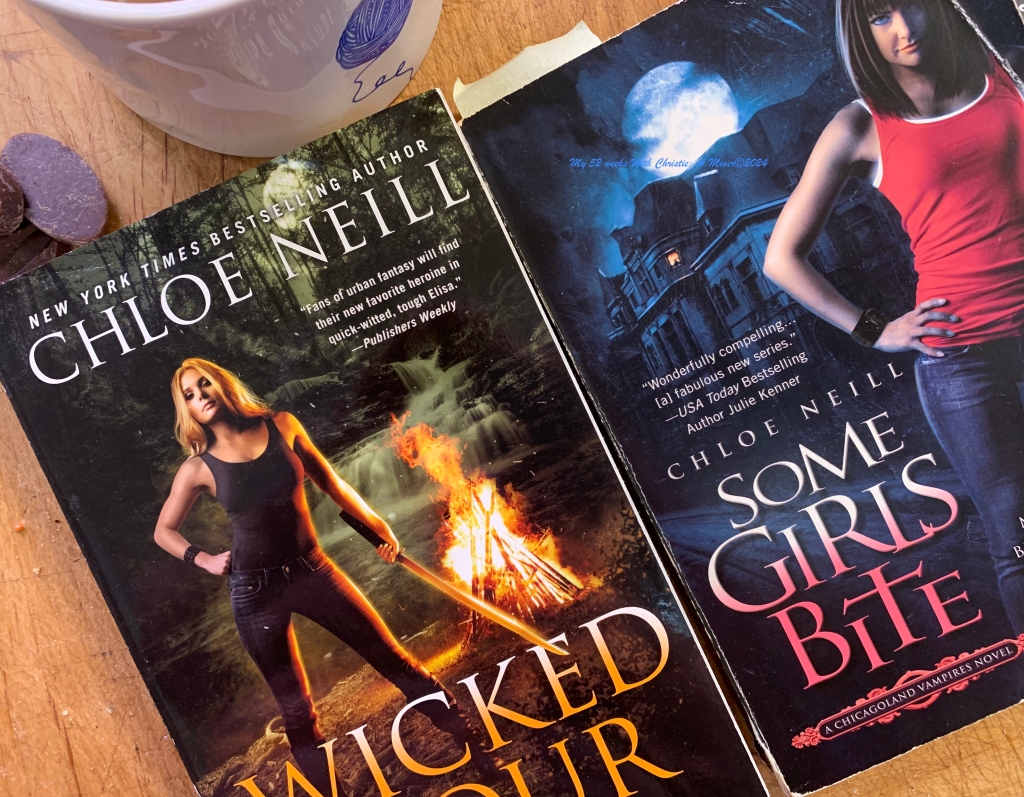
Chloe Neill — Cold Curses

Endings are not necessarily a bad thing. Bibliographies, especially lengthy ones, allow bummed-out readers to take solace in the knowledge they can revisit their favorite characters anytime they wish. However, what can leave a sour taste in a reader’s brain is when the final book in the series fails to land the ending either by indulging in maudlin sentimentality, nonsensically cramming every crowd favorite character into the narrative, or just failing to wrap up the story arcs in a satisfying way.

Happily, Cold Curses, the last of the Heirs of Chicagoland series, doesn’t succumb to any of these pitfalls. Chloe Neill does a fantastic job of wrapping up all the stray storylines in a way that feels natural and, most importantly, makes sense

Even better? The book is a fun read! Full of mystery, ass-kicking, and clever traps, Cold Curses doesn’t let the reader down. Perhaps the epilogue could’ve been longer. However, this is a very minor gripe that really stems from not wanting to say goodbye to everyone you’ve grown to love and all the mouth-watering food Elisa, Lulu, Alexei, Conner, and everyone else eats in both the Chicagoland and Heirs series.

Seriously, I would recommend either series to anyone who enjoys reading urban fantasy, about vampires, and enjoys Chicago as a book setting. You won’t be disappointed.

My 52 Weeks With Christie: A.Miner©2024

Cocktails With Christie: Blood Orange Negroni

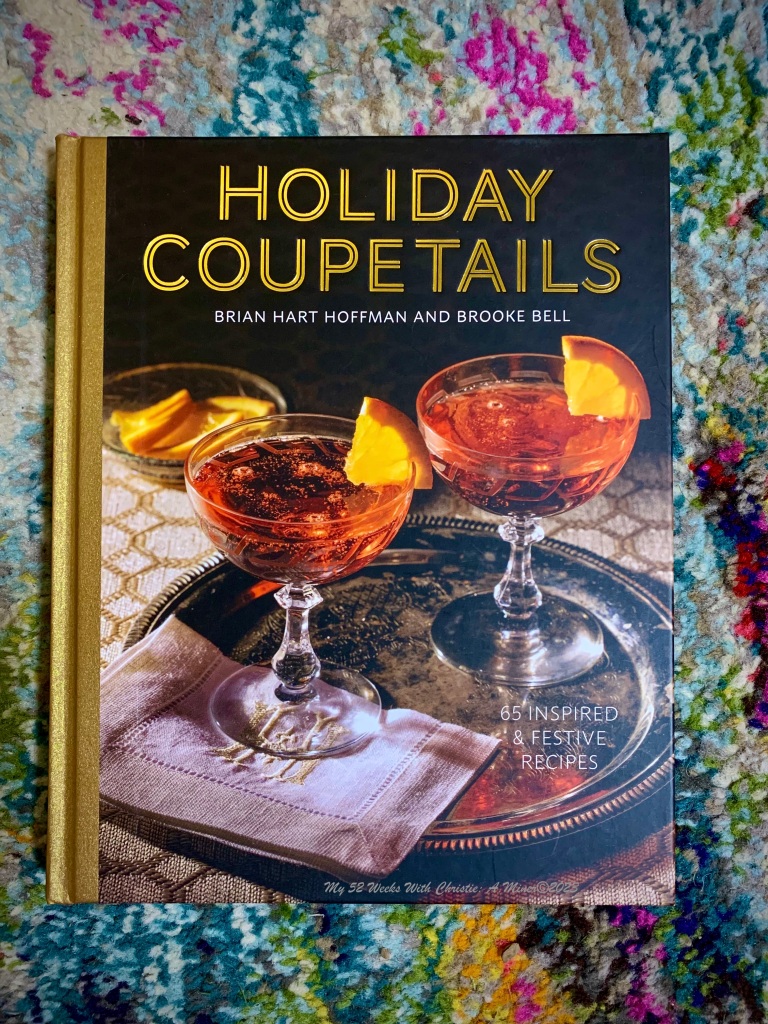
Inspiration: Perusing one of my favorite baking magazines a few months back, they advertised an upcoming cocktail book that looked interesting — Holiday Coupetails. Trusting the editors of Bake From Scratch, I gave the book a go…and am delighted that I did.

Not only does Holiday Coupetails have drink recipes, but it also gives instructions on how to make the garnishes and some fun, festive nibbles!

Even better, Hoffman and Bell (the authors) give the basic recipe for said drink garnishes, allowing you to dress them up as you see fit. This focus on the basics is a refreshing change from the recipes for things like dried citrus peels you find on the internets, which tend to be either overly complicated or assume you’ve got specialized equipment (like a dehydrator).

In any case, this cocktail turned out great! On my second try….

Learn From My Mistakes: When making it, do not put in an equal amount of blood orange juice to that of the other ingredients. The extra sweetness totally flattens the taste of the Campari and makes the cocktail somewhat dull. As they instruct in the book — a single squeeze is enough!

Christie: This is a drink I could see Poirot or Mr. Satterthwaite enjoying — as it is both bitter, sweet, and sophisticated. More importantly, since one version or another of this cocktail has been around since the 1920s, it means either gentleman could easily have ordered a negroni on their travels.

Mystery Review: Murder and Mamon

Mia P. Manansala – Murder and Mamon

“Everybody likes a bit of gossip to some point, as long as it’s gossip with some point to it….” This quote by Gore Vidal suits Lilia Macapagal’s godmothers (The Calander Crew, aka April, Mae & June) to a ‘T’. They gather scandals, scuttlebutt, and stories from around the community — then distribute what they learn to the appropriate parties.

However, unlike Oscar Wilde, who penned — “There is only one thing in the world worse than being talked about, and that is not being talked about.” Not everyone within Shady Palms appreciates being the butt of a whisper campaign, nor The Calander Crew’s brand of honesty.

So when someone starts spray painting “Mind Your Business” all over April, Mae & June’s new storefront (a laundromat) and sending them anonymous letters to the same effect…Well, some people within their sphere of influence relish the trio’s comeuppance. What’s worse, when April’s niece is found murdered in their laundromat not long after the vandalism begins, sympathy sadly runs short…Unless you’re part of Tita Rosie’s Kitchen crew! Despite her family and boyfriend’s requests to sit this mystery out, Lila sets out to find justice for her godmother’s niece.

What I enjoy about Tita Rosie’s Kitchen Mysteries is the portrayal of family and with family comes food (especially when said family owns a diner, coffee shop, brewery, and winery between them). In this series, the food is woven flawlessly into the narrative, so it adds to rather than detracts from the mystery at hand . And the mysteries Lila inevitably finds herself investigating make sense, as do her investigation methods. So I am never thrown from the narrative by what I read on the page.

There’s a reason why Mia P. Manasala won an Agatha Award!

Murder and Mamon is a great book I enjoyed reading from beginning to end. Whilst at the cozy end of the mystery spectrum, I would recommend this book to anyone looking for a light, warm, funny, and engaging mystery to combat the stress of upcoming holiday events and/or the loss of sunlight during autumn days!

BTW: This is not the first book in the series. However, if you know this going in, starting with this book isn’t a problem, as Manasala doesn’t ruin the endings of her other books in this one!

Vintage My 52 Weeks With Christie: Spinsters

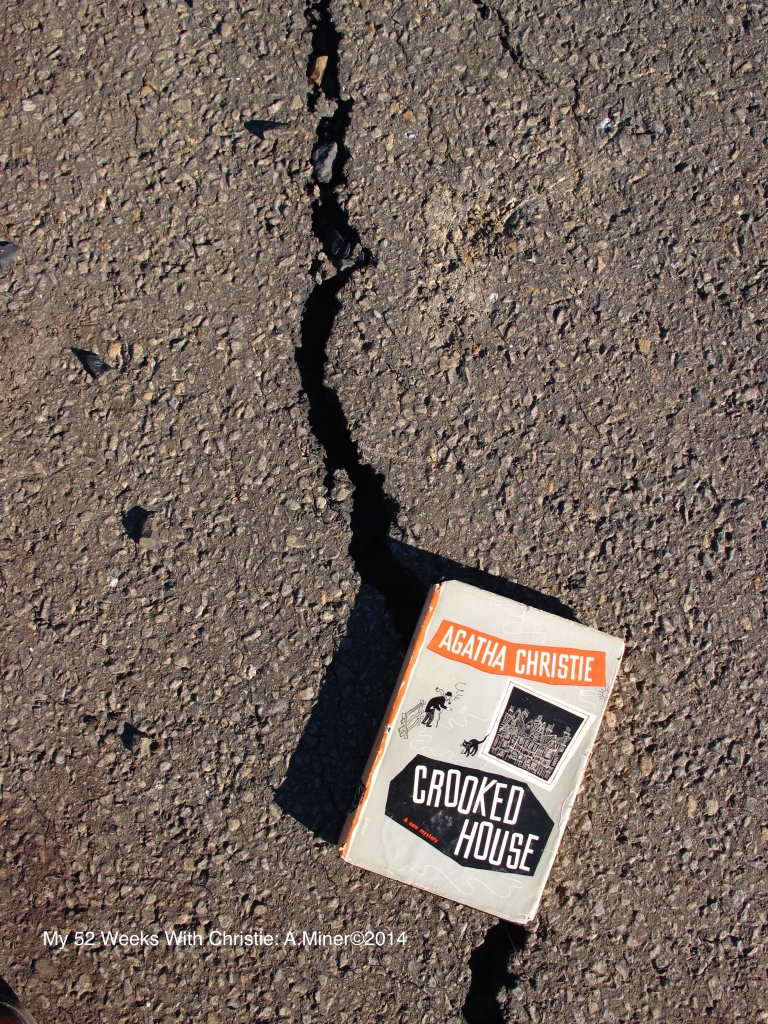
Crooked House 

First Published: In Cosmopolitan (US magazine) in 1948. 

I Read: Crooked House. Harper, New York, 2011. 

Series: Stand Alone. 

Detective: Charles Hayward 

Summary: Charles and Sophia met overseas, fell in love and were separated by their duties in the War. They decided if they lived through it and still liked each other then they would get married. Two years later the War is over, both are back in England and Charles meets with Sophie to reaffirm their arrangements. While the war is finished, there is an unexpected battle on the home front — Sophia’s grandfather, patriarch of the Leonide’s family, has been murdered. The whole family is convinced his second, and much younger, wife is the culprit. However there is little evidence against her, and everyone who lives in the house had a pretty good motive for murder. And much to Charles’s consternation, Sophia refuses to marry him until the mystery is put to bed, giving him a very strong motive to see the whole business through…  

Review:Much like the Murder Of Roger Ackroyd, either you know how the book ends or you do not and I cannot really review it for fear of spoiling the ending. Suffice it to say I thought this book brilliantly clever; you can tell Christie had fun while writing it. The mystery itself is a bit different, as the Rules of Fair Play, which normally Christie strictly adheres to, she took a bit of liberty with them in this mystery. You see, there are really only two clues which give a hint as to who the culprit is and even then they are a bit convoluted. The ending makes complete and utter sense when you read it, however the ability to reach the correct conclusion on your own, well, let’s just say it is a bit more difficult than usual.

One of the best characters in the book beyond the Charles Hayward and Sophia was Sofia’s great aunt Edith de Haviland. Edith was the only one in the whole of the Leonide family who figured out who committed the murder. Charles thought, “I had a suspicion that there might be more going on under the battered felt hat than I knew.” (pg. 35), and he wasn’t wrong in his assessment of Edith. Which brings us to an important point, Christie’s use of spinsters in key roles in her mysteries. 

It all started when Michael Morton cut Caroline Sheppard from the stage adaptation of The Murder Of Roger Ackroyd and replaced her with a young girl (“for plot purposes” is the phrase I heard when I read this snippet of information, it has no basis in fact — just in my imagination). Caroline Sheppard was the spinster sister of Doctor Sheppard; she seemed abreast everything going on in the village without ever leaving her house. This directorial cut catalyzing Dame Christie into giving a voice to those women who never married and never had children (and were past reproductive age) — in other words the spinster. 

Using notes from Caroline Sheppard and her memories of her grandmother (& her grandmother’s friends) — Christie created her second beloved sleuth, Miss Marple (btw Christie is one of the only authors to have created two equally famous sleuths). Christie was not alone in putting this group on the literary map; Miss Marple is just arguable one of the most popular. As a group I find them an interesting read, as they are allowed to do things which married or single ladies are not. And obviously with her use of Edith in Crooked House, Miss Marple is not the end of the line in Christie’s use of this type of character, I cannot wait until I meet another spinster! 

Random (And Almost Relevant) Facts: During the period in which Christie was penning her mysteries, there were a plethora of spinsters populating the world. Why? World Wars One and Two had decimated the numbers of eligible males. Millions of men died at sea, in trenches and on beaches — creating a “surplus” of marriageable women back home after the wars. This allowed for the rise of respectability among this group, since mathematically speaking it was infinitely harder to “find” a husband (or for that matter remarry, since so many husbands and fiancees died as well).

And since I am on a roll….

Mother Teresa is not a spinster. While researching spinsters I found many lists which included her on them. Seriously. Greta Garbo, Coco Chanel, or Elizabeth the First all can be considered spinsters, I am not sure I would have ever used that term to their face (because I am not stupid), but the term is applicable. Mother Teresa is different, she willingly took herself out of the procreation and marriage pool when she took her vows, to become a nun. Which is different than either choosing not to or not having the opportunity to marry and/or having kids. I just needed to point this out, since I guess I had stronger feelings on the use of the word “spinster” than I thought….

Favorite Quote:  

“It was rather like the exit of a bumblebee and left a noticeable silence behind it.” (pg. 55) 

Interesting Note: This is one of the hardest edged solutions I have read so far in her books. When it was first published her publisher considered it so controversial they asked her to change it. Christie refused and the book is better for it (she’d been writing for thirty years at this point, so she could get away with saying no)!

Also this is one of the few Christie mysteries which has never been made into a play, movie or tv show. The BBC made it into a radio play in 2008; but so far that’s it!

Cheating: Still no cheating. I hear London and Edinburgh are lovely at Christmas time…… 

A.Miner©2014

Book Review: Tress of the Emerald Sea

During the last couple of years, when the bookshop was open, many of you who visited Fran and me on Fridays know I brought baked goods for you all to try. Whereupon I learn simultaneously that: A) I love baking. B) The practice gave me the confidence to try new and unfamiliar recipes. C) I am actually pretty decent at it. Due to this love, which finds me handing off treats to the neighbors and my husband’s coworkers regularly, I also enjoy watching baking shows.

Unsurprisingly, The Great British Bake Off is one of my faves.

Not only can you pick up pointers from the bakers themselves, but if you pay attention, you are exposed to all kinds of savory & sweet treats you (or, in this case, I) have never seen. Fans of the show know Prue Leith, one of the competition’s judges, has a compliment she whips out every now and again — “This (insert pastry name here) is worth the calories.” 

Or, inversely, “It wasn’t worth the calories.”

Considering the number of pastries, pies, breads, ice cream, and baked bits of goodness she and Paul Hollywood enjoy on the show — this is serious kudos or criticism indeed. 

Now, what does this have to do with the price of shortbread in Scotland? 

Since SMB closed its doors, gradually over the years, I’ve needed reading glasses more and more often. In point of fact, unless the writing on my phone is the size of a chipmunk’s footprint, I can’t read it. This makes reading the fine print on food labels, forms, and footnotes all but impossible…Unless I’m standing four feet away, which presents a whole new set of challenges. 

As I can no longer read books without my readers, eye strain has become a very irritating part of my life. Often keeping me from enjoying books as much as I used to. (Yeah, yeah, I’ll get to the optometrist soon. However, that’s not the point right now.) 

So when I tell you a book is totally worth the eye strain — you best believe I’m telling the truth. 

And Tress of the Emerald Sea is one of these books.

In the postscript of Tress of the Emerald Sea, Sanderson likens his story to a modern fairytale meant for grownups. However, a more apt one comes a few paragraphs later when he talks about watching The Princess Bride during lockdown with his family. When his wife wondered: “What would that story have been like if Buttercup had gone searching for Westley, instead of immediately giving him up for dead?”

This question planted the idea of Tress of the Emerald Sea in Sanderson’s brain and is a rather apt description that, whilst giving one an idea of what Tress of the Emerald Sea is about, doesn’t spoil the pleasure of found within the pages.

Of course, Tress of the Emerald Sea is far more complex and compelling than its origin question. (We’d expect nothing less.) It’s witty, laugh-out-loud funny, full of edge-of-your-seat suspense, with thought-provoking throwaway lines and a mystery concealed at its heart. 

Unlike my lovely husband, I’ve not devoured everything Sanderson’s written. Sure, I’ve read the Reckoners series (Steelheart, Firefight & Calamity) and Legion: The Many Lives of Stephen Leeds. And while Tress and the Emerald Sea is unlike any of the above books, it is set within the same multiverse. Meaning you meet one or three characters who obviously have a far deeper backstory. But so long as you know this before the first page, you’re fine. (Plus, Sanderson does a great job of weaving in enough information that someone picking up this book cold won’t get lost.)

*Squinting my eyes in the direction of New Mexico, where Fran is, at present, residing.*

Seriously, if you need something to lose yourself in, if only for a little while, Tress of the Emerald Sea is the book you’ve been looking for.

Book Review: A Conundrum…

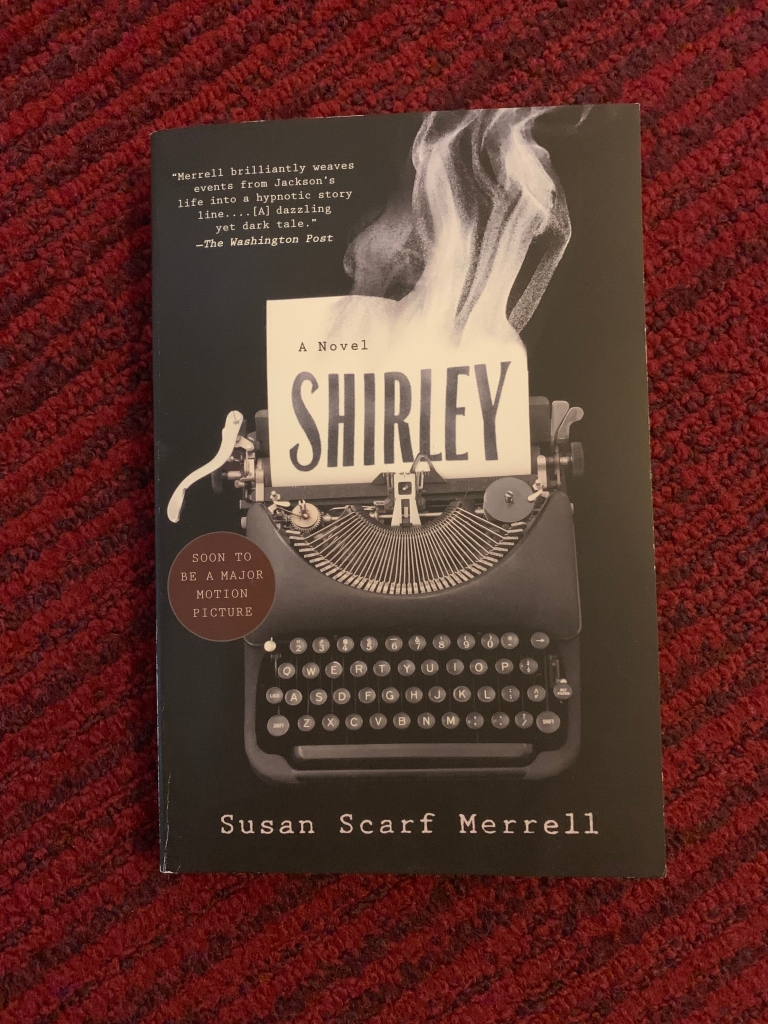
Shirley — Susan Scarf Merrell

Whilst working on my Murder By Mail series, I ran across a short story penned by Shirley Jackson called The Possibility of Evil. Which gives a fictional first-hand account of how the missives of a poison pen writer affect the community in which they live. A mere six pages, it takes no time at all to finish, and it’s one of the best short stories I’ve ever read.

That’s when I realized, despite my former coworker’s love of We Have Always Lived in the Castle, I’d never read anything by Shirley Jackson….And I fell down a literary rabbit hole trying to rectify this glaring gap in my book knowledge. During my research, in trying to figure out which anthology or anthologies to pick up, Merrell’s novel Shirley popped up. Excited by its premise, I ordered a copy of it as well. Then as one does, when gripped by a literary obsession, I eschewed my entire to-be-read-next stack in favor of my latest acquisitions. After reading a few of Jackson’s works, I switched it up and started Shirley. Whereupon I discovered myself reading a well plotted, paced, and put together book. 

The problem is, I’m not sure if I actually like it.

This realization left me in a morass of confusion, not only because I’d cracked the covers fully expecting to enjoy the read but because it took a while for me to suss out exactly why Shirley left such a sour taste in my mouth. 

Do you recall a review I wrote about Last Seen Wearing? Hillary Waugh loosely based his 1952 book on the real-life disappearance of Paula Jean Welden, a sophomore at the all female (at the time) Bennington College. Last Seen Wearing explores, through fiction, how the outcome of this still unsolved case might’ve changed had Paula’s diary been located and if North Bennington possessed a methodical police force.* 

Well, in a strange case of serendipity unknown to me prior to cracking Shirley’s cover, not only did Shirley Jackson and her husband Stanley Edgar Hyman reside in North Bennington, Vermont, when Paula Jean Welden vanished into thin air — Hyman taught English at Bennington College during the same period in which Paula attended. Giving Jackson a front-row seat to the frantic clamor of the five-hundred volunteers who turned up to search the mountain, the helicopter & airplane they employed in their search, the gaggle of reporters who descended on the town, and the strain the other students, staff, & teachers bore during this uncertain period. Unsurprisingly, Jackson drew inspiration from Paula’s case and wrote her into two stories — the 1951 novel Hangsaman and a short story called The Missing Girl.

Now, you might ask, what does a true-crime-inspired police procedural, a gothic novel, and a scathing piece of short fiction, all of which were written decades before Shirley, matter? Because of the four aforementioned works, only Waugh and Jackson chose to change Paula Jean Welden’s name in their stories.

Merrell did not.

And herein lies my problem with Shirley

When reading a fictional biopic, you expect the author to cherry-pick both the good, the bad, and the salacious from the lives of the people they are focused on. And let me tell you, Jackson and Hyman gave Merrell plenty of material to work with — a gothic/horror/mystery writer, who suffered from mental health issues (anxiety and agoraphobia), smoked like a chimney, drank, and took amphetamines & barbiturates. (Gotta love doctors — they gave her the former for weight loss, the latter to treat her anxiety, and believed they were okay to take together.) Add to that a husband who was a writer himself, had a habit of taking his students to bed, purportedly asked for an open marriage, felt frustrated by the lack of recognition for his wife’s work, yet controlled all the money she earned….As I said, there’s plenty of meat on the bone for Merrell to pick at. And it probably seemed like a stroke of luck when Merrell discovered the messy lives of this pair of literary luminaries intersected with the mysterious disappearance of a pretty blonde college sophomore.

Pictures of Paula Jean Welden.

However, Shirley is not a true crime story.

An homage to Jackson & The Haunting of Hill House? Yes. A fictional story about an unhealthy relationship that inspired Hangsaman? Yup. A way of shining a light on Hyman’s professional accomplishments? Certainly. A true crime novel?

Absolutely not.

It’s a piece of fiction meant to entertain.

The second, Merrell started intimating a resolution to Paula Jean Welden’s case, which, btw begins on page two; Merrell should have changed Paula’s name. Just as Jackson herself did in Hangsaman and The Missing Girl. Especially since I don’t believe, as I haven’t found any evidence on her website or in the handful of articles about Shirley, Merrell actually considers Jackson a viable suspect in the disappearance of Paula Jean Welden. 

Albeit Merrell does mention Paula in the last paragraph of the Acknowledgments, “….I must acknowledge Shirley Jackson and Stanley Edgar Hyman. I have conflated their residential history, and restructured facts and details to serve the purpose of my story, much as Shirley did with the story of Paula Welden….” An acknowledgment that is in no way good enough for turning Paula into so much grist for the mill, a plot device, a means for our main character Rose to prove her loyalty to Merrell’s version of the late great authoress.

And this is the crux of my problem with Shirley

Would I place Shirley on my recommended shelves if the bookshop was still open? No. And this makes me angry because there are so many things to like about this book. But I cannot get over the callous indifference shown to Paula Jean Welden. A real person who, chances are, lost her life on the Long Trail back in 1946. A girl who did nothing to deserve the cheap insinuations Merrell wove into the plot of Shirley — other than being attractive, vanishing without a trace, and choosing a college that happened to employ a professor who apparently enjoyed bedding his students.

*(I’m not taking a swipe at the police here. When Paula vanished, Vermont didn’t possess a State Patrol. (Though this case, plus four other unsolved missing persons cases from what’s now dubbed The Bennington Triangle, directly led to Vermont forming one.) Thereby leaving the initial stages of the investigation to the local Sheriff — who’d lost his reelection bid less than a month before Paula vanished. And whom, according to Connecticut State police detectives who were put on the case at the request of Vermont’s Governor, didn’t keep a single written record detailing any of the efforts, leads, or witnesses interviewed before their arrival — ten days after Paula was reported missing. The pair of detectives are the ones who shined a light on the lame-duck Sheriff and his poor handling of Paula’s case.)

My 52 Weeks With Christie: A.Miner©2023