Crime & Christie: The Court of Public Opinion

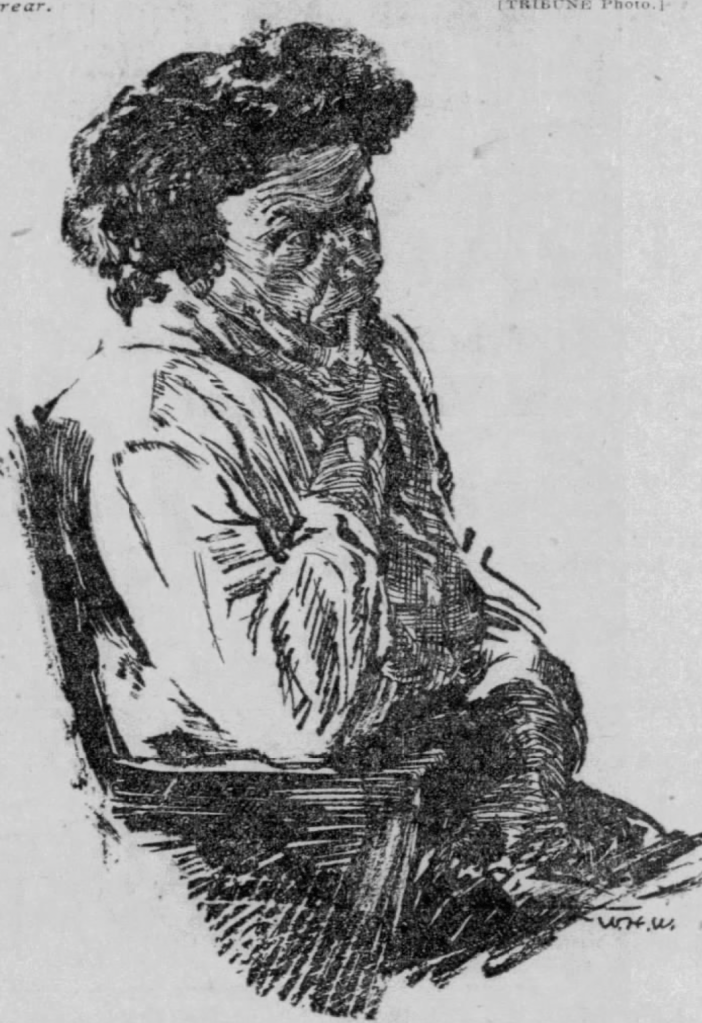
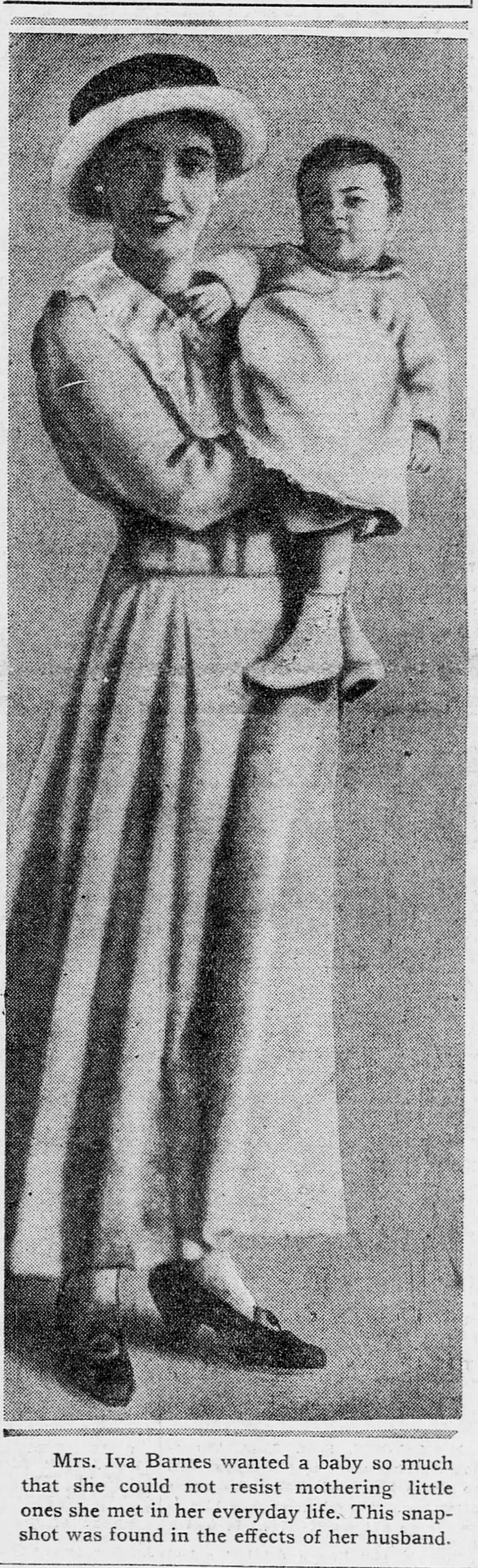
In early July 1923, Isabella Nitti-Crudelle and Peter Crudelle went on trial — pleading not guilty. Whereupon, Isabella drew some singularly harsh criticism from Genevieve Forbes, a prominent female reporter who covered the crime beat for the Chicago Tribune. 

Forbes took exception to basically everything about Isabella, calling her: “…dumb, crouching, animal-like Italian peasant” and “…dirty, disheveled woman…” amongst other derogatory terms. Other reporters picked up this language, calling Isabella: “Dumpy and squat and with no redeeming gift of grace, the dumb-like little peasant woman….creature of primitive physical instincts…mussy twisted hair and swarthy brow so seamed and crinkled with premature marks of age….leathery face and warped figure…” 
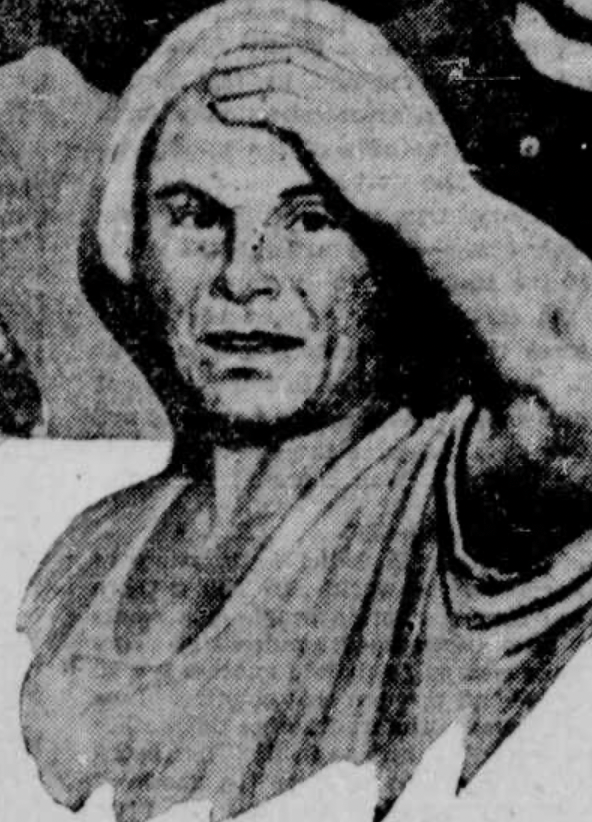
These dehumanizing descriptions go on and on and on.

By referring to Isabella in such terms, Forbes and the others of her ilk painted Isabella as subhuman and undeserving of compassion, sympathy, or mercy from their readers or the jury. Moreover, by focusing on Isabella’s southern Italian heritage, language, and mannerisms — Forbes tapped into the anti-immigrant sentiment of the day (as exemplified by the Immigration Act of 1924, crafted by a fan of eugenics and a man who thought the US needed a Mussolini type leader to pull the country out of the Great Depression). Which only increased Isabella’s status as unworthy of the leniency shown to the bevy of other accused murderesses who’d come before her. 

Unsurprisingly, Isabella and Peter (who’d practically become a footnote in the newspaper coverage of the crime) were convicted of Frank’s murder and sentenced to hang on October 12, 1923. A punishment that caused a sensation across the country, as Isabella was only the fourth woman ever to receive a death sentence in Illinois. 

While most believed Illinois’s Governor Len Small would commute Isabella’s death sentence to life in prison, which had been done for the two other women before Isabella — it wasn’t a sure thing. In 1845, Illinois’s Governor Thomas Ford failed to intervene on behalf of Elizabeth Reed, who’d hung after being convicted of poisoning her husband. Above and beyond Illinois’s single female execution seventy-eight years earlier, there’d been an uptick around the world of female death sentences being carried out: Dora Wright (1903 Oklahoma), Mary Rogers (1905 Vermont), Mary Farmer (1909 New York), Virginia Christian (1912 Virginia), Pattie Perdue (1922 Mississippi), and, across the pond in England, another cause célèbre murder case resulted in the hanging of Edith Thompson on January 9, 1923.

Even more worrisome, Isabella’s conviction failed to stem the flow of dehumanizing remarks. Many of the reports after Isabella’s date with the hangman was announced made it sound as if Isabella was grateful for her confinement on Murderess Row: “….she seems thankful for the better jail fare with occasional time for play, recreation, and with no worry now for poverty nor endurance of bitter cold.” Whether these comments were meant to assuage the public’s guilt over the state’s mandate of death or to make her execution sound akin to mercy is unclear. What we do know is Isabella was terrified. Alongside these reports of Isabella’s “gratefulness” were stories of her enduring panic attacks, obsessive cleaning & singing (undoubtedly done to try to keep her mind occupied), and at least two suicide attempts.

Thankfully, not everyone shared Genevieve Forbes’s point of view. 

After the death sentence was handed down, one juror’s wife threatened to leave him if Isabella hanged. Another group of women bent on obtaining Isabella’s freedom took Forbes to task for her attacks on Isabella’s appearance and character. Unsurprisingly, Forbes mocked their rebuke in print and labeled their efforts to free Isabella as: “…women’s primitive loyalty to a forlorn sister, down and out, and homely.

Crucially, besides gaining the sympathy of women around the city and the support of those opposed to the death penalty under any circumstance — Forbes’s inhuman rhetoric and reports of the trial itself inspired five Italian American lawyers (Swanson, De Stefano, Bonilli, Mirabella, and Helen Cirese) to step in and take Isabella’s (and Peter’s) appeal on pro bono. 

First, the legal team took aim at the circumstantial evidence used to convict: Identification of the body — which rested on a single ring, the inconsistencies between Charles Nitti’s confession and the state’s evidence (where he said the body was dumped in a river, yet the body identified as Frank’s was found in a catch basin), and the fact there was another suspect with plenty of motive whose identity was deemed inadmissible during the trial.

However, the main thrust of the quintet of lawyers’ appeal rested on the absolutely abysmal defense mounted by Isabella and Peter’s former trial lawyer, Eugene A. Moran who, the Illinois Supreme Court would later say, “….It is quite clear from an examination of the record that the defendants’ interest would have been much better served with no counsel at all than with the one they had.” 

For example: Despite securing a translator who spoke Barese, the Italian dialect Isabella spoke, Moran exchanged very few words with her prior to stepping into the courtroom — so how could she aid in her own defense? Moreover, during Moran’s cross-examination of Isabella and Peter, he repeatedly asked them questions that could’ve led them to incriminate themselves on the stand. Apparently, it got so bad that at one point, the trial judge stepped in, warning Moran he was harming his client’s defense. (A caution which didn’t alter Moran’s behavior a whit.)

(BTW: Before we paint Moran in villainous colors, according to a couple of recent articles/blog posts, he’d started suffering from some sort of mental health problems around this time. Which could account for this subpar court performance. Though I’ve been unable to verify this information, I thought it worth mentioning.)

Taking all these legal points under consideration, on September 26, 1923, Justice Orrin N. Carr stayed Isabella and Peter’s execution until their appeal could be presented to the Illinois Supreme Court in February 1924.

My 52 Weeks With Christie: A.Miner©2024

Crime & Christie: Give Them The Old Razzle Dazzle….

On May 6, 1919, the day after slaying Paul F. Volland, a Grand Jury charged Vera Trepagnier with his murder. What’s more, the twelve men refused to set bail, thereby sending sixty-year-old Vera off to the Cook County Jail to join the other women awaiting trial on its infamous Murderess Row. Nevertheless — despite the charge, the multiple witnesses placing her in the room when Volland died, handing Patrolman Patrick Durkin the murder weapon, and confessing to the crime — Vera wasn’t without a heaping helping of hope that she’d get away with murder. 

Sounds mind-boggling, right? Hope, in the face of an apparent prosecutorial slam dunk. 

However, in the 12 years leading up to Paul F. Volland’s death, Cook County prosecutors only managed to convict 3 out of the 29 women put on trial for murder or manslaughter (according to the tallies routinely published in the papers). Which begs the question: How? Well, in studying Vera’s case, as well as yards and yards of newspaper columns covering the 29 women who preceded Vera into the courtroom (and a number who came after), a familiar refrain kept repeating itself.

And They Both Reached For The Gun

Variants of this line kept creeping up, pinging a distant and dormant earworm in the back of my brain. Unable to recall why it sounded so very, very familiar, I tapped the phrase into a search engine and immediately learned why it resonated.

Did you know the musical Chicago is loosely based on real murders and murderesses? Maurine Dallas Watkins, the play’s original author, based Chicago on two (in)famous criminal cases she covered during her eight-month stint with the Chicago Tribune in 1924. Beulah Annan, who shot her married lover in the back, served as the inspiration for Roxie Hart. Belva Gaertner, the muse for Velma Kelly, claimed to have no memory of shooting her married lover in her car after they’d spent several hours visiting bars, drinking, and listening to jazz. You will be unsurprised to learn both women were acquitted of the crimes. 

The musical, created after Watkins’ death in 1969, does a great job of exposing the formula defense lawyers (generally, though not exclusively) followed to obtain acquittals for their female clients. 

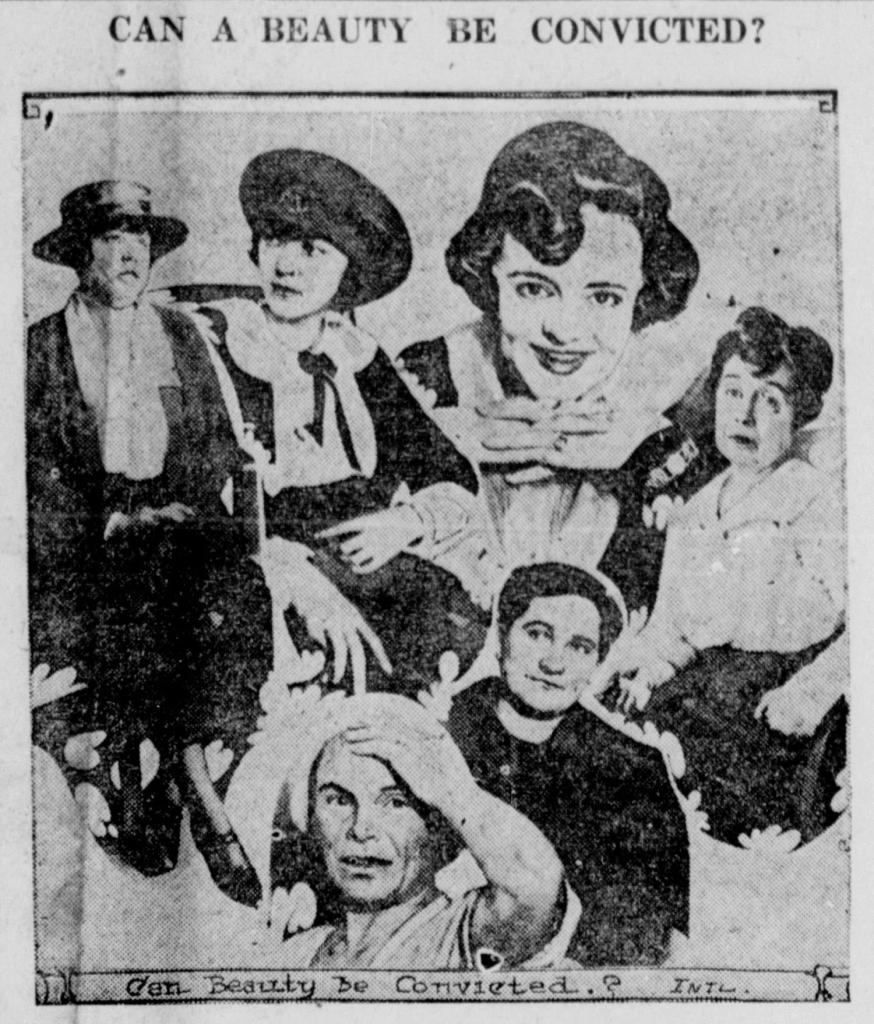
Step One: After committing the crime (of course), feed the media. Recall the newspaper headline that started me down this odd and twisting path: “Can A Beauty Be Convicted?” Admittedly, owning youth, good looks, and manners didn’t hurt their cause. However, what this story conveniently ignores (though the musical shows in aces) is the symbiotic relationship enjoyed with many, though not all, of these female killers and the press.

By answering questions shouted at them on the courthouse steps and granting interviews, these women helped improve the paper’s circulation numbers whilst priming potential members of their juries before ever stepping into the courtroom. 

Thereby explaining why Vera, who declined to testify before the Grand Jury in her own defense, gave a series of interviews to reporters hours after joining Murderess Row. By laying out her slow spiral into poverty after losing her fortune, home, and husband while making sure to mention her altruistic plans for the $5,000 and/or the painting, Vera noticeably softened the tone of the subsequent coverage. 

More importantly, by concentrating on her life story and the lopsided deal she unwittingly struck, Vera could obliquely portray Paul F. Volland as a rich man willing to use his power and position to swindle an older, desperate woman out of the last remaining vestige of her salad days without rousing other influential Chicagoans into defending the dead man’s memory — which would prove catastrophic for Vera’s defense. 

Speaking of Vera’s story, sifting through Vera’s interviews and testimony, the bare bones of her version of events goes like this: After Paul F. Volland closed his office doors, she reiterated her demand for either $5,000 or the Trumbull miniature. 

Volland’s response: “I’m tired of looking at you and of listening to you. I haven’t got anymore time to waste. Now, will you get out?” 

Unaccustomed to such rudeness but unwilling to leave without at least one of her requests being met, Vera stood her ground. Whereupon, according to Vera, “…{Paul F. Volland} leaped at me. I felt his fingers touching at my throat. He pushed me towards the door. I could stand it no longer. I opened my purse, grasped the pistol and pointed it at him. He leaped at me again and I fired. He dropped in a heap at my feet, gasping: ‘I am shot, I am shot.’ That is all I remember.” 

With the potential jury pool now prepped to think Volland attacked first and his death a mere accident, it’s time to cue the next essential element of an acquittal…

Step Two: Razzle-dazzle them, or in other words, create a spectacle evocative enough to bamboozle the 12 men of the jury into finding reasonable doubt, whether it’s there or not. This was usually accomplished through effusive weeping, fainting bouts, and statements of abject regret, remorse, and sorrow by the accused in court.

However, these over-the-top demonstrations of contrition didn’t really suit Vera’s case. Seems prior to sinking their teeth into Vera’s tales of woe, the papers reported on her absolutely serene demeanor at the crime scene. According to their words, Vera showed no signs of distress over what she’d done — no shaking hands or voice, no apologies, no tears. In point of fact (and I’m not sure how accurate this is), the papers made it sound as if Vera stepped over Volland as he lay dying on the floor in order to peer out his office windows while waiting for the police. 

With standard razzmatazz measures rendered useless, Vera’s lawyers turned to plan B — during her six straight hours on the stand (the only person her defense team called to testify), Vera dramatically reenacted her and Volland’s struggle over the gun. The exhibition highlighted the physical disparity between 44-year-old Paul F. Volland and 60-year-old Vera while attempting to refute the prosecution’s expert witness, who declared it impossible for Vera’s revolver to accidentally discharge in the way Vera claimed. “My {Vera’s} finger was on the trigger. His hand closed over mine, pressed my finger and exploded the weapon. He really shot himself.” 

The theatrics didn’t end there. 

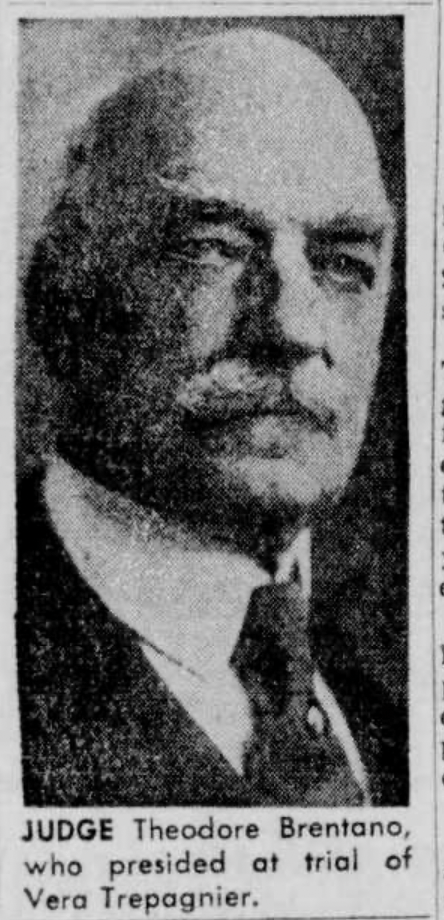
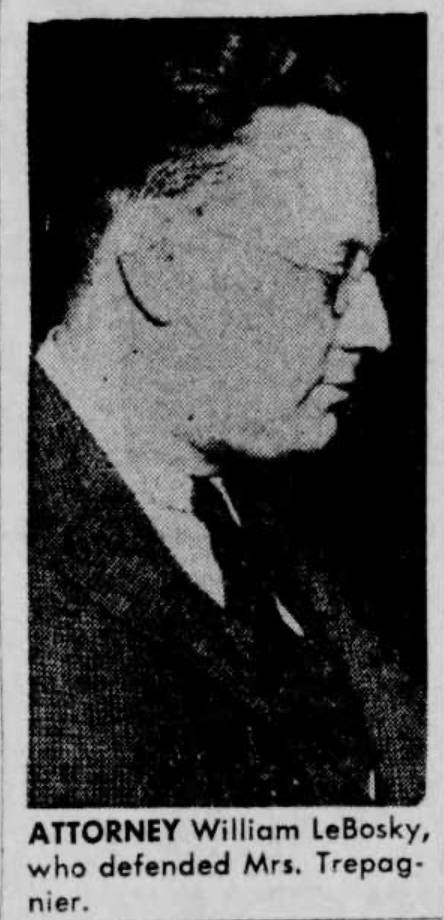
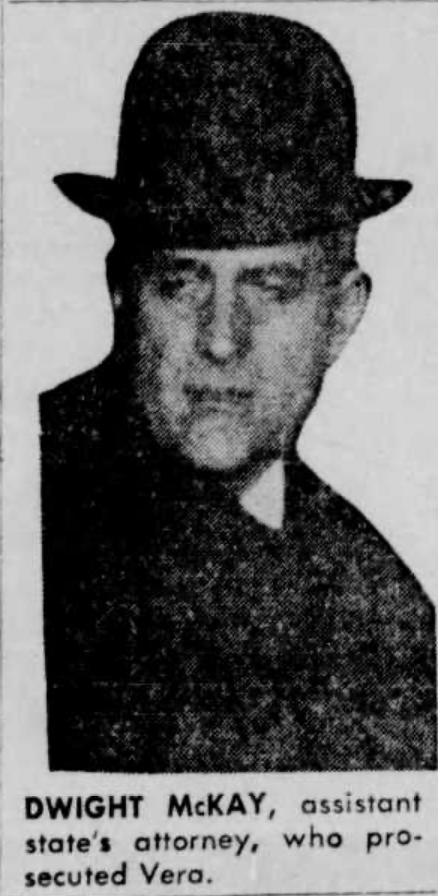
Endeavoring to bolster Vera’s claim: That Volland attacked first and without provocation thus rendering Vera’s actions understandable. In his opening remarks, Leo Lebosky (one of Vera’s lawyers) attacked Volland’s reputation. Calling Volland a “woman-hater” and “woman-beater” — then claimed Volland’s second ex-wife sought a divorce on the grounds of cruelty. These remarks instantly provoked Assistant State’s Attorney Dwight to raise strenuous objections and Judge Brentano to remind Lebosky that claims along these lines would not be admitted into evidence. This led Lebosky to confidently counter, “…it would be.” (They weren’t, btw.)

In July 1919, with the formula now complete: Crime, sob story, razzle-dazzle, and blaming the victim for their own death (i.e., the killing was accidental), a Cook County jury withdrew from the courtroom to deliberate on Vera’s fate.

My 52 Weeks With Christie: A.Miner©2024

Crime & Christie: George Washington, Art, and Revolution

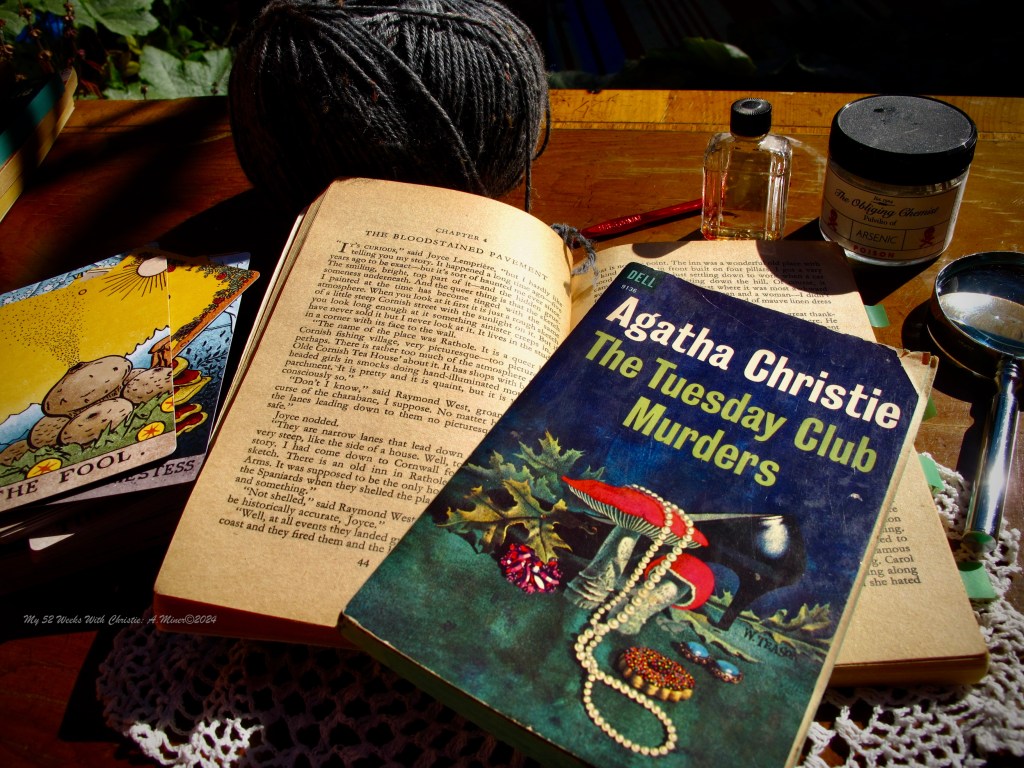
Recently, on a whim, I reread the Miss Marple short story The Bloodstained Pavement. After finishing the story (for the umpteenth time), an idle thought crossed my mind: I wonder if an artist has ever solved a crime whilst painting a painting? Curiosity sparked, I plugged in some keywords into an old newspaper archive.

It came back with:

Diverted by this curious headline (mere minutes after my original query flew through my head), I jotted down the brief list of names printed below the photo collage. Deciding I could spare a few seconds to suss out the meaning of this singular bit of news — I, in a fair imitation of The Fool, blithely stepped off an unobserved precipice.

Fast forward several months.

Surfacing from a mares’ nest of mind-boggling murders, wafer-thin defenses, and musical numbers — I’d grasped a slender thread (loosely) linking The Bloodstained Pavement and the aforementioned fantastic headline to a crap ton of crime in Chicago spanning betwixt 1907 to 1919. 

And it all starts with an artist named John Trumbull.

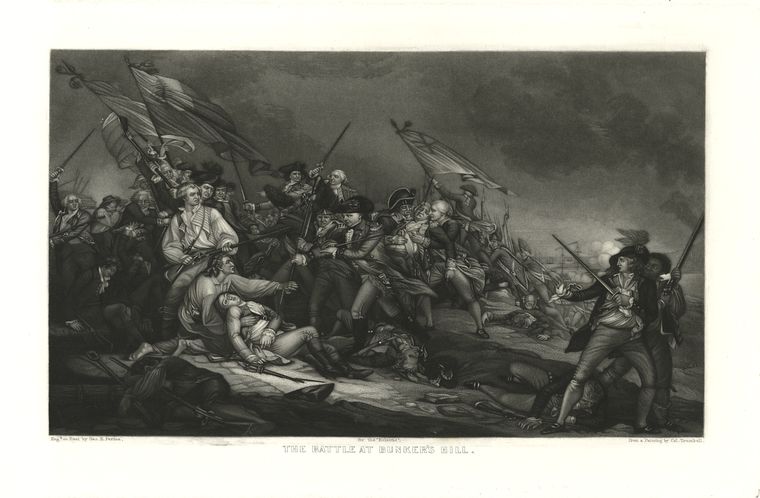
Never heard of him before? Well, ten to one, you’ve probably seen his work: in history books, if you’ve ever been to the rotunda in the U.S. Capitol building (in Washington D.C.), scanned the back of a two-dollar bill, or gazed upon Alexander Hamilton’s portrait on a ten spot. How did Trumbull find himself commissioned with such momentous projects? Well, between being the son of Connecticut’s Governor, graduating from Harvard, and serving under George Washington & Horatio Gates during the American Revolution — Trumbull met a plethora of the fledgling country’s early leaders. 

However, before Trumbull became known for his hyper-detailed life-sized scenes, earned a commission from Congress, or painted the portraits of several founding fathers — he sailed for London in 1780. Unsurprisingly, whilst in the capital of the UK, Trumbull met up with Benjamin Franklin. (Seriously, Trumbull’s life is a who’s who of historical figures.) Franklin, in turn, introduced the aspiring artist to Benjamin West — whose subject matter meshed well with Trumbull’s artistic aspirations. Under West’s tutelage, Trumbull began practicing painting techniques by filling small canvasses with images of the war he’d fought in and miniature portraits. 

Apparently, Trumbull enjoyed the latter exercise so much that he’d go on to paint over 250 of these mini-pics over the next 63-ish years. 

Amongst the bevy of minis Trumbull created was a portrait of George Washington (one of his favorite subjects). Painted in predominantly blues and golds on an oval-shaped piece of ivory, it measured 2.25 by 1.75 inches. According to legend, after completing the Lilliputian sized portrait, Trumbull presented it to a Virginian bride as a wedding gift. After this, this unnamed bride moved both herself and the pocket-sized portrait to Kentucky. Next, the fun-sized painting relocated with one of her kids to Tennessee, her grandkids decamped with it in tow to Arkansas, and finally, it wound up in Louisiana, where it was gifted to Vera Trepagnier. 

Elizabeth Vera McCullough or Vera (as she seemed to prefer), was born into a wealthy family in Belfast, Ireland, around 1860. Round about the age of seventeen, she and her family immigrated to the U.S. and settled in Louisiana. Sometime over the next seven years, Vera caught the eye of her future husband and sugar planter — Francois Edmund Trepagnier. The two married around 1886, when Vera was 24 and Francois was 52 (give or take). They had a son by the following year. 

(Upon marrying Francois, Vera also became the stepmother to three kids from Francois’s first marriage — the eldest of whom was only two years younger than herself….which sounds….awkward.)

Fast-forward four years to when the Trepagnier sugar plantation flooded and ruined their entire crop. In the wake of the devastation and unable to recover, Francois and Vera were forced to economize: first, they let go of all their servants, then sold all their furniture, and finally, the plantation itself. Sadly, despite trying to find a fresh start in Florida, the pressure of unexpectedly tumbling downwards through a significant number of tax brackets proved too much for Francois. Who, whether by illness or suicide (it’s unclear), passed away around 1891. 

Despite losing her husband, estate, and way of life, Vera retained possession of the diminutive Trumbull portrait.

In 1916, during the WWI war effort, about twenty-five years after these life-altering events, found Vera working for the Treasury Department in Washington D.C. Now a grandmother who wanted to help her grandson get a good education, Vera finally decided to investigate the legend around her pocket-sized portrait. Placing the ivory miniature beneath the lens of a microscope for a better look at the artist’s signature, Vera discovered the painting’s lore true. Even better, thanks to the private tutors who’d educated her in her youth, Vera not only knew who Trumbull was, she understood how valuable a rendering of George Washington by his hand could be. 

With this knowledge, Vera traveled to Philadelphia, hoping to make money off the tiny thing while (hopefully) retaining possession of it. 

(Cue dramatic music.)