Crime & Christie: It’s Complicated

Admittedly, unlike the painting in Agatha Christie’s short story The Bloodstained Pavement, which tangentially helped solve a murder, the Trumbull portrait clearly caused one. Nor did the Chicago police need Miss Marple’s hard-won acumen to solve Paul F. Volland’s murder. Yet there’s one question I still haven’t found a definitive answer to: Did Vera Trepagnier’s looks play a substantial role in her conviction? 

According to the 1923 headline, “Can A Beauty Be Convicted?” which featured a photo of Vera amongst others below the headline, it did. Yet, as I (hopefully) showed in the previous posts, Vera’s conviction owed little to her looks and more to her own behavior, together with her lawyer’s failure to address the unique features of her crime in their efforts to shim her case down to fit the Murderess Acquittal Formula. More importantly, Vera herself never mentioned this line of reasoning (at least in the articles I read) in the interviews given after her conviction. Nor did the papers harp on about her features during her trial, focusing instead on her “gentle spiral” into poverty and the prominence of the late Paul F. Volland.

But what of the other handful of convicted murderesses during this period? Did their looks play a role? 

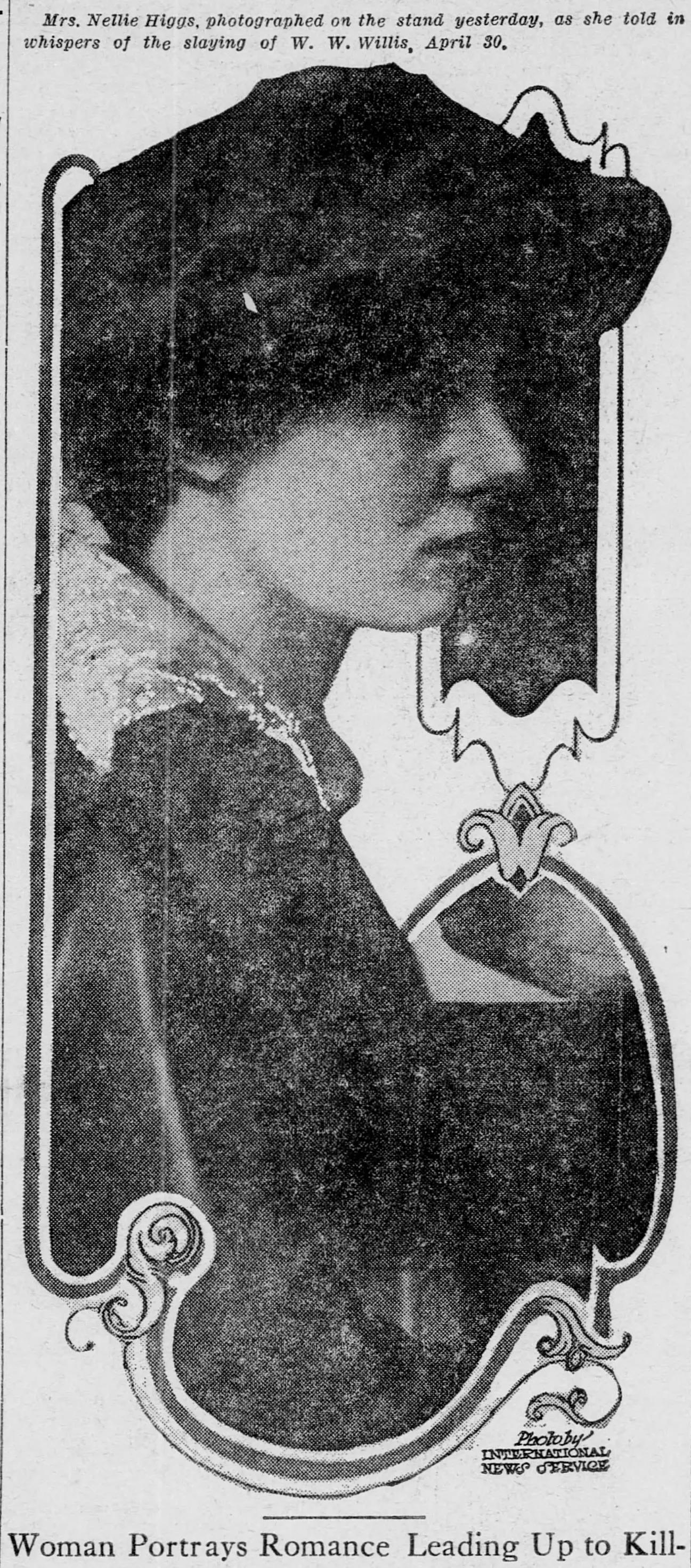
Hilda Exlund, a Swedish immigrant, certainly thought so: “If I had been young and pretty I suppose I’d have been turned loose just as the other women who have been tried for killing their husbands.” In fairness, Hilda’s lack of good looks did draw comment by the press. However, they weren’t harped on in any of the stories I read. Moreover, prior to her conviction, Hilda drew very little attention from Cook County’s press core. Meaning their news articles neither helped soften the potential jury pool leading up to the trial nor hurt Hilda’s chances for an acquittal. To my mind, what actually foiled Hilda’s acquittal prospects lay in the same realm as what sunk Vera Trepagnier’s bid for freedom seven months(ish) later.
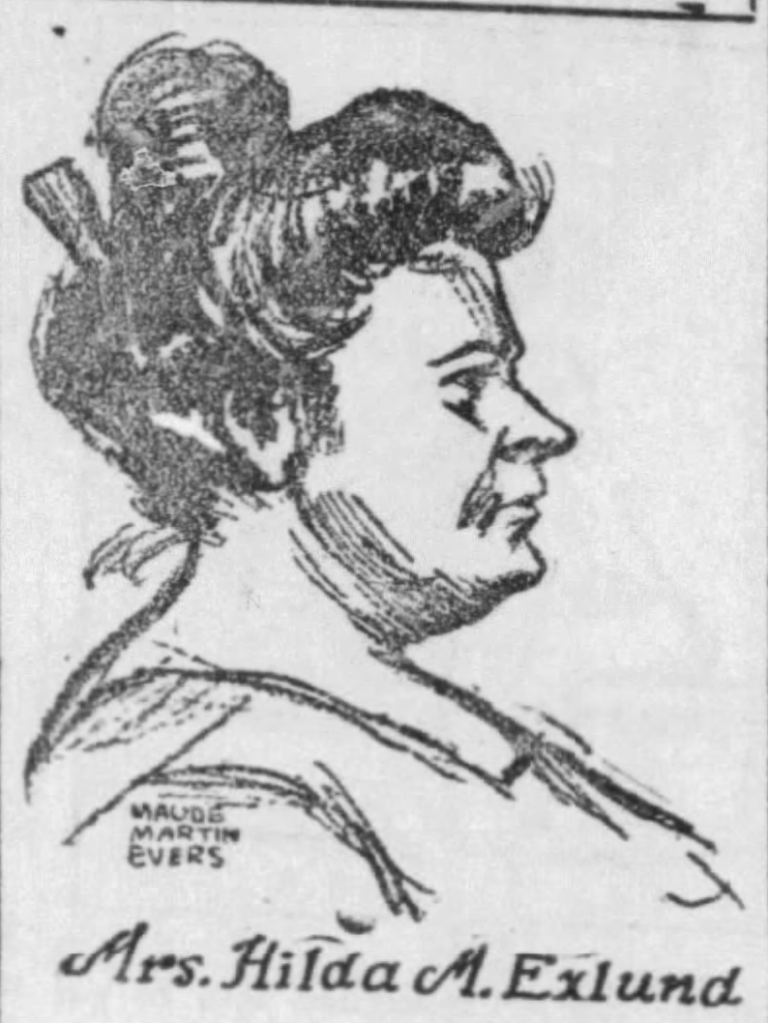
According to Hilda: On the evening of October 16, 1918, whilst standing in the kitchen chopping a cabbage up for dinner, her husband Frank attacked her. In the ensuing struggle over the butcher knife, Hilda stabbed Frank repeatedly and killed him.

A clear case of self-defense, right? 

The hitch in the giddy-up here was, after speaking with friends and neighbors, police quickly uncovered a pattern of violence within the Exlund household perpetrated not by Frank against his wife — but by Hilda against her husband. According to their acquaintances and next-door neighbors, Hilda routinely abused her husband: Some spoke of Hilda’s habit of belittling, cursing, and beating Frank. Another relayed an episode where Hilda poured a pot of boiling hot water over Frank. Others spoke of an incident occurring a few weeks before his death, when Frank beat feet from his house while holding a bloodied handkerchief to his face, whereupon he told multiple people, “She tried to kill me.” Tallied together, these stories painted Hilda as the aggressor while reframing Frank’s possible motivation for striking first. More importantly — they negated Hilda’s claim to the “unwritten law.” 

During the ensuing trial in January 1919, Assistant State’s Attorney Edward Prindiville drew the jury’s attention to Hilda’s form by highlighting the disparity between Hilda’s “powerful physique” and her husband’s slim frame. Thus validating Hilda’s belief her looks played a role in her murder conviction and subsequent sentence of 14 years inside Joliet Prison — though not quite in the way the headline above insinuates. All that being said, the fact Hilda’s jury was comprised exclusively of married men or the fact she was tried in Judge Windes’ court (who presided over two other successfully prosecuted cases we’ll explore later) could’ve influenced the outcome as well.

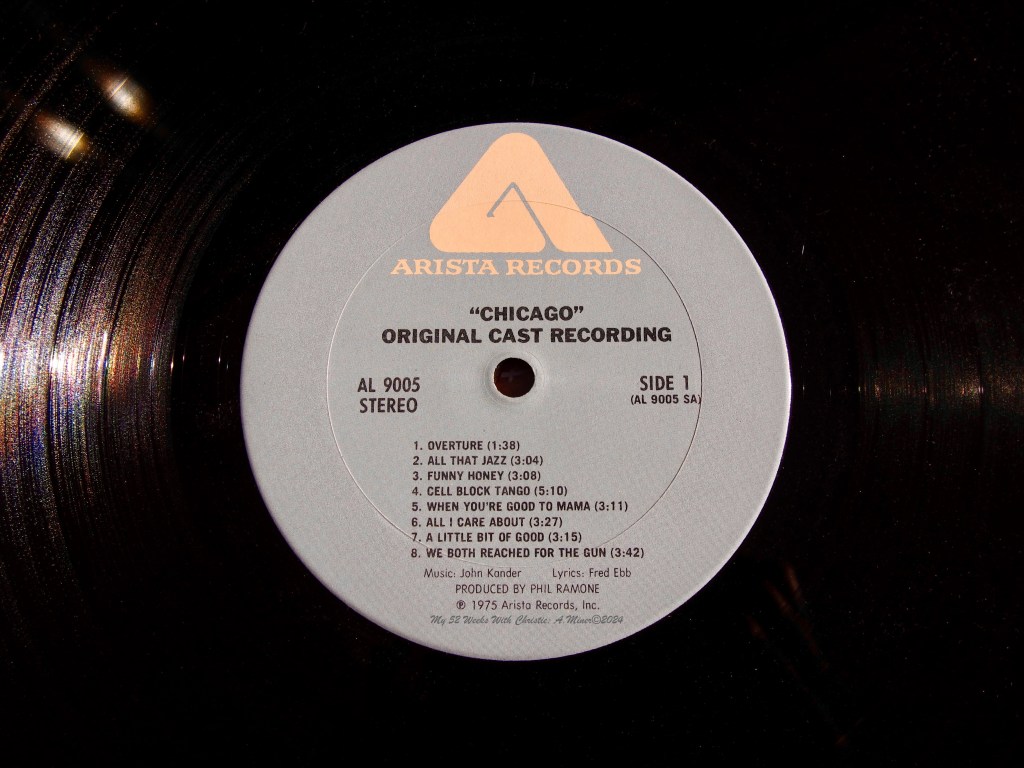
Weirdly, while studying Hilda’s crime — Chicago’s ‘Cell Block Tango’ kept echoing through my brain. Specifically, June’s portion of the song designated ‘Squish’, where she describes how her husband “ran into her knife ten times” during a fight that kicked off while she was “carving a chicken for dinner”. I do not know if Hilda inspired the third member of the “six merry murderesses” — but I do know who provided the inspiration for Katalin ‘Hunyak’ Helinszki. The Hungarian woman who sang the fourth refrain, ‘Uh-Uh’ during the aforementioned song and was hung later on in the musical. 
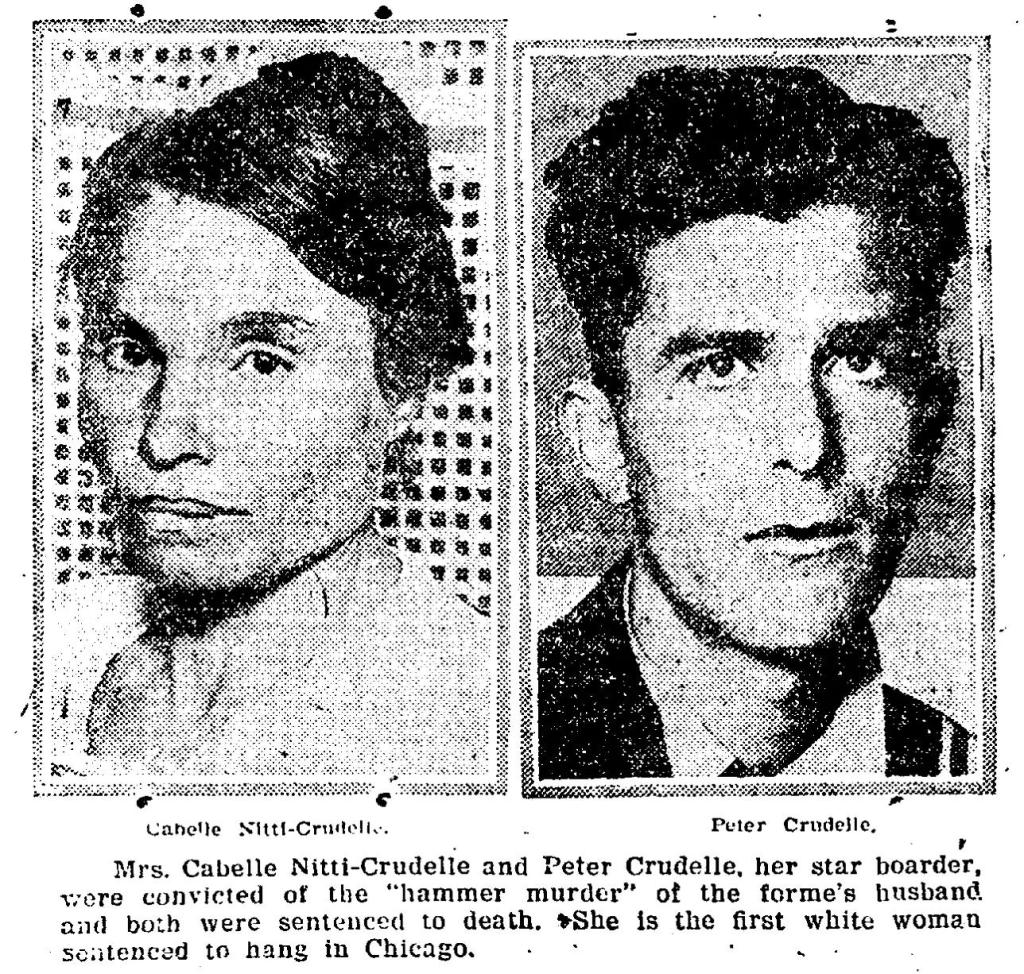
Her name was Isabella Nitti Crudelle* — and her looks alternately condemned and saved her from a trip to the scaffold.

Isabella’s ordeal began on July 29, 1922, when her husband, Frank Nitti, disappeared from their farm. Unsurprisingly, Isabella, with the aid of one of her sons, as she knew very little English at this point, reported him missing the next day. During the subsequent investigation, Isabella’s sixteen year old son Charles confessed to helping, under duress, Peter Crudelle (the Nitti’s farmhand/boarder) dispose of his father’s body in the Des Plaines River. After witnessing Isabella pinning down Frank’s hands while Peter repeatedly struck him in the head with a hammer while Frank slept under a cart. Unfortunately for the police, they had zero luck locating Frank’s corpse downriver, and without a body, the indictment against the pair was dismissed.

Endeavoring to break the case, in late September 1922, the police arrested and charged Peter and Isabella for adultery. However, whatever confession they’d hoped to extract from the couple failed to materialize and they were released. The couple would marry soon(ish) after, thus thwarting a repeat of this particular stratagem.

Fast forward to May 9, 1923: When a body was discovered in a nearby catch basin. James Nitti positively identified it as that of his brother Frank — based on a ring found on (or near, I’m not quite sure) the body. And despite Charles’s story not quite aligning (i.e., the body being found in a catch basin instead of on the banks of the Des Plaines River), the prosecutors decided to charge Peter with first-degree murder and Isabella as an accessory before and after the fact. Initially, Isabella’s son Charles was charged as an accessory after the fact, but turned state’s evidence to get out of trouble.

*I’m using Isabelle versus Sabella (the nickname used in the newspapers of the time), as it’s the name used on her headstone and two notes I’ve seen where she signed her name.

My 52 Weeks With Christie: A.Miner©2024

Crime & Christie: Han Shot First

Let’s be clear: I believe Paul F. Volland pulled a bait-and-switch on Vera Trepagnier. I think he used his position as President of the P. F. Volland Company, his business acumen, and knowledge of Vera’s strained circumstances to his advantage in order to obtain and keep the Trumbull portrait of George Washington. By dangling the promise of $5,000 before Vera, Volland gained possession of the painting. Next, by carefully wording the contract, he — not his company — secured ownership of the diminutive object if sales of the reproduction reached the 5k mark. If said sales didn’t pan out, which he was in the perfect position to ensure, Volland could point at the $500 advance and issue an ultimatum — either accept it as payment or repay the shortfall in a lump sum. Secure in the knowledge she couldn’t. 

The fact he didn’t maintain contact with Vera, nor had his lawyers issue said ultimatum until Vera made it patently clear she would continue to pester him for forever and a day, is why I’m inclined to view his actions under a crooked light. Because without that $5,000 promise, I don’t think Volland could’ve pried that painting out of Vera’s hands. (And I don’t see him giving Vera $500 as a charitable act.)

The question is, why would a wealthy man bilk a widow? The only concrete reason I found that might, and I mean might, explain such behavior occurred a few years before Volland’s death: When he nearly declared bankruptcy. Ultimately, Volland didn’t. But perhaps after skating so close to financial ruin, it invoked an unscrupulous or miserly side to his nature? Or maybe he grew up unable to rub two nickels together, which left him unwilling to pay a penny more for anything when he didn’t have to. Or perhaps he was just crafty. 

It’s unclear.

Interestingly, Vera’s charge of sharp business practices against Volland wasn’t the only one I found. A female musician contracted to write some sheet music for the P. F. Volland Company claimed that after Volland rejected her song, he later published it under someone else’s name without her permission or paying her for the work. What’s more, the day after Volland’s death, Chicago artists announced their intention to raise funds for Vera’s defense…..Again, this makes me wonder how fair Volland played with others when wheeling and dealing.

Unfortunately for Vera, partaking in dodgy business practices doesn’t automatically translate into owning a violent streak. (Nor does it mean he deserved to die.)

This begs the question: Why did Vera feel the need to bring a gun with her to discuss a dispute over a contract? According to the woman herself, “I took the revolver along to scare him. I had no intention of killing him, but that was done when he tried to take the weapon away from me.” An explanation I find believable. What I find harder to swallow is Vera’s claim the one and only day she packed the piece in her purse was the afternoon she accidentally shot Volland. 

As I see it, either the stars aligned and allowed Vera to seize an unexpected opportunity to lie her way into Volland’s presence — OR — Vera stalked Volland long enough to know he’d be in his office that particular day. If Vera relied on the ‘universe’ to provide her with an opportunity to enact her desperate plan, then it stands to reason she’d bring the gun along with her daily. Otherwise, how would she have it on hand precisely when she needed it? The latter stalking explanation, which Vera admitted doing, is the only way I see the ‘I only brought the gun with me once’ course of events as plausible. The problem there is it smacks of premeditation.

Either way, neither version of events paints Vera in glory. 

More importantly, by bringing the firearm with her, Vera cast herself into the role of instigator, severely undermining any claim of self-defense, crime of passion, or the ‘unwritten law.’ The prosecution weakened Vera’s claim further when they labeled her a blackmailer, presenting at least one nasty letter Vera wrote threatening to ruin Volland’s reputation by exposing his manipulative business practices — lest he make good on their deal. 

Without any other testimony (from, for instance, another firearms expert to refute the prosecution’s, a psychiatrist willing to declare Vera mentally unsound at the time of the murder, or anyone who could attest to Vera’s erratic behavior) to mitigate the prosecution’s arguments, Vera’s lawyers only managed to convince one juror out of twelve to find Vera not-guilty. (And he changed his mind by the second ballot.) 

Hence why, I feel Vera’s lawyers did her a disservice.

What happened after the guilty verdict? After Vera’s appeal for a new trial was denied in August 1919, she was transferred to Joliet State Prison to serve her sentence of one year to life. Sadly, at some point after September 1, 1920, Vera was transferred to Kankakee Insane Asylum. According to prison officials, the loss of the Trumbull’s portrait of George Washington (and probably the stress of the trial and incarceration) “unhinged” her mind — causing Vera to speak dreamily of nothing but her former prized possession to anyone willing to listen. 

Vera would die within the asylum walls on August 19, 1921.

In her will, Vera left several tracts of land in Maryland, a vase, and the Trumbull miniature to her grandson. Sadly, Vera forgot the vase had already been donated to a museum in New Orleans, so it wasn’t hers to give. And Vera’s only son sold the tracts of land to cover an overdue mortgage. 

As for the Trumbull miniature, an attorney by the name of Michael F. Looby was assigned by a probate court to sell it — which made quite a splash in the papers. Assured by art experts, museums, and collectors that ‘Exhibit A’ would fetch anywhere between $5,000 and $30,000, it went to auction. On September 23, 1922, Looby returned to Judge Horner’s courtroom and reported that due to the unpleasant notoriety attached to the painting, the highest bid received was $325. 

Whereupon Judge Horner approved the sale — to persons unknown and it disappeared from public view.

Crime & Christie: Give Them The Old Razzle Dazzle….

On May 6, 1919, the day after slaying Paul F. Volland, a Grand Jury charged Vera Trepagnier with his murder. What’s more, the twelve men refused to set bail, thereby sending sixty-year-old Vera off to the Cook County Jail to join the other women awaiting trial on its infamous Murderess Row. Nevertheless — despite the charge, the multiple witnesses placing her in the room when Volland died, handing Patrolman Patrick Durkin the murder weapon, and confessing to the crime — Vera wasn’t without a heaping helping of hope that she’d get away with murder. 

Sounds mind-boggling, right? Hope, in the face of an apparent prosecutorial slam dunk. 

However, in the 12 years leading up to Paul F. Volland’s death, Cook County prosecutors only managed to convict 3 out of the 29 women put on trial for murder or manslaughter (according to the tallies routinely published in the papers). Which begs the question: How? Well, in studying Vera’s case, as well as yards and yards of newspaper columns covering the 29 women who preceded Vera into the courtroom (and a number who came after), a familiar refrain kept repeating itself.

And They Both Reached For The Gun

Variants of this line kept creeping up, pinging a distant and dormant earworm in the back of my brain. Unable to recall why it sounded so very, very familiar, I tapped the phrase into a search engine and immediately learned why it resonated.

Did you know the musical Chicago is loosely based on real murders and murderesses? Maurine Dallas Watkins, the play’s original author, based Chicago on two (in)famous criminal cases she covered during her eight-month stint with the Chicago Tribune in 1924. Beulah Annan, who shot her married lover in the back, served as the inspiration for Roxie Hart. Belva Gaertner, the muse for Velma Kelly, claimed to have no memory of shooting her married lover in her car after they’d spent several hours visiting bars, drinking, and listening to jazz. You will be unsurprised to learn both women were acquitted of the crimes. 

The musical, created after Watkins’ death in 1969, does a great job of exposing the formula defense lawyers (generally, though not exclusively) followed to obtain acquittals for their female clients. 

Step One: After committing the crime (of course), feed the media. Recall the newspaper headline that started me down this odd and twisting path: “Can A Beauty Be Convicted?” Admittedly, owning youth, good looks, and manners didn’t hurt their cause. However, what this story conveniently ignores (though the musical shows in aces) is the symbiotic relationship enjoyed with many, though not all, of these female killers and the press.

By answering questions shouted at them on the courthouse steps and granting interviews, these women helped improve the paper’s circulation numbers whilst priming potential members of their juries before ever stepping into the courtroom. 

Thereby explaining why Vera, who declined to testify before the Grand Jury in her own defense, gave a series of interviews to reporters hours after joining Murderess Row. By laying out her slow spiral into poverty after losing her fortune, home, and husband while making sure to mention her altruistic plans for the $5,000 and/or the painting, Vera noticeably softened the tone of the subsequent coverage. 

More importantly, by concentrating on her life story and the lopsided deal she unwittingly struck, Vera could obliquely portray Paul F. Volland as a rich man willing to use his power and position to swindle an older, desperate woman out of the last remaining vestige of her salad days without rousing other influential Chicagoans into defending the dead man’s memory — which would prove catastrophic for Vera’s defense. 

Speaking of Vera’s story, sifting through Vera’s interviews and testimony, the bare bones of her version of events goes like this: After Paul F. Volland closed his office doors, she reiterated her demand for either $5,000 or the Trumbull miniature. 

Volland’s response: “I’m tired of looking at you and of listening to you. I haven’t got anymore time to waste. Now, will you get out?” 

Unaccustomed to such rudeness but unwilling to leave without at least one of her requests being met, Vera stood her ground. Whereupon, according to Vera, “…{Paul F. Volland} leaped at me. I felt his fingers touching at my throat. He pushed me towards the door. I could stand it no longer. I opened my purse, grasped the pistol and pointed it at him. He leaped at me again and I fired. He dropped in a heap at my feet, gasping: ‘I am shot, I am shot.’ That is all I remember.” 

With the potential jury pool now prepped to think Volland attacked first and his death a mere accident, it’s time to cue the next essential element of an acquittal…

Step Two: Razzle-dazzle them, or in other words, create a spectacle evocative enough to bamboozle the 12 men of the jury into finding reasonable doubt, whether it’s there or not. This was usually accomplished through effusive weeping, fainting bouts, and statements of abject regret, remorse, and sorrow by the accused in court.

However, these over-the-top demonstrations of contrition didn’t really suit Vera’s case. Seems prior to sinking their teeth into Vera’s tales of woe, the papers reported on her absolutely serene demeanor at the crime scene. According to their words, Vera showed no signs of distress over what she’d done — no shaking hands or voice, no apologies, no tears. In point of fact (and I’m not sure how accurate this is), the papers made it sound as if Vera stepped over Volland as he lay dying on the floor in order to peer out his office windows while waiting for the police. 

With standard razzmatazz measures rendered useless, Vera’s lawyers turned to plan B — during her six straight hours on the stand (the only person her defense team called to testify), Vera dramatically reenacted her and Volland’s struggle over the gun. The exhibition highlighted the physical disparity between 44-year-old Paul F. Volland and 60-year-old Vera while attempting to refute the prosecution’s expert witness, who declared it impossible for Vera’s revolver to accidentally discharge in the way Vera claimed. “My {Vera’s} finger was on the trigger. His hand closed over mine, pressed my finger and exploded the weapon. He really shot himself.” 

The theatrics didn’t end there. 

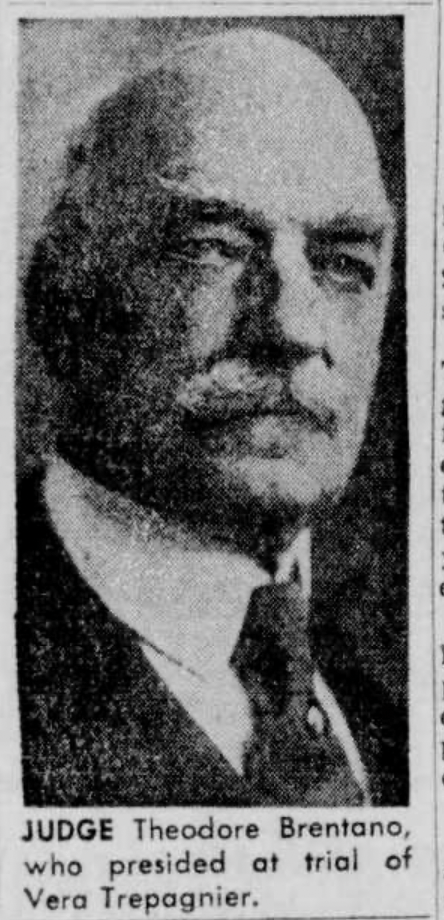
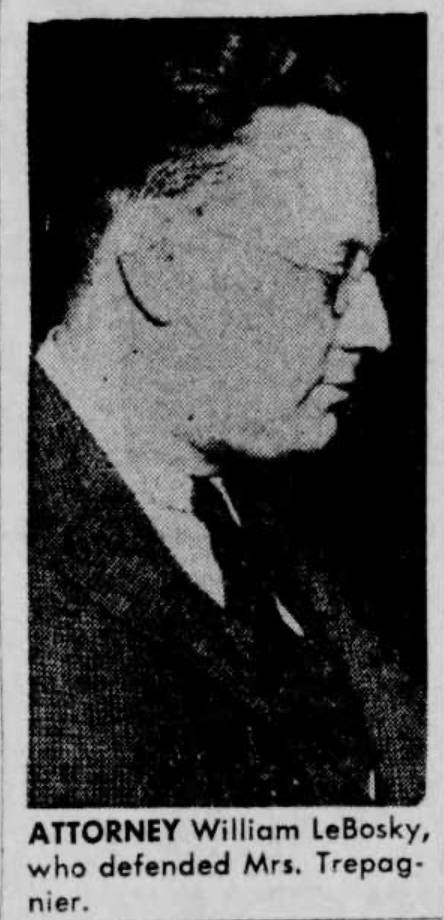
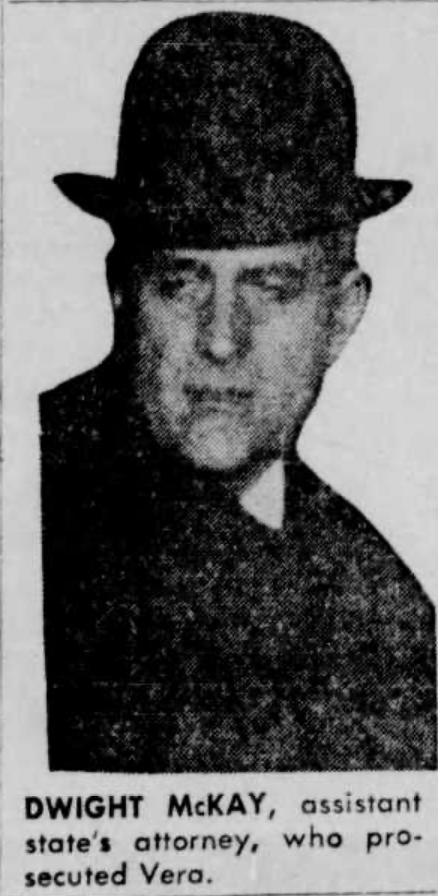
Endeavoring to bolster Vera’s claim: That Volland attacked first and without provocation thus rendering Vera’s actions understandable. In his opening remarks, Leo Lebosky (one of Vera’s lawyers) attacked Volland’s reputation. Calling Volland a “woman-hater” and “woman-beater” — then claimed Volland’s second ex-wife sought a divorce on the grounds of cruelty. These remarks instantly provoked Assistant State’s Attorney Dwight to raise strenuous objections and Judge Brentano to remind Lebosky that claims along these lines would not be admitted into evidence. This led Lebosky to confidently counter, “…it would be.” (They weren’t, btw.)

In July 1919, with the formula now complete: Crime, sob story, razzle-dazzle, and blaming the victim for their own death (i.e., the killing was accidental), a Cook County jury withdrew from the courtroom to deliberate on Vera’s fate.

My 52 Weeks With Christie: A.Miner©2024