Caustic Candy: The Woebegone Case of Rena Nelson

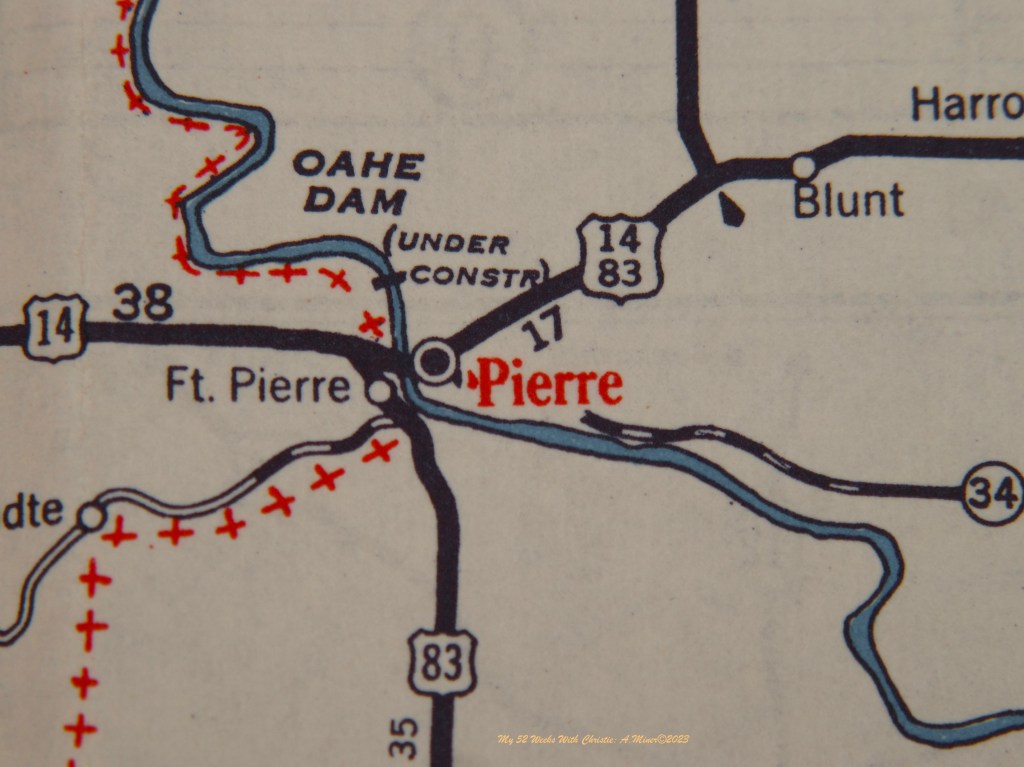
In our last case of Caustic Candy, we will travel roughly three-hundred-and-thirty-seven miles north and slightly west from Hastings, Nebraska, to Pierre, South Dakota, to meet a love-struck woman who nearly managed to send another to prison for a murder she didn’t commit.

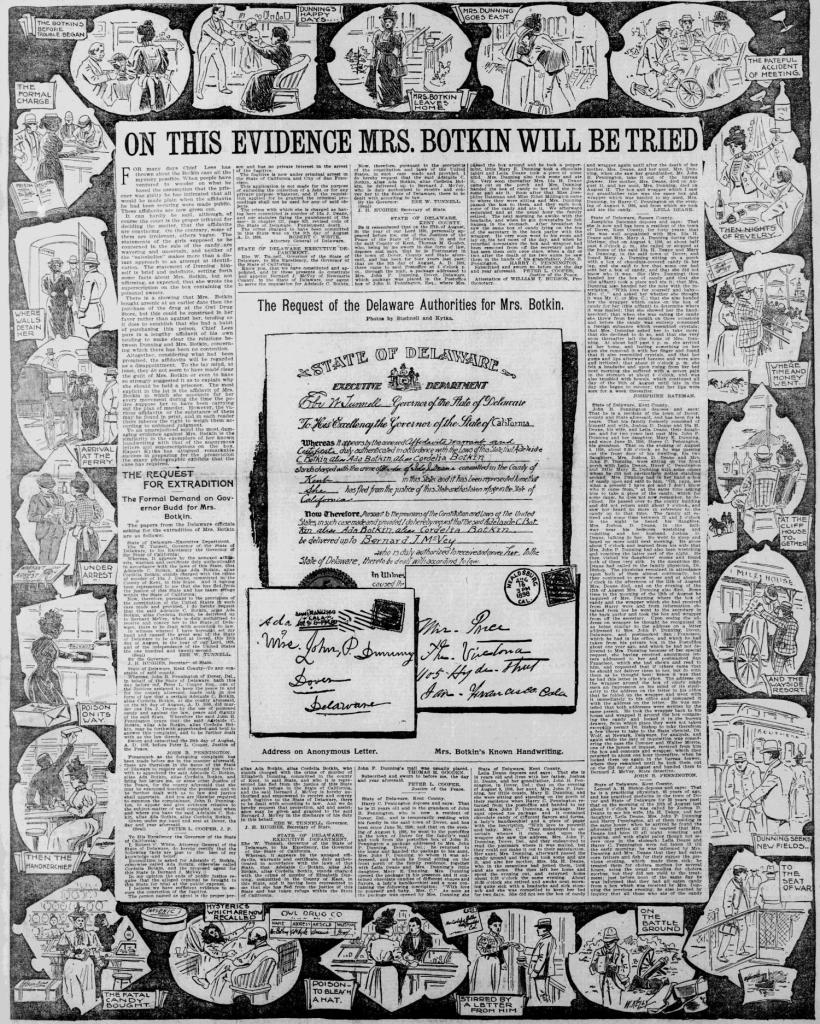
In the years leading up to February 27, 1904 — Cordelia Botkin and her infamous cross-country murders continued to make headlines. (Due in no small part to the upcoming retrial Botkin managed to secure for herself — which would ultimately fail.) Despite the police catching and the prosecutors convicting Cordelia Botkin, her evil exploits still inspired/tempted people across the country into trying to rid themselves of an unwanted lover, rival, enemy, or annoying neighbor by sending said person a box of poisoned laced sweets through the mail.
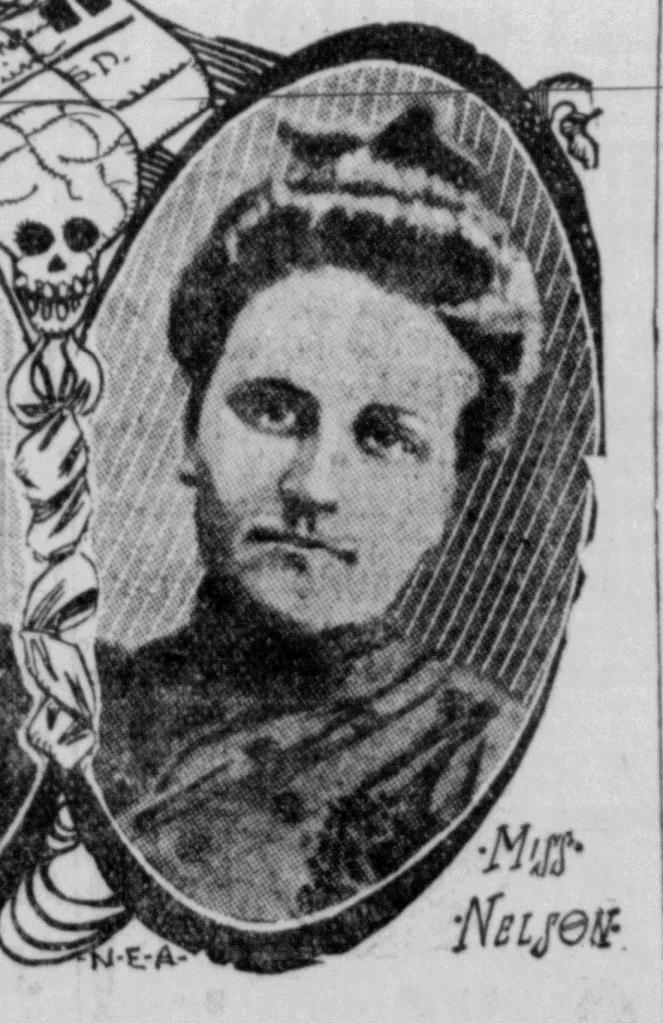
Enter Rena Nelson.

An unattached woman in her late twenties, Rena lived six miles north of Pierre, South Dakota, on a farm with her parents working as a nurse around the city. (Though, as she had no formal training, I think it’s more likely Rena acted as a nurse’s aide.) In any case, on Saturday, February 27, Rena and her father went into Pierre. One of the must-visit spots, whenever one visited town, was (of course) the post office. On this day, a parcel and a letter waited for Rena. Carefully slitting open the parcel’s wrappings, she discovered someone had sent her a box of chocolates. Popping one in her mouth, Rena stood at a counter chewing whilst reading a letter from her Aunt. By Sunday night, Rena was beginning to feel a little iffy, though still well enough to pen a return letter to her relation in Boone, Iowa. On Monday, Rena’s family sent for the doctor.

Who in turn sent for Sheriff Laughlin. 

Whilst slowly succumbing to a hitherto unknown poison her doctor suspected was delivered via bonbon, Sheriff Laughlin listened to Rena point the finger at her own murderer. Taking Rena’s hunch and the suspect box of confectionary with him, the Sheriff left the Nelson household. His first stop was the chemists, where he handed off the sweets for testing. His second was the telegraph office, where he wired his counterpart in Boone, Iowa, asking them to arrest his prime suspect.

By this point, it was Tuesday, March 1, 1904, and the local newspapers got wind of a possible Botkin copycat within their midsts. By the following day, regional papers had picked up the story, and by the next, the national press. 

On March 4, the State Chemist, Professor Whitehead, confirmed the local physician’s worst fears: Rena had ingested corrosive sublimate. Otherwise known as mercury chloride, this compound was used in developing photographs, preserving specimens collected by anthropologists & biologists, to treat syphilis, and as a disinfectant. In acute poisoning cases, like Rena’s, the chemical’s corrosive properties wreak havoc on internal organs. Causing ulcers in the mouth, throat, stomach, and intestines. Leading to a burning sensation in the mouth/throat, stomach pain, lethargy, vomiting blood, corrosive bronchitis, and kidney failure. Even today, doctors face an uphill battle in mercury chloride poisoning. Back in 1904, the only option available were iodine salts.  

Unfortunately, Rena’s organ damage proved too extensive for any hope of recovery.

But who did Rena accuse of killing her, and why? This was the question the newspapers, public, and residents of Pierre clamored after Sheriff Laughlin to reveal. For that answer, we must travel back three years to Boone, Iowa. Where for a season, Rena worked at the Boone Telephone Exchange as an operator while living with her Aunt. During this time, Rena met Mr. Sherman Dye, who worked for the Northwestern Railroad as a clerk in one of their roundhouses. 
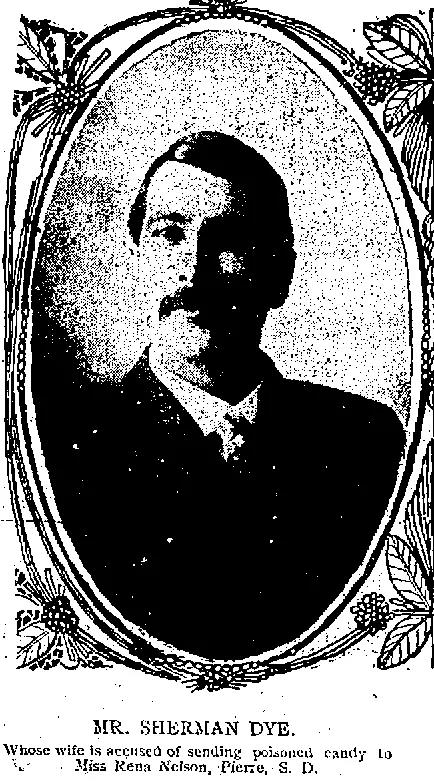
The two soon started dating. 

When Rena returned to Pierre, the pair continued their romance via pen & paper and carried on in this fashion for the next two-and-a-half years….Until November 1903, when Mrs. Belle Dye, Sherman’s wife and mother of his child, accidentally discovered Rena’s letters and photos stashed in the family’s chicken coop.

Mr. & Mrs. Dye separated on Christmas 1903.

Now, it’s unclear when Sherman told Rena he was married. However, thanks to the letter Rena penned to her Aunt on that Sunday when she started suffering from the effects of the corrosive sublimate, we do know that Sherman initially ‘misrepresented his marital status’. Telling Rena he’d obtained a divorce. However, when Sherman revealed he was, in fact, still married — for whatever reason — Rena chose to continue the relationship rather than giving him the old heave-ho. 

Rena even went so far as to write Belle several letters asking her to grant Sherman a divorce as he wanted to marry her. 

Finally, on January 23, 1904, Belle wrote back, asking Rena to leave them both alone — pointing out that she was ‘interfering with a husband and wife.’ And therein lies the crux of Rena’s deathbed accusation. She claimed Belle was jealous because Sherman transferred his affections from his wife onto herself. Rena also told the Sheriff she recognized the handwriting on the parcel’s wrapping as that of Mrs. Belle Dye’s — but only after ingesting the poison-laced chocolates.

On March 6, 1904, with a South Dakota issued arrest warrant in hand, Sheriff Laughlin arrested Belle Dye — in Boone, Iowa.

Unfortunately, for Sheriff Laughlin, returning to South Dakota with Belle in tow wasn’t as easy as simply catching a train. Facing the same conundrum his counterparts in California and Delaware found themselves in a few years prior with Cordelia Botkin — Sheriff Laughlin needed to navigate Iowa law, which had never faced a case where the (impending) murder took place in a separate state from where the instrument of destruction was mailed from. The first blow to the Sheriff’s extradition of Belle came when the Iowa Supreme Court quashed the North Dakota arrest warrant — which labeled Belle as a fugitive from justice. However, since Belle never entered South Dakota, it followed that she’d not fled back to Iowa afterwards. 

So, by definition of the law, Belle wasn’t a fugitive.

Not willing to let this woman get away with murder, Sheriff met with Iowa’s Governor Cummings on March 7, hoping he’d intervene. While he did, on advice from State Attorney General Mullan, Governor Cummings made a different call than his Californian counterpart. Not only did he free Belle on March 9 with a writ of habits corpus, he also let Sheriff Laughlin know that Belle could neither be extradited to South Dakota nor would she meet a murder charges in Iowa. 
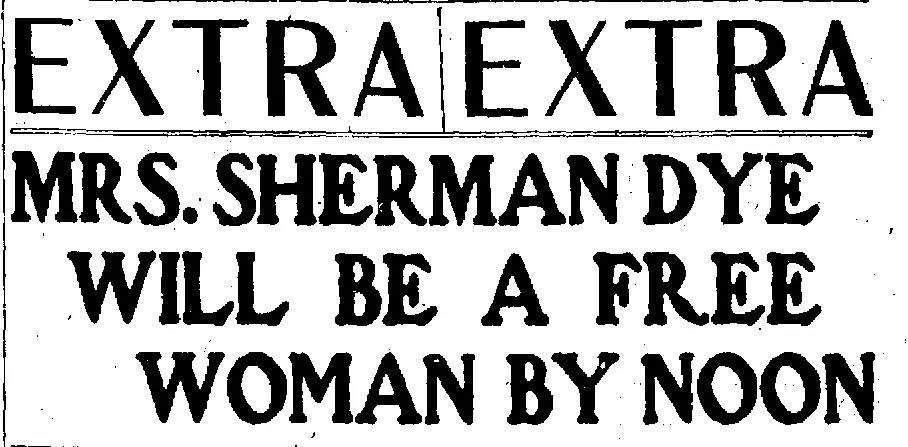
Belle needed to be tried in South Dakota, where the deed took place, or not at all. 

Undoubtedly, seeing which way the wind was blowing before Governor Cumming made his announcement, Sheriff Laughlin made one last Hail Mary play to get Belle Dye back to South Dakota to face justice — he applied to the US Postal Inspection Service. As one of the only investigative federal bodies at the time (the precursor to the FBI wouldn’t be founded until four years later), the Sheriff hoped they’d charge Belle with misuse of the mail. (As sending poison thru the post was, and is still, illegal.) If the Special Agents found enough evidence to charge her, then Federal Marshals could cross state lines, arrest Belle without a warrant, and bring her back to South Dakota.

Whilst all this legal wrangling went on, Rena Nelson died on March 8, 1904. 

Noticeably absent from the side of Rena’s deathbed was Sherman Dye. Rather than comforting his dying lover, he chose to support his wife during her detention. Not only defending Belle in the press, Sherman also paid multiple visits to Belle in jail with their daughter Dolly.

On March 10, the same day Postal Service Special Agents arrived in Pierre — the Coroner’s Inquest into Rena’s death was held. The verdict from the jury was a foregone conclusion: “Miss Nelson came to her death through eating some tablets or chocolate candies contained in a box received through the United States Mail at Pierre, South Dakota and postmarked Boone, Iowa and contained corrosive sublimate in sufficient quantities to cause death.”

However, the most significant feature of the inquest, which would throw the whole case on its ear, occurred as the spectators congregated outside the courthouse discussing the case….

My 52 Weeks With Christie: A.Miner©2023

Caustic Candy: Copycats of Cordelia Botkin

Last week I touched briefly on the true-crime case of Cordelia Botkin. As it happens, she’s the lynchpin in the spat of turn-of-the-century poisoned candy cases in the US, and let me tell you, her case had it all: A talented reporter who fell from grace, an adulterous affair conducted by an older woman with a younger man (which was far more whisper worthy back in 1898), a US Senator, anonymous letters, and a cross country murder plot which paired arsenic tainted chocolates with the postal system to complete the dastardly deed. (If you want a more comprehensive account of Cordelia Botkin’s misdeeds, check out episode #134 of the Poisoner’s Cabinet podcast.) 

Unsurprisingly, newspapers across the country splashed Cordelia’s crimes across their pages for years — and the public lapped up every single word. 

However, as we now know, this highly publicized poisoning case wasn’t exactly good news for law enforcement. Whilst Cordelia was by no means the first poisoner to mail a box of toxic sweets in the hopes of dispatching a rival, a wealthy relative, or the perpetrator of past slights — she was by far the most (in)famous. Convicted twice, first in 1898 and again in 1904 (after winning an appeal for a retrial), forces of law and order knew it was only a matter of time before copycats began creeping out of the woodwork.

They didn’t need to wait long.

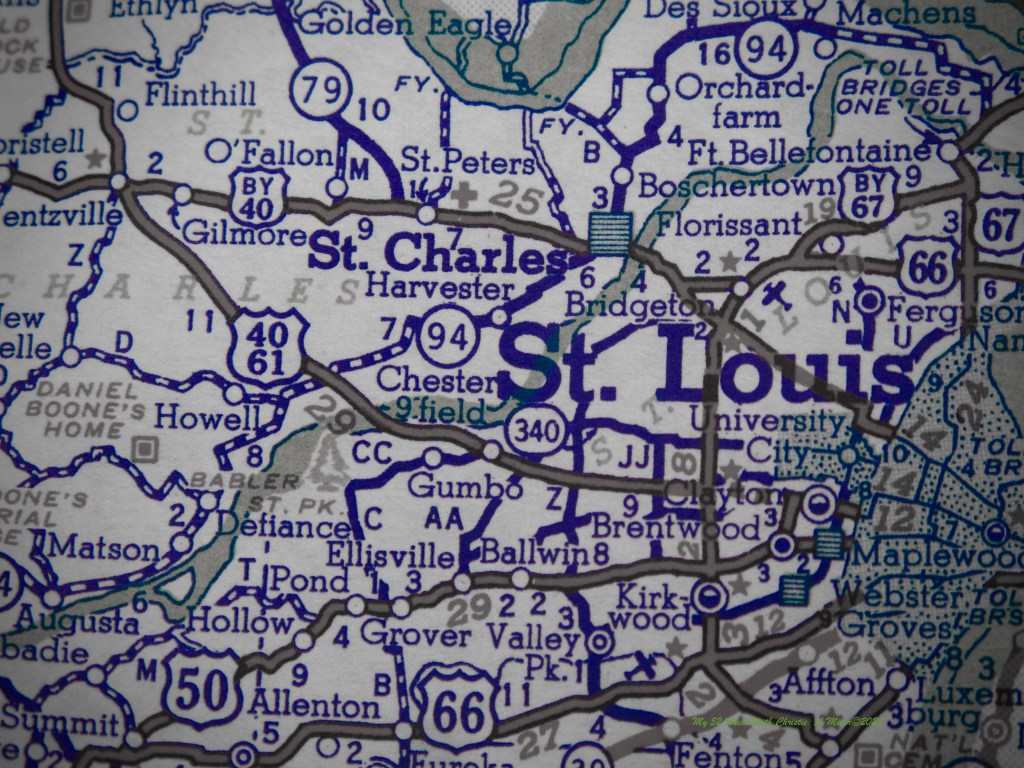
In January of 1899, mere weeks after Cordelia Botkin’s first trial concluded, Florence McVean began suffering from an acute case of nerves. The thirty-five-year-old widow of a prominent doctor, Florence, lived with her mother and younger sister at No. 4015 Cook Avenue in St. Louis, Missouri. After a couple weeks, Florence confided in her sister, Miss McGraw*, the source of her troubles: Poison Pen Letters. Being a good sister, Miss McGraw began intercepting the caustic communiques before her sister could see them, helping restore some of Francis’s peace of mind. 

Fast forward a few more weeks, to around February 7, 1899 (the newspapers weren’t clear on the exact date), when an anonymous box of bonbons arrived at the house without a note and addressed to Florence. 

Instantly suspicious of the unrequested sweets, Miss McGraw took both the box of chocolates and the stack of malicious missives to Police Chief Campbell and told her sister’s tale. During said recitation, she aimed authorities at one Miss Zoe Graham — to whom Miss McGraw, Florence, and their mother firmly believed was the author of all. The question was, why? Why would the twenty-two-year-old daughter of a prominent St. Louis plumbing contractor stoop to such crimes and misdemeanors? The answer, of course (sigh), was a man. Doctor Glasgow, a well-respected physician & eligible bachelor, had been calling on both Zoe and Florence.

Obviously, Zoe wanted to keep Florence from nabbing the catch of the county.

Knowing from which side his bread was buttered, Sheriff Campbell wisely chose to test the candy prior to tackling the well-to-do Graham family. Submitting the box of chocolates to the City Chemist for testing, the Sheriff quickly learned that each chocolate had been rolled in a powder containing arsenic, imbuing each piece with lethal levels of the metalloid. 

Now possessing definite proof of murderous intent, Chief Campbell began looking into the finer points of Miss McGraw’s story. Which inevitably brought him to Doctor Frank A. Glasgow’s doorstep, whereupon, the distinguished young doctor informed him of a massive flaw in Miss McGraw’s theory: His interest in Florence was purely professional. He’d only looked in on Mrs. McVean to treat her for one malady or another — simple as that. Doctor Glasgow further complicated and confused proceedings by producing a sheaf of Poison Pen Letters, which he’d received over the course of a few weeks, all of which warned him to stay away from Florence — as she had “designs” on him.

Taking possession of the second set of noxious notes, determined to compare them to the first, Chief Campbell turned his eyes slowly toward his prime suspect. However, in a surprising twist of fate, the Chief didn’t need to bother pussyfooting around Zoe Graham and her parents. As both she and her mother showed up, unannounced and madder than a pair of wet hens, at the police station to see him. Evidently, Florence and her female relations had been broadcasting hither, thither, and yon to anyone and everyone (including several veiled references printed in multiple newspapers across the region) their suspicions about Zoe. The indignant Mrs. Graham wanted to press charges against Florence for dragging her innocent daughter into the whole affair and their insistence on throwing mud at Zoe’s good name. Whilst the Prosecuting Attorney refused to issue a warrant for Florence’s arrest, Miss & Mrs. Graham’s visit provided Sheriff Campbell with another critical clue — the younger woman’s alibi, which, according to his subsequent investigation and statements on the subject, was cast iron.

This development might’ve thrown a spanner into investigation had Sheriff Campbell’s detectives not run down the source of the tainted bonbons. Enter Miss Henley of the Busy Bee Candy Store: Who could not only describe the woman who purchased the box of sweet treats, she could put a name to the face — as she’d kept the mystery woman’s calling card so the store could ship her her purchase. Though Miss Henley’s true coup de grace was her positive identification of the chocolate’s purchaser……

A one Mrs. Florence McVean!

Rolling with this unforeseen twist, Chief Campbell returned to Doctor Glasgow’s doormat and asked if he had any correspondence, notes, or even a grocery list in Florence’s hand. The only scrap the good doctor could share with authorities was an envelope Florence had addressed to him. Upon comparing the exemplar to the handwritten noxious notes, the handwriting appeared similar but wasn’t a conclusive match. Seems the letter writer had taken steps to disguise themselves. Of the countermeasures employed, all are classics: writing in all capital letters, failing to sign the missive itself, and using commonly available stationary (in this case, cheap ruled paper). Piling onto this circumstantial evidence were the postmarks stamped onto the envelopes. Apparently, every postmark indicated the letters were mailed from a postal territory only a stone’s throw away from Florence’s home.

Thoroughly convinced Florence was the architect of her own misery Sheriff Campbell immediately dropped his investigation and turned the case over to the Federal Authorities. (They didn’t say which branch, but I’m reasonably certain it was the US Postal Inspection Service.) Who, in turn, dropped the case as well due to the lack of direct evidence linking Florence to the Poison Pen Letters or the Chocolates. Sheriff Campbell also, to reassure the public there wasn’t a mad poisoner stalking the citizens of St. Louis, presented his findings to the press — who were more than willing to take the story and run.

After the story broke, Florence went into hiding for a few days, leaving her mother and sister Mary to defend her in her absence. When she returned, Florence vehemently denied the allegations against her. Contending to anyone willing to listen, she’d not set foot in downtown St. Louis, where the Busy Bee Candy Shop was located, for several months. Secondly, Florence claimed that poison pen letters continued to arrive in the mail. And why on earth would she continue to write them if authorities didn’t believe her? Miss Mary McGraw corroborated both claims….to no avail. Neither the papers, police, nor the populace of St. Louis were swallowing Florence’s defense.

Then came the night of March 14, 1899.

*(I’ve read no less than four wildly different variations of Florence’s sister’s name in the newspaper articles I referenced for these posts — I’m sticking with Miss McGraw as it was the most legible of the lot.)

My 52 Weeks With Christie: A.Miner©2023
Caustic Candy: How NutraSweet Got Me Into Hot Water

Back in 1984, NutraSweet introduced themselves to the world via a gumball campaign, where the company sent out a handful of spherical sweets to prove to the public it “tasted just as good as sugar”. Knowing they couldn’t send out the chewing gum and expect people to eat it — they preceded the mass mailing with an ad campaign letting everyone know what their mailers and gumballs looked like. Catching a couple of the commercials, I shrugged and returned to reading my Nancy Drews.

We never got anything that interesting in the mail.

Fast forward a few weeks to the day I opened our mailbox and spotted a familiar envelope lying inside — my heart skipped a beat. Lacking the means to buy candy on my own, as I was still in grade school at the time, I tore that envelope open in two shakes of a lamb’s tail. Popping the bright red gumball in my mouth, I began happily chewing away. Since checking the mail doesn’t generally include snacks, my mom immediately spotted my repetitive mastication when I walked back into the house and handed her the stack of correspondence. After a brief inquisition, in which my television defense was found wanting, the remaining gumballs were confiscated, and the piece I was happily snapping was consigned to the trash………….and my mom was MAD. 

Yes, capital letters are necessary.

As a kid, I thought her reaction was blown way out of proportion. The tv commercial showed the envelope, the envelope we received was a match, and the sleeve of gumballs was unopened (I did possess some common sense) — so what’s the big deal? And let me tell you, that’s the exact wrong thing to say under your breath around an already irate mom. (I swear that woman possesses the hearing of a bat.) It wasn’t until recently, when I started reading and writing about true crime, that I finally understood the root of my mom’s eruption of MAD.

In point of fact, my mom wasn’t mad — she was scared.

What sparked her poorly expressed fear? Less than two years before the artificial sweetener’s spectacular introduction to American consumers, seven people died in Chicago via cyanide polluted pain pills. The first victim in the 1982 Chicago Tylenol Murders, which remain unsolved to this day, was only a couple of years older than myself when those gumballs landed in our letterbox. My mom, an avid mystery and true-crime reader (proving I come by my reading inclinations naturally), followed the case and knew of the rash of copycat killings it inspired — hence her fright at finding me chewing gum of “uncertain” origins. (BTW — I called her up and apologized a couple weeks ago for this long ago eye rolling transgression — she laughed and accepted it.)

Now what exactly does this have to do with the price of shortbread in Scotland?

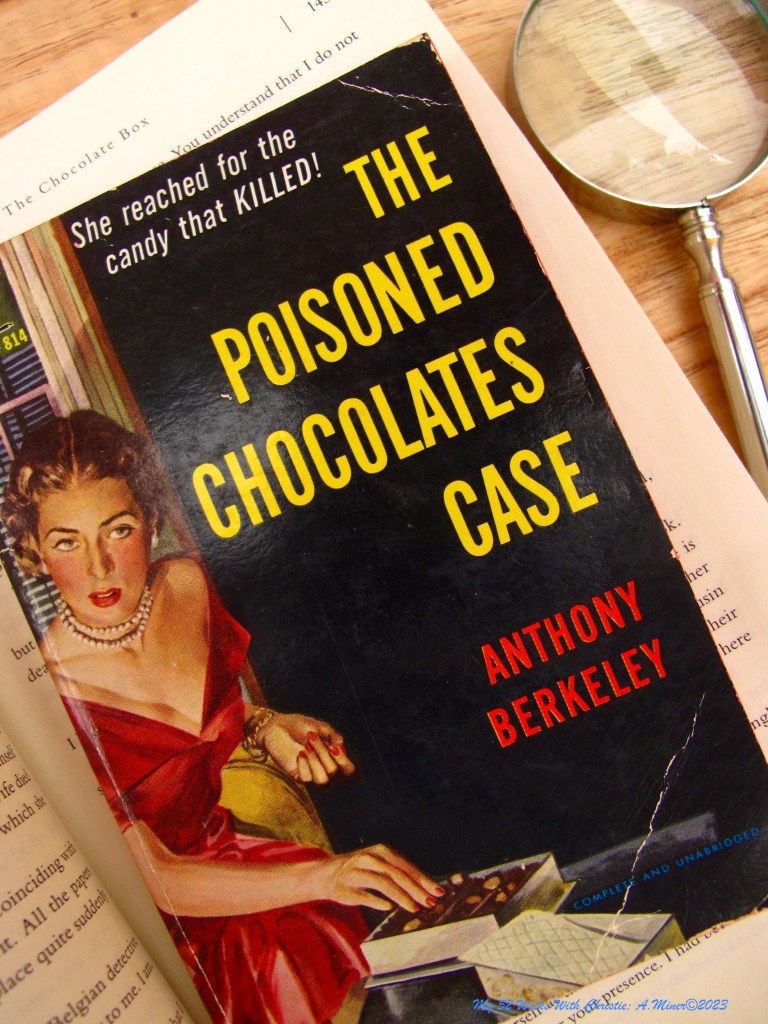
Over the past few months, I’ve unconsciously gravitated towards books that, in one way or another, feature chocolates and mail. Sometimes together, sometimes separate, these two elements kept creeping into the narrative…..A box of chocolates laced with cocaine appears in Peril At End House (1932). In the short story The Chocolate Box (1923), Poirot figures out the murder weapon was a singe trinitrine (aka nitroglycerine) stuffed chocolate. Author Anthony Berkley injected nitrobenzene into the soft centers of an entire box of chocolates, sent thru the mail to an unwitting puppet, to complete the deed in The Poisoned Chocolate Case (1929). 

Following the heels of Berkley’s aforementioned mystery, I listened to Poisoner’s Cabinet’s (a brilliant podcast) take on the case of Christiana Edmunds (year of crimes: 1870 -1871). The Chocolate Cream Killer, as Christiana was later known, laced her favorite chocolate coated confections with strychnine, then left bags of the contaminated sweets all over Brighton in the hopes someone would eat a piece of uncredited candy and sicken. Thereby convincing her crush that the candy maker was responsible for poisoning his wife and not her (it was definitely Christiana, btw). Later in her career as an adulterationist, Christiana sent anonymous boxes of sweets, chalked full of her preferred poison, to prominent citizens of the same city.

(This last feature of Christiana’s crimes, of course, brought Angele Laval and her infamous letter writing campaign to mind. Thank the gods above and below that Umberto Eco’s book, The Name of the Rose, wouldn’t be published for another sixty-three years — otherwise, it might have inspired her to post literally poisonous, poison pen letters….But I digress.)

Hot on Christiana’s heels, though not actually, as there are several episodes betwixt the two explorations, I re-listened the Poisoner’s Cabinet’s alcohol tinged study of Cordelia Botkin (year of crime: 1898). Who first tried to dissuade her love rival with an anonymous note. When that foray fell flat, Cordelia sent her a box of chocolates overflowing with arsenic to permanently deal with her opponent.

Talking with my husband about these cases, I idly wondered: What on earth possessed people to eat candy they neither ordered nor expected to receive in the mail? Didn’t they see the danger? Indeed common sense and penny dreadfuls would warn people away from such behavior….That’s when I recalled the whole gumball debacle of my childhood, which made me curious. Since mysteries often reflect reality, and all the fictional crimes I listed above came well after my true-crime exemplars….How often (really) did candy get turned into a weapon before 1923?

Turns out a lot, and I will explore three true-crime cases linked by candy, poison, the postal service, and love-rivals over the next few weeks.

My 52 Weeks With Christie: A.Miner©2023