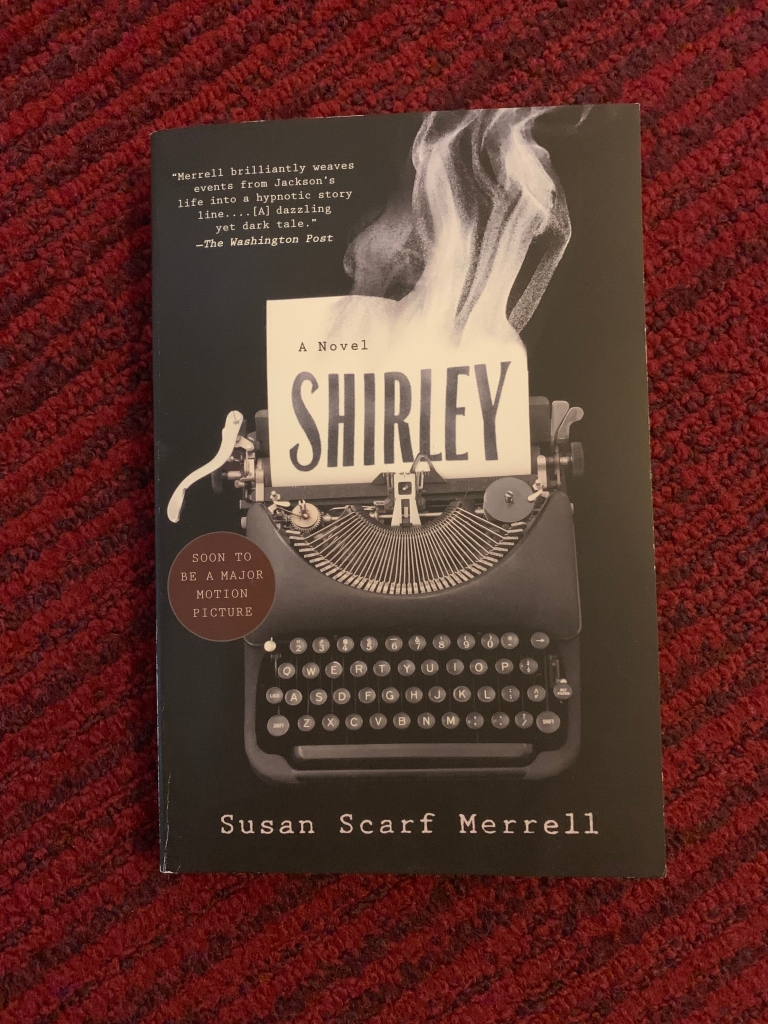
Shirley — Susan Scarf Merrell
Whilst working on my Murder By Mail series, I ran across a short story penned by Shirley Jackson called The Possibility of Evil. Which gives a fictional first-hand account of how the missives of a poison pen writer affect the community in which they live. A mere six pages, it takes no time at all to finish, and it’s one of the best short stories I’ve ever read.
That’s when I realized, despite my former coworker’s love of We Have Always Lived in the Castle, I’d never read anything by Shirley Jackson….And I fell down a literary rabbit hole trying to rectify this glaring gap in my book knowledge. During my research, in trying to figure out which anthology or anthologies to pick up, Merrell’s novel Shirley popped up. Excited by its premise, I ordered a copy of it as well. Then as one does, when gripped by a literary obsession, I eschewed my entire to-be-read-next stack in favor of my latest acquisitions. After reading a few of Jackson’s works, I switched it up and started Shirley. Whereupon I discovered myself reading a well plotted, paced, and put together book.
The problem is, I’m not sure if I actually like it.
This realization left me in a morass of confusion, not only because I’d cracked the covers fully expecting to enjoy the read but because it took a while for me to suss out exactly why Shirley left such a sour taste in my mouth.
Do you recall a review I wrote about Last Seen Wearing? Hillary Waugh loosely based his 1952 book on the real-life disappearance of Paula Jean Welden, a sophomore at the all female (at the time) Bennington College. Last Seen Wearing explores, through fiction, how the outcome of this still unsolved case might’ve changed had Paula’s diary been located and if North Bennington possessed a methodical police force.*
Well, in a strange case of serendipity unknown to me prior to cracking Shirley’s cover, not only did Shirley Jackson and her husband Stanley Edgar Hyman reside in North Bennington, Vermont, when Paula Jean Welden vanished into thin air — Hyman taught English at Bennington College during the same period in which Paula attended. Giving Jackson a front-row seat to the frantic clamor of the five-hundred volunteers who turned up to search the mountain, the helicopter & airplane they employed in their search, the gaggle of reporters who descended on the town, and the strain the other students, staff, & teachers bore during this uncertain period. Unsurprisingly, Jackson drew inspiration from Paula’s case and wrote her into two stories — the 1951 novel Hangsaman and a short story called The Missing Girl.
Now, you might ask, what does a true-crime-inspired police procedural, a gothic novel, and a scathing piece of short fiction, all of which were written decades before Shirley, matter? Because of the four aforementioned works, only Waugh and Jackson chose to change Paula Jean Welden’s name in their stories.
Merrell did not.
And herein lies my problem with Shirley.
When reading a fictional biopic, you expect the author to cherry-pick both the good, the bad, and the salacious from the lives of the people they are focused on. And let me tell you, Jackson and Hyman gave Merrell plenty of material to work with — a gothic/horror/mystery writer, who suffered from mental health issues (anxiety and agoraphobia), smoked like a chimney, drank, and took amphetamines & barbiturates. (Gotta love doctors — they gave her the former for weight loss, the latter to treat her anxiety, and believed they were okay to take together.) Add to that a husband who was a writer himself, had a habit of taking his students to bed, purportedly asked for an open marriage, felt frustrated by the lack of recognition for his wife’s work, yet controlled all the money she earned….As I said, there’s plenty of meat on the bone for Merrell to pick at. And it probably seemed like a stroke of luck when Merrell discovered the messy lives of this pair of literary luminaries intersected with the mysterious disappearance of a pretty blonde college sophomore.
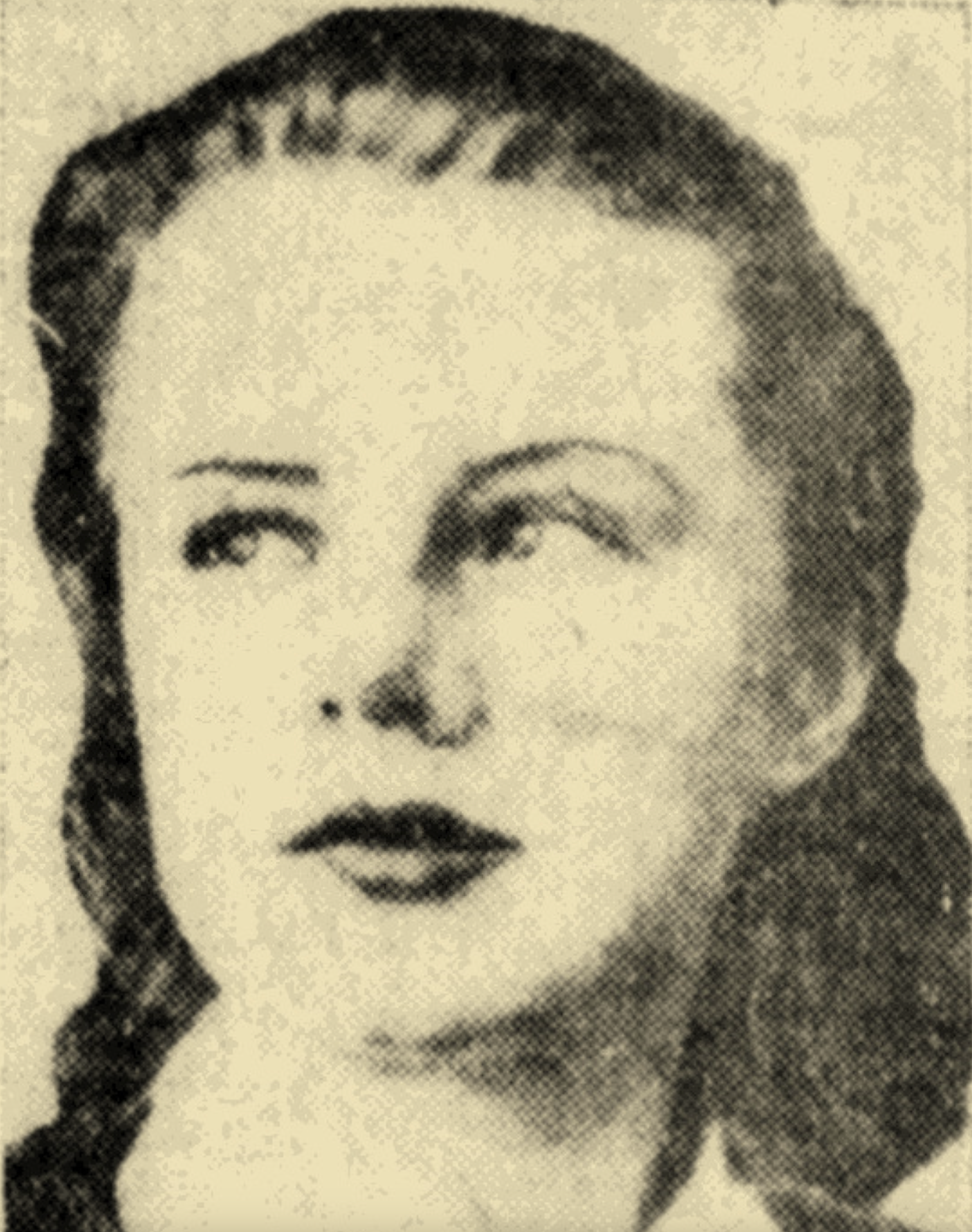
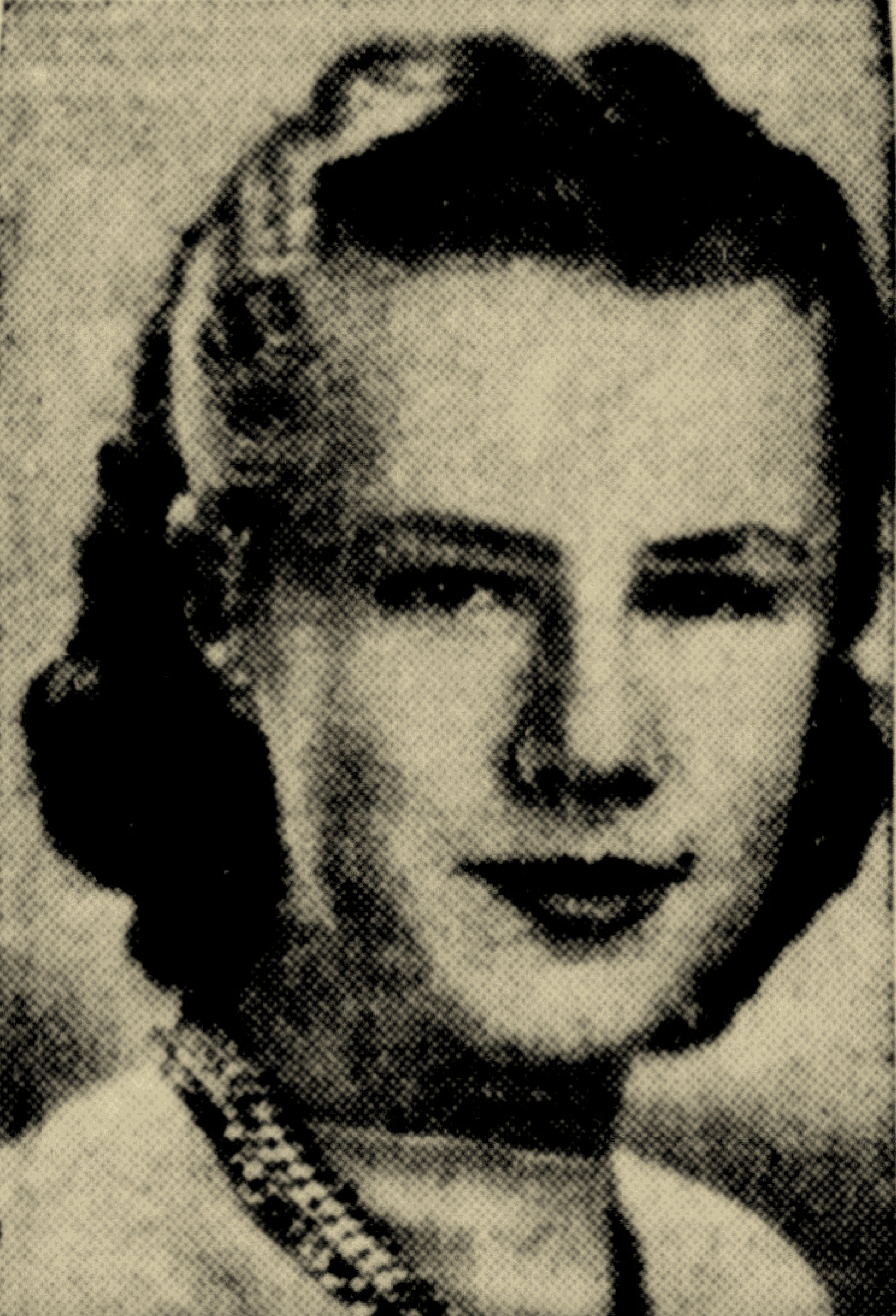
Pictures of Paula Jean Welden.
However, Shirley is not a true crime story.
An homage to Jackson & The Haunting of Hill House? Yes. A fictional story about an unhealthy relationship that inspired Hangsaman? Yup. A way of shining a light on Hyman’s professional accomplishments? Certainly. A true crime novel?
Absolutely not.
It’s a piece of fiction meant to entertain.
The second, Merrell started intimating a resolution to Paula Jean Welden’s case, which, btw begins on page two; Merrell should have changed Paula’s name. Just as Jackson herself did in Hangsaman and The Missing Girl. Especially since I don’t believe, as I haven’t found any evidence on her website or in the handful of articles about Shirley, Merrell actually considers Jackson a viable suspect in the disappearance of Paula Jean Welden.
Albeit Merrell does mention Paula in the last paragraph of the Acknowledgments, “….I must acknowledge Shirley Jackson and Stanley Edgar Hyman. I have conflated their residential history, and restructured facts and details to serve the purpose of my story, much as Shirley did with the story of Paula Welden….” An acknowledgment that is in no way good enough for turning Paula into so much grist for the mill, a plot device, a means for our main character Rose to prove her loyalty to Merrell’s version of the late great authoress.
And this is the crux of my problem with Shirley.
Would I place Shirley on my recommended shelves if the bookshop was still open? No. And this makes me angry because there are so many things to like about this book. But I cannot get over the callous indifference shown to Paula Jean Welden. A real person who, chances are, lost her life on the Long Trail back in 1946. A girl who did nothing to deserve the cheap insinuations Merrell wove into the plot of Shirley — other than being attractive, vanishing without a trace, and choosing a college that happened to employ a professor who apparently enjoyed bedding his students.
*(I’m not taking a swipe at the police here. When Paula vanished, Vermont didn’t possess a State Patrol. (Though this case, plus four other unsolved missing persons cases from what’s now dubbed The Bennington Triangle, directly led to Vermont forming one.) Thereby leaving the initial stages of the investigation to the local Sheriff — who’d lost his reelection bid less than a month before Paula vanished. And whom, according to Connecticut State police detectives who were put on the case at the request of Vermont’s Governor, didn’t keep a single written record detailing any of the efforts, leads, or witnesses interviewed before their arrival — ten days after Paula was reported missing. The pair of detectives are the ones who shined a light on the lame-duck Sheriff and his poor handling of Paula’s case.)
My 52 Weeks With Christie: A.Miner©2023

 My 52 Weeks With Christie
You must be logged in to post a comment.