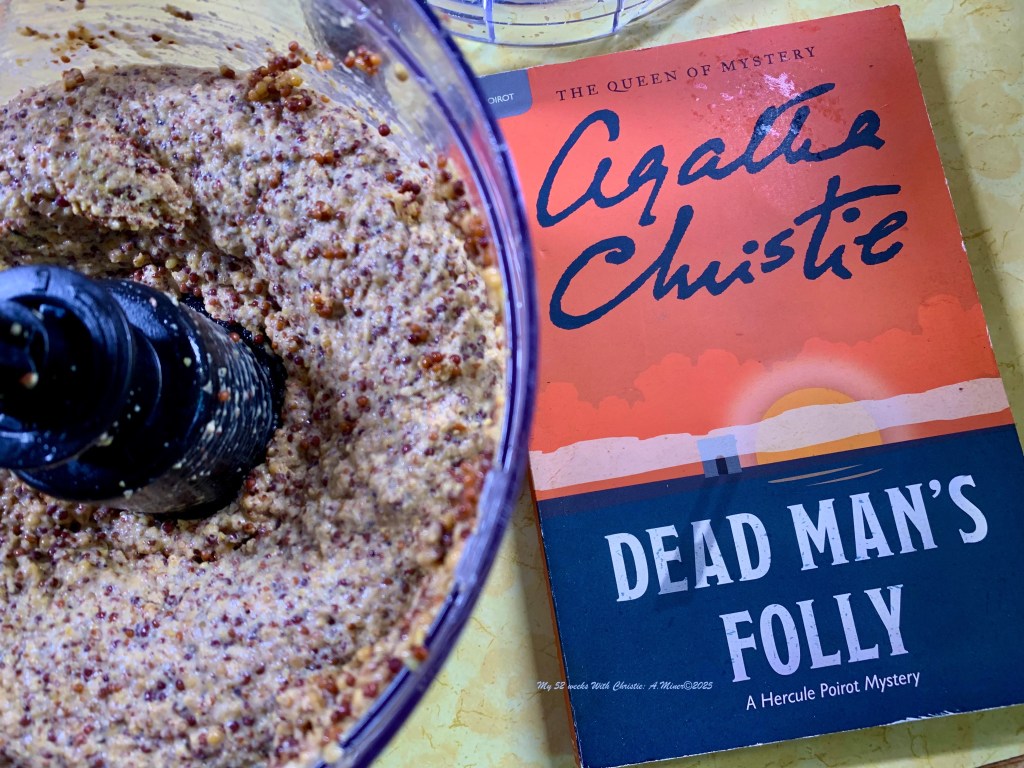
Here’s the final product of my first foray into making whole grain mustard!
I actually used 2/3 brown mustard seed and 1/3 yellow — as it turns out I didn’t buy quite enough of the brown and I really wanted to make it! Still turned out great.
Here’s the final product of my first foray into making whole grain mustard!
I actually used 2/3 brown mustard seed and 1/3 yellow — as it turns out I didn’t buy quite enough of the brown and I really wanted to make it! Still turned out great.
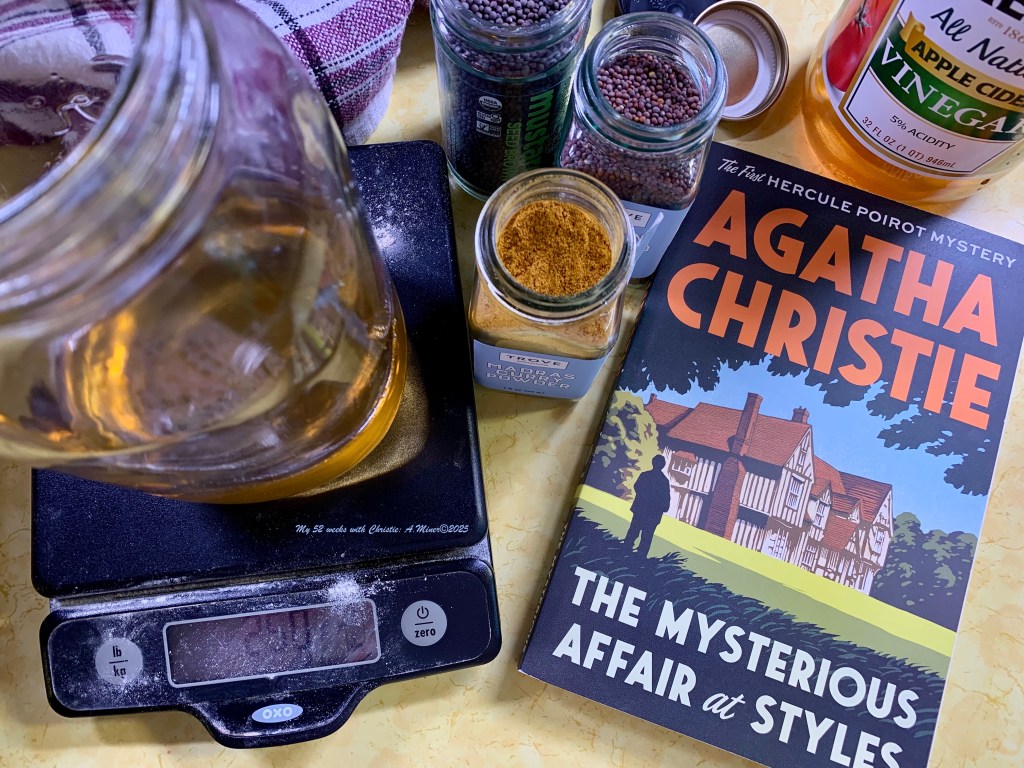
Inspiration: Whilst shopping in my favorite spice shop, I spotted several bottles of mustard seeds and vaguely recalled a homemade mustard recipe I’d glanced at in one of my cookbooks. So I grabbed bottles of yellow, brown, and black seeds.
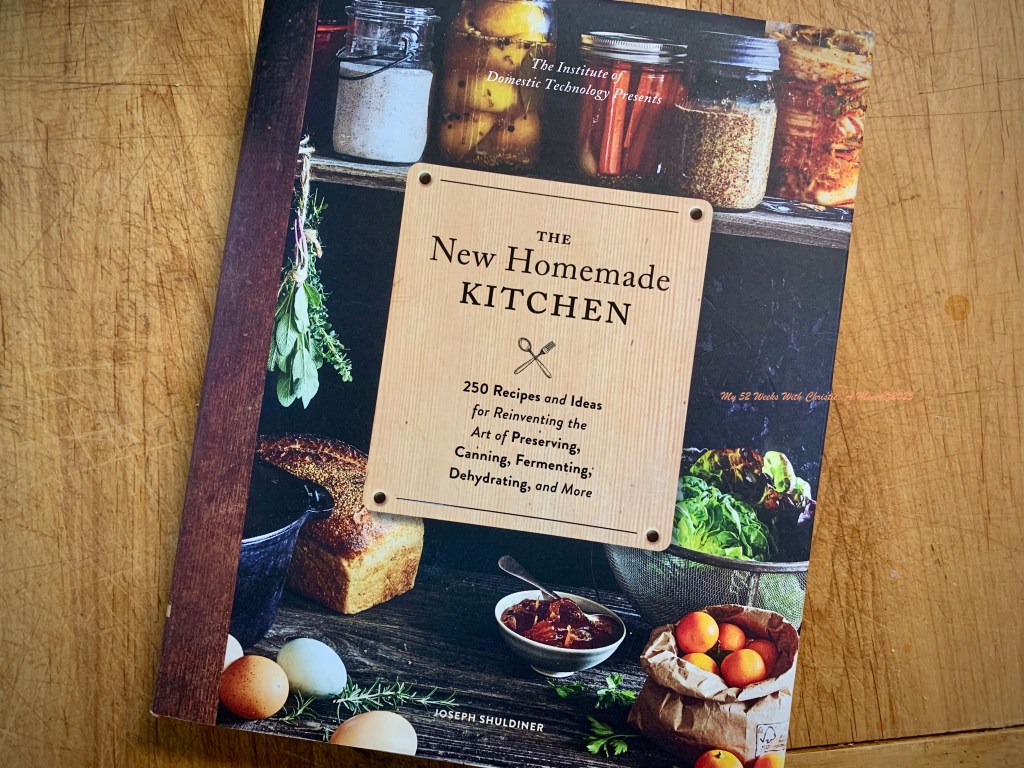
After taking a closer look at the Spicy Brown Mustard Recipe Master Recipe in Joseph Shuldiner’s The New Homemade Kitchen, I discovered mustard is dead easy to make.
Seriously.
Seeds, salt, spices, vinegar, and time. That’s it. And let me tell you, it smells and tastes great! I highly recommend giving this condiment a whirl, as watching the seeds slowly absorb the vinegar is wild!

Helpful Hint from Me to You: Though the recipe says you can blend the seeds in a blender to create the finished product. Unless you own one of those fancy high-speed ones (and even then, I’m not sure as I don’t own one myself), this is the wrong tool for the job.
Choose the food processor option!
Otherwise, you could end up like me with a kitchen inexplicably covered in clumped-up seeds, despite the care taken when transferring the concoction from vessel to vessel!
Next: Halve the recipe.
Until you get the flavor combo to your liking, at least, as it turns out that this particular recipe makes about two and a half cups of the finished product.
Now, if you go through this whole-grain mustard like water, then the sheer volume this recipe produces isn’t a problem. However, if you don’t, it makes noodling with the recipe challenging.
One Last Thing: In future batches, on top of the aforementioned halving, I’m going to double the amount of Madras Curry Powder added (the additional flavor I chose for this trial run). Turns out, the spiciness of the brown mustard seeds and the tang of the apple cider vinegar wholly overshadow the curry powder. (i.e., I can’t taste it.)
Agatha Christie: Honestly? I can easily see Miss Marple, Tuppence, and Superintendant Battle making their own mustard…And closely guarding their version’s recipe!
Can you imagine trying to crowbar the list of secret ingredients from any one of them? And even if they did, finally, relent….Would they actually hand over the complete list or hold one or two back?
My 52 Weeks With Christie: A.Miner©2025
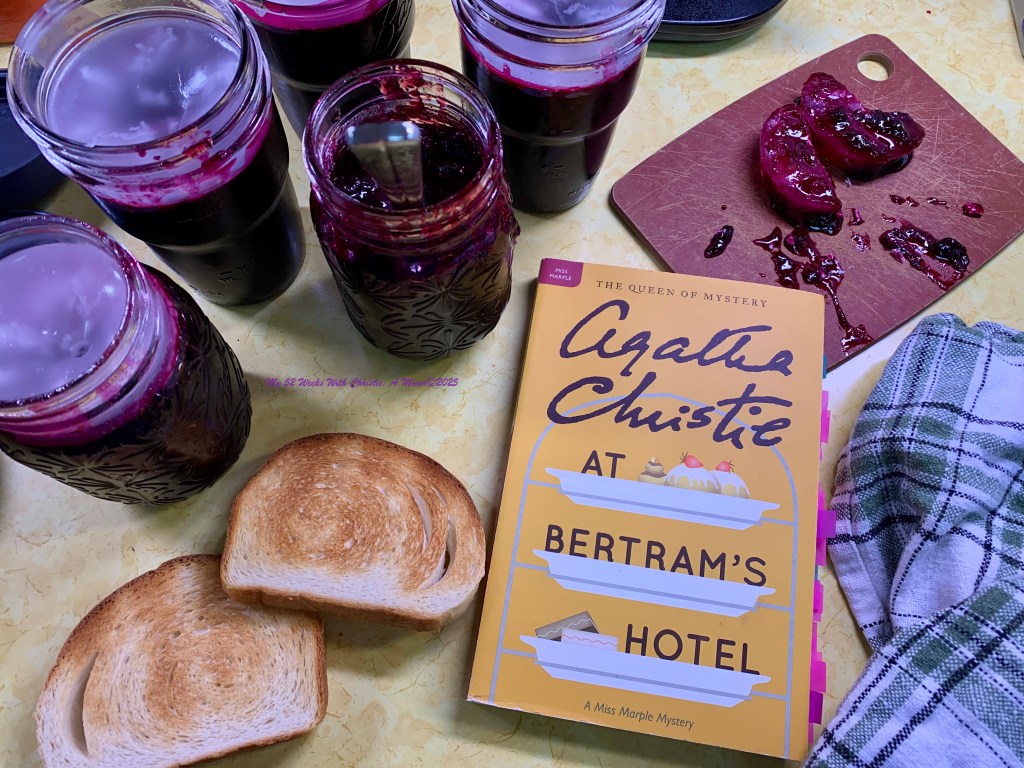
Inspiration: After reading The Spellshop and all its lovely sounding jams, I couldn’t shake the hankering for jam. Then, I spotted a great deal on fresh blueberries at my local grocery store. Grabbing a couple of extra lemons, with visions of jam dancing in my head, we set out for home.
A couple of days later, with The New Homemade Kitchen open at my elbow, I started making blueberry jam.
Using the book’s simple recipe, with The Spellshop‘s main character’s method hanging about the back of my brain, I combined the sugar, berries, and lemon juice, then added a bit of cinnamon for depth of flavor. After the hot mixture finished roiling and boiling in the pot, I ladled the finished product into warmed jars.

The berries, sugar, & lemon juice macerating!
Then, using a double boiler, I melted wax. Please don’t get mad at using wax to seal the jars. Only after starting the jam process did I figure out I didn’t have any more of the proper lids for sealing them off with a water bath, but I did have wax. Hence, it’s what I used.
(For those who might be confused, wax sealing jam jars is no longer considered the safest method. However, since it will live in the fridge and will undoubtedly get eaten before any mold should start growing, I went with it.)
Christie: Whilst an entirely different book series inspired this culinary creation, I still can see Tuppence and Miss Marple making and bottling jam made of summertime fruits. Whilst Tommy, Poirot, and Hastings enjoy the results!
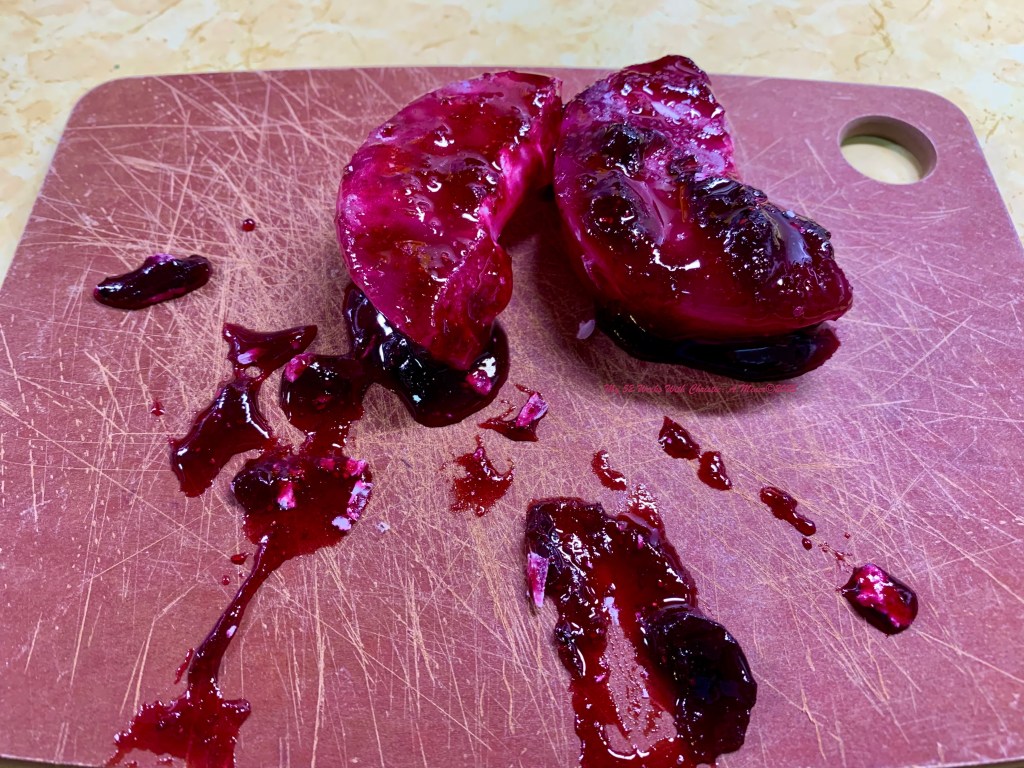
The first broken wax seal!

Inspiration: Recently, whilst at a restaurant supply store, we found a fifteen-pound flat of tomatoes on sale. Since tomatoes are nummy, we picked one out. Then, I needed to process them…..Turning to my cookbook library, I picked up The New Homemade Kitchen and decided to make some basic tomato sauce that I could freeze and add to soups and stews when additional flavor is needed.
Little did I know my kitchen would look like a tomato based crime scene by the end of the project.
It was a super simple recipe, especially since I wasn’t planning on canning the end result. Over a couple of hours, I roasted, milled, and cooked down the sauce. (The pic above was taken during the milling process when things got particularly sticky.) This experiment also served as a test run for this summer when, in the past, I’ve struggled with what to do with loads and loads of fruit when it all ripens at the same time!
Happily, it turned out great!
Christie: I can see Miss Marple or Tuppence doing something similar! Especially since growing your own tomatoes (and other fruits and veggies) in the garden and then canning them for future use was very common after WWII.
 My 52 Weeks With Christie
You must be logged in to post a comment.