Crime & Christie: It’s Complicated

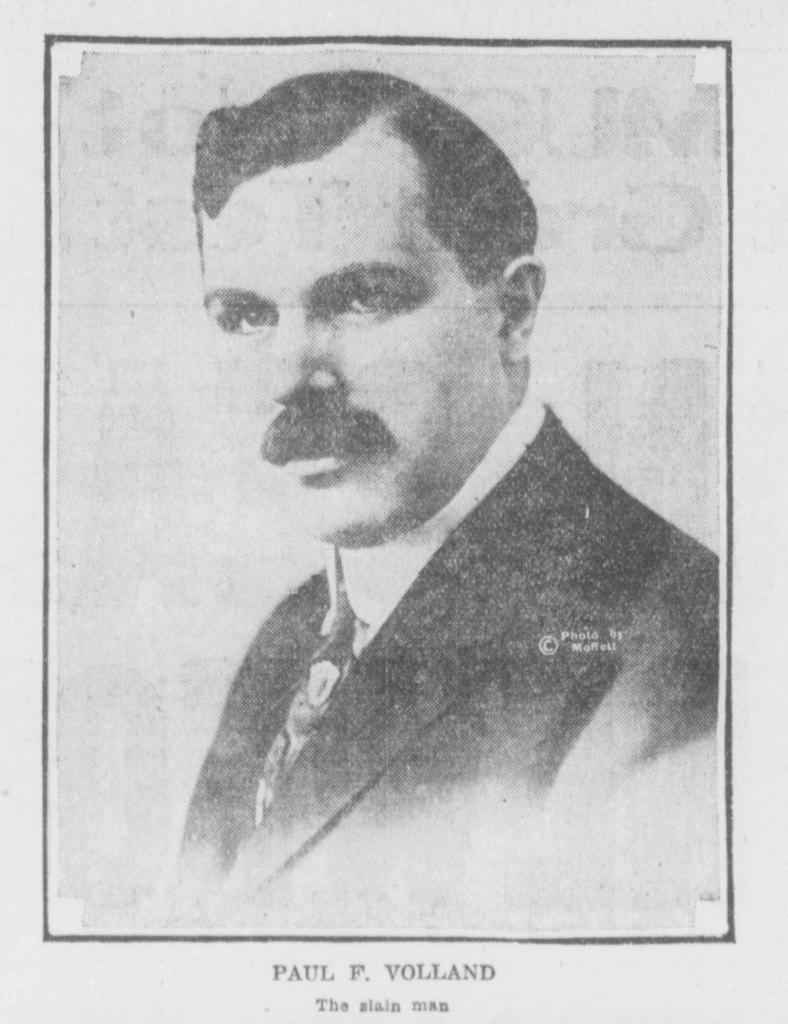
Admittedly, unlike the painting in Agatha Christie’s short story The Bloodstained Pavement, which tangentially helped solve a murder, the Trumbull portrait clearly caused one. Nor did the Chicago police need Miss Marple’s hard-won acumen to solve Paul F. Volland’s murder. Yet there’s one question I still haven’t found a definitive answer to: Did Vera Trepagnier’s looks play a substantial role in her conviction? 

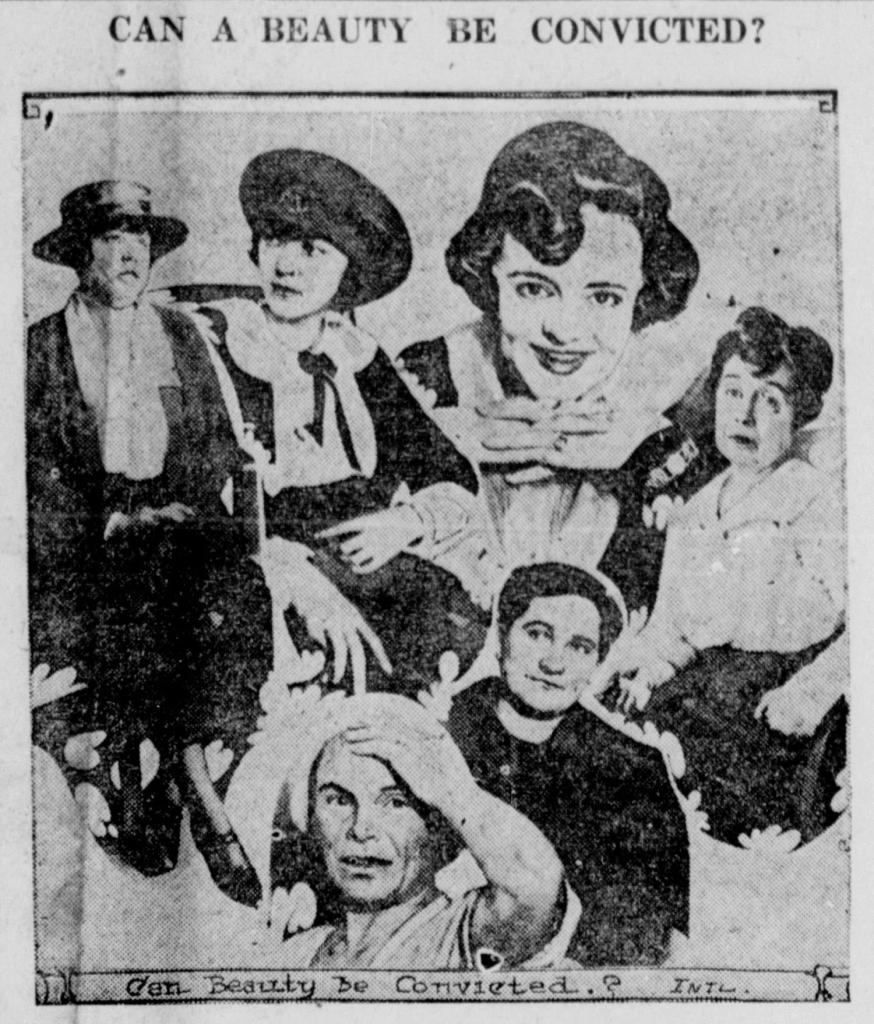
According to the 1923 headline, “Can A Beauty Be Convicted?” which featured a photo of Vera amongst others below the headline, it did. Yet, as I (hopefully) showed in the previous posts, Vera’s conviction owed little to her looks and more to her own behavior, together with her lawyer’s failure to address the unique features of her crime in their efforts to shim her case down to fit the Murderess Acquittal Formula. More importantly, Vera herself never mentioned this line of reasoning (at least in the articles I read) in the interviews given after her conviction. Nor did the papers harp on about her features during her trial, focusing instead on her “gentle spiral” into poverty and the prominence of the late Paul F. Volland.

But what of the other handful of convicted murderesses during this period? Did their looks play a role? 

Hilda Exlund, a Swedish immigrant, certainly thought so: “If I had been young and pretty I suppose I’d have been turned loose just as the other women who have been tried for killing their husbands.” In fairness, Hilda’s lack of good looks did draw comment by the press. However, they weren’t harped on in any of the stories I read. Moreover, prior to her conviction, Hilda drew very little attention from Cook County’s press core. Meaning their news articles neither helped soften the potential jury pool leading up to the trial nor hurt Hilda’s chances for an acquittal. To my mind, what actually foiled Hilda’s acquittal prospects lay in the same realm as what sunk Vera Trepagnier’s bid for freedom seven months(ish) later.
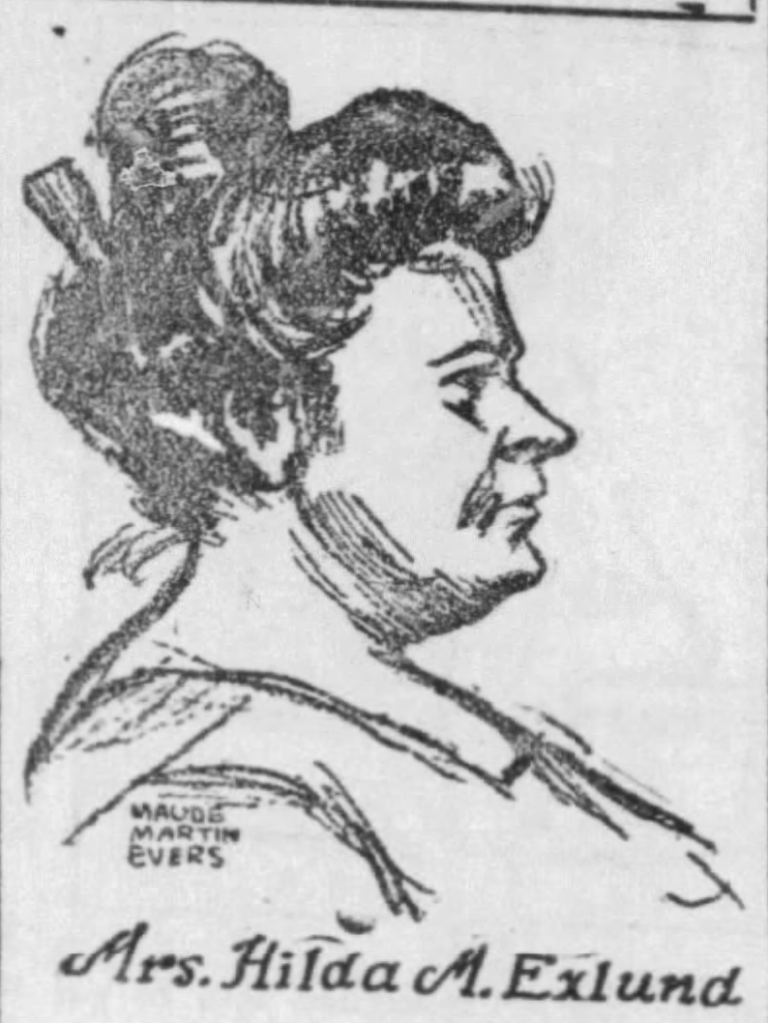
According to Hilda: On the evening of October 16, 1918, whilst standing in the kitchen chopping a cabbage up for dinner, her husband Frank attacked her. In the ensuing struggle over the butcher knife, Hilda stabbed Frank repeatedly and killed him.

A clear case of self-defense, right? 

The hitch in the giddy-up here was, after speaking with friends and neighbors, police quickly uncovered a pattern of violence within the Exlund household perpetrated not by Frank against his wife — but by Hilda against her husband. According to their acquaintances and next-door neighbors, Hilda routinely abused her husband: Some spoke of Hilda’s habit of belittling, cursing, and beating Frank. Another relayed an episode where Hilda poured a pot of boiling hot water over Frank. Others spoke of an incident occurring a few weeks before his death, when Frank beat feet from his house while holding a bloodied handkerchief to his face, whereupon he told multiple people, “She tried to kill me.” Tallied together, these stories painted Hilda as the aggressor while reframing Frank’s possible motivation for striking first. More importantly — they negated Hilda’s claim to the “unwritten law.” 

During the ensuing trial in January 1919, Assistant State’s Attorney Edward Prindiville drew the jury’s attention to Hilda’s form by highlighting the disparity between Hilda’s “powerful physique” and her husband’s slim frame. Thus validating Hilda’s belief her looks played a role in her murder conviction and subsequent sentence of 14 years inside Joliet Prison — though not quite in the way the headline above insinuates. All that being said, the fact Hilda’s jury was comprised exclusively of married men or the fact she was tried in Judge Windes’ court (who presided over two other successfully prosecuted cases we’ll explore later) could’ve influenced the outcome as well.

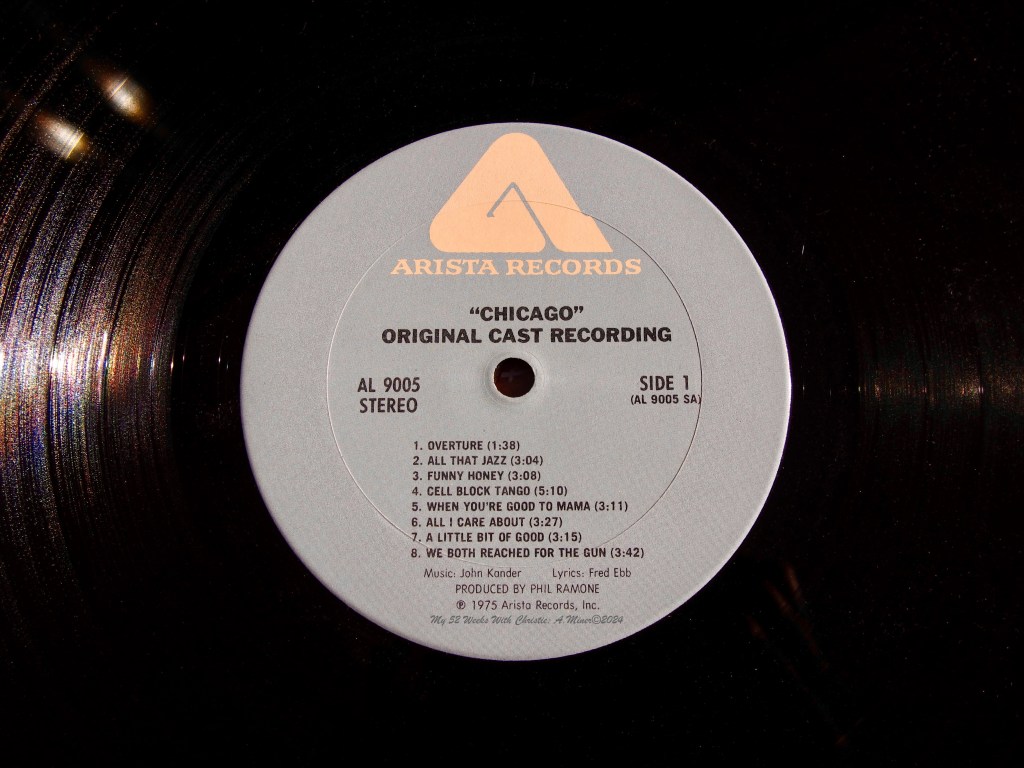
Weirdly, while studying Hilda’s crime — Chicago’s ‘Cell Block Tango’ kept echoing through my brain. Specifically, June’s portion of the song designated ‘Squish’, where she describes how her husband “ran into her knife ten times” during a fight that kicked off while she was “carving a chicken for dinner”. I do not know if Hilda inspired the third member of the “six merry murderesses” — but I do know who provided the inspiration for Katalin ‘Hunyak’ Helinszki. The Hungarian woman who sang the fourth refrain, ‘Uh-Uh’ during the aforementioned song and was hung later on in the musical. 
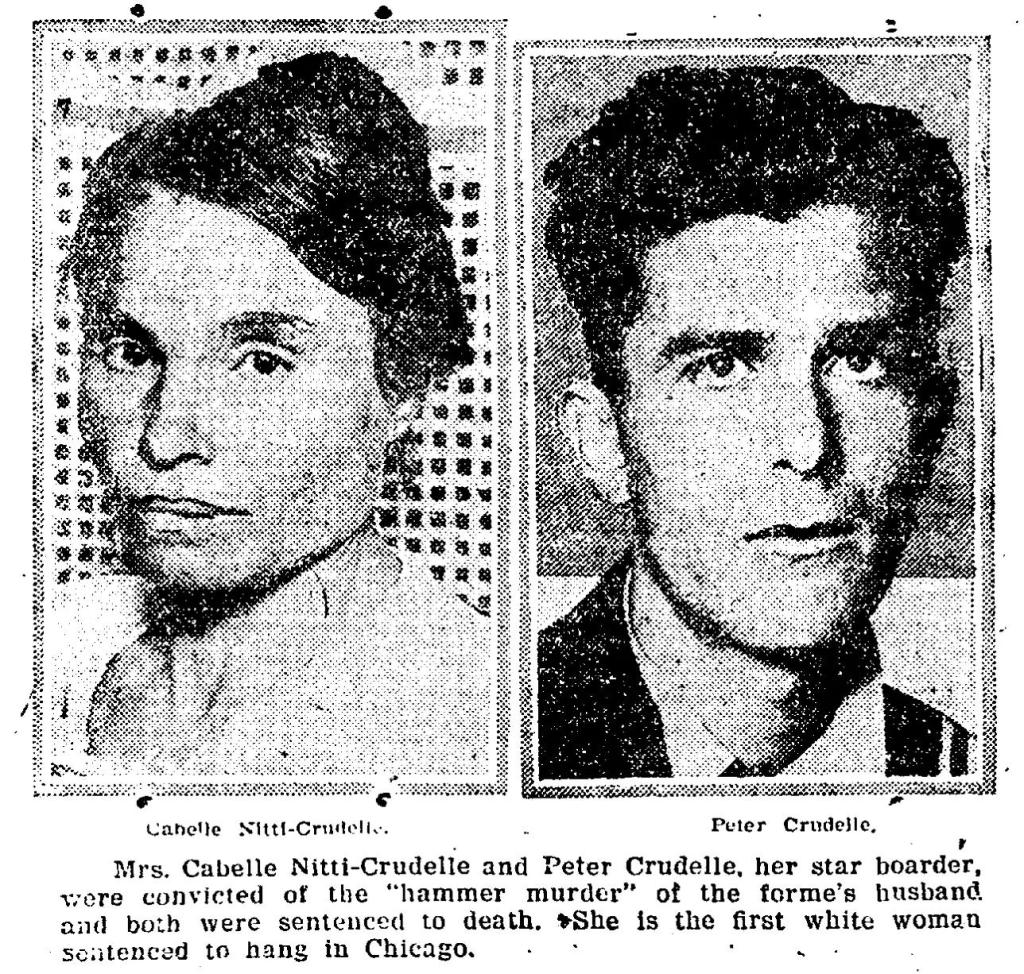
Her name was Isabella Nitti Crudelle* — and her looks alternately condemned and saved her from a trip to the scaffold.

Isabella’s ordeal began on July 29, 1922, when her husband, Frank Nitti, disappeared from their farm. Unsurprisingly, Isabella, with the aid of one of her sons, as she knew very little English at this point, reported him missing the next day. During the subsequent investigation, Isabella’s sixteen year old son Charles confessed to helping, under duress, Peter Crudelle (the Nitti’s farmhand/boarder) dispose of his father’s body in the Des Plaines River. After witnessing Isabella pinning down Frank’s hands while Peter repeatedly struck him in the head with a hammer while Frank slept under a cart. Unfortunately for the police, they had zero luck locating Frank’s corpse downriver, and without a body, the indictment against the pair was dismissed.

Endeavoring to break the case, in late September 1922, the police arrested and charged Peter and Isabella for adultery. However, whatever confession they’d hoped to extract from the couple failed to materialize and they were released. The couple would marry soon(ish) after, thus thwarting a repeat of this particular stratagem.

Fast forward to May 9, 1923: When a body was discovered in a nearby catch basin. James Nitti positively identified it as that of his brother Frank — based on a ring found on (or near, I’m not quite sure) the body. And despite Charles’s story not quite aligning (i.e., the body being found in a catch basin instead of on the banks of the Des Plaines River), the prosecutors decided to charge Peter with first-degree murder and Isabella as an accessory before and after the fact. Initially, Isabella’s son Charles was charged as an accessory after the fact, but turned state’s evidence to get out of trouble.

*I’m using Isabelle versus Sabella (the nickname used in the newspapers of the time), as it’s the name used on her headstone and two notes I’ve seen where she signed her name.

My 52 Weeks With Christie: A.Miner©2024

Crime & Christie: Han Shot First

Let’s be clear: I believe Paul F. Volland pulled a bait-and-switch on Vera Trepagnier. I think he used his position as President of the P. F. Volland Company, his business acumen, and knowledge of Vera’s strained circumstances to his advantage in order to obtain and keep the Trumbull portrait of George Washington. By dangling the promise of $5,000 before Vera, Volland gained possession of the painting. Next, by carefully wording the contract, he — not his company — secured ownership of the diminutive object if sales of the reproduction reached the 5k mark. If said sales didn’t pan out, which he was in the perfect position to ensure, Volland could point at the $500 advance and issue an ultimatum — either accept it as payment or repay the shortfall in a lump sum. Secure in the knowledge she couldn’t. 

The fact he didn’t maintain contact with Vera, nor had his lawyers issue said ultimatum until Vera made it patently clear she would continue to pester him for forever and a day, is why I’m inclined to view his actions under a crooked light. Because without that $5,000 promise, I don’t think Volland could’ve pried that painting out of Vera’s hands. (And I don’t see him giving Vera $500 as a charitable act.)

The question is, why would a wealthy man bilk a widow? The only concrete reason I found that might, and I mean might, explain such behavior occurred a few years before Volland’s death: When he nearly declared bankruptcy. Ultimately, Volland didn’t. But perhaps after skating so close to financial ruin, it invoked an unscrupulous or miserly side to his nature? Or maybe he grew up unable to rub two nickels together, which left him unwilling to pay a penny more for anything when he didn’t have to. Or perhaps he was just crafty. 

It’s unclear.

Interestingly, Vera’s charge of sharp business practices against Volland wasn’t the only one I found. A female musician contracted to write some sheet music for the P. F. Volland Company claimed that after Volland rejected her song, he later published it under someone else’s name without her permission or paying her for the work. What’s more, the day after Volland’s death, Chicago artists announced their intention to raise funds for Vera’s defense…..Again, this makes me wonder how fair Volland played with others when wheeling and dealing.

Unfortunately for Vera, partaking in dodgy business practices doesn’t automatically translate into owning a violent streak. (Nor does it mean he deserved to die.)

This begs the question: Why did Vera feel the need to bring a gun with her to discuss a dispute over a contract? According to the woman herself, “I took the revolver along to scare him. I had no intention of killing him, but that was done when he tried to take the weapon away from me.” An explanation I find believable. What I find harder to swallow is Vera’s claim the one and only day she packed the piece in her purse was the afternoon she accidentally shot Volland. 

As I see it, either the stars aligned and allowed Vera to seize an unexpected opportunity to lie her way into Volland’s presence — OR — Vera stalked Volland long enough to know he’d be in his office that particular day. If Vera relied on the ‘universe’ to provide her with an opportunity to enact her desperate plan, then it stands to reason she’d bring the gun along with her daily. Otherwise, how would she have it on hand precisely when she needed it? The latter stalking explanation, which Vera admitted doing, is the only way I see the ‘I only brought the gun with me once’ course of events as plausible. The problem there is it smacks of premeditation.

Either way, neither version of events paints Vera in glory. 

More importantly, by bringing the firearm with her, Vera cast herself into the role of instigator, severely undermining any claim of self-defense, crime of passion, or the ‘unwritten law.’ The prosecution weakened Vera’s claim further when they labeled her a blackmailer, presenting at least one nasty letter Vera wrote threatening to ruin Volland’s reputation by exposing his manipulative business practices — lest he make good on their deal. 

Without any other testimony (from, for instance, another firearms expert to refute the prosecution’s, a psychiatrist willing to declare Vera mentally unsound at the time of the murder, or anyone who could attest to Vera’s erratic behavior) to mitigate the prosecution’s arguments, Vera’s lawyers only managed to convince one juror out of twelve to find Vera not-guilty. (And he changed his mind by the second ballot.) 

Hence why, I feel Vera’s lawyers did her a disservice.

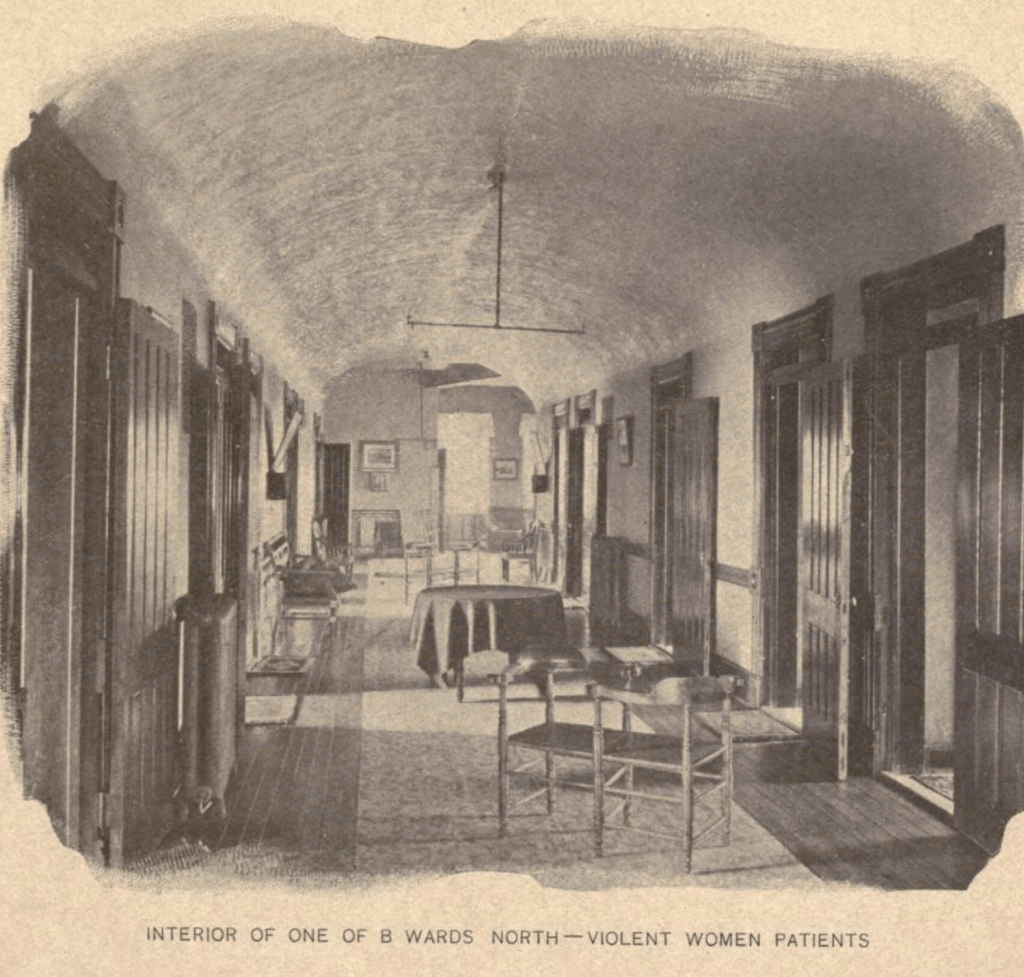
What happened after the guilty verdict? After Vera’s appeal for a new trial was denied in August 1919, she was transferred to Joliet State Prison to serve her sentence of one year to life. Sadly, at some point after September 1, 1920, Vera was transferred to Kankakee Insane Asylum. According to prison officials, the loss of the Trumbull’s portrait of George Washington (and probably the stress of the trial and incarceration) “unhinged” her mind — causing Vera to speak dreamily of nothing but her former prized possession to anyone willing to listen. 

Vera would die within the asylum walls on August 19, 1921.

In her will, Vera left several tracts of land in Maryland, a vase, and the Trumbull miniature to her grandson. Sadly, Vera forgot the vase had already been donated to a museum in New Orleans, so it wasn’t hers to give. And Vera’s only son sold the tracts of land to cover an overdue mortgage. 

As for the Trumbull miniature, an attorney by the name of Michael F. Looby was assigned by a probate court to sell it — which made quite a splash in the papers. Assured by art experts, museums, and collectors that ‘Exhibit A’ would fetch anywhere between $5,000 and $30,000, it went to auction. On September 23, 1922, Looby returned to Judge Horner’s courtroom and reported that due to the unpleasant notoriety attached to the painting, the highest bid received was $325. 

Whereupon Judge Horner approved the sale — to persons unknown and it disappeared from public view.

Crime & Christie: It’s Not Personal, It’s Just Business

On July 15, 1919, at 5:50 pm, after three ballots — the jury found Vera Trepagnier guilty of manslaughter and fixed a sentence of one year to life in prison. Paul F. Volland’s second ex-wife, Gladys Couch Volland, and his son, Gordon B. Volland, were both in court when the verdict was announced and applauded (metaphorically) the jury for holding Vera accountable for her actions. Unsurprisingly, State’s Attorney Hoyne lauded the victory of ASA Dwight and the jury’s decision. 

So what went wrong? Why did the jury find Vera guilty of manslaughter despite her lawyers following the formula that got 26 other women acquitted? 

Vera blamed the loss on another attorney, Frances E. Spooner — the only lawyer she’d found who agreed to fight the unbalanced contract she’d signed with Paul F. Volland in civil court. In an interview given shortly after her conviction, Vera claimed Spooner hamstrung her defense because she “…had all my papers about the case that led up to the killing, and she left town.” Which could be true? The one and only time I found Spooner’s name linked with Vera’s occurred the day after Vera’s bid for a new trial was denied, on August 16, 1919: When the papers reported Spooner was suing her former client for breach of contract, “…by killing Volland, she brought an end to the case and threw the plaintiff out of a job.” (I’ve no clue how this case ultimately panned out.) 

However, it’s equally possible Vera’s all-male defense team used Spooner as a convenient scapegoat to cover the collective backsides with their client after their loss. Spooner, one of the rare female attorneys in Chicago during this period, would make an easy target in any post-trial blame game.

Weighing in, over 100 years later, I see the scales of recrimination tipping ever so slightly in the direction of Vera’s cadre of lawyers and their decision to rely solely on Vera’s testimony. 

Why? First and foremost, Vera’s account doesn’t quite add up, in my estimation.

While it’s possible Vera’s version of events unfolded exactly as she said……Why would Volland start strangling her for simply refusing to leave his office? Granted, Vera had become a thorn in Volland’s paw. However, until that afternoon, he’d successfully kept her at arm’s length for years through a lack of communication, lawyers, and by using layers of security/secretaries/doormen as a shield. Moreover, if Vera failed to leave Volland’s office because he murdered her (worst case scenario) or she exited under her own power with hand-shaped bruises around her neck, disheveled from a struggle, and gasping — it would’ve been noticed by the office full of people working away in the middle of the day.

Speaking of people, while there weren’t any eyewitnesses other than Vera who saw what happened in Volland’s office, two individuals were close enough to hear some of what was happening inside. Both women spoke of hearing Vera’s voice growing louder and shriller as the interview went on while Volland’s remained low and even. Suggesting it was she, not him, who grew furious as the conversation continued.

The defense, in an attempt to shore up Vera’s assertion Volland struck first, claimed Volland was a “wife beater” and “woman-hater” which led to the dissolution of his second marriage. The only problem? Said second wife, Gladys Crouch Volland, still resided in Chicago and was more than willing to testify that her ex-husband never abused her or their daughters, nor was cruelty the reason why she sued for divorce. While it’s possible Gladys was lying, the fact she wasn’t called to the stand or her divorce decree read aloud by the defense — who’d subpoenaed her — suggests they couldn’t scrounge up enough proof that Volland abused his ex-wife to convince the presiding Judge to allow it into evidence. Making it likely that Vera’s attorneys simply spliced the idea into their opening remarks in the hopes that the jury would consider the unsubstantiated claim during their deliberations.

Furthermore, I found an announcement for Volland’s 1904 divorce from Laura Gordon Volland, his first ex-wife. While one of the gossipy articles alluded to money at the root of the marriage’s dissolution, none mentioned cruelty. (And the fact Laura remarried mere days after the finalization of the divorce decree hints at a different set of problems within the union.)

In my humble opinion? Upon realizing Volland wasn’t going to willingly hand back her miniature or write a check for five grand, Vera pulled a revolver on him and that’s when Volland “lept at her” — not the other way around. 

This fine — yet important distinction — is why Billy Flynn, in the musical Chicago, worked so hard to make sure the newspapers reported that Roxie Hart and her lover both reached for the gun. If it came out that Roxie pulled the gun on her boyfriend first, in a fit of rage rather than in self-defense, it would’ve negated her claim to the “unwritten law.” 

After her arrest, in an effort to invoke said statute for herself, Vera neatly summed up the “unwritten law” as this: “In my State men may lie, gamble, cheat in business, but they do not lay hands on a woman.” As I understand it, this tacit law allowed judges and juries to protect abused women who either snapped or needed to defend themselves at a point in time when domestic violence laws were nearly nonexistent. More importantly, it’s part of the foundation on which the murderess acquittal formula rested — hence why, in my opinion, it’s more than likely Vera swapped up the order of events to save her own skin.

Unfortunately for Vera, her uneven account wasn’t the only problem.

My 52 Weeks With Christie: A.Miner©2024

Crime & Christie: Fool’s Gold

I’ve no clue why Vera Trepagnier chose Philadelphia as her hunting ground for a money-making opportunity for the Trumbull miniature. Yet, this decision proved fortuitous, as Vera learned the name of a man who fit the parameters of her needs perfectly — Paul Frederick Volland. 

Originally hailing from Germany, Paul Frederick Volland worked as an engraver and diamond merchant prior to setting up his own firm (with two silent partners) in 1908. Whilst the P. F. Volland Company, as it was known, published all kinds of print-based products ranging from poetry to cookbooks and music to calendars. One of the firm’s specialties lay in creating beautiful, high-quality greeting cards and postcards — which undoubtedly is why Vera and her portrait were pointed in Paul F. Volland’s direction.

By all accounts, when Paul F. Volland met Vera in Philly in February 1917, he was so taken with the Trumbull miniature he made Vera an offer on the spot: If Vera would loan him Trumbull’s mini portrait of George Washington, he would, in turn, create and sell postcard-sized reproductions worthy of framing. Confident his company could easily sell 150,000 copies a year at a dollar a piece, Volland assured Vera she’d see at least $5,000 in royalties yearly. 

This suited Vera’s needs down to the ground. Not only could she make money off the last vestige of her former fortune, but she’d also retain ownership of the picture. To a woman who’d hovered just above the poverty line for the better part of the three decades, this sum surely sounded like a godsend — not only in accomplishing her goal of helping her grandson with his education but with her own expenses as well. So, with visions of dollar signs dancing in her head, Vera lent Volland the miniature, signed the requisite contract, and received a $500 advance.

If this deal sounds like a bit of fool’s gold…..well……you’d be right.

After acquiring both her signature and the piece of art, Paul F. Volland ghosted Vera. A circumstance Vera didn’t realize until the promised royalty checks failed to materialize. 

Puzzled, Vera wrote Volland. 

According to later testimony, when Volland eventually responded to her missives, he informed Vera that the firm decided against printing and placing reproductions of her miniature on the market. Vera’s disappointment with Volland’s decision transformed into outrage a few months later when she spotted a copy of the supposedly abandoned print run in the window of a shop, framed and retailing for a whopping $2 — double the price he’d initially quoted her.

Unsurprisingly, Vera immediately took to her stationary, posting letter after letter to Paul F. Volland — without receiving a single reply. Unwilling to take his lie lying down and determined to get her property back, Vera made the momentous decision to leave Washington D. C. and accepted a tutoring position (or perhaps that of a maid, Vera’s words differ from the reporters on this point) with a wealthy family in Rock Island, Illinois, around November/December 1918.

Now living, give or take, only 168 miles from the P. F. Volland Company’s offices, Vera took the first opportunity she could to visit the man himself. (At this point, events become a tad muddled, as it’s unclear if Vera spoke to Volland in his office, if he was called down to the building’s lobby to talk with her there, or if they met on the street. Due to following events and some non-scientific deductions, I lean towards the middle option being the likeliest for this impromptu meeting.) 

Geography aside, when Volland met with Vera, he informed her that not only did the reproductions of the George Washington miniature not sell nearly as well as he’d originally envisioned, but if she wished to reacquire her property she’d need to write him a check for $174 (or about $3,026 in today’s money) to cover the shortfall between her advance and the postcard’s paltry sales. Moreover, if she wished to discuss the issue further, she would need to go through the P. F. Volland Company’s lawyers, as he would not speak with her directly again.

Incensed, Vera engaged lawyers of her own and immediately felt the full brunt of not asking a law professional to probe the contract before signing on the dotted line. Above and beyond the 1917 document being written entirely in favor of the P. F. Volland Company from top to bottom, the agreement also stipulated that upon reaching the $5,000 mark in royalties, Vera would cede ownership of the miniature to Paul F. Volland (not his company). Moreover, the deal left Vera with very little recourse in pursuing legal action against Volland, his company, or the ability to reacquire her precious Trumbull miniature. 

Firmly convinced Paul F. Volland swindled her, Vera continued visiting not only Volland’s office building but the offices of various law firms around Chicago. The former cost nothing but time and pride, as Vera was repeatedly rebuffed by security/reception in the lobby on her successive visits. The latter endeavor, however, slowly bled Vera dry, making her more and more frantic for Volland’s promised payout as time wore on.

Upon reaching the last few pennies of her savings, Vera hatched a desperate plan.

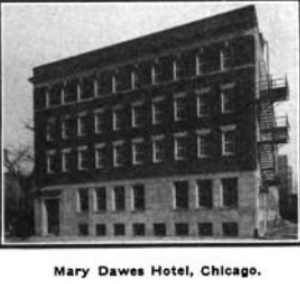
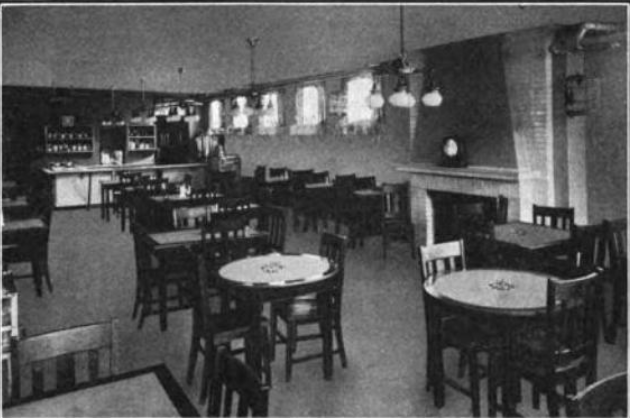
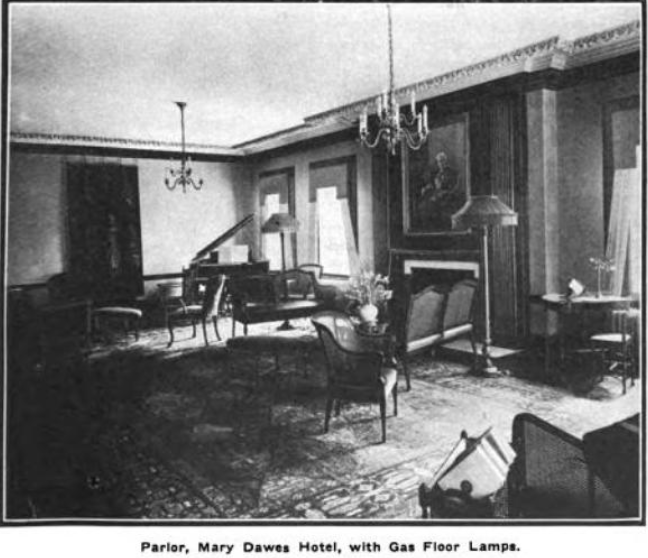
Sometime around late April to early May in 1919 — Vera Trepagnier traveled from Rock Island to Chicago. After checking into the Mary Dawes Hotel, an all-female establishment, Vera immediately set about enacting her single-step plan: Wait outside before the P. F. Volland Company’s office building until the man himself exited, then ambush him with an ultimatum: Either return the diminutive portrait of George Washington or pay $5,000.

So Vera waited. In rain and shine, she stayed vigilant until finally, on May 5, 1919, Vera seized the gold-plated opportunity her persistence presented her. Upon arriving for her self-appointed vigil, Vera spotted Volland’s car pulled against the curb. Knowing for certain he was on the premises, Vera, employing the alias Mrs. Martin, bamboozled her way through the lobby and reception until she stood before Paul F. Volland’s private office. 

Upon emerging and catching sight of Vera, Volland uttered, “Oh, it’s you.” 

Ignoring Paul F. Volland’s less-than-auspicious greeting, Vera Trepagnier launched into her demand for her money or property. Undoubtedly wishing to avoid providing fruit for the office gossips, as he knew Vera was more than capable of making a scene, Volland escorted her into his office whilst reiterating his position — she needed to speak with his lawyers about the Trumbull portrait, not him. 

Despite Volland’s unwelcome visitor, the outer office activity continued to hum along…..Until a single report rang out from the otherside of Volland’s office doors and brought everyone running. Unceremoniously bursting into the room, two clerks found Volland dying on the floor from a bullet wound to his chest while Vera stood across the office, calmly staring out a window. 

Crime & Christie: George Washington, Art, and Revolution

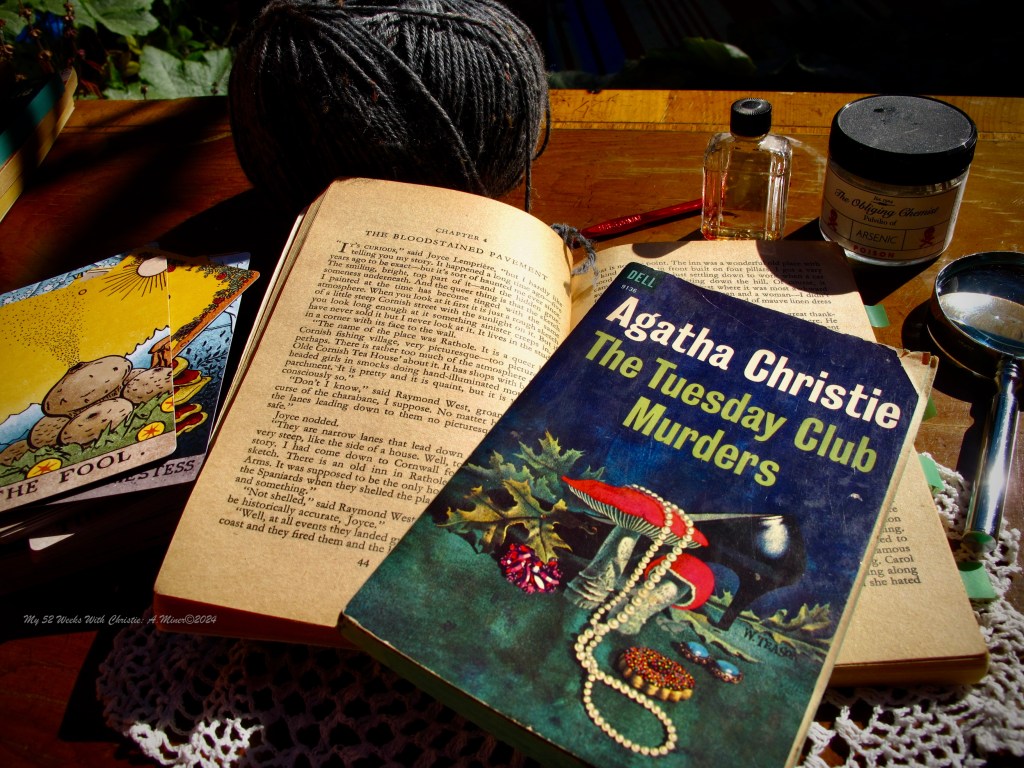
Recently, on a whim, I reread the Miss Marple short story The Bloodstained Pavement. After finishing the story (for the umpteenth time), an idle thought crossed my mind: I wonder if an artist has ever solved a crime whilst painting a painting? Curiosity sparked, I plugged in some keywords into an old newspaper archive.

It came back with:

Diverted by this curious headline (mere minutes after my original query flew through my head), I jotted down the brief list of names printed below the photo collage. Deciding I could spare a few seconds to suss out the meaning of this singular bit of news — I, in a fair imitation of The Fool, blithely stepped off an unobserved precipice.

Fast forward several months.

Surfacing from a mares’ nest of mind-boggling murders, wafer-thin defenses, and musical numbers — I’d grasped a slender thread (loosely) linking The Bloodstained Pavement and the aforementioned fantastic headline to a crap ton of crime in Chicago spanning betwixt 1907 to 1919. 

And it all starts with an artist named John Trumbull.

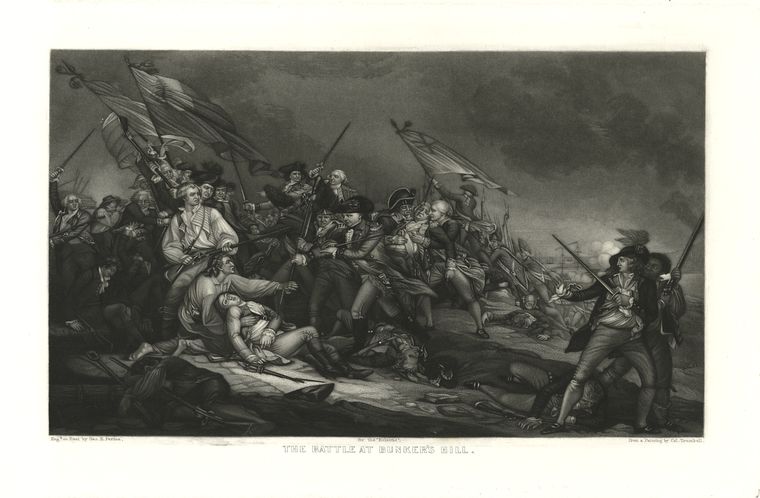
Never heard of him before? Well, ten to one, you’ve probably seen his work: in history books, if you’ve ever been to the rotunda in the U.S. Capitol building (in Washington D.C.), scanned the back of a two-dollar bill, or gazed upon Alexander Hamilton’s portrait on a ten spot. How did Trumbull find himself commissioned with such momentous projects? Well, between being the son of Connecticut’s Governor, graduating from Harvard, and serving under George Washington & Horatio Gates during the American Revolution — Trumbull met a plethora of the fledgling country’s early leaders. 

However, before Trumbull became known for his hyper-detailed life-sized scenes, earned a commission from Congress, or painted the portraits of several founding fathers — he sailed for London in 1780. Unsurprisingly, whilst in the capital of the UK, Trumbull met up with Benjamin Franklin. (Seriously, Trumbull’s life is a who’s who of historical figures.) Franklin, in turn, introduced the aspiring artist to Benjamin West — whose subject matter meshed well with Trumbull’s artistic aspirations. Under West’s tutelage, Trumbull began practicing painting techniques by filling small canvasses with images of the war he’d fought in and miniature portraits. 

Apparently, Trumbull enjoyed the latter exercise so much that he’d go on to paint over 250 of these mini-pics over the next 63-ish years. 

Amongst the bevy of minis Trumbull created was a portrait of George Washington (one of his favorite subjects). Painted in predominantly blues and golds on an oval-shaped piece of ivory, it measured 2.25 by 1.75 inches. According to legend, after completing the Lilliputian sized portrait, Trumbull presented it to a Virginian bride as a wedding gift. After this, this unnamed bride moved both herself and the pocket-sized portrait to Kentucky. Next, the fun-sized painting relocated with one of her kids to Tennessee, her grandkids decamped with it in tow to Arkansas, and finally, it wound up in Louisiana, where it was gifted to Vera Trepagnier. 

Elizabeth Vera McCullough or Vera (as she seemed to prefer), was born into a wealthy family in Belfast, Ireland, around 1860. Round about the age of seventeen, she and her family immigrated to the U.S. and settled in Louisiana. Sometime over the next seven years, Vera caught the eye of her future husband and sugar planter — Francois Edmund Trepagnier. The two married around 1886, when Vera was 24 and Francois was 52 (give or take). They had a son by the following year. 

(Upon marrying Francois, Vera also became the stepmother to three kids from Francois’s first marriage — the eldest of whom was only two years younger than herself….which sounds….awkward.)

Fast-forward four years to when the Trepagnier sugar plantation flooded and ruined their entire crop. In the wake of the devastation and unable to recover, Francois and Vera were forced to economize: first, they let go of all their servants, then sold all their furniture, and finally, the plantation itself. Sadly, despite trying to find a fresh start in Florida, the pressure of unexpectedly tumbling downwards through a significant number of tax brackets proved too much for Francois. Who, whether by illness or suicide (it’s unclear), passed away around 1891. 

Despite losing her husband, estate, and way of life, Vera retained possession of the diminutive Trumbull portrait.

In 1916, during the WWI war effort, about twenty-five years after these life-altering events, found Vera working for the Treasury Department in Washington D.C. Now a grandmother who wanted to help her grandson get a good education, Vera finally decided to investigate the legend around her pocket-sized portrait. Placing the ivory miniature beneath the lens of a microscope for a better look at the artist’s signature, Vera discovered the painting’s lore true. Even better, thanks to the private tutors who’d educated her in her youth, Vera not only knew who Trumbull was, she understood how valuable a rendering of George Washington by his hand could be. 

With this knowledge, Vera traveled to Philadelphia, hoping to make money off the tiny thing while (hopefully) retaining possession of it. 

(Cue dramatic music.)